Ben & Jerry’s tops 2024 wastewater violations list for reporting lapses
December 22, 2025 | By Lisa Scagliotti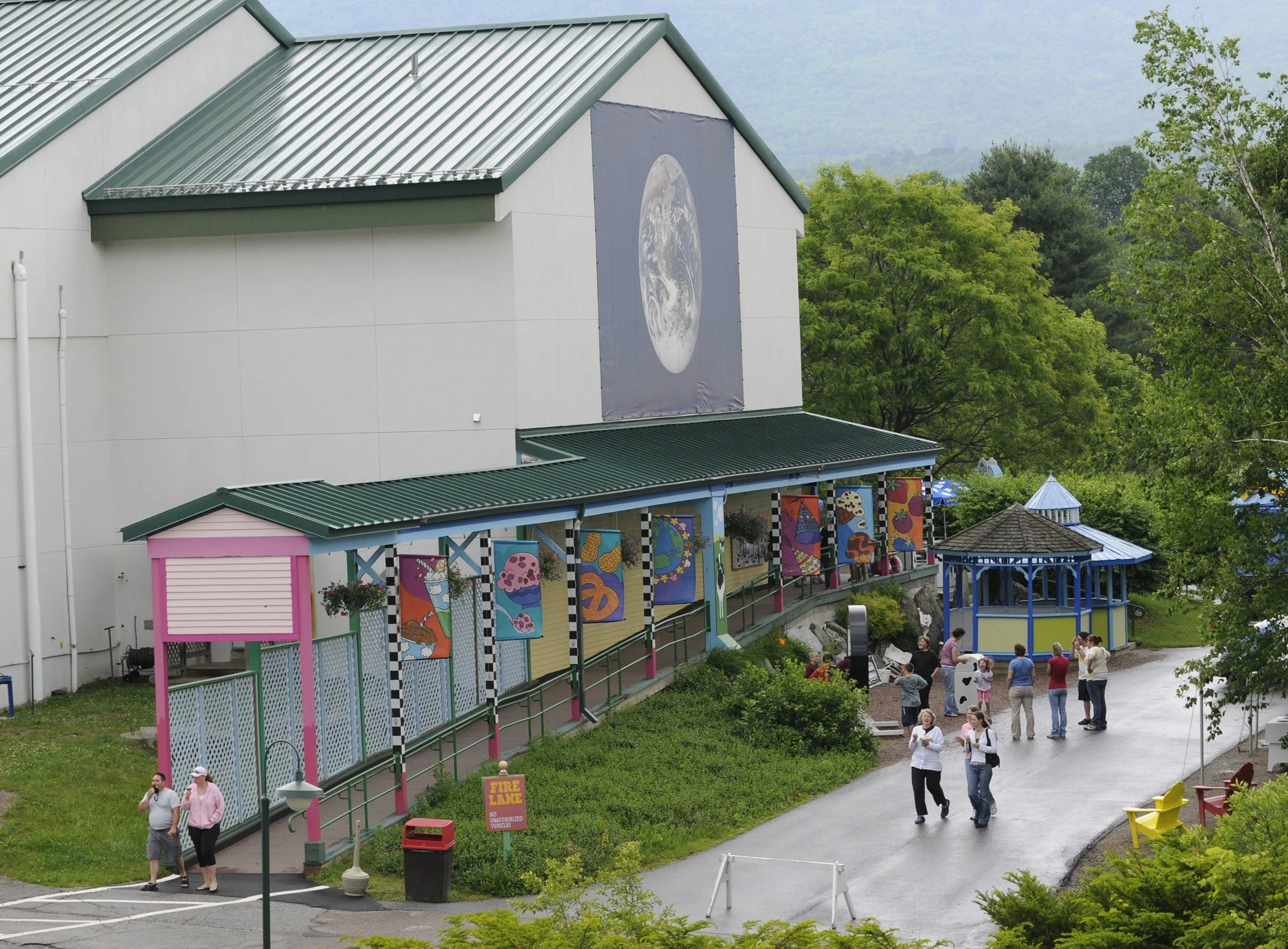
For the past 35 years, Ben & Jerry's ice cream plant in Waterbury has pretreated wastewater before it is discharged into the municipal system. File photo by Gordon Miller
A state announcement of industrial wastewater pretreatment permit violations reports that Ben & Jerry’s ice cream plant in Waterbury topped the list of 17 companies that logged infractions in 2024.
The Vermont Department of Environmental Conservation oversees the industrial pretreatment program in coordination with the U.S. Environmental Protection Agency.
Federal rules require the state to publicly report significant non-compliance each year.
The data review and report for 2024, released on Dec. 12 by the Vermont Department of Environmental Conservation, lists 17 permittees found to be “in significant non-compliance during the 2024 reporting year.”
Department Commissioner Misty Sinsigalli said the state views the industrial facilities that hold such permits “as key partners in environmental stewardship,” guided by specific requirements they must follow.
“Fulfilling these permit requirements is how we work together to safeguard the health of Vermont's lakes, rivers, and wetlands,” Sinsigalli said.
Industrial facilities such as breweries, dairy processing plants, and metal finishers receive pretreatment permits to discharge wastewater to municipal wastewater treatment facilities. The permits set discharge limits to prevent overloading the local wastewater treatment infrastructure.
Garrett Walsh, pretreatment coordinator with the state’s Wastewater Management Program, explained that the permitting process aims to track industrial wastewater, which ultimately is discharged into Vermont’s rivers and lakes. Big industrial entities that generate large quantities of wastewater are required to have systems on site to pretreat their wastewater before it’s sent into the municipal systems in the communities where they are located.
“Proper pretreatment helps ensure safe discharges from wastewater treatment facilities into our waterways,” Walsh said. “Without timely and accurate reports, DEC cannot properly manage its pretreatment program.”
As part of the permit requirements, the permittees must submit monthly reports, report instances of non-compliance, and not exceed limits for pollutants set in their permits. Some examples of pollutants are nutrients, heavy metals, and biochemical oxygen demand (a measure of how waste impacts a water body’s oxygen content).
State officials explained that significant non-compliance can occur when facilities discharge a pollutant that causes imminent risk to human health, or discharge pollutants that exceed their permit limits. Other examples of permit violations cover instances when permit-holders fail to submit monthly reports and other required documentation on time.
Violations involve reporting, not overflows
The list released this month by the state shows that six companies in 2024 exceeded the wastewater discharge limits and/or did not meet their requirements for monitoring set in their permits. Ben & Jerry’s Waterbury ice cream plant topped that list with 130 violations.
In Ben & Jerry’s case, the permit violations did not pertain to its Waterbury plant exceeding its wastewater output limits. “It was due to a personnel issue,” said Heather Collins, the state’s Wastewater Management Program Manager. “It was not a flow issue.”
Ben & Jerry’s spokesman Sean Greenwood confirmed that the company failed to meet some of its reporting requirements last year. “In 2024, a routine internal audit of our wastewater treatment facility revealed that several required reports had not been submitted to the state. We notified state officials and began a thorough review of our practices,” Greenwood said. “It is important to note that at no time did Ben & Jerry’s release wastewater amounts exceeding permitted limits.”
Ben & Jerry’s staff failed to submit a number of sampling reports in 2024. Collins said the 130 violations were for 24 missed reports on suspended solids, 12 on biochemical oxygen demand, two on total phosphorous and 92 daily reports on pH levels. The other seven violations for Ben & Jerry’s cited in the state’s announcement pertained to monthly reports not filed on time.
Each wastewater pretreatment permit has specific requirements around reporting information to regulators, Collins explained. “It’s easy to rack up that many violations if you have a daily requirement to collect and analyze some type of sample,” she said.
Each report has a required deadline, after which state regulators review the reports. “If it’s 30 days past that date, if we haven’t received a report then you’re reporting late,” she said.
Once Ben & Jerry’s manager were aware of the reporting lapses, they turned their attention to improving their process for reporting, including hiring a consultant for advice, Greenwood said. “We strengthened our operations, appointing a highly experienced Chief Wastewater Operator to best manage our operations moving forward, and engaged an independent environmental auditing firm to review our facilities and procedures,” he said.
Regulators from both the state of Vermont and the federal EPA visited the Waterbury ice cream plant. Following those reviews, the company implemented all recommendations from the auditing firm, which included updating procedural safeguards, hiring the additional wastewater operator, and establishing a system of checks and balances for monthly report sign‑offs, Greenwood noted.
Although all of the violations Ben & Jerry’s was cited for pertain to reporting and not exceeding the plant’s wastewater limits, Collins said it’s important for the state to have timely reports. “When we don’t receive reports, and if they miss samples, I can’t say that they were within permits limits or not, because I have no sample to determine that,” Collins explained. “If you don’t collect samples, I can’t tell if they exceeded the limits.”
P. Howard “Skip” Flanders chairs the Board of Commissioners that oversees Waterbury’s Edward Farrar Utility District, which operates the municipal water and wastewater departments. He said issues with wastewater from the Ben & Jerry’s plant in the 1980s led to the company adding its pretreatment system around 1990 which has since worked well to prevent the industrial volumes from overburdening the municipal system. Flanders said there were no instances in 2024 or this year where the plant exceeded its wastewater output limits that resulted in EFUD exceeding its discharge limits.
The flow coming from the ice cream maker typically does not strain the EFUD system, Flanders said. “The Ben and Jerrys volume is pretty well diluted when mixed and run through our lagoon system and then through the phosphorus removal process,” he explained.
The rest of the list
The other six companies on the 2024 violations list for having exceeded their permit limits and/or not met their monitoring requirements and were found in significant non-compliance are: Metal stamping company New England Precision in Randolph with 68 violations; St. Albans Creamery in St. Albans, 23 violations; Butternut Mountain Farm maple sugar company in Morrisville, 16 violations; dairy cooperative Agri-Mark, Inc. in Middlebury, 14 violations; and Commonwealth Dairy in Brattleboro, nine violations, according to the state announcement.
The state’s report also lists a total of 11 companies that did not submit monthly reports or other required documents on time, which constitutes significant non-compliance with their permit requirements.
In this category, Ben & Jerry’s in Waterbury and Swan Valley Cheese of Vermont in Swanton each had seven violations. Ben & Jerry’s failed to submit seven monthly reports on time. Swan Valley missed making four monthly reports on time and had three other instances of failing to submit other documents, the list notes. Two other companies with reporting infractions in the same category included Lost Nation Brewery and Rock Art Brewery, both in Morrisville, with five and two reports not submitted on time, respectively.
A third category in the state announcement notes that two companies – Trapp Family Lodge in Stowe and Zero Gravity Craft Brewery in South Burlington – had significant violations for not following operation and maintenance requirements and not notifying state regulators. Trapp Family Lodge had one such infraction; Zero Gravity had seven, the list notes.
State officials noted that the information in this public report is based on 2024 data, and it does not represent the current compliance status of the companies on the list.
Collins said it takes time to review the various reports submitted by companies and her office right now is going through reports from the third quarter of this year. She said there have been no violations at the Waterbury ice cream plant to date.
Greenwood at Ben & Jerry’s confirmed: “We’re happy to share that we have had no non‑compliance issues in 2025.”