
Arborists gather at Little River State Park for service, training
November 13, 2025 | By Lisa Scagliotti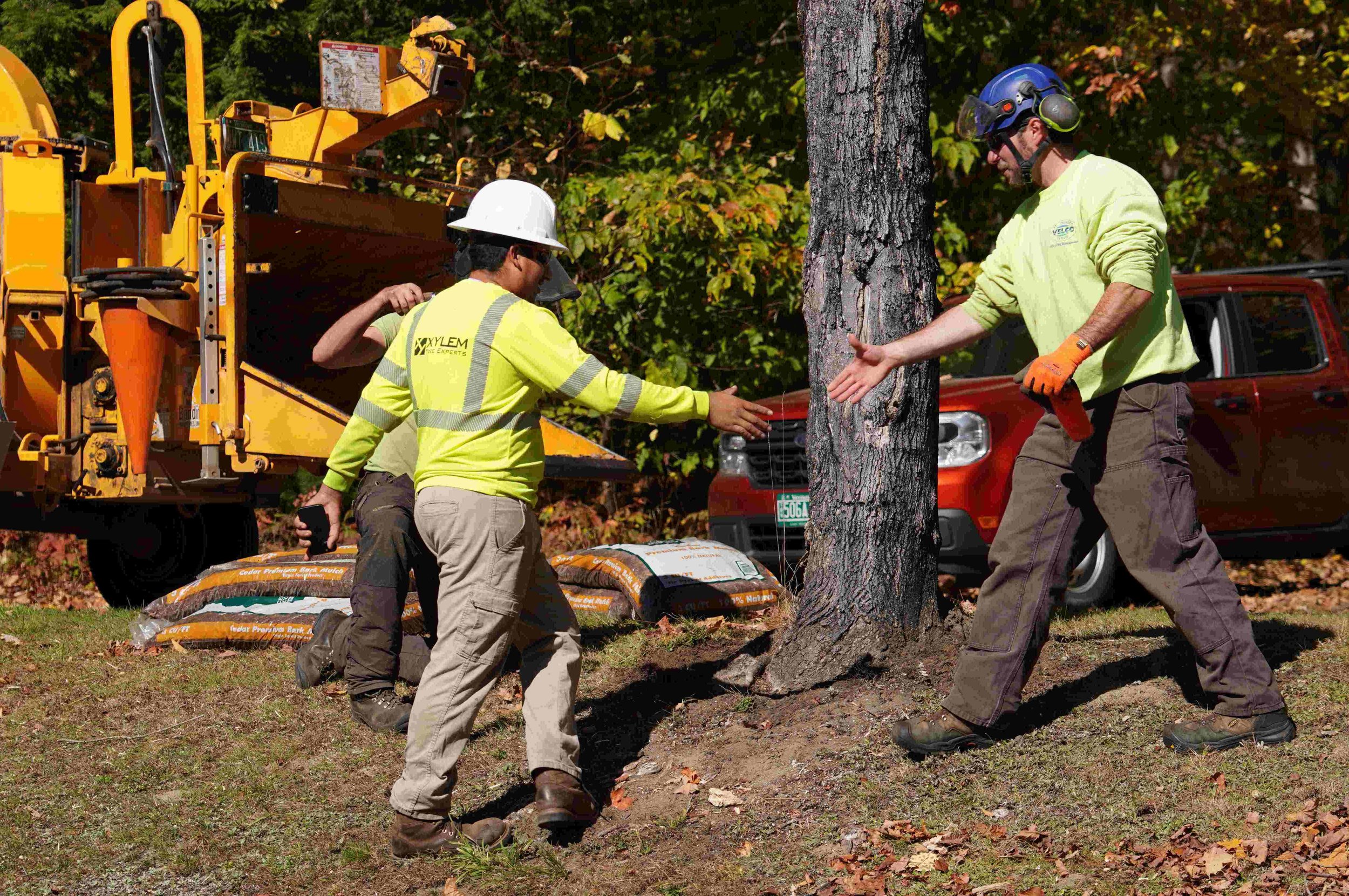
Volunteering together strengthens ties of cooperation and professionalism as many arborists from around the state meet each other for the first time at the Vermont Arborist Day of Service. David Silva Rodriguez (left) of Xylem Tree Care and John Kimball of VELCO share a handshake. Photo by Megan Davin/Vt. Forests, Parks, & Recreation
Little River State Park was the site recently for an inaugural gathering of 21 tree care professionals from around Vermont for an arborist’s day of service.
The tree-care specialists brought their tools and shared their expertise by giving attention to trees in need of maintenance at the state park. The event in mid-October was organized by the Vermont Urban & Community Forestry Program and its Advisory Council, explained Adam McCullough, a state urban forester who works in the program, which is in the Vermont Department of Forests, Parks & Recreation.
The arborists did a training exercise called a structural prune.
“It mimics the most successful, strongest trees that grow in nature, lending some of those traits to trees that didn't develop them on their own,” McCullough explained. The goal is to prune the tree so it develops a strong central leader, or stem, as the spine of the tree, instead of allowing multiple stems to develop.
The group started with a discussion of the process and then the climbers, ground workers and bucket truck operators fanned out and got to work on a group of 18 trees. As they worked, they collected cuttings to be chipped, to leave the park site free of any tree debris.
The pruning is considered most beneficial to shade trees, McCullough noted, “because it is highly effective, inexpensive, and it proactively reduces future tree defects and tree-related nuisances or risks.”
Other steps the crew took were to protect tree roots from mowers by adding a layer of mulch at their base. “The maples received a crown clean, which prunes away dead, broken, and diseased branches that are likely to fall in the popular camping area if left alone,” he noted.
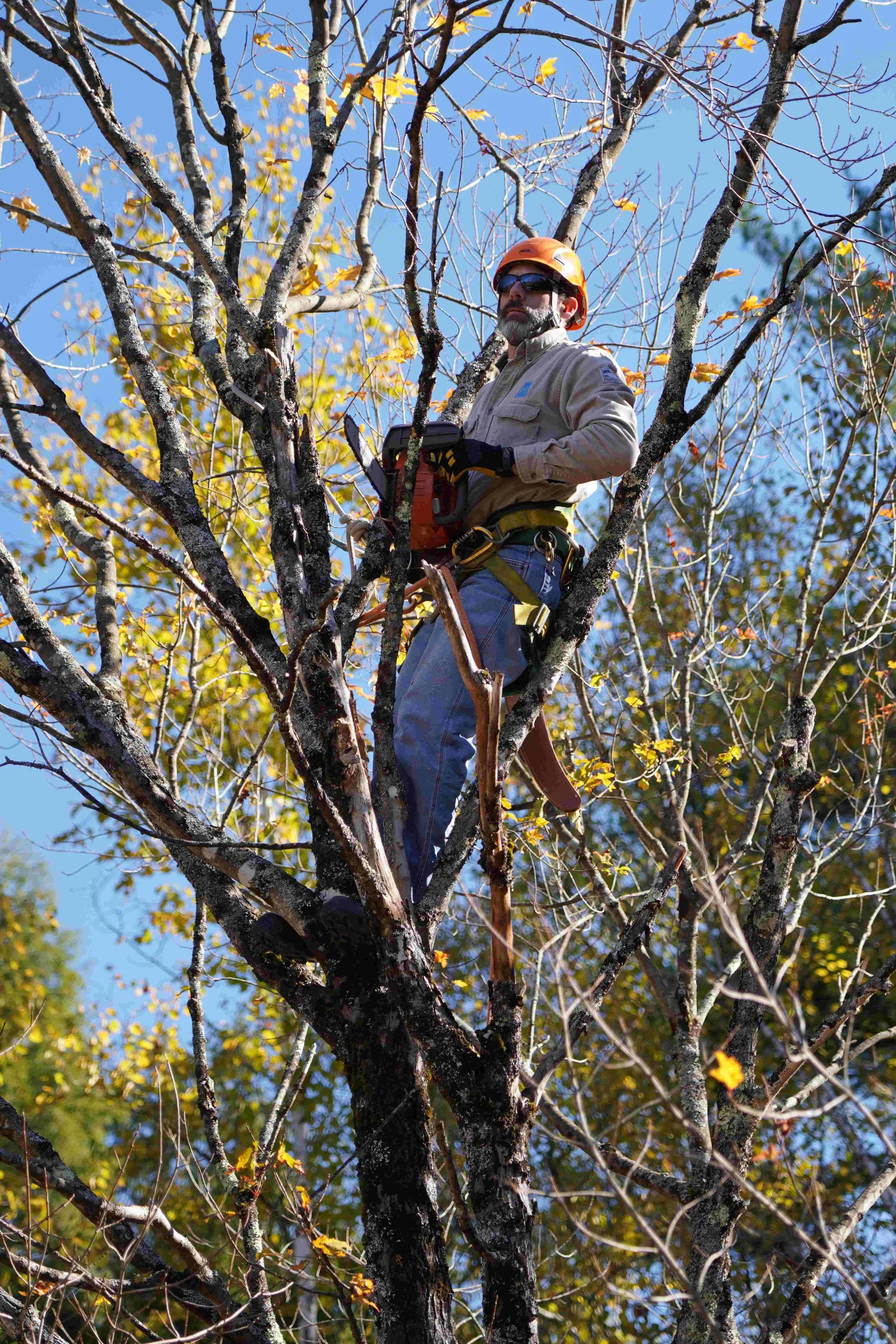
Jeremy Tinker from Vermont Electric Coop Inc. climbs a sugar maple on a doubled rope system to remove dead wood and improve the structure to reduce the likelihood of branches breaking in a future storm. Photo by Megan Davin/Vt. Forests, Parks, & Recreation
On a local note, McCullough noted that the Waterbury town Tree Board has employed this technique for the newest tree plantings on town property to train them into sustainable, low-maintenance, high-value trees in the future.
“This type of pruning is available from any arborist, but it is not in high demand because most people don't know it exists,” McCullough said. “It is used on young trees primarily to prevent future problems. Therefore, it's being done long before a tree looks alarming, so an arborist usually won't be called.”
The aim is preventative in nature. “It gives the tree owner the greatest bang for their buck because a handful of small cuts today prevent a much larger and costlier prune in the future,” he explained.
The crews enjoyed the late-fall sunshine during a lunch break and then went to work on a group of nine white pines that had lower dead branches encroaching on the sandy volleyball area near the ranger station.
The effort to give careful attention to specific trees meant that trees that may have been considered a nuisance and a target for removal were preserved by the arborists’ work.
“This volunteer effort of over 60 labor hours made possible a whole new degree of stewardship for the trees that make our parks so special,” McCullough said in his report on the event.
The companies that had personnel participate in the event were Acer Tree Co., Whitney Tree Service, Lucas Tree Experts,Vermont Electric Cooperative, Vermont Electric Power Company (VELCO), Xylem Tree Care, Terrigenous Landscape Architecture,Dubois & King, and Shelter Tree Care Products.
The state forestry program hopes to make the exercise an annual event as a way to be of service and for the professionals to have an opportunity for training and to share expertise.
“And yes, working on trees is as fun as it looks!” McCullough noted.
Learn more about the Vermont Urban & Community Forestry Program here, including more about structural pruning.