
Bears are waking up – time to take down birdfeeders, etc.
March 17, 2026 | By Waterbury Roundabout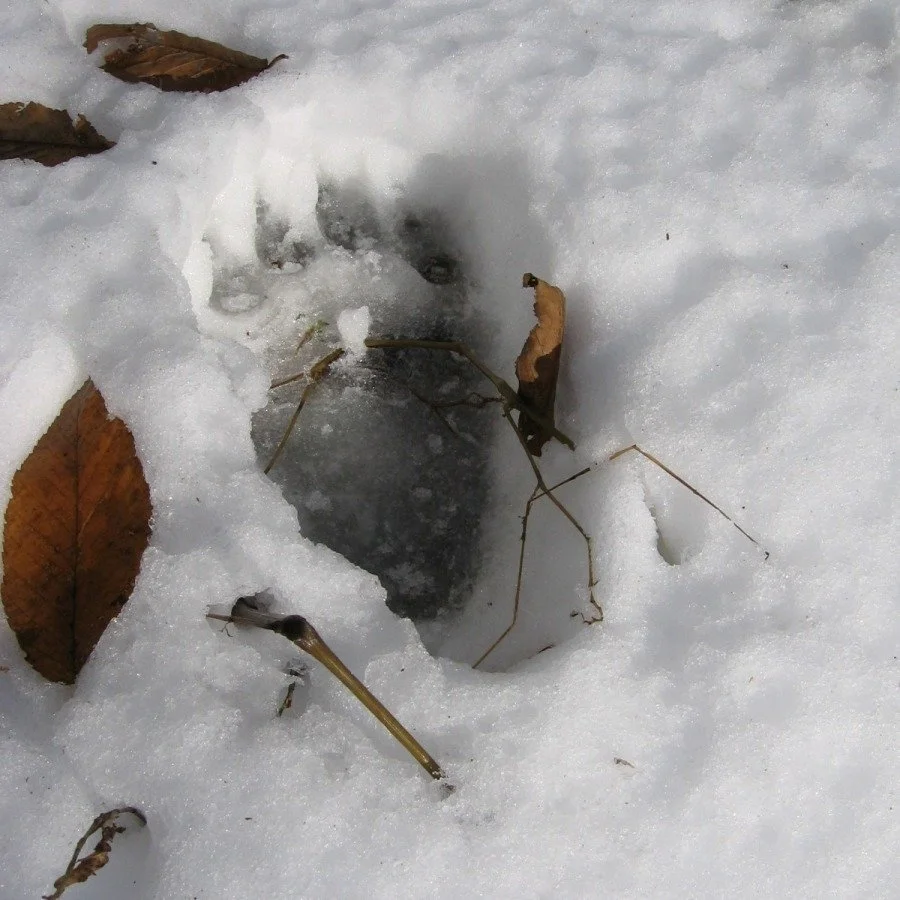
A black bear print in the snow indicates a bear out of its den and on the move in early spring. Photo by M. Meisel/National Park Service
Vermonters are already reporting sightings of bears waking from their winter slumber and leaving their dens. Wildlife biologists at the Vermont Fish and Wildlife Department urge Vermonters to remove their birdfeeders and take steps now to prevent conflicts with bears over the spring and summer.
“Do not wait to take down your birdfeeders and bear-proof your yard until a bear comes to visit,” said Jaclyn Comeau, the department’s bear biologist. “You need to act now to head off bear conflicts over the spring and summer, even if you have never had a bear visit your property before.”
Bear incidents with humans have been on the rise over the past several years. Officials believe this trend is in part a result of Vermont’s abundant black bear population learning to associate people and food over multiple generations.
And while hunters have taken more than 1,000 bears in both 2024 and 2025, the state’s bear population has continued to grow over the past five years, wildlife experts say.
Shorter winters also mean that bears are emerging from their dens earlier in the spring. The most recent trend has seen bear activity starting in mid-March, about two weeks sooner than what has traditionally been considered the start of “BearWise season” in northern New England.
To avoid attracting bears to human homes and neighborhoods, Comeau says it’s most critical for bears not to associate people with food.
“Preventing bears from having access to human-related foods is key to successful coexistence with these long-lived and intelligent animals,” Comeau said. “Bears can be found in every corner of Vermont other than the Champlain Islands. Put bluntly, most Vermonters live in bear country.”
Some steps to take now to coexist with bears this spring through fall:
Take down bird feeders until December.
Store garbage in bear-resistant containers or structures. Trash cans alone are not enough.
Refer to the Vermont Fish and Wildlife Department’s website for details on composting in bear country.
Use electric fences to keep chickens and honeybees safe.
Request a bear-resistant dumpster from your waste hauler.
Feed your pets indoors.
Never feed bears. It is illegal.
“Deep snow may delay some bears from emerging from winter dens until April, but mid-March is the time for Vermonters to prepare for the early risers by taking down our bird feeders, making sure garbage is secure, and protecting backyard chickens and bees with an electric fence,” Comeau said. “This will help teach bears that our yards and neighborhoods are not good places to search for food, but it will only work if everyone does their part.”
Ultimately, bears coming in contact with food sources from humans amounts to feeding bears. “At the end of the day, purposely feeding a bear is not just bad for the bear,” said Comeau. “It is also dangerous for you. It causes problems for your neighbors, and it is illegal. If bears are finding food on your property, it is your responsibility to remove that attractant and report a problem before the situation gets worse.”
Takine care to not attract bears could have an additional benefit of not attracting other wildlife species, too, such as raccoons, skunks and rodents.
And, should Vermonters still encounter bears engaging in potentially dangerous behavior, the Vermont Fish and Wildlife Department asks that people submit a report. Some examples worth reporting: bears targeting bird feeders and garbage, feeding on crops or livestock, or investigating campgrounds.
Reports can be made on the department’s Living with Black Bears webpage. Information from the reports helps biologists keep track of bear incidents and provide early interventions to head off conflicts.