
Introducing CReW Corner: Dancing in the Rain
May 19, 2026 | By Matt Dugan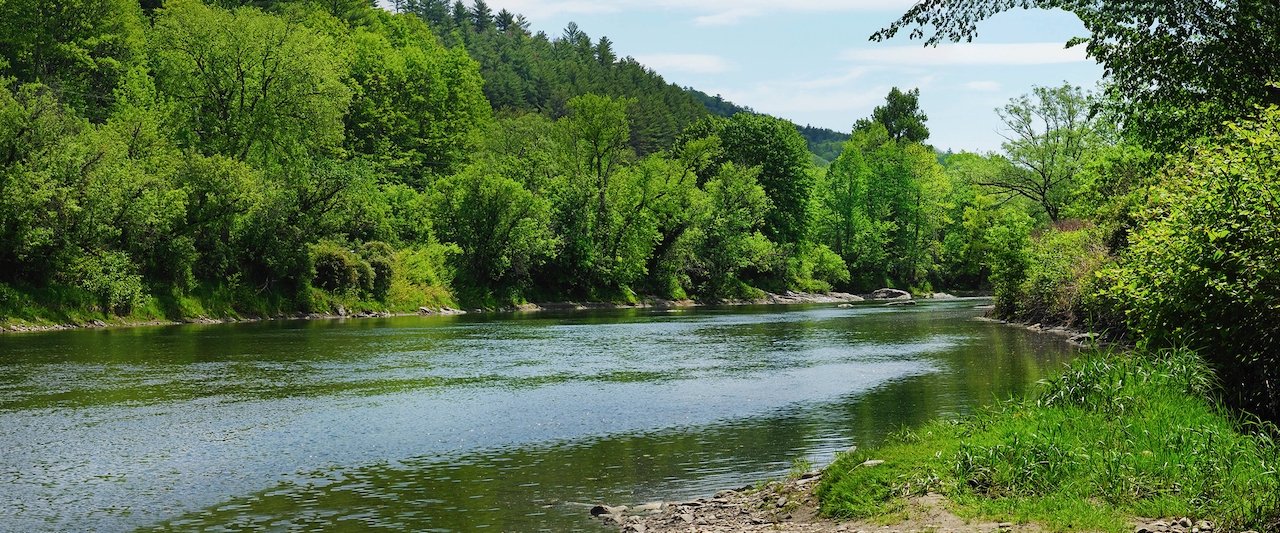
The Winooski River in springtime. File photo by Gordon Miller
“Climate change” is a daunting term that defines our era. But looked at from the perspective of natural history, change has been happening since well before the first humans set foot in Vermont, and water has been perhaps the most consistent theme.
Five hundred million years ago, Vermont was warm and submerged, an ocean home to prehistoric sea creatures. Eventually, the climate changed such that ice reigned for a couple million years. Humans had still not set foot here 25,000 years ago when a mile-thick glacier, so powerful it sheared mountaintops, covered every inch of what we now call home. Rising temperatures gradually began to melt the glacier; go back about 13,000 years and you could take a cold swim in Lake Vermont, hundreds of feet deeper and far larger than today’s Lake Champlain. All that water and all that ice left beaches on today’s mountainsides, carved new rivers, and created deltas where none had existed before.
In other words, water made our modern landscape.
As the glacier receded, grasses grew, and caribou followed the forage, and humans followed the caribou. Then spruce forests arose and the earliest Vermonters adapted by hunting different animals and eventually farming, particularly along the Winooski River plain. The first Europeans to reach Vermont came in the early 1600s, and not surprisingly, they arrived by water.
To our semi-nomadic predecessors, moving with the waters was a fact of life. The European settlers who followed did not so much go with the flow. Instead, with an abiding faith in their ability to bend the waters to their will, they did as their name describes: they settled.
Living with close neighbors, however, usually means someone has to compromise, and our rivers and streams obliged as they were dredged, straightened and essentially told to stay put. For a long time, the waters did well by us, allowing for commerce and power generation, transportation, recreation, and more. But ultimately, nature doesn’t take orders, and water inevitably seeks its original meandering routes. And so, as our climate changes, we’re now faced with a question: How much are we willing to change to get along with our wet, wandering, generous, and cantankerous neighbors?
Welcome to the CReW Corner.
CReW – short for Community Resilience for the Waterbury Area – was founded after the 2023 summer flood with the immediate goal of linking area residents to assistance and funding for recovery, and the longer-term goal of building a stronger, more climate-friendly and climate-adaptive community. Its work focuses on these efforts in Waterbury, Duxbury, Bolton, Middlesex and Moretown.
Here, in regular dispatches for the Waterbury Roundabout, we’ll be sharing information about what you can do individually and what we can do together to work in partnership with the waters that surround us for the benefit of all who live in and visit this spectacular place. Learn more, including how to volunteer, online at thecrewvt.org.
Because, in the words of Vivian Greene, life isn’t about waiting for the storm to pass. It’s about learning to dance in the rain.
Waterbury resident Matt Dugan is a CReW volunteer and a member of the Waterbury Natural Disaster Preparedness Committee.