
Harwood event highlights farm-to-school connections
November 12, 2025 | By Claire Pomer | Correspondent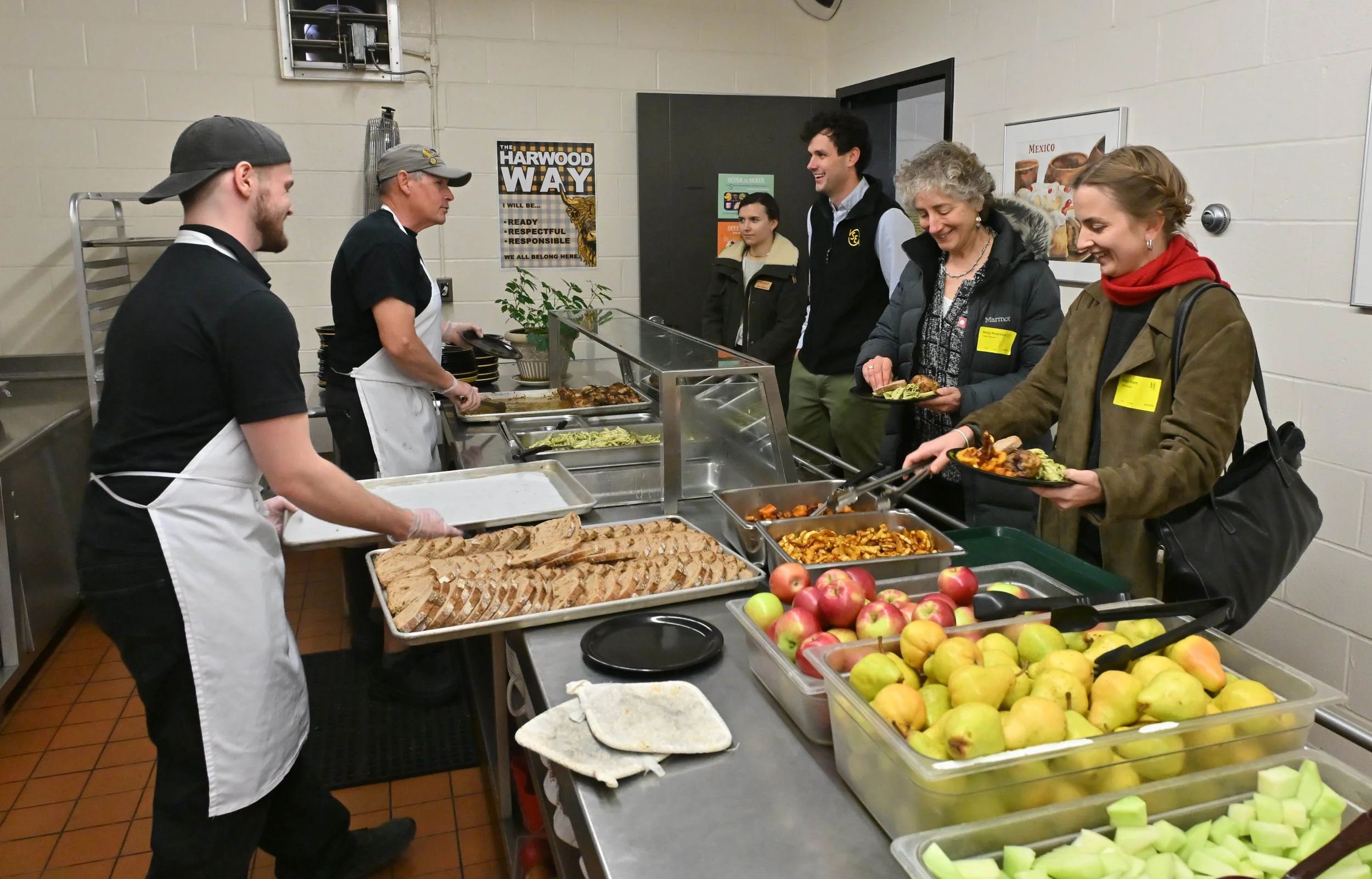
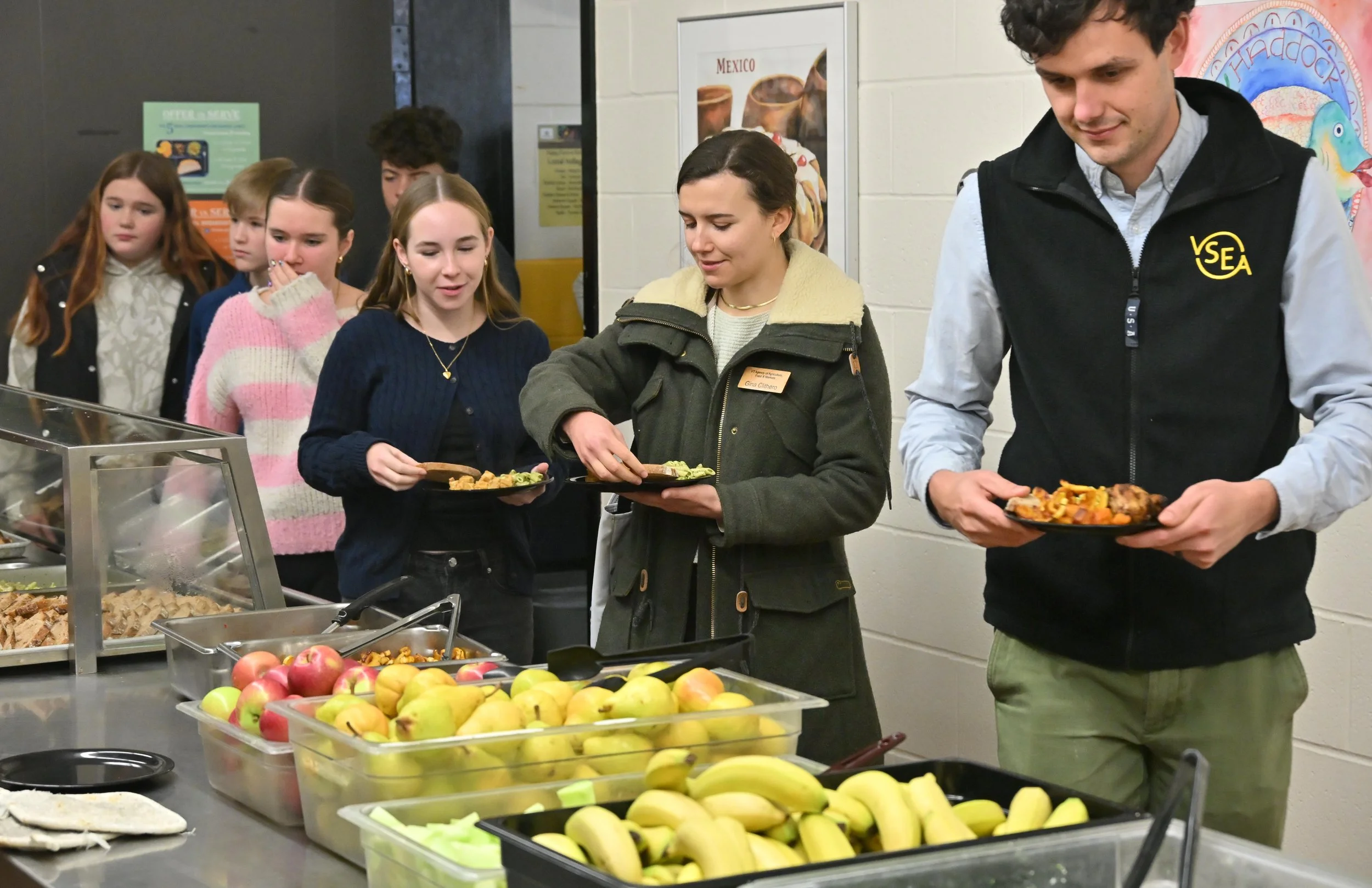
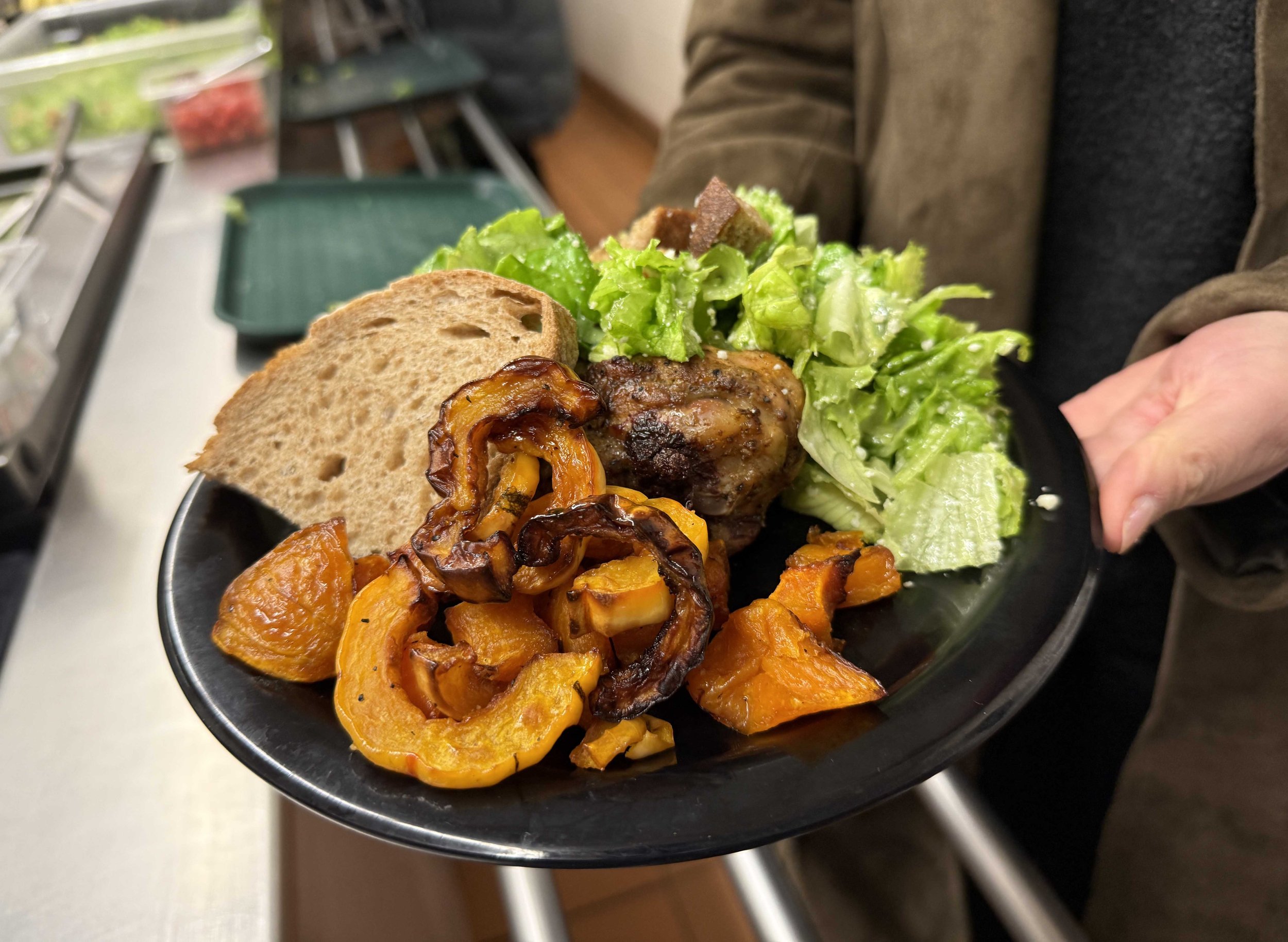
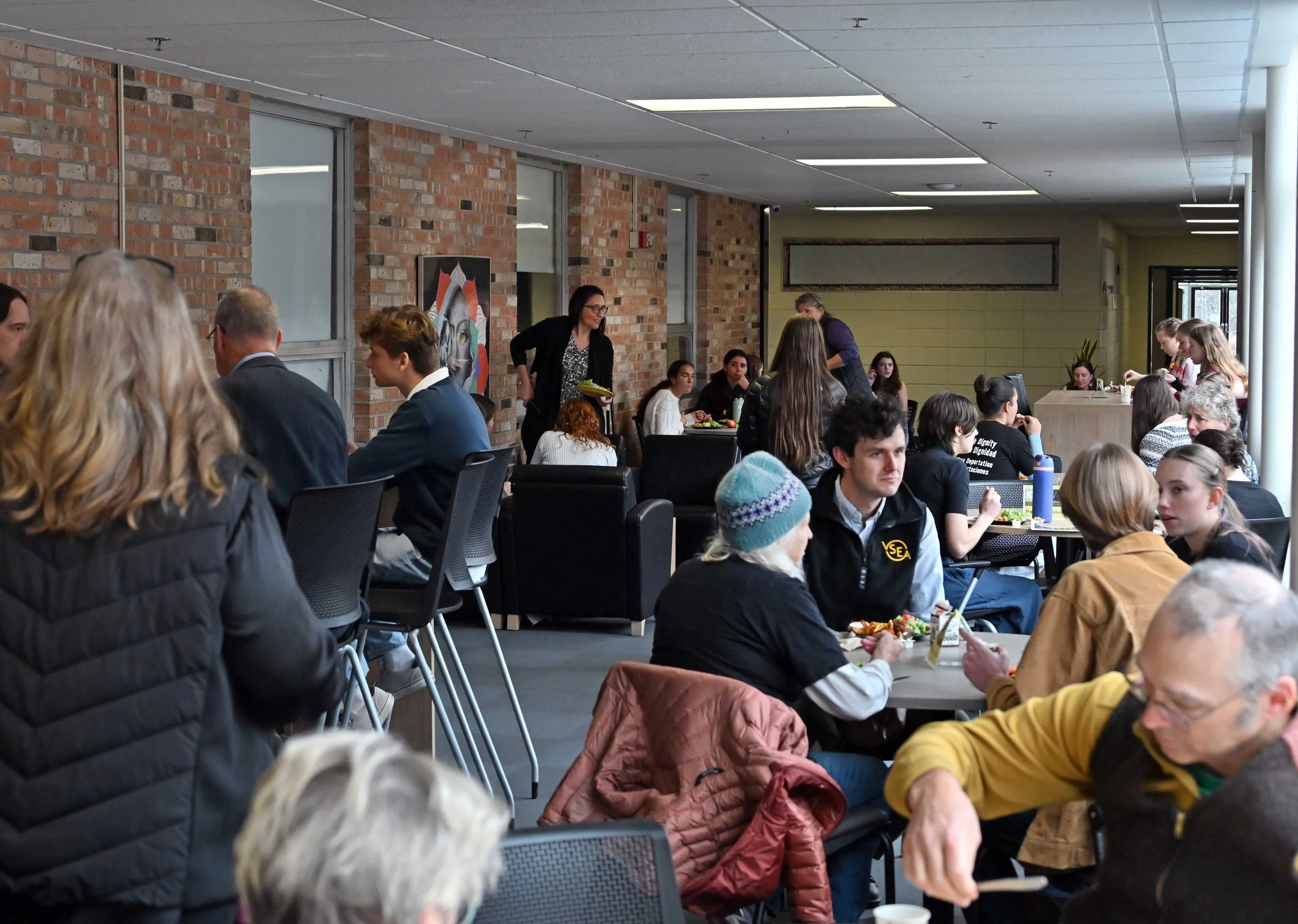
The event included lunch served by Harwood food staffers. Photo by Gordon Miller
Two hours out of each of Harwood’s seven-hour school days are dedicated to lunch blocks. The kitchen staff spends hours planning, preparing, and serving meals. Much of the planning involves coordinating with local farmers, as 25% of Harwood’s lunches are locally sourced.
To highlight this process, the Vermont Farm to School & Early Childhood Network held an event last Friday, Nov. 7, celebrating Harwood’s commitments to sustainability and connections with local food systems.
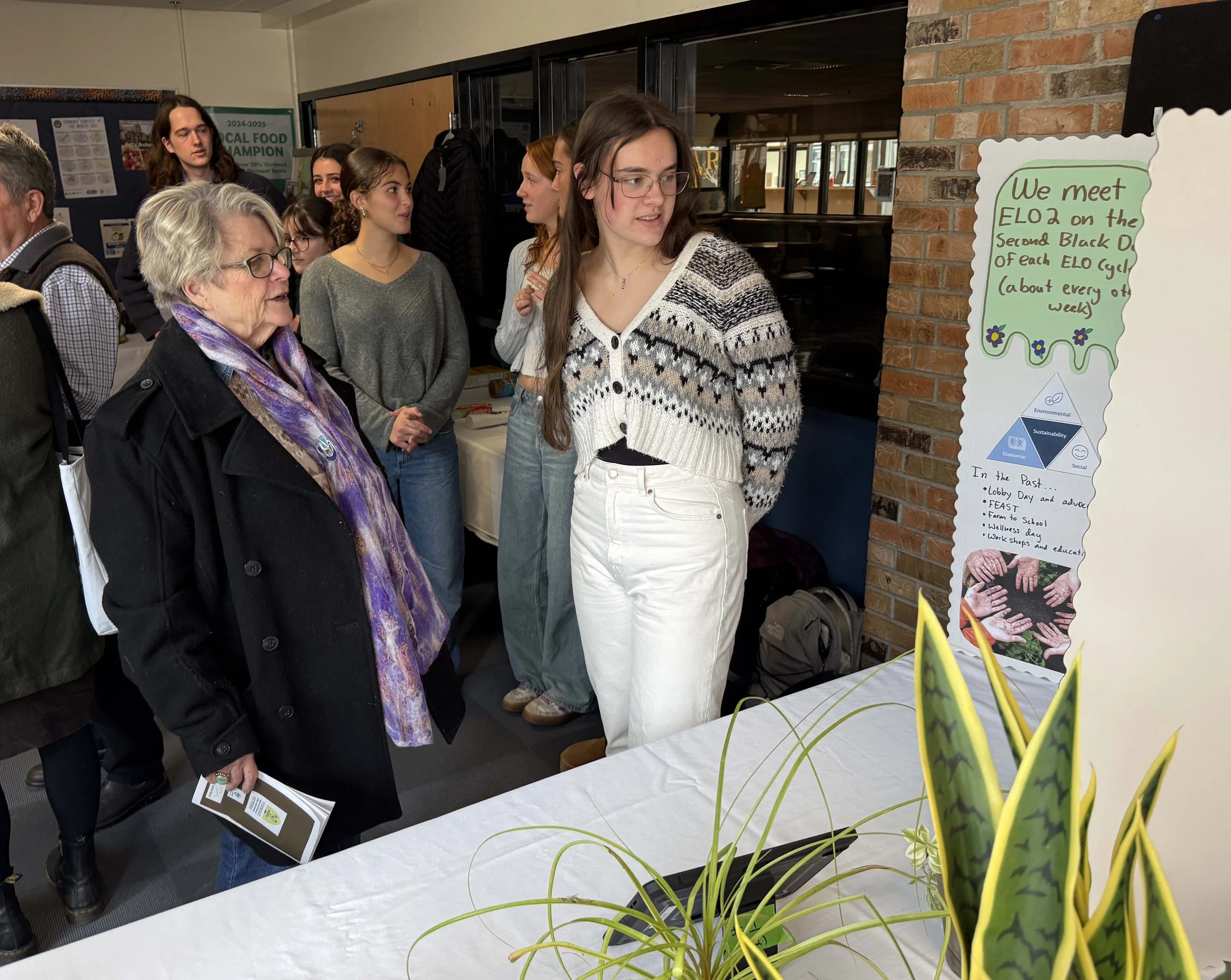
Four groups of students from the district were invited to share presentations on their contributions to this effort. They represented Harwood’s National Honor Society, Sustainability Club, Developing Sustainable Habits class, and Crossett Brook Middle School’s Sustainability class.
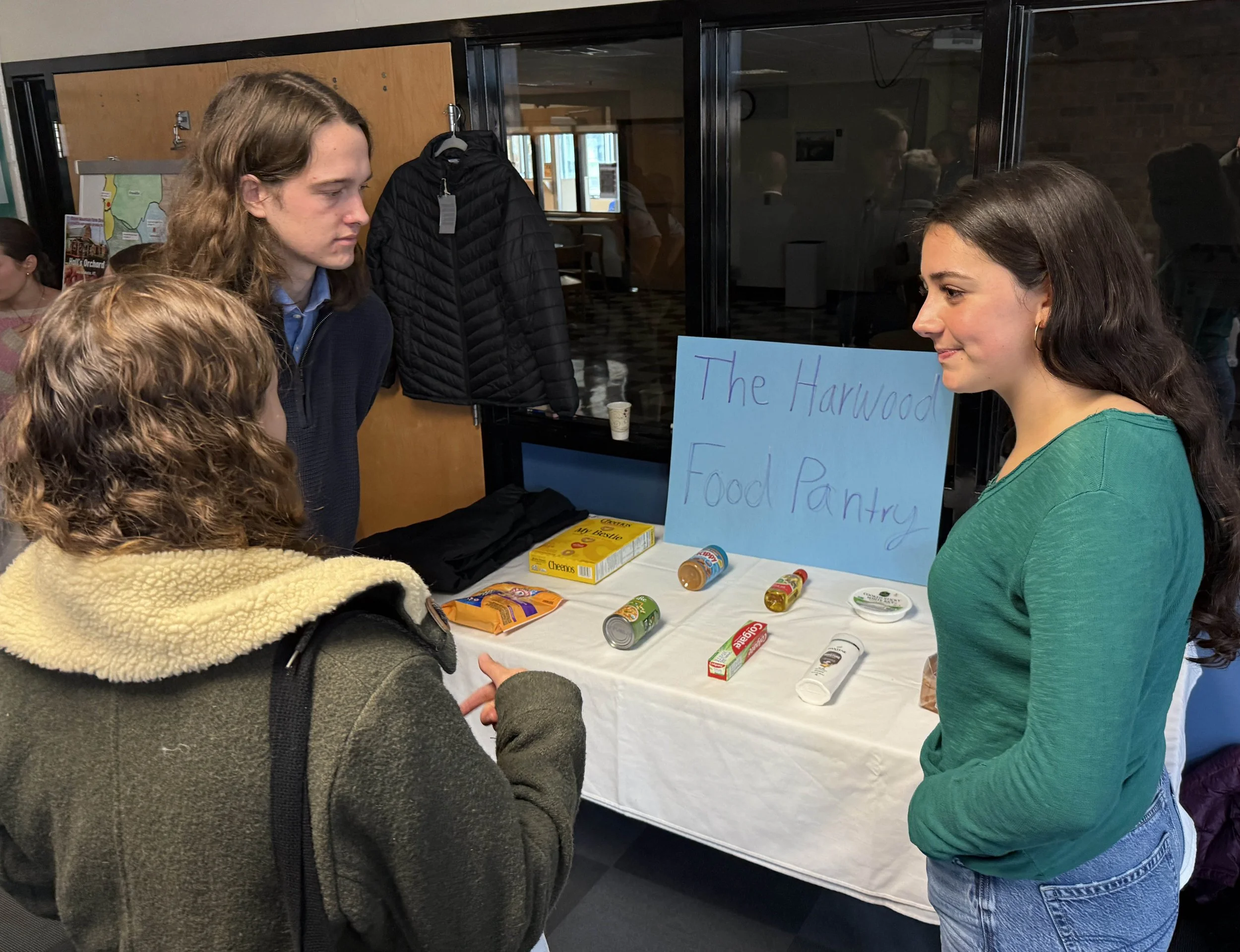
National Honor Society presidents Cashel Higgins and Lessa Dreimiller spoke about the club’s newly opened, donation-based food pantry, which is stocked with non-perishable food items, clothing, and hygiene items. It’s a new space for Harwood students to access what they need during the school day.
Sustainability Club members spoke about their efforts to revive the school’s greenhouse and gardens, their legislative advocacy efforts, and their recent conversation with Vermont state Rep. Candice White, D-Waitsfield. The club is combined with the school’s branch of the Youth Lobby, which focuses on amplifying student voices through political advocacy.
Developing Sustainable Habits members spoke about their class curriculum, which centers around the United Nations 17 Sustainable Development Goals, and their efforts to create locally sourced dishes each month with the Harvest of the Month.
“Our goal is that people learn how to incorporate local food. We hope that people are thinking about what they eat and where their food is coming from,” said freshman Evelyn Andrus. This month’s Harvest of the Month is apples, and the Friday event included apple crisp bites made with apples from Hall’s Orchard in Isle La Motte.
Three Crossett Brook seventh graders attended to share their sustainability class curriculum. Unlike the other clubs and classes, middle school sustainability classes are only taken for one trimester at a time. “The curriculum tries to build on itself,” said Kayla Henry, who has been teaching at Crossett Brook for six years. “It’s focusing on the natural world and our part in it and our communities.”
Throughout the trimester, the seventh graders have been growing microgreens and taking care of the school’s chickens and bees.
Following the student presentations, speakers included Harwood Unified Union School District staff members, representatives from several state agencies, and local food-business owners.
Dana Hudson, coordinator for the Vermont Farm to School & Early Childhood Network, began by emphasizing the importance of Farm to School programs in schools and celebrating Vermont’s progress on incorporating local food into school lunches. “We’re coming up on the five-year mark of universal food in schools,” she said. “Thanks to this, 85,000 students have access to free breakfast and lunch.”
Last year, Vermont schools had an average of 14% local ingredients in their meals, keeping $3.5 million in the local economy. “Much of the success is due to the efforts that people are making,” Hudson said.
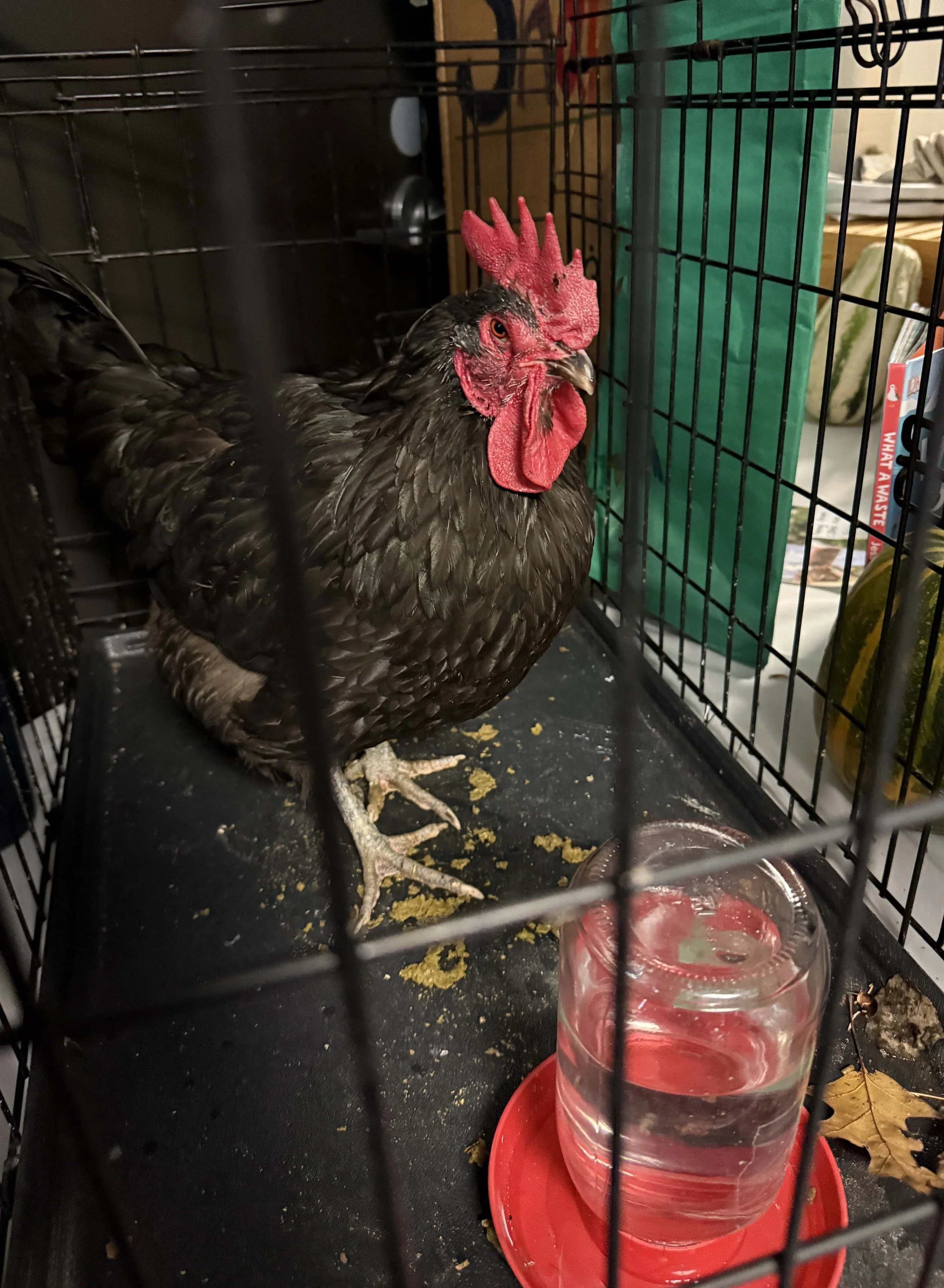
A rooster known as 'the Rock' from the coop at Crossett Brook Middle School visits for the event. Photo by Gordon Miller
Harwood Superintendent Mike Leichliter shared details about his experiences with Farm to School programs during his move from Lancaster, Pennsylvania, to the Mad River Valley. In Lancaster County, the “garden spot of America,” he said, “We were never able to figure out how to bring local food into our cafeterias. Not long after I arrived at Harwood in 2022, I visited one of our elementary schools and met a kindergartener.” Leichliter, along with the kindergarten teacher, struggled to find a way to describe his job. When they settled on a description, the student said, “So he’s the keeper of the keys to the chicken coop!”
Leichliter said the description felt “very Vermont” to him, but demonstrated the progress that the Farm to School programs had made with student mindsets here. “I am so impressed with the quality of food that we provide for our children,” he continued. “Harwood provides about 25% of local food in our meals, and that reflects not only the work of the kitchen staff but student work and advocacy.”
Harwood junior Julia Wulff spoke next, starting off by pointing out that she has been a student in the district since preschool. She recalled her experiences with Farm to School programs throughout her school career.
“My most vivid Brookside [Primary School] memory was from the 4 Winds program,” she noted. In this program, led by volunteer educators like Hudson, students would go outside, make butter, cheese, and ice cream, and learn about farms and farming.
At Crossett Brook, Wulff said she learned about food, farming, and climate change in the school’s Sustainability class. “It was my favorite part of middle school. So for my eighth-grade inquiry project, it seemed natural that I’d do something Farm to School-related.”
For that project, Wulff described leading the push to apply for a grant to keep beehives at Crossett Brook as a way of “enhancing the curriculum that I’d always loved.”
In high school, she said she has wanted to continue these experiences, so she joined the Sustainability Club, where they use the school greenhouses to grow ingredients for the school kitchens, and she joined the Youth Lobby, where she led a workshop at the FEAST Youth Summit. “I have become more knowledgeable and engaged in the world around me. I’ve never had to worry about not knowing what’s in school lunches, about mystery meat and overcooked broccoli,” she said.
Harwood district Food and Nutrition Director Erika Dolan piggybacked off Wulff’s points. “Our district is proof that local food incentive programs work,” Dolan said.
Local purchases in the district have grown from 14% to 23% thanks to incentives and universal school meal programs, “benefitting local economies but, most importantly, students,” she explained. “This shows what’s possible when we invest in Vermont values.”
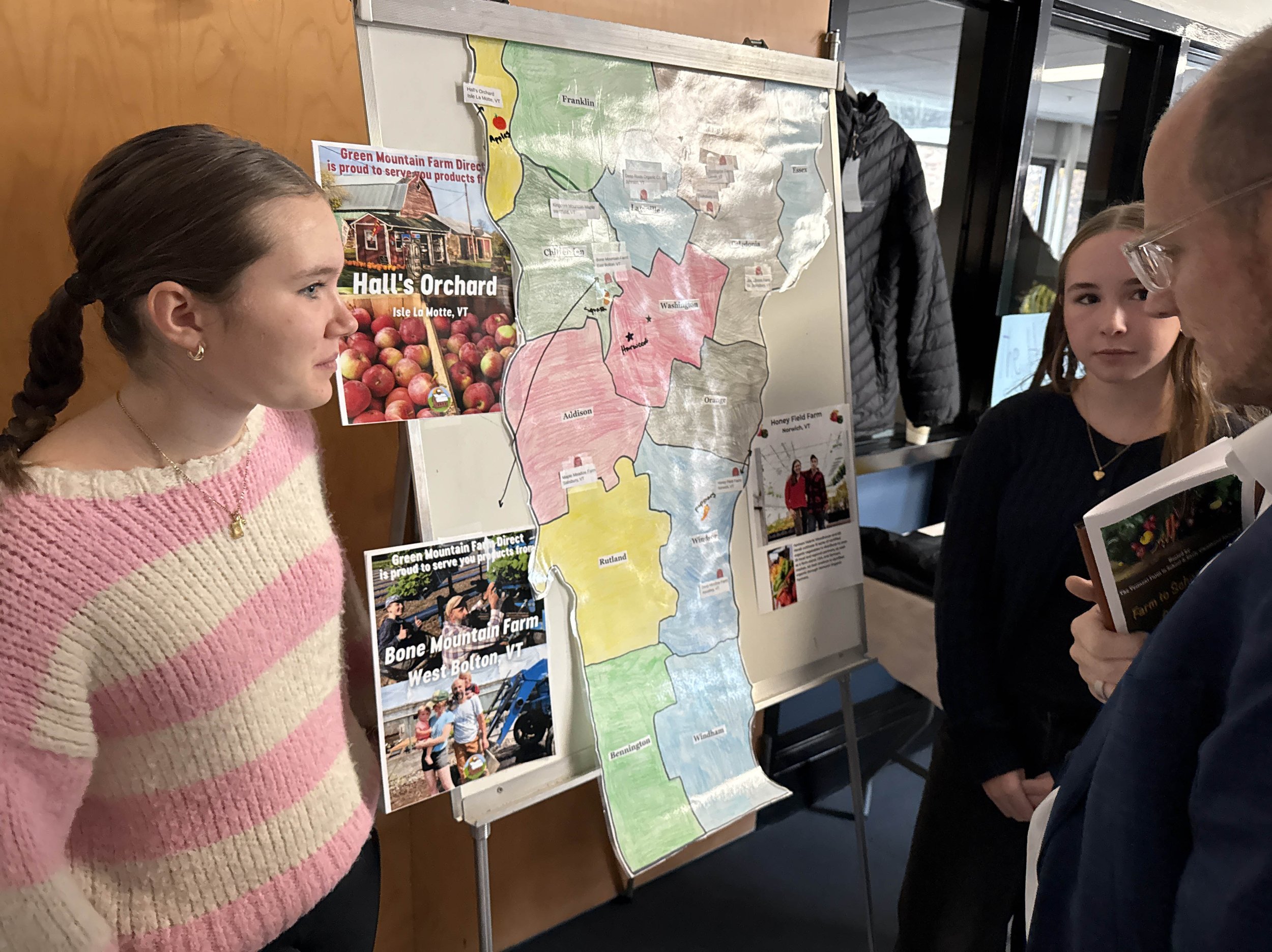

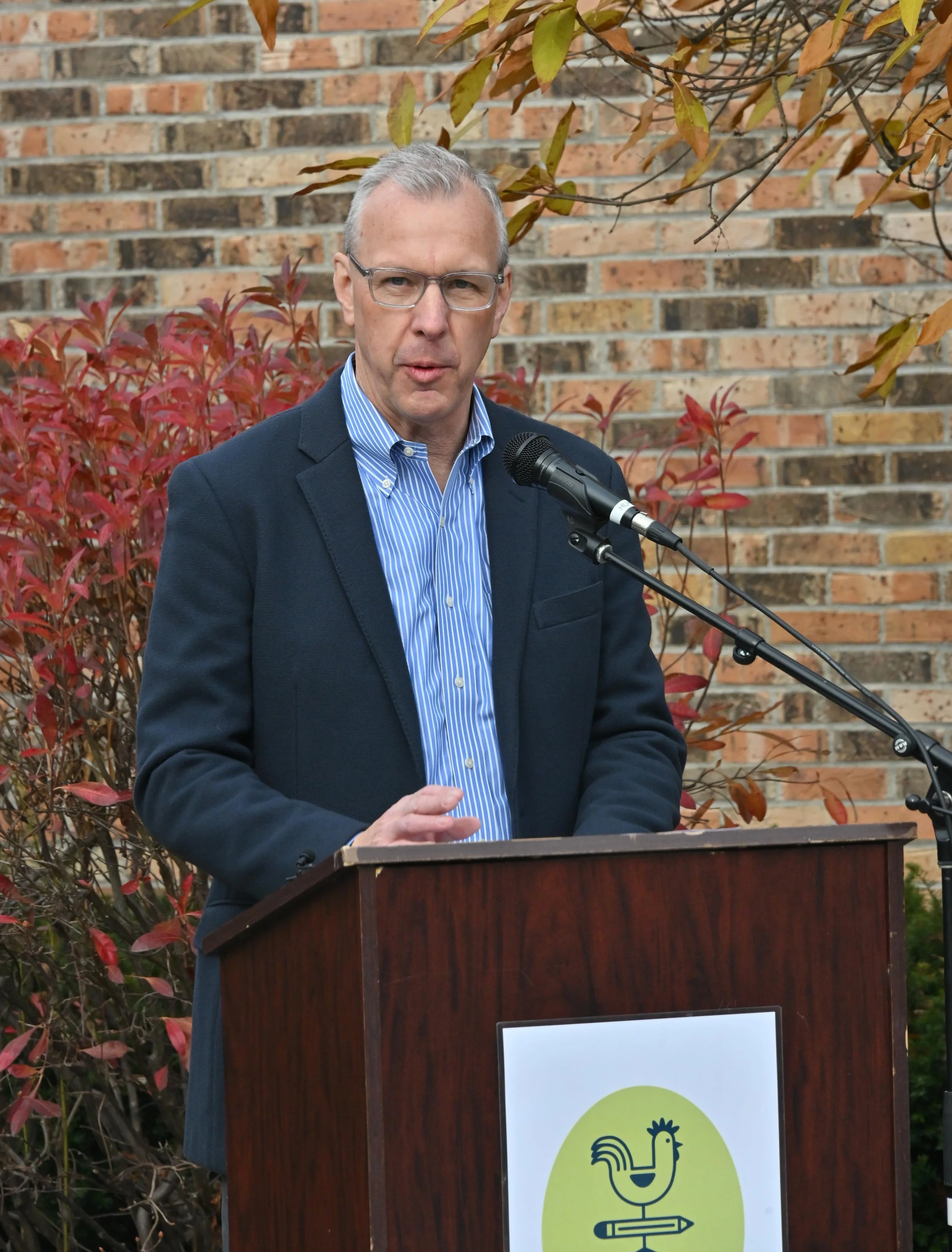
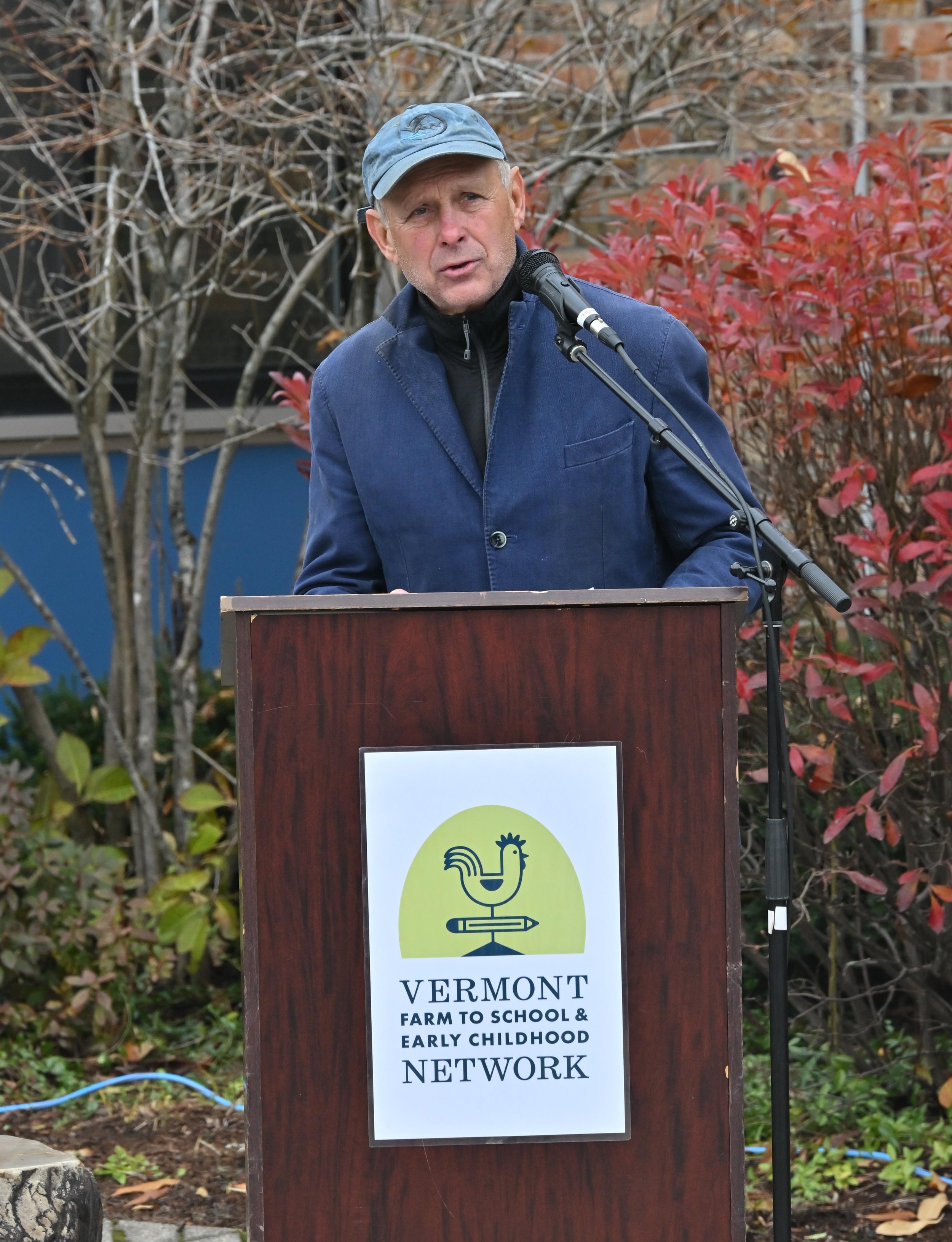
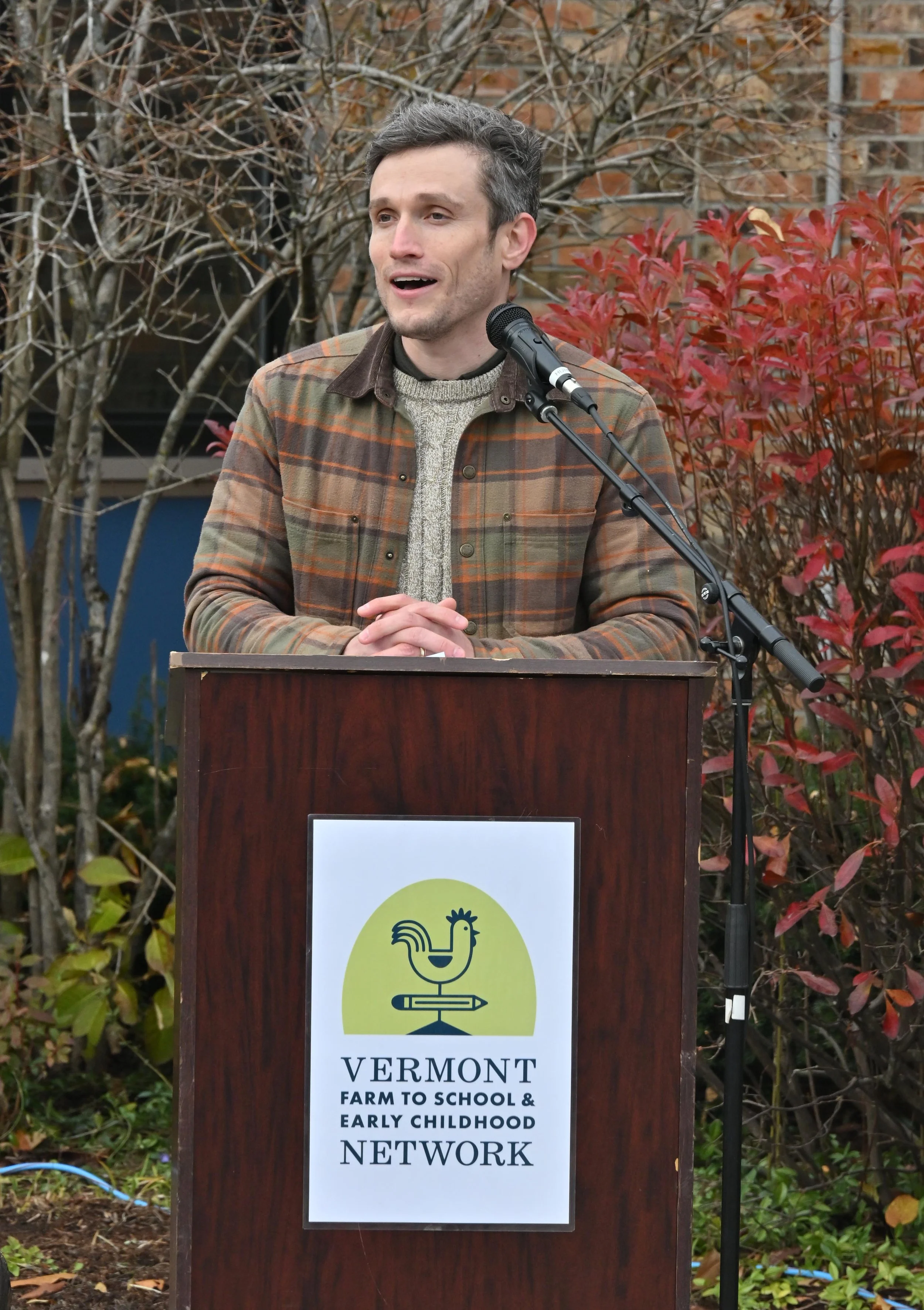
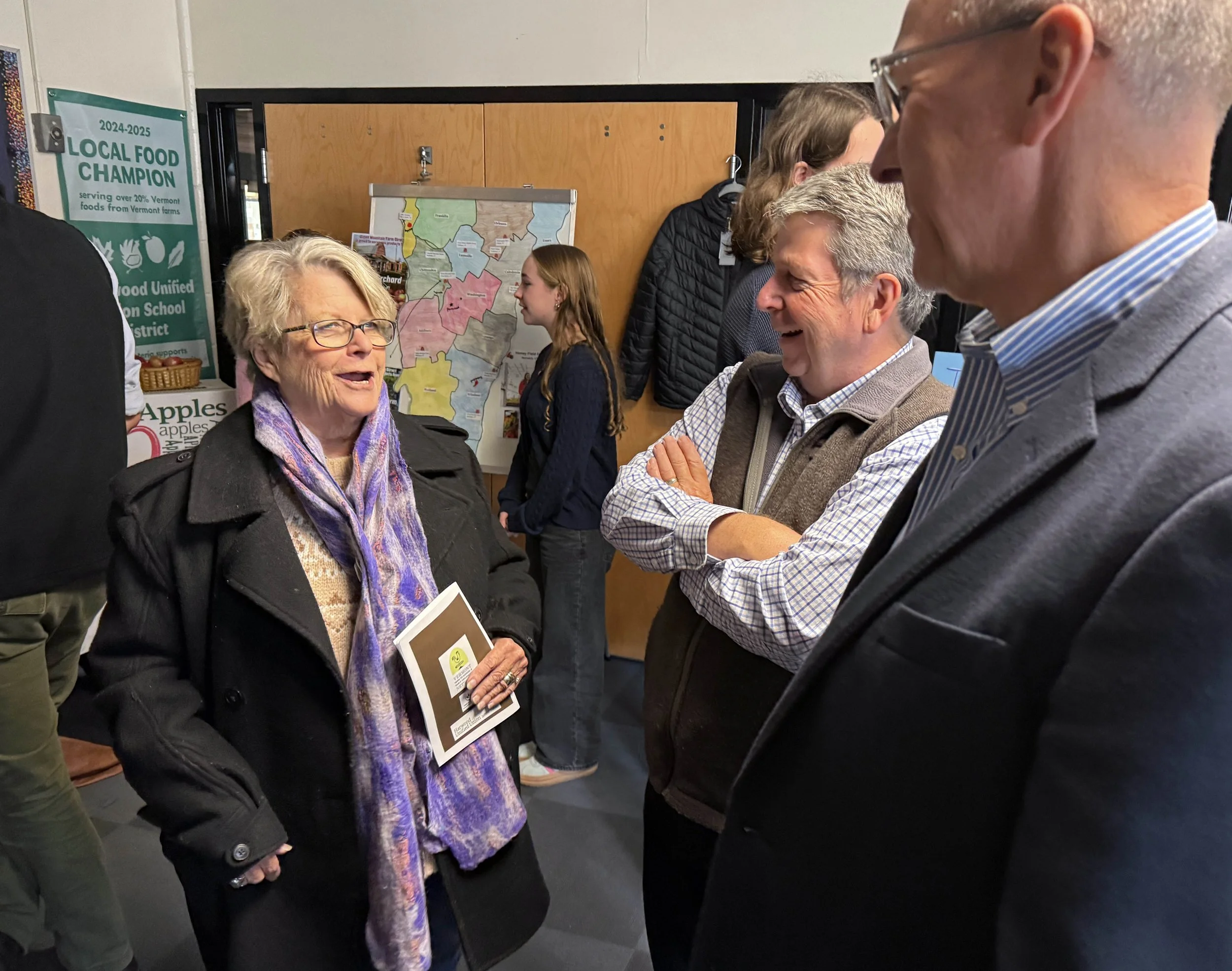
Also speaking were two local business owners, Randy George of Red Hen Baking Co. and George Schenk of American Flatbread. Both spoke of their businesses’ investments in utilizing local ingredients: Red Hen notably worked with local farmers to develop a bread recipe aligning with Obama-era school meal regulations that is now used in many Harwood school lunches. “What’s more powerful than knowing where your food came from?” Schenk asked. “Knowing this makes us, and our students, better citizens.”
Schenk spoke of the role of food systems in maintaining community health, citing the view of ancient Greek philosopher Democritus that “happiness is the highest human achievement. Fundamental to that happiness is human health, and fundamental to that health is the health of our environment and the food we eat.”
Bringing local foods into schools, he said, is “a tangible example of our commitment to children’s health. It’s an investment into the people we hold most dear.”
U.S. Sen. Peter Welch was scheduled to attend Friday’s event but was in Washington D.C. for votes related to ending the federal government shutdown and was unable to attend. His staff member, field representative James McNerney, read a letter from Welch, which stated that events such as the Harwood gathering “showcase not just the aptitude and skill of students but the intrinsic value of keeping local foods in schools.” Welch pointed out that October was Farm to School month, but that the “importance goes beyond one month.”
Welch’s letter detailed a bipartisan bill that he reintroduced in the Senate along with senators from Maine and Delaware, titled the Farm to School Act. It aims to expand Farm to School program funding, reduce barriers to applying for grants, and expand the program’s education to preschoolers.
Vermont’s new Commissioner of the Department of Health, Dr. Rick Hildebrant, and Anson Tebbetts, Secretary of the Vermont Agency of Agriculture, Food and Markets, were the final speakers.
Hildebrant detailed the medical importance of knowing what’s in the food that we eat. “It’s so important to actively decide what we put in our mouths each day,” he said. Tebbetts detailed the role that good lunches play in making students ready to learn, saying that investing in local food is “investing in our schools, our childcare centers, and our farmers. Farmers make Vermont a healthier, stronger place.”
Waterbury resident Claire Pomer is a senior at Harwood Union High School.