
Harwood Hall of Fame to add five new members on Nov. 15
August 21, 2025 | By Waterbury RoundaboutNov. 17 | Corrections: The graduation year for Stephen Bissette was corrected to 1973. Names of two coaches below, Donald Perry and Vance Sandretto, also were corrected.
The Harwood Union Hall of Fame Committee this week announced the five inductees it has named to its 13th class to be honored at an induction ceremony in November.
Each year, the committee selects individuals or groups who it believes represent the best of Harwood Union High School and the former Waitsfield and Waterbury high school communities.
“This group of inductees has left their mark on their respective high schools and through their actions and accomplishments during high school and beyond,” the committee said in announcing this year’s additions to the elite group.
The 13th Harwood Hall of Fame class members are:
Stephen Bissette, Harwood Class of 1973 alumnus; Katherine Cadwell and Maureen Charron Shea, retired Harwood educators; Lois Knight Sabin, Waterbury High School Class of 1941 alumna; and Travis Taylor, Harwood Class of 1995 alumnus.
This year’s Hall of Fame induction ceremony will be held on Nov. 15 at The Inn at the Round Barn Farm in Waitsfield. For tickets, contact Harwood Athletic Director Ian Fraunfelder at ifraunfelder@huusd.org. Ticket sales will close Nov. 3 and they will not be available at the door. Anyone wishing to help cover the cost of the event with a donation should contact Tommy Young with the committee at tyoung@huusd.org.
The committee shared background information for each of this year’s inductees below. Photos are courtesy of the Hall of Fame committee.
Stephen R. Bissette
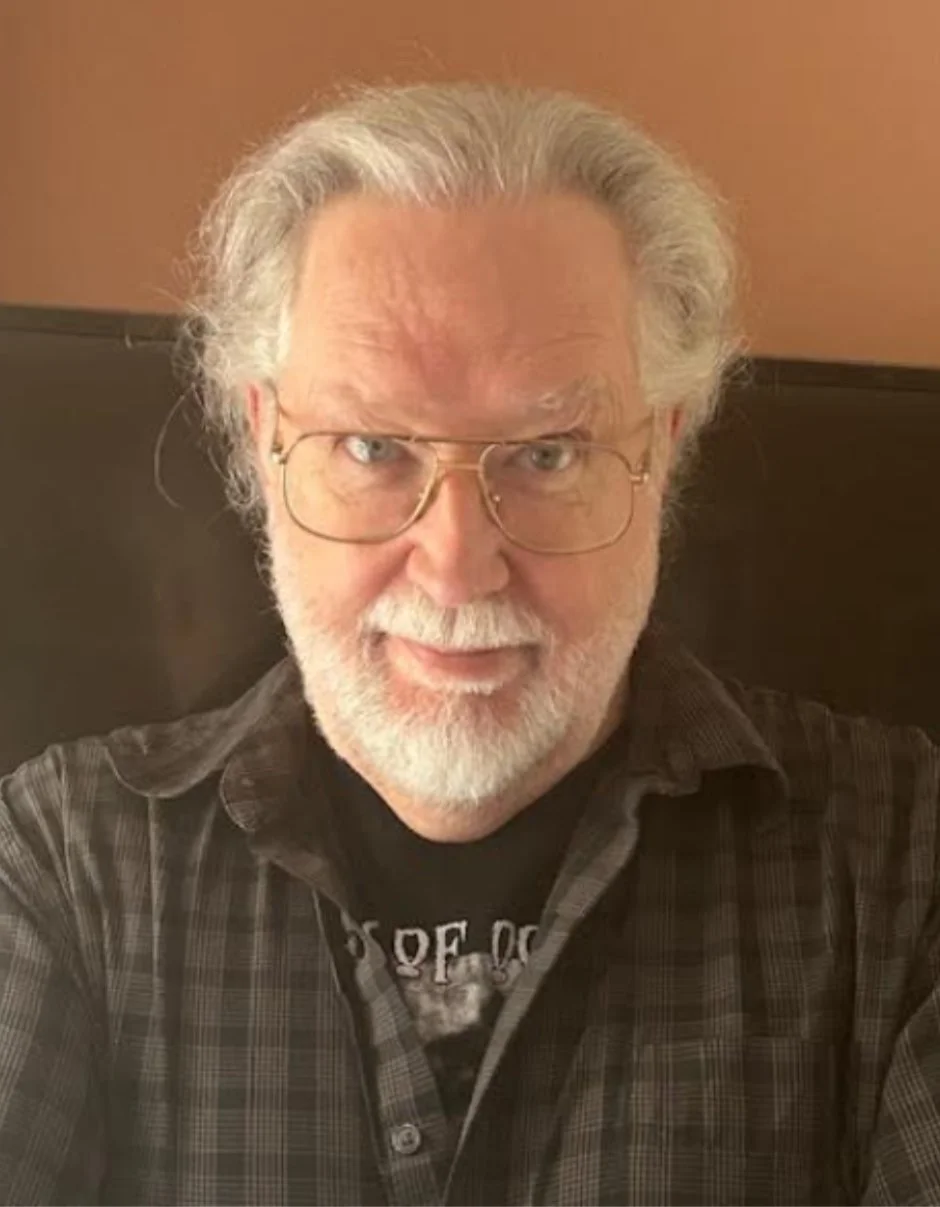
Stephen R. Bissette. Courtesy photo
Stephen R. Bissette, born on March 14, 1955, in Vermont, and a 1973 Harwood graduate, is an acclaimed American comic book artist, editor and publisher, best known for his work in the horror genre.
Bissette’s artistic journey began in the mid-1970s with the publication of his first work, “Abyss” (1976). Soon after, he enrolled in the inaugural class of the Joe Kubert School of Cartoon and Graphic Art. Even before completing his first year, Bissette’s distinctive style began appearing professionally in publications such as Sojourn, Sgt. Rock, and Heavy Metal. In 1978, he graduated as part of the school’s first class, alongside notable classmates Rick Veitch and Tom Yeates.
During his time at the Kubert School, Bissette’s creativity extended beyond comics. For example, he designed the logo and cover art for the New Jersey synth-pop band WKGB’s 1979 single “Non-Stop/Ultramarine” on Fetish Records. His early career included illustrations for Heavy Metal, Epic Illustrated, Bizarre Adventures, and Scholastic's Weird Worlds and Bananas magazines, where he collaborated with author R.L.Stine. He also worked with Rick Veitch on the graphic novel adaptation of Steven Spielberg’s film “1941.”
Bissette’s most renowned work emerged in the 1980s through his collaboration with writer Alan Moore and inker John Totleben on DC Comics’ groundbreaking run of Swamp Thing (1983–1987). Their partnership earned numerous accolades and pushed the boundaries of horror storytelling in mainstream comics. Their work on Swamp Thing Annual #2 earned the 1985 Jack Kirby Award for “Best Single Issue,” and their ongoing collaboration garnered three consecutive Jack Kirby Awards for “Best Continuing Series” from 1985 to 1987. Bissette and Totleben also won the 1985 award for “Best Art Team.”
Beyond Swamp Thing, Bissette made significant contributions as an editor and publisher. Under his own imprint, Spiderbaby Grafix, he launched the influential horror anthology Taboo, which became the original home for Alan Moore and Eddie Campbell’s From Hell and Tim Lucas’ Throat Sprockets, with art by Mike Hoffman and David Lloyd. Taboo went on to win the Eisner Award for “Best Anthology” in 1993. During this period, Bissette also created Tyrant, a short-lived but acclaimed comic chronicling the life of a Tyrannosaurus rex, and edited the horror series Gore Shriek, published by FantaCo Enterprises.
Bissette’s commitment to the horror genre has extended into education and public speaking. Since 1991, he has presented a lecture series titled Journeys into Fear, which traces the history of horror in visual storytelling, from Japanese ghost scrolls and Mixtec codices to early 20th-century American comics like Winsor McCay’s Dream of the Rarebit Fiend. His expertise and scholarship positioned him as a respected authority on the genre.
In the 1990s, Bissette reunited with Moore, Totleben, and Veitch for a series at Image Comics, marking their final creative collaboration. From this project, Bissette retains ownership of characters such as Hypernaut, N-Man, and the Fury.
His influence also helped spark the 24-Hour Comic challenge. In 1990, Scott McCloud dared Bissette to create a 24-page comic in 24 hours – an idea that blossomed into a global creative movement. Bissette’s contribution, A Life in Black and White, appeared in SpiderBaby Comix #2 in 1997.
That same spirit of community and critical insight led Bissette to co-edit Comic Book Rebels with Stanley Wiater in 1993, a landmark collection of interviews with visionary creators such as Harvey Pekar, Scott McCloud, Will Eisner, Kevin Eastman, Robert Crumb, and others.
In 1999, Bissette stepped away from mainstream comics, citing a “generational shift.” However, his passion for comics and storytelling continues. He has transitioned to education, becoming a respected faculty member at the Center for Cartoon Studies in White River Junction, where he teaches Comic Art History, Drawing, and Film.
Bissette also launched Green Mountain Cinema, a publication focused on Vermont’s independent film scene, and published five volumes of Blur, a collection of his film reviews and criticism.
Bissette’s contributions to comics, horror, and education have been widely recognized. In addition to his multiple Kirby and Eisner Awards. He was nominated for the 1993 Eisner Award for “Best Editor” for Taboo and received the Inkpot Award in 1997. His work continues to be preserved and celebrated through the Stephen R. Bissette Collection at Henderson State University in Arkadelphia, Arkansas.
Through decades of artistic innovation, mentorship, and advocacy for independent and genre storytelling, Stephen R. Bissette has left an indelible mark on the world of comics and horror. He continues to live in the state that shaped his creative and personal identity and where his legacy is one of bold creativity, intellectual rigor, and deep respect for the power of story to challenge, inspire and endure.
Katherine Cadwell
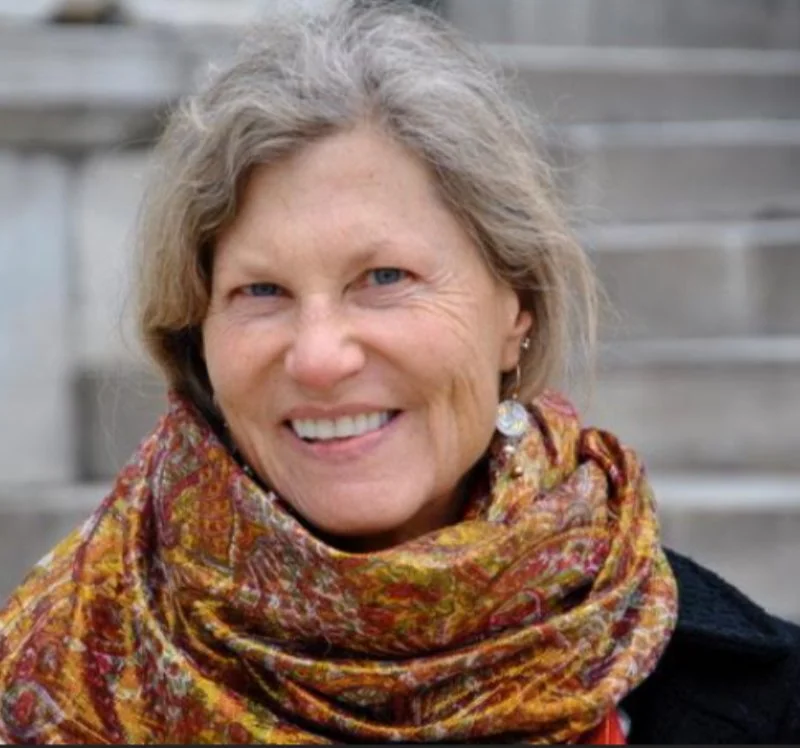
Katherine Cadwell graduated in 1973 from Hathaway Brown School in Cleveland, Ohio. Her high school years were marked by a deep commitment to academics, leadership and service. She was actively involved in student government throughout all four years, culminating in her role as All-School Representative during her senior year. In addition, she served as a class officer and contributed regularly to the school’s literary magazine, eventually becoming assistant editor in both her junior and senior years. She was also involved in her school’s Dance Club, serving as president for two years.
One of the most defining experiences of her high school career was initiating and implementing Hathaway Brown’s first-ever “All School Discussion Day” – a school-wide event that brought together students, faculty, and board members in meaningful dialogue about the school’s mission and future. The event became an annual tradition and continues to be a valued part of the school’s culture.
In recognition of her contributions to school life and character, Cadwell received Hathaway Brown’s 1973 “Honor Girl” award, the highest honor given at graduation.
She went on to earn a B.A. in Sociology and Anthropology from Middlebury College in 1978. While there, she organized and ran the annual Winter Carnival Ice Show, choreographing routines and performing solo alongside fellow skaters and hockey players. She later earned a Master’s degree in Curriculum and Instruction with a cognate in International Studies from the University of Denver (1980–1981), and she continues to be enrolled in Classical Philosophy courses at St. John’s College.
Cadwell’s career as an educator has focused on empowering student voice and fostering community dialogue. In 2012, she initiated biannual Socrates Café events at Harwood Union High School – gatherings that continue today to bring together students and community members. She trains educators across Vermont to host similar conversations in their own schools and towns.
Cadwell currently serves as the Vermont Co-Chair of Braver Angels, a national nonprofit dedicated to bridging the political divide. In this role, she facilitates workshops on civil discourse.
Her community involvement includes 14 years of teaching figure skating to elementary students at the Skatium in Waitsfield, Sunday school instruction at the Warren Church, and leadership of the Youth Group at the Waitsfield Church. She volunteers during local elections in Fayston.
Cadwell says one of the most significant experiences of her professional life was co-founding PH International (formerly Project Harmony) in 1985. The organization began when the Harwood Union Advanced Choir traveled to the Soviet Union. It grew into a global organization with support from the Harwood community. Today, PH International operates programs across Africa, Asia, Latin America, Europe, and the United States, advancing civic engagement and cross-cultural understanding.
Another defining milestone came in 2016, when Cadwell was awarded a Rowland Fellowship to bring the Harkness Pedagogy – a student-driven model of classroom dialogue – to Harwood. Her goal was to empower students to lead meaningful conversations and strengthen civil discourse. Working collaboratively with students and faculty, she introduced strategies that reshaped classroom practice. Today, Harwood has a dedicated Harkness Leadership class, a trained faculty coach, and a growing network of educators across Vermont using the approach. Harwood students now present their Harkness practice and skills at regional and statewide education conferences.
Cadwell’s efforts to promote the Harkness model earned national recognition in 2023 when Harwood received the MAGNA Silver Award from the National School Boards Association for the Harkness Initiative. As part of that recognition, Cadwell Harwood Superintendent Mike Leichliter co-wrote an article, “Student Driven Learning in Vermont,” for the American School Board Journal. Cadwell’s website, Strategies in Classroom Dialogue, and her TED Talk titled “Students Need to Lead the Classroom, Not Teachers,” further highlight her work.
Since stepping back from full-time teaching in 2021, Cadwell has been teaching graduate-level courses on the Harkness method and supporting teachers throughout Vermont and New England. She says that each time she visits a school, she is reminded of the extraordinary spirit of Harwood – a place defined by committed educators, strong community ties, and vibrant student-teacher relationships.
Cadwell says she is honored to be considered for the Harwood Hall of Fame and deeply grateful for the opportunity to have contributed to a community that continues to shape and inspire her life’s work.
Maureen Charron Shea

Maureen Charron Shea. Courtesy photo
Maureen Charron Shea is a retired Harwood educator and a 1960 graduate of Manchester Central School.
From the moment Charron Shea stepped into the field of education, her work was driven by a belief in the power of communication, inclusion, and social justice. After earning her Bachelor of Science degree from the University of Vermont in 1976 and a Master of Science in Speech-Language Pathology in 1978, she set out on a path that would span decades and leave a lasting mark on every community she served. Throughout her career, she continued to pursue knowledge, earning more than 45 additional graduate credits – a testament to her lifelong commitment to growth and learning.
Charron Shea began her career in the Burlington School District, followed by several years in medical and consulting roles – serving at Central Vermont Hospital and the Washington Central Supervisory Union. She then transitioned to the Montpelier School District, where her passion for working with students began to take root.
But it was at Harwood Union High School, where she arrived in 1988, that she found her professional home. For nearly three decades, she served as a speech-language pathologist, working with students of all abilities and backgrounds. While her official role focused on communication skills, her mission reached far beyond the walls of the special education classroom. She believed in the transformative power of personal story – and she believed deeply that every student deserved to be heard.
One pivotal conversation helped shape the heart of her work. A friend, the parent of a child with Down syndrome, confided in her about how painful it was to hear the word “retard” used as a slur. That moment lit a fire in Charron Shea. She brought a question to her students: What if those with disabilities told their own stories? Would people understand them better? Would they be treated differently?
From that question, Speak Out for Understanding was born. It began as a single documentary, created by a small group of students who bravely shared their experiences with ADHD, dyslexia, Down syndrome, and other challenges. Their honesty and courage shed light on discrimination, stereotypes, and isolation – but also on resilience, identity, and hope. The film won awards and sparked a movement.
Over time, Speak Out evolved into a wide-ranging, student-led initiative. Students wrote children’s books, crafted poetry and rap, made public service announcements, and produced a second documentary. They shared their truths through art and storytelling – always with the goal of raising awareness, creating connection, and building community. More than just a campaign, Speak Out became a vehicle for youth leadership, social change, and authentic inclusion.
Disability awareness became Charron Shea’s calling. She designed and taught a disability awareness curriculum delivered to every ninth-grade class each year. She also founded Vermont’s first Best Buddies chapter at Harwood, building meaningful friendships between students with and without disabilities. All of this was done beyond her teaching responsibilities, funded by grants she sought from organizations such as National Life, Teaching Tolerance, Best Buddies International, the National Service Learning Organization, and the Mad River Valley Rotary Club.
As Speak Out for Understanding gained momentum, Charron Shea was invited to share the work on state and national stages. She presented at conferences across New England and the country, spoke at the Vermont Principals Association and UVM institutes, and was featured on Vermont Public Television. Her articles appeared in the American Speech-Language-Hearing Association Journal and Teaching Tolerance Magazine, and her work was celebrated in the Waterbury Record newspaper.
Recognition followed, including the 2009 National Service-Learning Excellence Award, the 2009 Vermont Speech-Language-Hearing Association Associate of the Year Award, the 2008 Deborah Lisi-Baker Leadership Award, and the Life Changer of the Year Finalist Award. She also received letters of recognition from U.S. Sens. Patrick Leahy and Bernie Sanders – honors she holds dear.
Charron Shea’s leadership at Harwood extended well beyond her classroom. She served as a class advisor for 12 years, coordinated proms, led homerooms, and helped establish the district’s Service Learning Advisory Team. Her presence was a constant source of support and inspiration to students – many of whom still carry her impact with them. One wrote, “We began surfing through our high school careers, isolated outside of the box of normal, and with a little push, we quickly realized there is nothing wrong with us... We are not so different after all.” Another shared, “Speak Out has been a project that never leaves my day-to-day experience.”
For Charron Shea, speech therapy was never just about language – it was about connection, dignity, identity, and voice. It was about giving students the tools not only to communicate but to stand up, speak out, and lead. Her legacy is not only measured in programs or awards, but in the courage, empathy, and self-advocacy of the students she empowered.
Looking back on nearly 30 years of service at Harwood Union High School, Maureen Charron Shea sees not just a career – but a community that welcomed her vision, a generation of students who rose to the challenge, and a lifetime of stories that changed lives.
Lois Knight Sabin
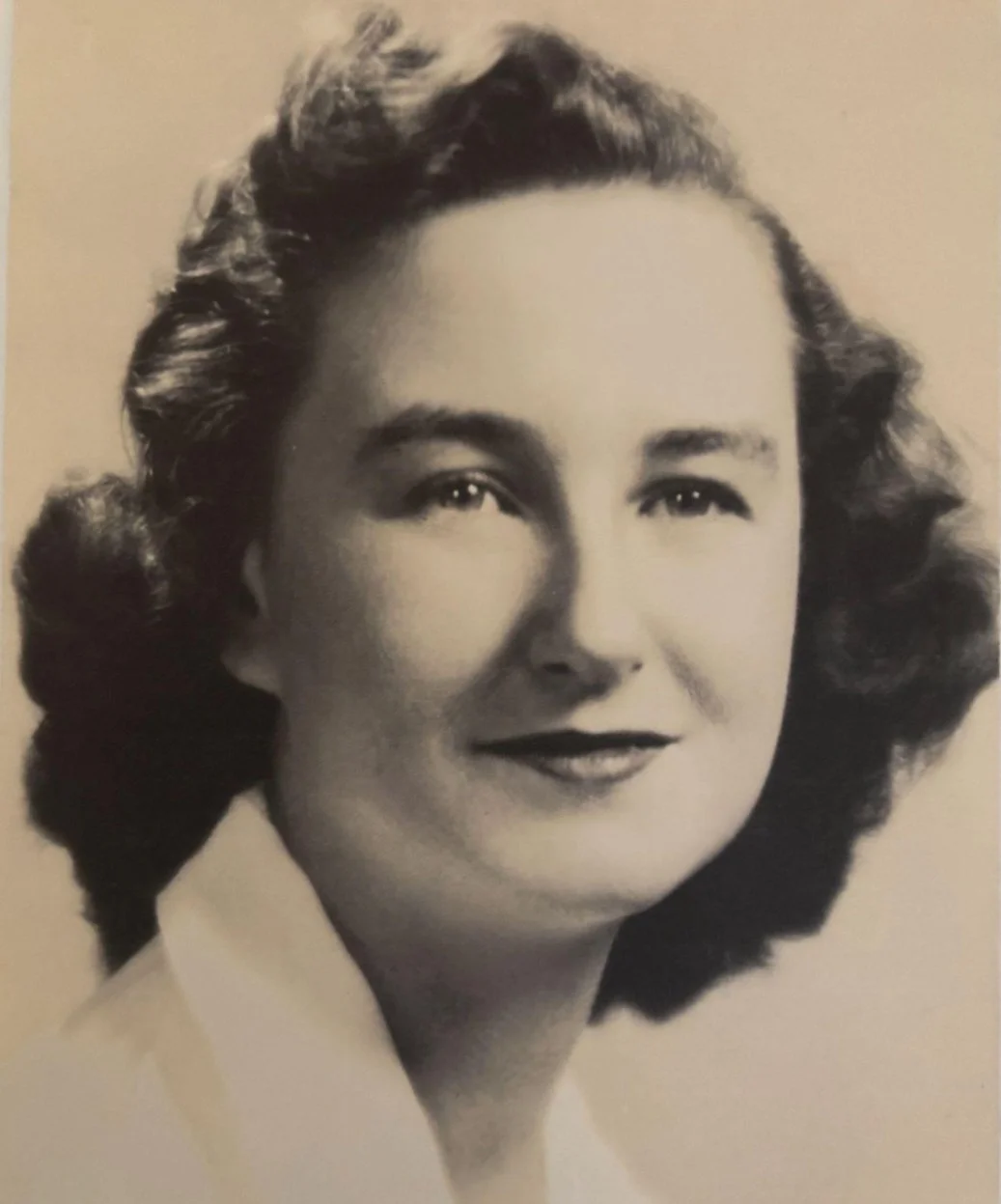
Lois Knight Sabin. Courtesy photo
A graduate of Waterbury High School’s Class of 1941, Lois Athalee Knight Sabin was born on June 3, 1924, in Skowhegan, Maine, the only child of Jacob Stillman and Arlene Clark Knight. Her early years were marked by frequent moves, as she attended 11 different schools during her first eight grades while her father pursued a career constructing dams throughout New England. In 1936, Sabin and her family arrived in Waterbury, when her father was hired to work on the Little River Dam project. It was here after long yearning for a true sense of home, that she finally found the community she had been searching for.
Sabin became an enthusiastic and well-rounded student at Waterbury High School, immersing herself in music, drama and sports. She played violin in the All-State Orchestra – later admitting that she often mimed with the bow more than actually playing the strings – and contributed her rich alto voice to the school’s Glee Club.
Her true talent and greatest passion, however, was basketball. As a standout athlete on the 1940 girls championship basketball team, Sabin earned the prestigious title of Outstanding Player for the state of Vermont, an honor awarded by coaches and referees across the league.
During her eighth-grade year, she began dating Kenny Sabin, the love of her life, and often looked back fondly on their high school days, referring to them as their “glory days.”
After graduating from Waterbury High School in 1941, Sabin enrolled in a five-year nursing program at Simmons College in Boston, completing her degree in 1946. Although she had intended to join the war effort, the conflict ended before she could enlist. On January 19, 1946, she married Ken at the Waterbury Congregational Church. Together, they built a life on Randall Street where they raised their two children, Jay and Jane.
Sabin maintained a vibrant social life, enjoying bridge games with her card club and participating actively at Blush Hill Country Club, although she humorously admitted that her golfing talents never quite matched her basketball prowess. She also taught ceramics classes in the family home for several years, sharing her creative spirit with others.
Professionally, she dedicated 25 years to the field of nursing education at the Vermont State Hospital. As Director of Nursing Education, she was instrumental in developing a Psychiatric Technician curriculum that was later adopted by the Community College of Vermont. Encouraged to continue her education, she earned her Master’s Degree in Administration in the 1970s. She went on to become the Nursing Administrator at the hospital, leading through the complex period of deinstitutionalization with strength and professionalism. Known for her capable leadership and strong work ethic, she made a lasting impact in her field.
After retiring in 1984, Sabin turned her attention to her beloved community. She volunteered with the Waterbury Historical Society, playing a major role in organizing its museum and contributing to the book History of Waterbury 1915–1991. She served as co-president of the society for nine years. Alongside Ken, she was a dedicated member of the Waterbury Alumni Association, hosting the much-loved pre-banquet “Happy Hour” gatherings. A talented sewer and painter, Sabin expressed her creativity through her involvement with Circle 2 at her church, and she also gave her time to the Waterbury Food Shelf.
Lois Knight Sabin lived a full, passionate, and service-driven life. She left behind a legacy of leadership, community engagement, and a warm, generous spirit that deeply touched all who knew her. She passed away on March 4, 2018, at age 93.
Travis Taylor

Travis Taylor. Courtesy photo
Travis C. Taylor, a proud member of Harwood Union High School’s Class of 1995, distinguished himself both athletically and academically during his years as a student, and he has continued that excellence into a remarkable professional career.
Taylor’s athletic journey began in 1991, when he played junior varsity basketball and baseball as a freshman. From 1992 to 1995, he was a multi-year varsity athlete in both sports, earning letters each year and contributing significantly to his teams’ successes.
On the basketball court, Taylor was a prolific scorer, amassing over 1,300 points in just three seasons – an average that placed him among the highest scorers in program history. He was named Player of the Game multiple times by WDEV, including standout performances in December 1992 and January 1994 and 1995. He also played under coaches Vance Sandretto for JV basketball, Aaron Hill for varsity basketball, and Donald Perry for baseball.
In baseball, Taylor excelled at the plate and in the field. Though an injury limited part of his 1993-94 season, he remained a force across all four years, leading his team in batting average and other offensive categories each season. He served as captain for the varsity baseball team during the 1993-94 and 1994-95 seasons, guiding Harwood to a strong finish that included a playoff run ending in a hard-fought loss to eventual New England champion Lamoille in the quarterfinals.
The 1994-95 basketball season marked the pinnacle of Taylor’s high school athletic career when the Harwood team made a memorable run to the state championship game, ultimately finishing as runners-up after a close loss to Windsor. Taylor was the starting center for Vermont’s All-State (Alhambra) basketball team and was named to the All-State First Team by the Burlington Free Press. He was also recognized as the top scorer in the prestigious North/South All-Star Game.
That same year, he earned a spot on the Vermont All-State Baseball Team, an honor made even more impressive by the fact that he was limited due to a thumb injury. Few, if any, Harwood athletes have achieved All-State honors in both major sports in a single year – a testament to Taylor’s exceptional talent and determination.
Beyond athletics, Taylor participated in jazz band as a freshman, though scheduling conflicts with sports eventually prevented him from continuing. Academically accomplished, he completed his graduation requirements early and used his free time to pursue woodworking, creating high-quality furniture in Hults’s shop class. His creativity and work ethic were evident even then.
Following graduation, Taylor was recruited to play baseball for the University of Vermont where he graduated with honors in Economics. His professional career took off soon after. He began as a stock trader and market maker for Fleet Bank from 1996 to 2001 before launching his own investment firm, Topwater Capital LLC, in 2002. That company was later acquired in 2010 by Leucadia National Corp/Jefferies Financial Group, a publicly traded company with over $50 billion in total assets. Taylor remains involved with Topwater, serving as the co-head and managing director of the Topwater Division of Leucadia Asset Management, along with his longtime business partner Bryan Borgia.
In addition to Topwater, Taylor is the managing partner and co-owner of two other private investment companies: Monroe Capital and Maple Bridge Funding. He has continued to serve in executive roles across these firms while also participating in various charitable fundraising efforts. His success in the financial industry has been both wide-ranging and impactful, with roots that can be traced back to the leadership, discipline, and teamwork he developed through his experiences as a student-athlete at Harwood and later at UVM.
Travis C. Taylor’s life and career exemplify the power of perseverance, leadership, and commitment. His legacy at Harwood – both on the court and beyond – continues to inspire future generations.