Harwood School Board forums present the budget, field questions
February 16, 2026 | By Lisa ScagliottiUpdate Feb. 22: Recordings of both Harwood budget forums are posted on the district’s YouTube channel.
This Thursday, the Harwood school board will host the second of two online public forums to review the $51.9 million proposed 2026-27 budget that voters will consider on March 3, Town Meeting Day.
The first forum was held on Feb. 4. About 20 people attended, in addition to a handful of school board members, Superintendent Mike Leichliter and Finance Director Lisa Estler.
The format opened with a slide presentation by Estler and attendees were asked to put their questions in the chat. School Board Outreach Committee Chair Steve Rosenberg of Moretown, then posed the questions to the group, with the administrators and board members weighing in with answers.
This Thursday, Feb. 19, at 7:30 p.m., the second such session will be held, also online via Zoom using the same format. In addition to the board members and administrators, state Rep. Dara Torre, D-Moretown, is expected to attend to lend some information regarding current education policy discussions in Montpelier to the discussion.
In addition this week, the board has a regular meeting at 6 p.m. on Wednesday, Feb. 18, and all three Washington County state senators are expected to attend to discuss ongoing efforts related to K-12 education happening at the State House.
The meeting link to attend Thursday’s online budget forum is posted on the school district website here. In addition, more background details about the budget are also posted there along with the slides Estler will present. The Feb. 4 forum recording is posted on the district’s YouTube channel under the “Live” tab. This recording of this week’s session also will be posted there.
The school district has proposed a budget of $51,884,847 to operate schools for fiscal year 2027, which begins on July 1. That represents an increase of 5.44% over the budget in place this year. A second question on the ballot will ask voters to authorize adding $500,000 in unspent funds from the 2024-25 school year into the district’s Maintenance Reserve Fund. (The maintenance plan will be discussed at this Wednesday’s board meeting as well.)
Below is an edited summary of the questions and answers from the Feb. 4 forum.
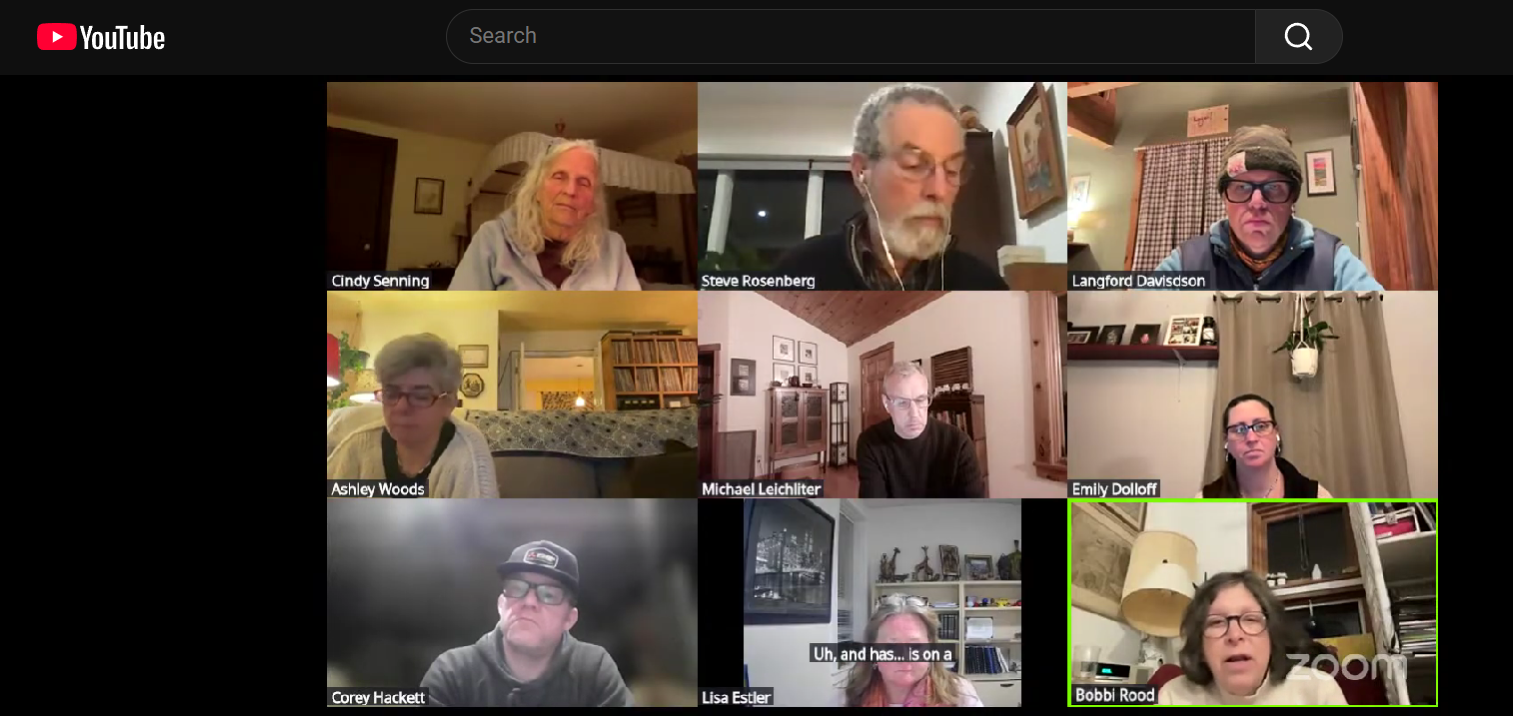
School board members and Harwood administrators host an online school budget public forum on Feb. 4. A second such Q&A session is scheduled for this Thursday, Feb. 19. Screenshot
Feb. 4 budget forum Q&A highlights
Q: If enrollment has declined, why does HUUSD still have the same number of schools?
A: Through extensive work with an outside engineering firm and the Buildings and Visioning Committee, it was established that we would not save any significant amount of money by closing any of the schools.
Also, the articles of agreement that were passed when the school district was unified in 2017 require that if a school building is closed, ,those residents be offered the ability to go to the school closest to them. So if, for example, Fayston were closed, the majority of those families live closest to the Waitsfield school. We do not have capacity in all the classrooms to handle that unless we're looking at in some cases, 40 students per class, and that is just not a realistic option at this point in time.
It costs money to close schools. There's a lot of up-front costs, and the state is not helping us with that.
Q: Previously, the HUUSD cost per pupil was among the highest in the state. Has this changed much in the last two years?
A: When you look at the long-term weighted average daily membership, we are 23rd in the state, so that's about [the top] 25%. If you look at just a cost per pupil … how many students we actually have sitting in seats – and divide that into our education fund cost, we are actually in the bottom 25%.
Q: I believe we're still receiving a “discount” in our tax rate, so we're still not paying according to our real spending. How many more years of discount beyond fiscal year 27?
A: We have one more year. In fiscal year 28, it will be zero. … The reason for that is because when the state passed Act 127, districts like HUUSD who do not have as many students who are economically disadvantaged, English language learners, or some of the other categories with those weights, we were disproportionately impacted. …There was a greater burden on our budget and a greater burden on our taxpayers. One of the slides [shows] that all the property tax money raised and sent to Montpelier does not come back. Only about 83% of the taxpayer money from property taxes raised in our district comes back to our district. The rest is distributed to other areas of the state. So that discount was put in place because those changes took effect in one year and had a heavy impact on our school district.
Q: Are there still co-principles as excess?
A: We do have a couple of co-principles and they are in buildings that are larger buildings. For example, state regulations require that for buildings with 10 full-time teachers, we have one full-time principal… So, if you have a building, for example, that's six times the size of that, you need more than one principal. We have 600 students at Harwood. We have two administrators… What we have are appropriate to manage and run our schools at this point in time.
Q: Does HUUSD not negotiate the contracts? Why do you say HUUSD doesn't control these negotiations? Doesn't HUUSD enter into these contracts? That means they're within the control of HUUSD?
A: We have the costs are tied to multi-year collective bargaining agreements… they can't be changed within that multi-year unless we go back to the bargaining table. … But, of course, we do negotiate them.
Also, if you take a look at our other factors, every state calculates labor statistics and one of the labor statistics calculated in states is the Vermont average weekly wage. Since 2019, the average weekly wage has grown about 32% across the entire state. That covers private sector employees – full-time, part-time wage and salary workers – in most industries like healthcare, construction, manufacturing, hospitality, finance. So they are mandated costs in that the board has entered into a contract that it has negotiated according to the terms of state labor law. When you look at the overall costs of our budget compared to the state average weekly wage in all sectors, there's been a pretty large increase across the whole state as well.
If the questioner was asking about the health insurance contract …the healthcare insurance is not negotiated by the school board. There is a state law that requires that Vermont public school employees have a pooled source that's governed by a state board and that is not negotiated by the individual school boards or the individual teachers association… All schools are required to pay into that system in the state and we are issued essentially a bill saying this is what the cost will be next year.
Q: Last year, there was a contract for off-site support because you could not be in the existing facilities. Are you terminating that lease or still paying the lease cost?
A: If they’re referring to the central office, that lease is ending, and we are relocating to Harwood Union High School at the end of this June, and we are saving $50,000 a year in the budget…We are very happy to be moving out and into an existing school facility and space that's available.
Q: Everyone's facing health care and inflationary pressures, including the state adding and/or increasing other taxes. Seniors receive [Social Security] increases of just the Consumer Price Index. How do you expect taxpayers to continue to fund this? The school spending requested is increasing at a rate 63% higher than our seniors’ on Social Security Income is rising. The statewide education system is broken. No substantive changes in two years. Why should citizens even consider approving these escalations when repeated budget rejections two years ago at least got the legislature interested, but not producing solutions?
A: We're all waiting right now to see what's going to break and change in this situation. We're steering the school through another year. The year is going to happen regardless of when the state gets their act together to address some of these issues that are well beyond our control… We're all feeling it and we're trying to keep the schools as the best we can with these constraints…
[The questioner] is pointing out real problems with our system of funding education and the legislature kind of seems to be in a dogfight about this. They passed a bill to create really large districts under the promise of saving hundreds of millions of dollars. The task force that was appointed to lay out these maps said that they didn't believe the savings would happen and instead endorsed voluntary consolidation of districts… We're just getting tremendous mixed messages, but everybody agrees that education rates are rising at a kind of unsustainable pace...
One of the hardest challenges that we face as a board is trying to balance what we know that community members want, what we want ourselves as taxpayers, while also trying to navigate through what everybody knows is a very broken system. Everybody is trying to do their best to understand where some of these costs come from. There are a lot of costs that are frustrating because we wish that we could control them and we just can't...
At the end of the day, it's 27% of our budget that we really have immediate control over. And that's very frustrating for everybody… As a board, we've talked about trying to participate as best we can in the legislative process…
We think that there's a lot of issues that will come out of the legislative level, but we, as school board members, can contribute to what legislators know and think about that and how that can and can't work. The whole issue of bringing school districts together – redistricting – that's come up that says, “We'll save all this money.” First off, we have not seen one penny of what exactly would be those savings just to begin with. And from our understanding of what we realize would happen if we were consolidated into several large districts in the state is just for instance … we would be having to look at doing a common teacher salary, probably across the whole state or at least across five or 10 districts. And you're not going to get any lowering of teacher salaries on that. The teachers’ unions and the teachers understandably aren't going to agree to going to a lower teacher salaries so that they all can have the same low salary. That'll be higher teacher salaries. That's just one small example.
A second one that is very big in this whole issue of consolidating districts is that we would be having to do a lot of school construction… We'd be moving kids to different schools that might not have space for them right now. That would need to have construction to increase them. The state has no money budgeted for assisting districts [with construction].
So one of the things that we're going to try and do as a school board is meet regularly with our legislators so they can be carrying the message from us – which we can get from you guys – to do the work that they do in the legislature for maybe changing some of these things...
We hope that you all, as our community members, understand that it's not just that we're saying well we can't do anything about it … we're really spending a lot of time and trying to work with our legislators and trying to work with the state on how we can begin to fix the funding issues…
Q: A presentation on the district website has a “long-term” slide with a statement that demographic declines indicate that a school could be closed without construction. Why is that not considered? Is it the case we could close a school without construction at another school?
A: Currently, no. … As of this year, it would require some level of construction.
[This is something that’s] going to be looked at by the Visioning and Building Committee to see for any type of consolidation of buildings with little or no construction. That's something in the future that would be considered under that committee.
Q: There was another question about the sale of buildings.
A: According to the articles of agreement, if the board were to vote to close a school, the sale of that building would first have to be offered to the town for a dollar. So essentially, it would revert back to the town if they chose to take it back. If they didn't choose to take it back for a dollar, then that would be the board's option to sell it at that point.
Q: What's the board doing to communicate to the public what sacrifices have already been made in our district to our community? Examples include cuts in programming and course offerings, class size increases.
A: That's the job of the outreach of the school board. We try to keep articles in the Waterbury Roundabout and Valley Reporter, post on Front Porch Forum….We could be doing more… That’s also present in [school budget slide] presentations. Previous cuts and reductions over the last two years was in presentation number three. That was over $6.5 million in reductions over the last two years. And then in presentation four and tonight's presentation also lists everything that we're projecting to cut for the next fiscal year.
Q: Does HUUSD still pay all of the payroll tax for child care expenses? Or has the allowable percentage been shifted to employees? If not, why?
A: Currently the district does pay that. We are looking at it. It has to be included in [contract] negotiations for it to be then passed on. But right now, the district pays all of it. For the district to pass on that cost, it would be about $30,000.
… That [tax] was a result of some work the legislature’s been looking to expand access to pre-kindergarten and child care. They passed a child care tax that helps offset that for families, providers. … We have a very robust pre-kindergarten program. We have maintained that. That is not a requirement… It is a requirement that the board act as a fiduciary agent for a guaranteed minimum number of hours for pre-kindergarten. But that is another example of an unfunded mandate that was passed by the legislature, and it's borne by the local taxpayers for those programs. We think it's quality. Our board has traditionally wanted to support that.
Q: Citizens are over-taxed and Vermont is already acknowledged as unaffordable. Do any board members believe perhaps we are currently overspending and will be forced to scale back? Respectfully, an increase twice the rate of inflation is not scaling back to me.
A: We are being forced to scale back. That's not a belief. That's our reality…We've cut 55 jobs in three years. We have way less student-facing people…Our increases still involve cutting services and these increases are forced on us by double-digit increases in health insurance, transportation costs, special ed costs, things like that… We have to cancel jobs because those things are so much more expensive… We've already done that cutting. It doesn't feel like that. It's a puzzle that isn't making sense.