
For one Waterbury monarch, white is the new orange
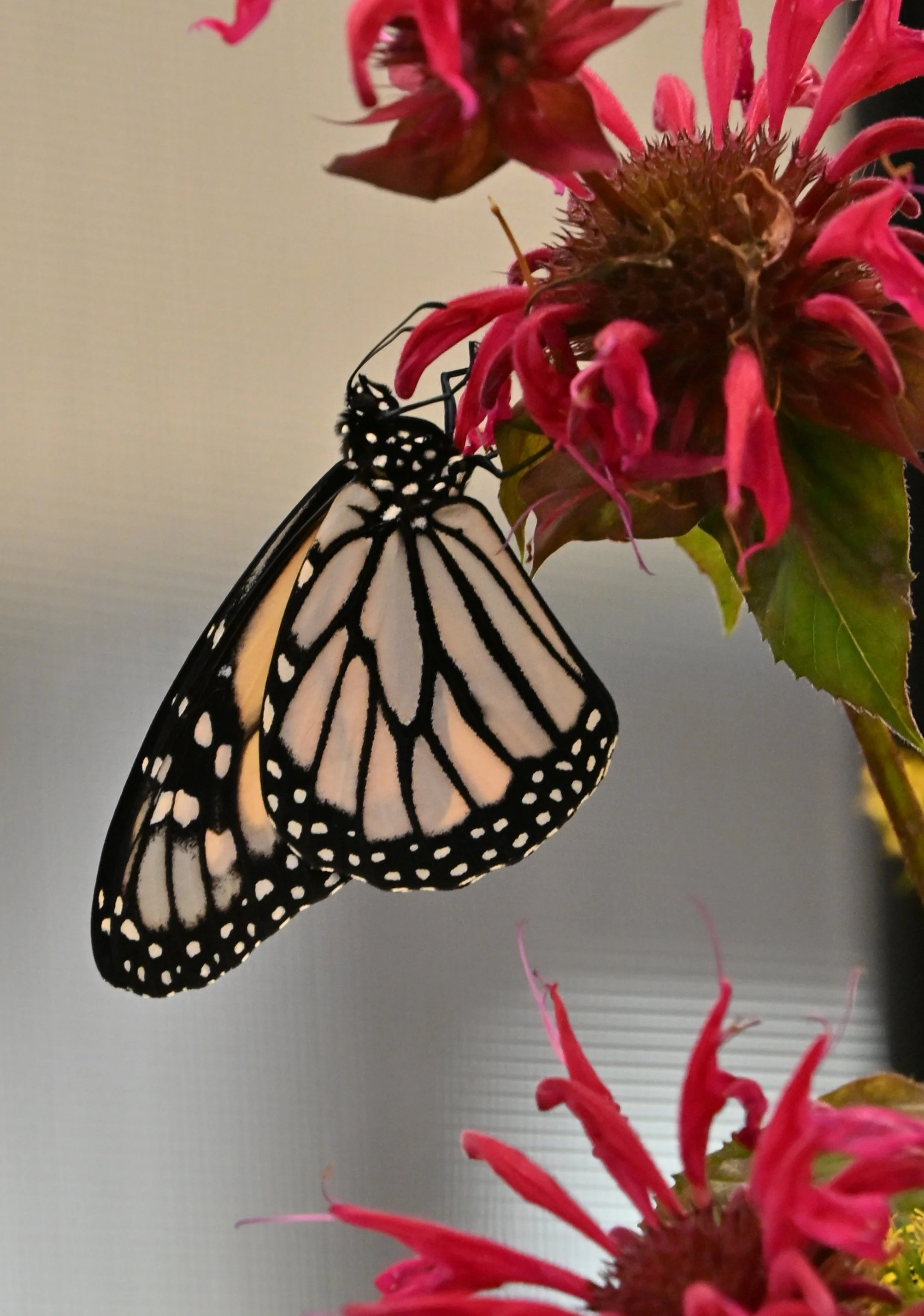
August 15, 2025 | By Claire Pomer and Lisa Scagliotti A white-and-black monarch butterfly named “Nivi” makes it debut on Friday before being released into the wild at the Waterbury Public Library. Photo by Gordon Miller
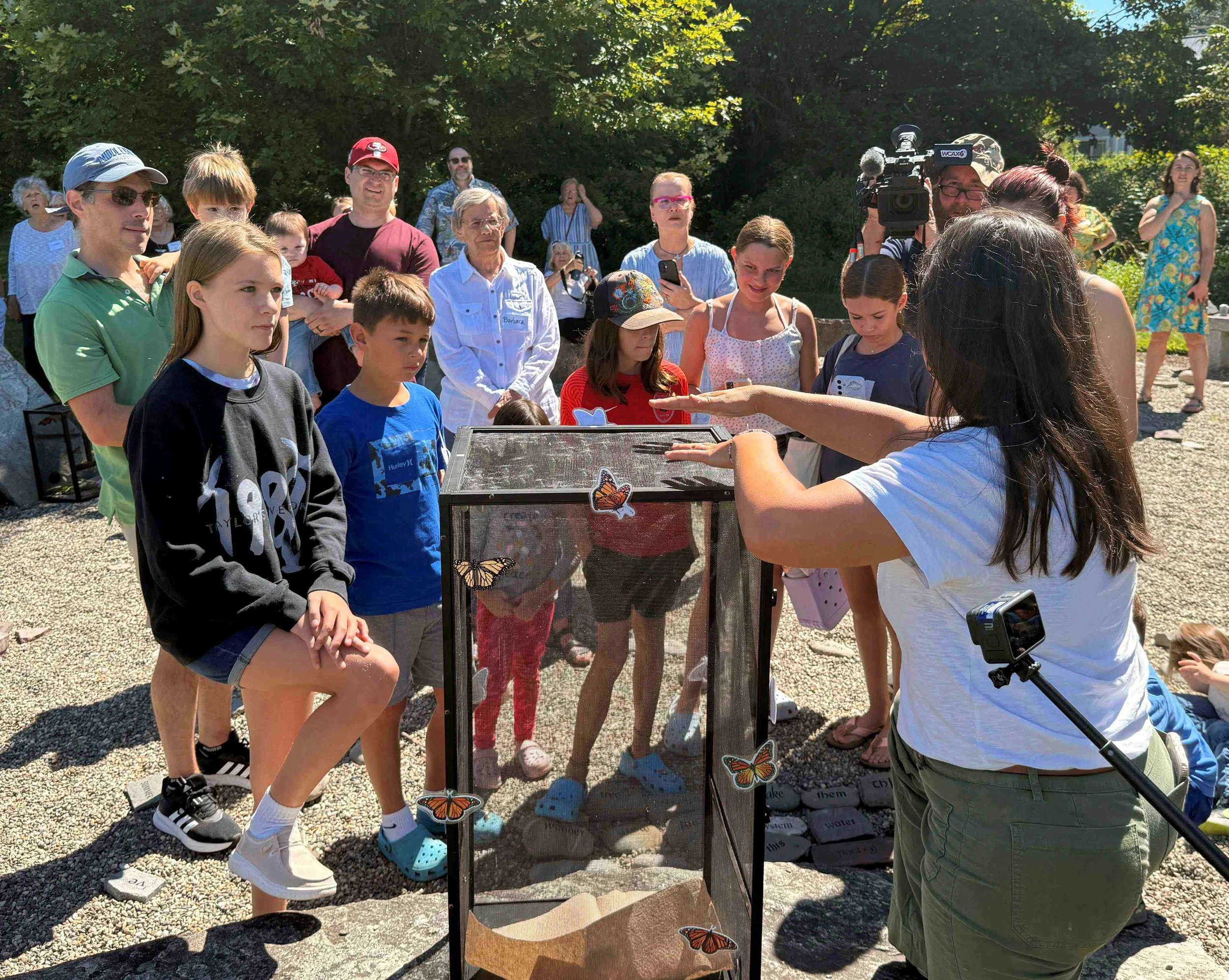
The Waterbury Public Library’s Word Garden was particularly busy Friday morning as a crowd of about 60 people gathered to watch the release of a rare white monarch butterfly.
After being released, the unique butterfly perches in a tree near the library garden for a while. Photo by Gordon Miller
The butterfly emerged from its chrysalis on Thursday, and after 24 hours of drying out and acclimating to its environment, the library caretakers released it into the wild.
Youth Services Librarian Sandra Schweikert spoke about the white butterfly before letting it go. The crowd included community members of all ages, including school-aged kids, toddlers and babies, their parents, and seniors who took a break from their exercise class inside the library to witness the special event.
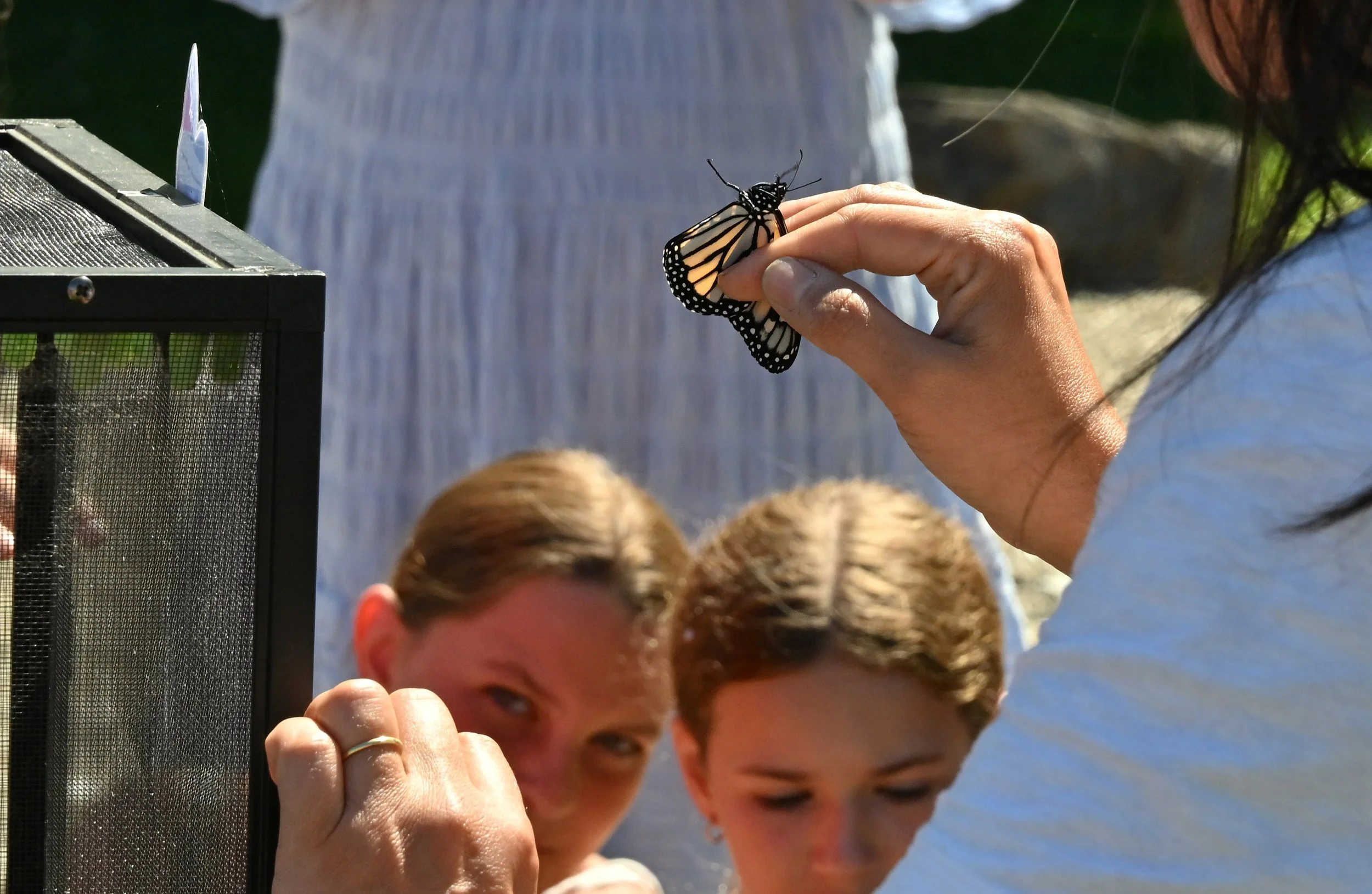
Schweikert explained that the unique specimen was most likely a male butterfly. Female monarchs have thick black lines on their wings, while the lines on males are thinner; males also have distinct black dots, she said.
The library’s white butterfly was briefly named Nivi – short for “nivosus,” a scientific term recognizing a lack of pigment. Its black wing lines appeared thin, and it sported the necessary wing dots as well, signifying that it was male, Schweikert said.
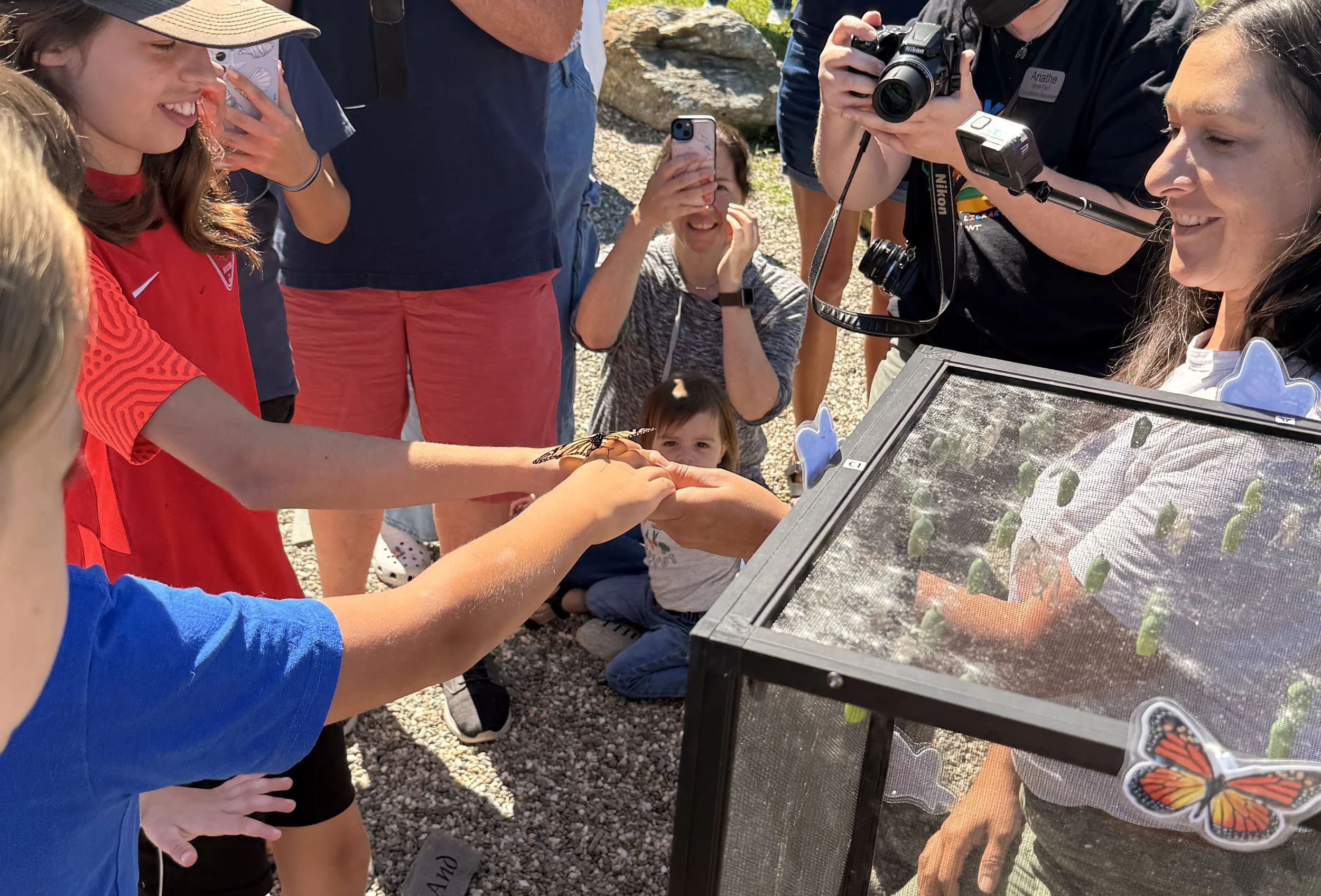
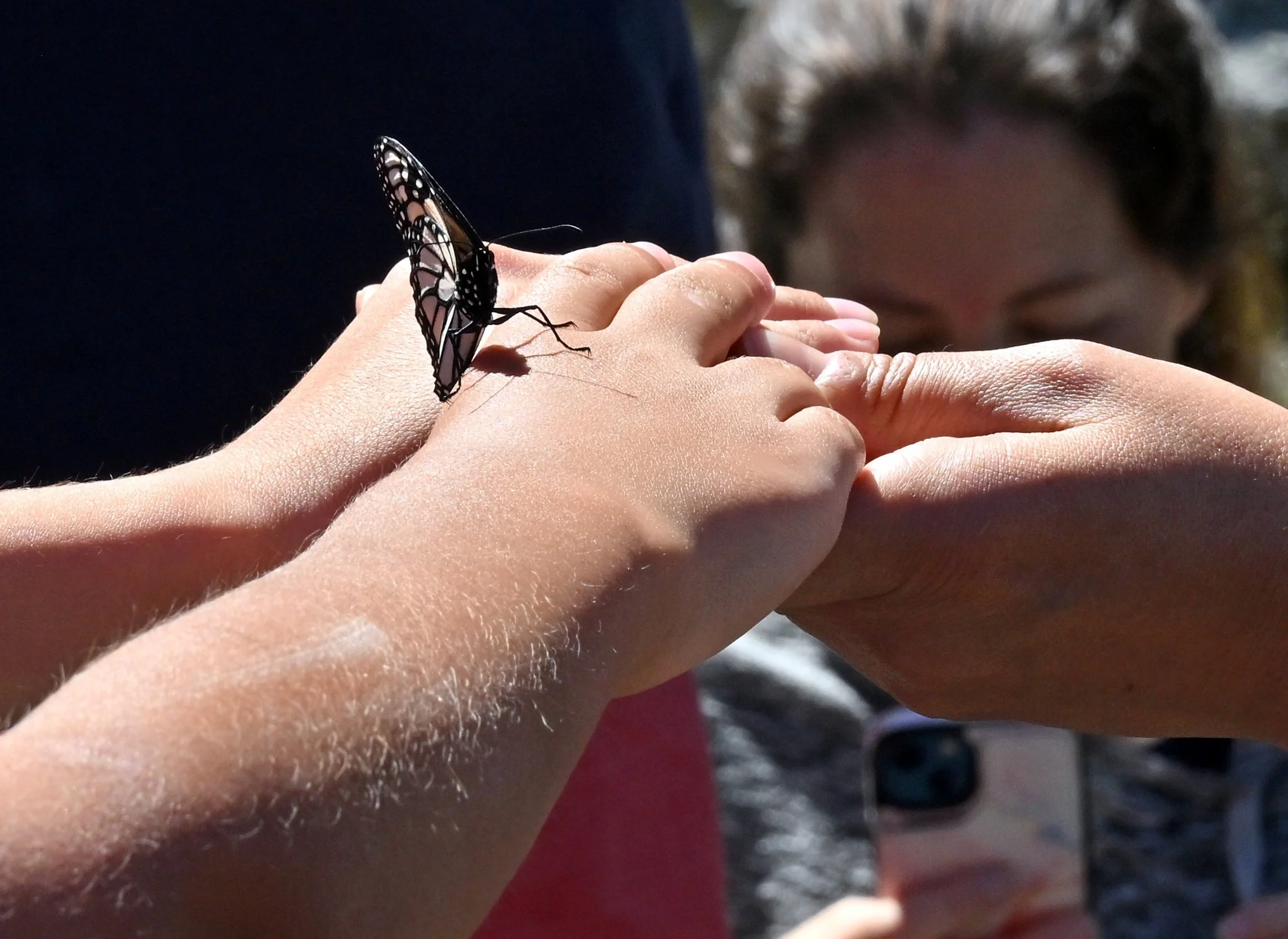
She picked the butterfly up by its wings and placed it on the outstretched arm of Eva Marotto, an eager young onlooker who said, “It felt just the same as all of the other butterflies.” After a short pause, the butterfly flew upward to cheers and applause.
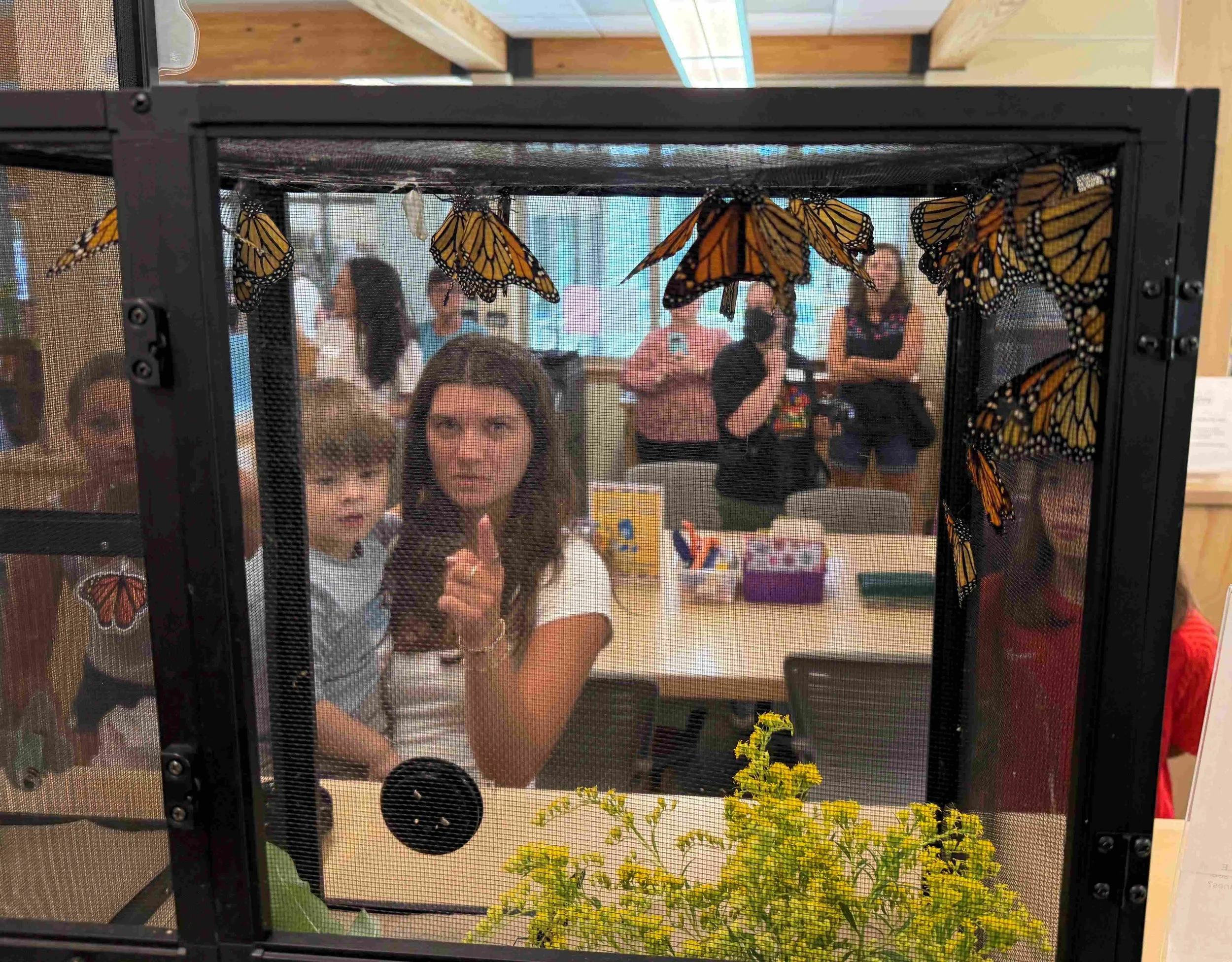
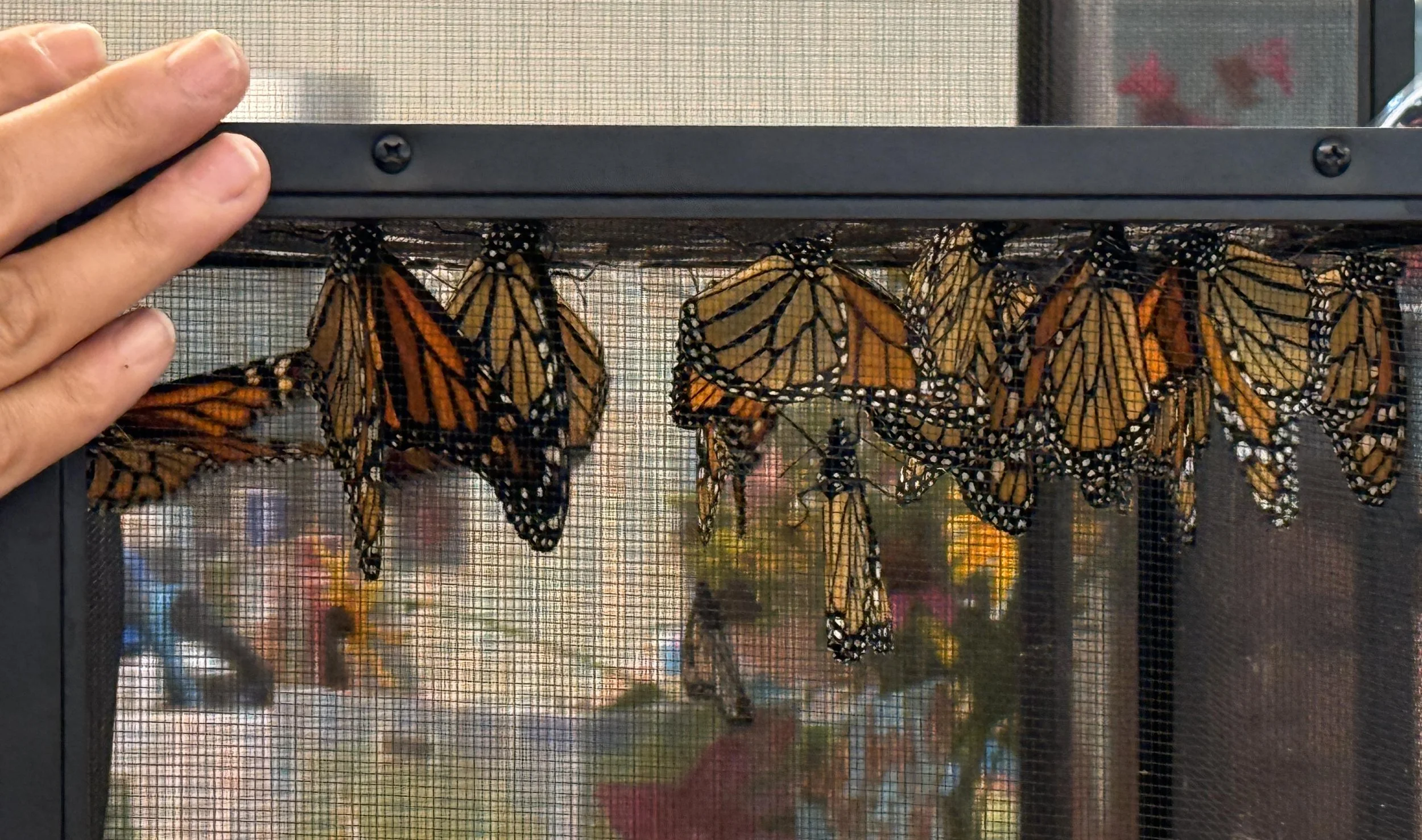
In addition to the special white monarch, the well-attended release party included about 20 familiar orange-and-black monarch butterflies that had also emerged from their chrysalises on Thursday. They were released one by one with adults and children in the crowd enjoying holding them briefly before they lit onto the breeze.
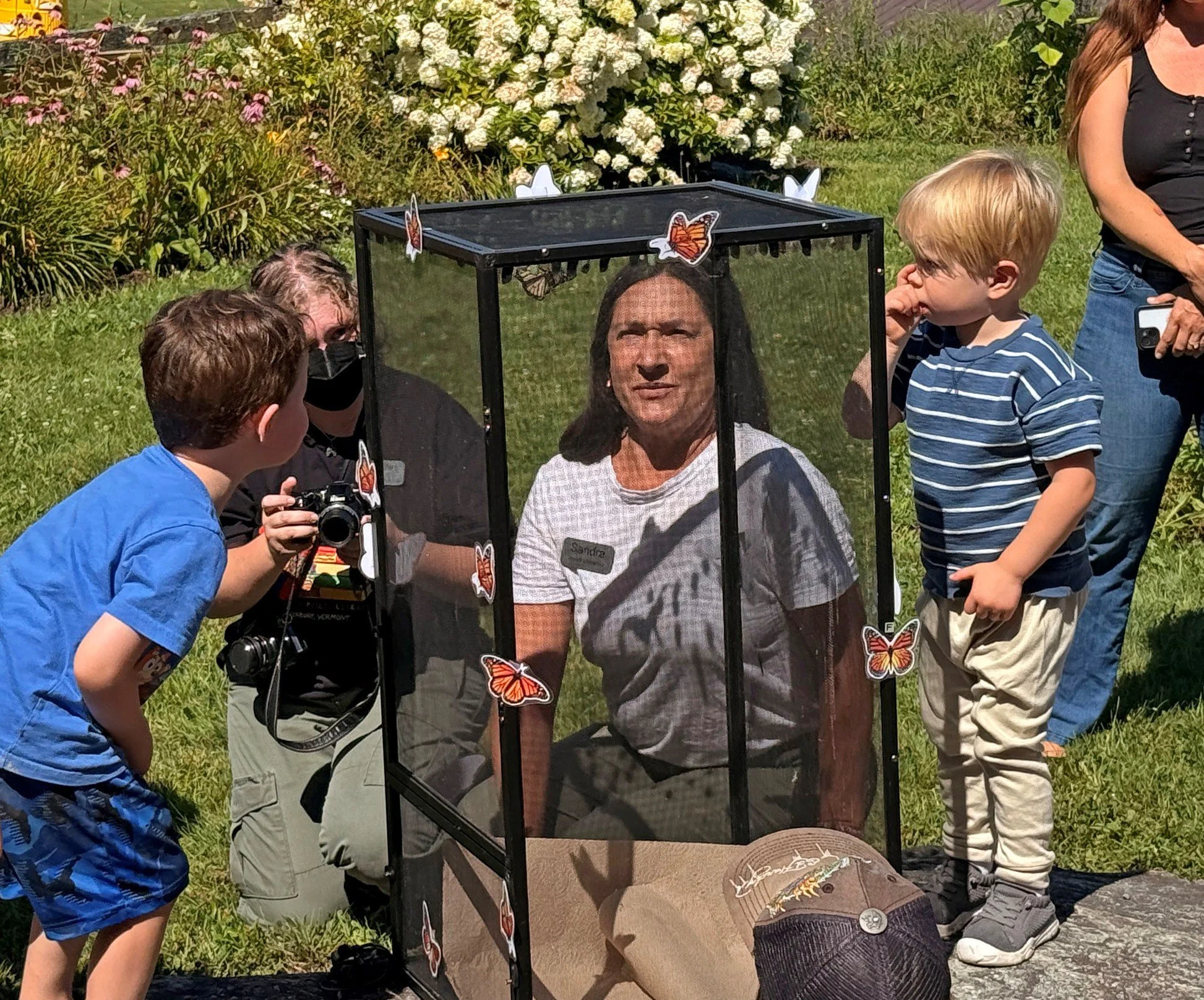
Spectators take a close look before the special butterfly is taken out of its cage. Photo by Gordon Miller
These releases have become commonplace for library staff, library Director Rachel Muse said. “We’ve been releasing [butterflies] every day for the past week or so, and we’re going to release more through September.”
The library’s butterflies are donated by local monarch enthusiast Kirsten Francis-Booth, who has been collecting monarchs for roughly 17 years. Last year, she approached the library about sharing her hobby with the community. “I was sitting upstairs in the library one day,” she said, “when I thought, why don’t I bring butterflies here?”
Francis-Booth collects monarch eggs and caterpillars from abundant milkweed in local meadows. This summer, she’s brought about 100 specimens to the library and she said she has several hundred more at her home. She visits the library to care of them as they go through their life cycle from egg to butterfly over a span of about a month. “I do the work, and the library gets the glory of displaying them,” she said.
Butterfly project volunteer Kirsten Francis-Booth carries the chrysalis cage with the white-and-black monarch inside to the library garden for its release on Friday morning. Photo by Gordon Miller
In return for the library hosting the butterflies, Francis-Booth teaches staff and patrons who gather to enjoy the insects everything she’s learned about monarchs. This summer, she said she began collecting eggs in early July and butterflies were emerging ready to fly about four weeks later. “I’ll keep collecting and releasing until late September,” she said.
Francis-Booth documents the number of butterflies that she releases, along with their sex. She said she typically releases several hundred each summer. This year, the number of eggs and caterpillars have been plentiful. She estimates that between her home collection and the butterflies the library is raising, they will release around 600.
The Waterbury library does not tag its monarchs before releasing them. And they still have several dozen caterpillars and chrysalises going through their metamorphosis. Muse said the library is about halfway through this summer's hatching process, adding that they will be watching closely to see if any more of the chrysalises produce another rare white monarch.
Muse also noted that she has reported the white monarch's appearance on the INaturalist.org website. Sne said she learned in making the report that, “according to the Global Biodiversity Information Facility, more than half of all biodiversity records for most species this decade come from iNaturalist Research Grade observations.” Muse said she will now be particularly aware of the wildlife she might see in the library’s gardens.
“This type of citizen science is such a fun and important part of library work,” she said.
Photos below by Gordon Miller. Click to enlarge and read captions.

Original post is below
August 14, 2025 | By Lisa ScagliottiA white monarch butterfly hatched Thursday morning at the Waterbury Public Library. Library photo
Around 10 a.m. Thursday morning, a new star patron at the Waterbury Public Library was born, and already the buzz around his arrival is cause for celebration.
On Friday morning at 11 a.m., the public is invited to visit the library garden where staff will be introducing a rare white monarch butterfly in the latest group of newly hatched butterflies ready for release.
In the summertime, the library’s monarch project involves specimens collected by local volunteer Kirsten Francis-Booth in Waterbury Center. In special cages over several weeks, they go through their life cycle from eggs to caterpillars, then to chrysalises until they emerge as butterflies. This summer, library Director Rachel Muse said there are about 100 in the collection. “We’re about halfway through” the hatching process, she said.
Around 10 a.m. on Thursday, one of the butterflies to emerge from its chrysalis caught the attention of library staff because it was noticeably different – its pattern is white-and-black instead of the typical orange-and-black.
“Someone thought to Google it and discovered this is actually very rare,” Muse said.
The library is releasing the butterflies in small batches as they hatch, she said. On Thursday, seven were released in the library’s garden after a storytime with young children. More, including the new “guest star” white monarch, will be set free at 11 a.m. in the garden on Friday. The library shared the news on its social media platforms, inviting community members to visit to see the rare insect in person before it’s gone.
Muse said that from what they have learned from the butterfly project, they believe the white specimen is a male. Monarchs’ markings vary slightly based on their sex, she explained. “We’ve learned a lot about monarchs,” she added.
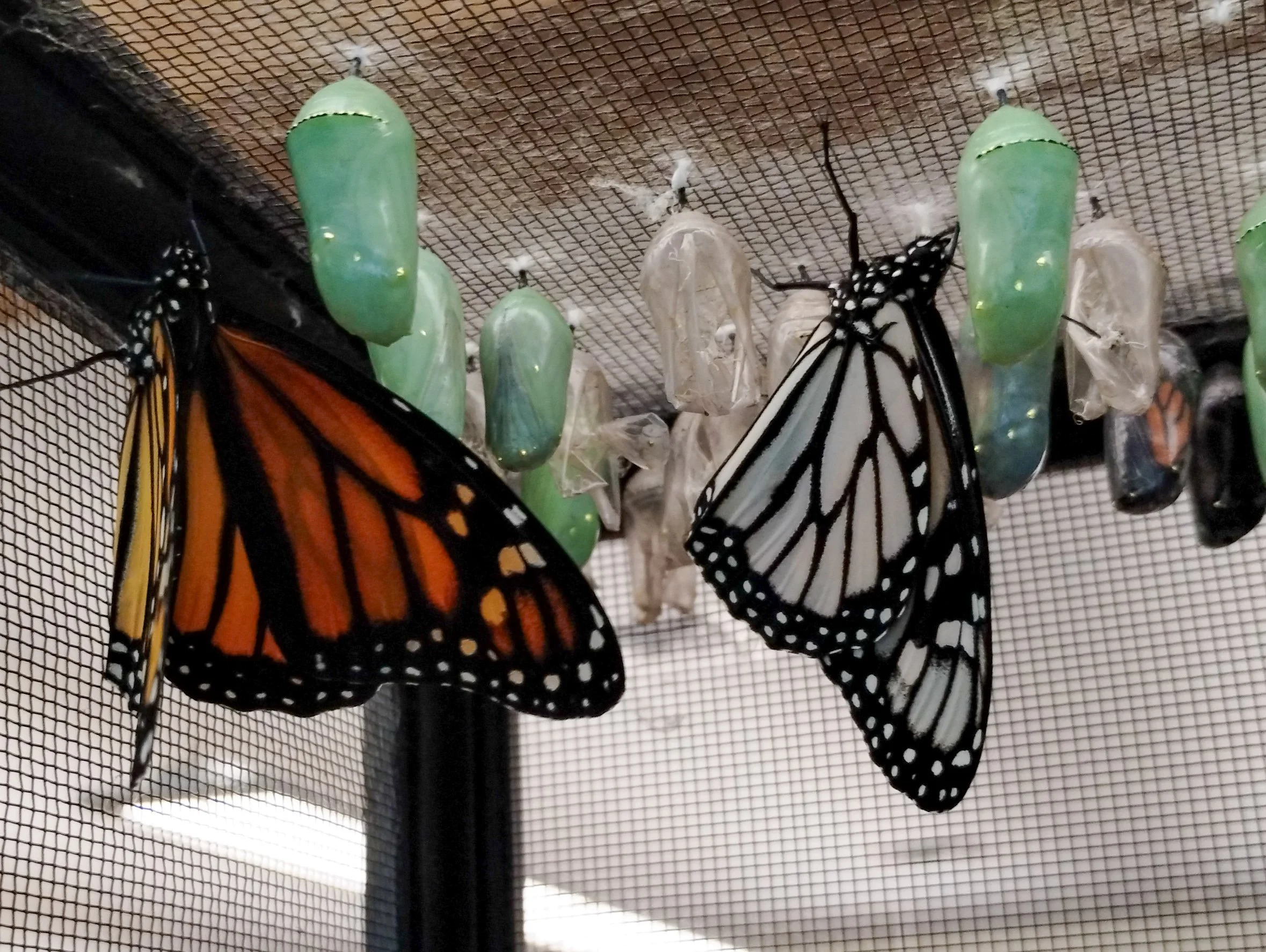
The white monarch along with its neighboring orange-and-black butterfly stretch their wings with both empty and unhatched chrysalises nearby. Library photo
Desiree Narango, a conservation biologist at the Vermont Center for Ecostudies in Norwich, confirmed that the black-and-white monarch variety is special due to a recessive gene. “It’s an extremely rare genotype. We see them occasionally in the U.S., but not super-often,” she said.
When told about the unusual insect, Narango’s first question was to ask where the chrysalis or caterpillar came from. It’s possible to order butterflies through the mail to hatch, which would make it difficult to determine origin of a single butterfly.
Muse confirmed that the library’s supply begins with eggs and caterpillars collected nearby. “This is local. Collected from a meadow a few miles away and brought right to our garden,” Muse said.
Narango was impressed. “That’s great to hear. It’s a very lucky find,” she said.
Unfortunately for the white-variety monarchs, their unusual appearance may make them more vulnerable to predators. “Part of the reason they’re so rare is their high mortality,” Narango explained. “They’re more likely to be eaten.”
As it turns out, the typical orange-and-black coloring of the monarch serves as a warning to potential predators. “Orange-and-black indicates to birds that if you eat that butterfly, you might throw up,” she said.
As a result, birds may be less hesitant to snap up a white-and-black variety, which would likely make “a delicious meal,” Narango said.
In fact, other species even have evolved with color patterns that mimic the monarch. The viceroy butterfly is the most prominent one, Narango noted. A recent essay in the Northern Woodlands’ The Outside Story series delved into this phenomenon in nature.
Narango noted that monarchs found in Vermont generally are the type that make the marathon migration to Mexico. Scientists study the creatures and the paths they take thanks to tracking tags that recently have evolved to include ones that emit radio signals, she said.
“Monarchs are one of the most studied butterflies, but there’s still so much we don’t know about their migration,” she said. “But our monarchs are arguably the most important.”
Narango suggested that the library note its white monarch on the website inaturalist.org. Vermont Center for Ecostudies scientists use data collected there for a variety of projects, Narango said, such as tracking shifts with climate change, monitoring populations, and identifying important nectar and pollen plants. The center has two specific uses for butterfly data: The 2nd Vermont Butterfly Atlas project and its Pollinator Interactions on Plants Project that documents flower interactions.
Narango shared that a source for more information on responsibly rearing monarchs is the Xerces Society.