
Duxbury voters bring pie, questions to 5th annual Have Your Say Day meeting
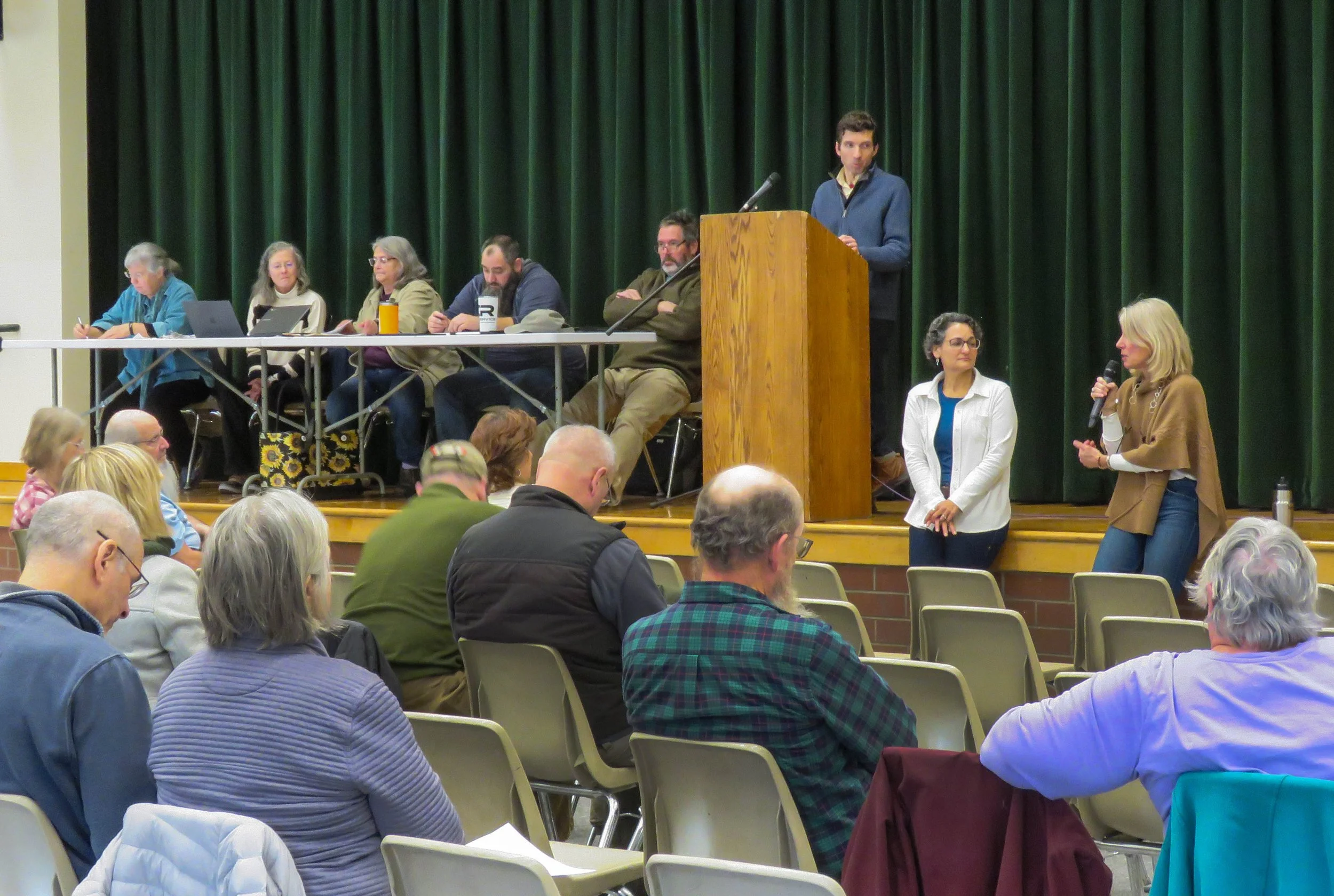
January 13, 2026 | By Claire Pomer | Correspondent Duxbury residents and town officials held their fifth annual “Have Your Say Day” on Saturday, giving voters a chance to ask their town leaders and state representatives questions before Town Meeting Day.
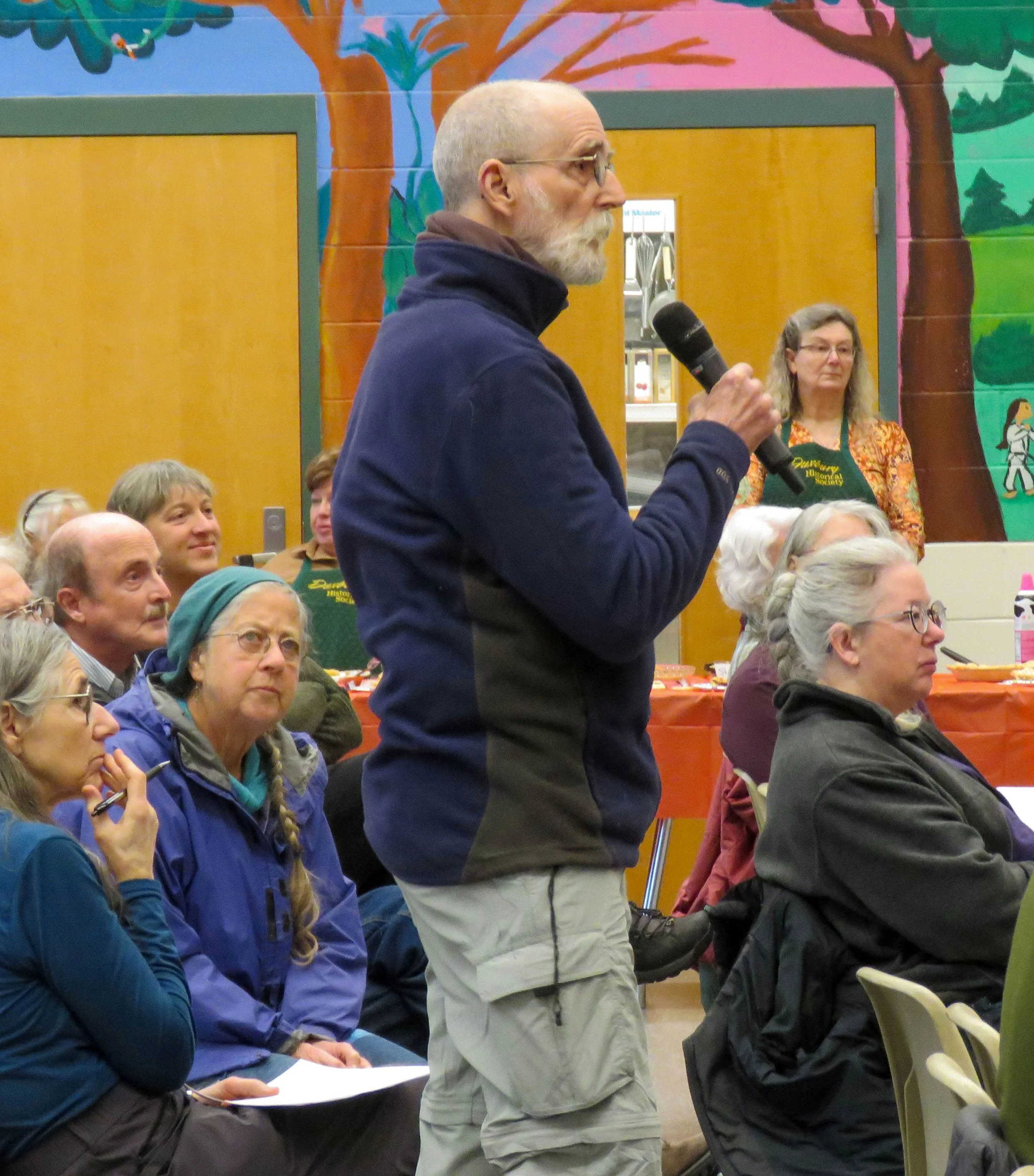
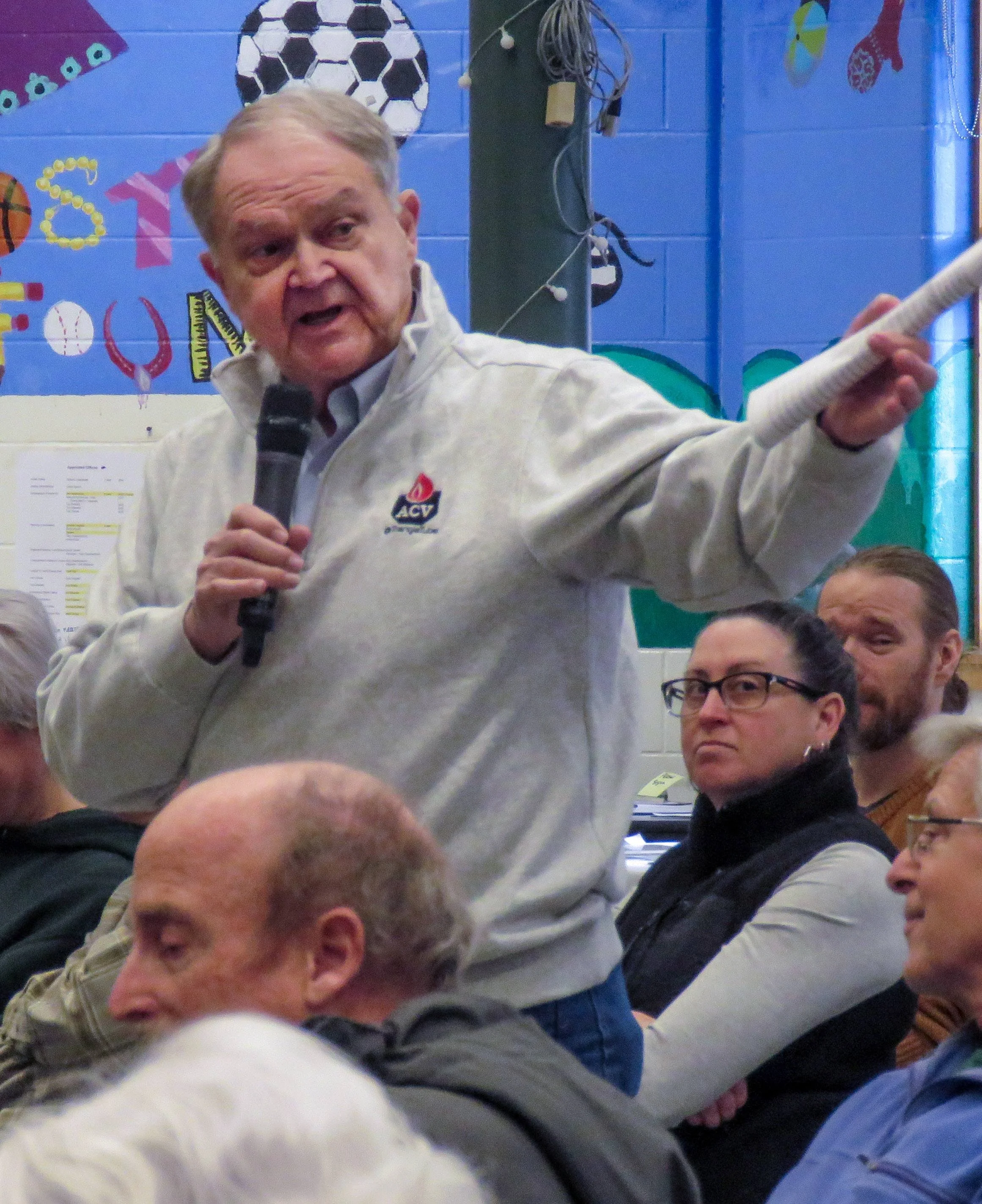
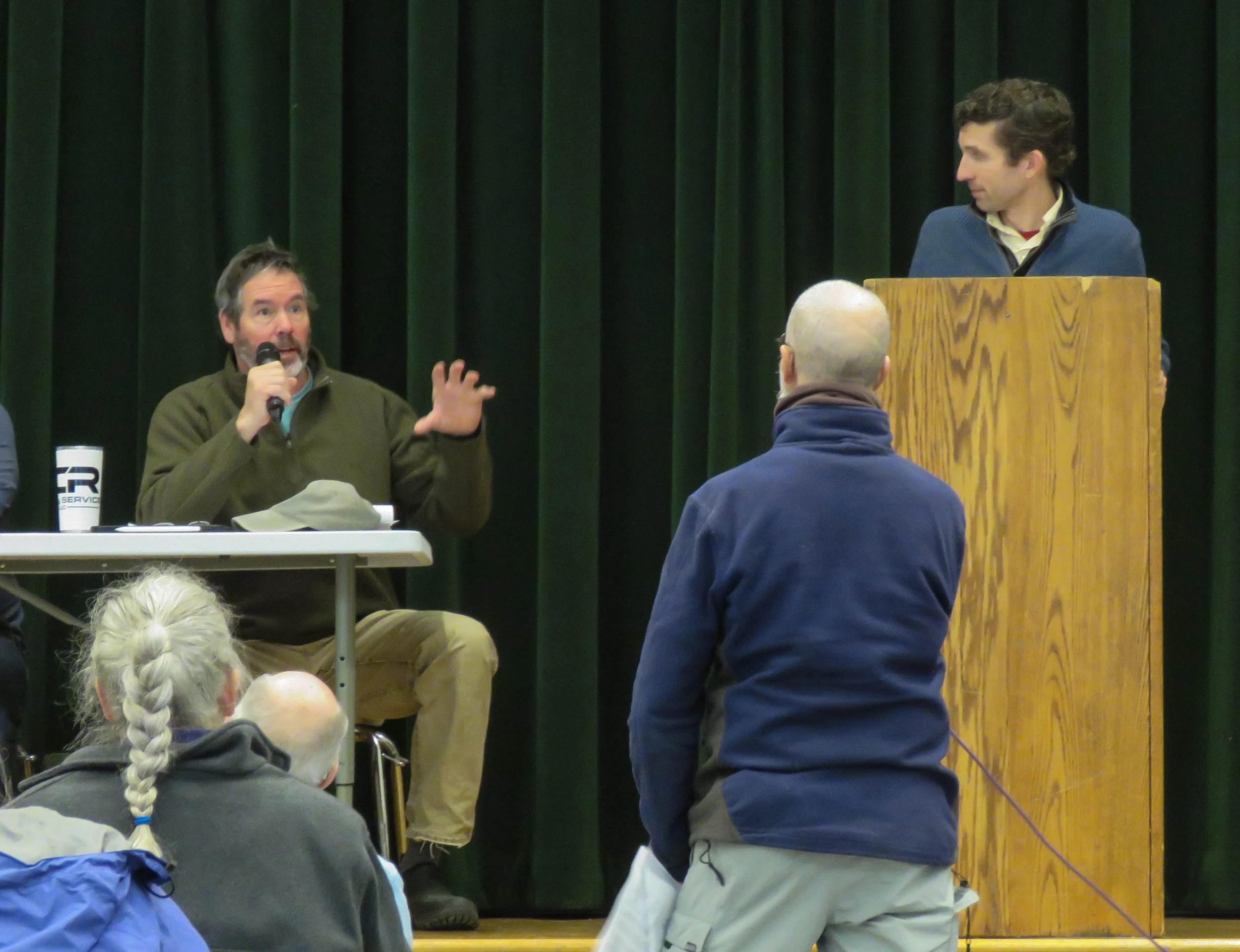
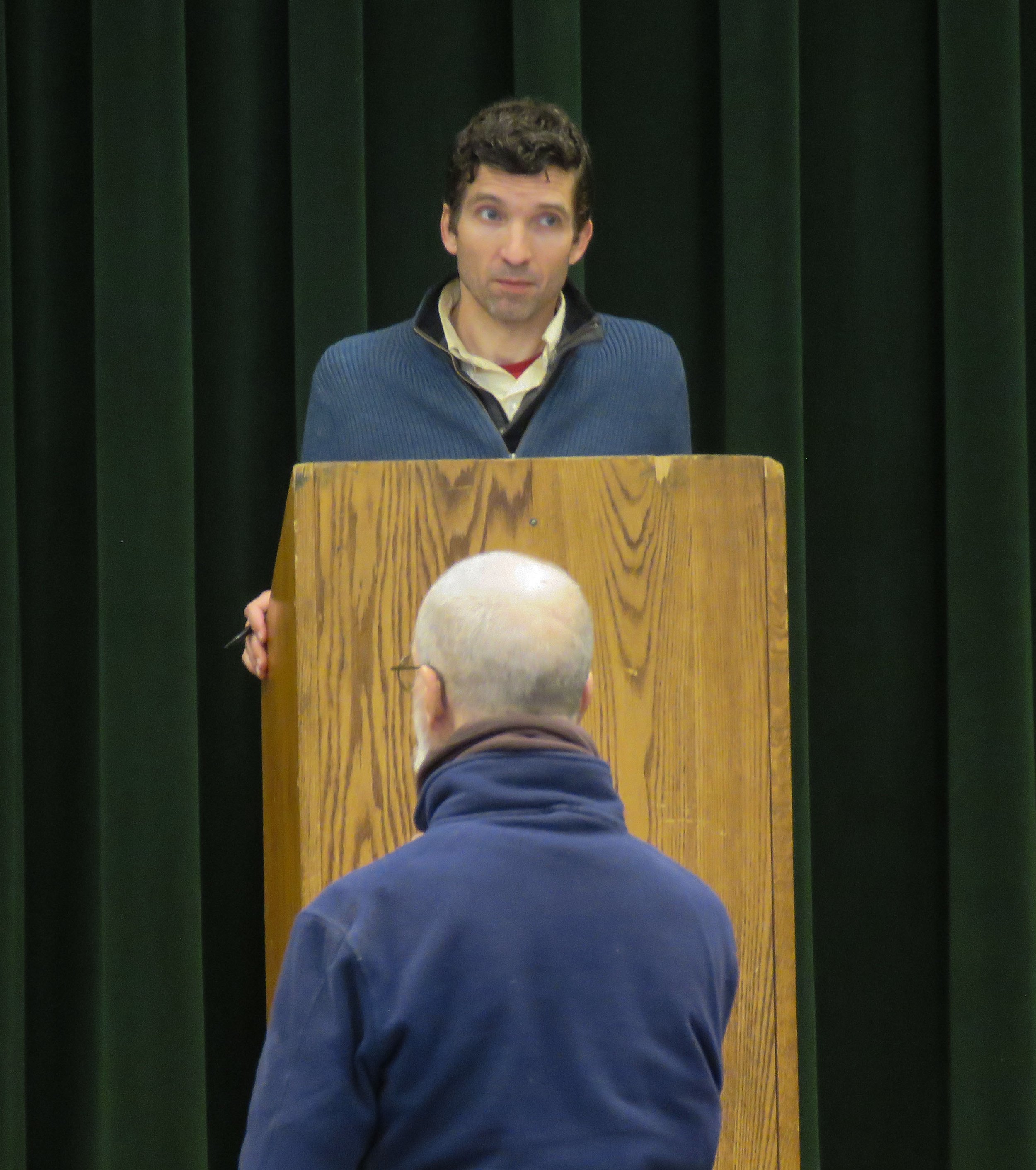
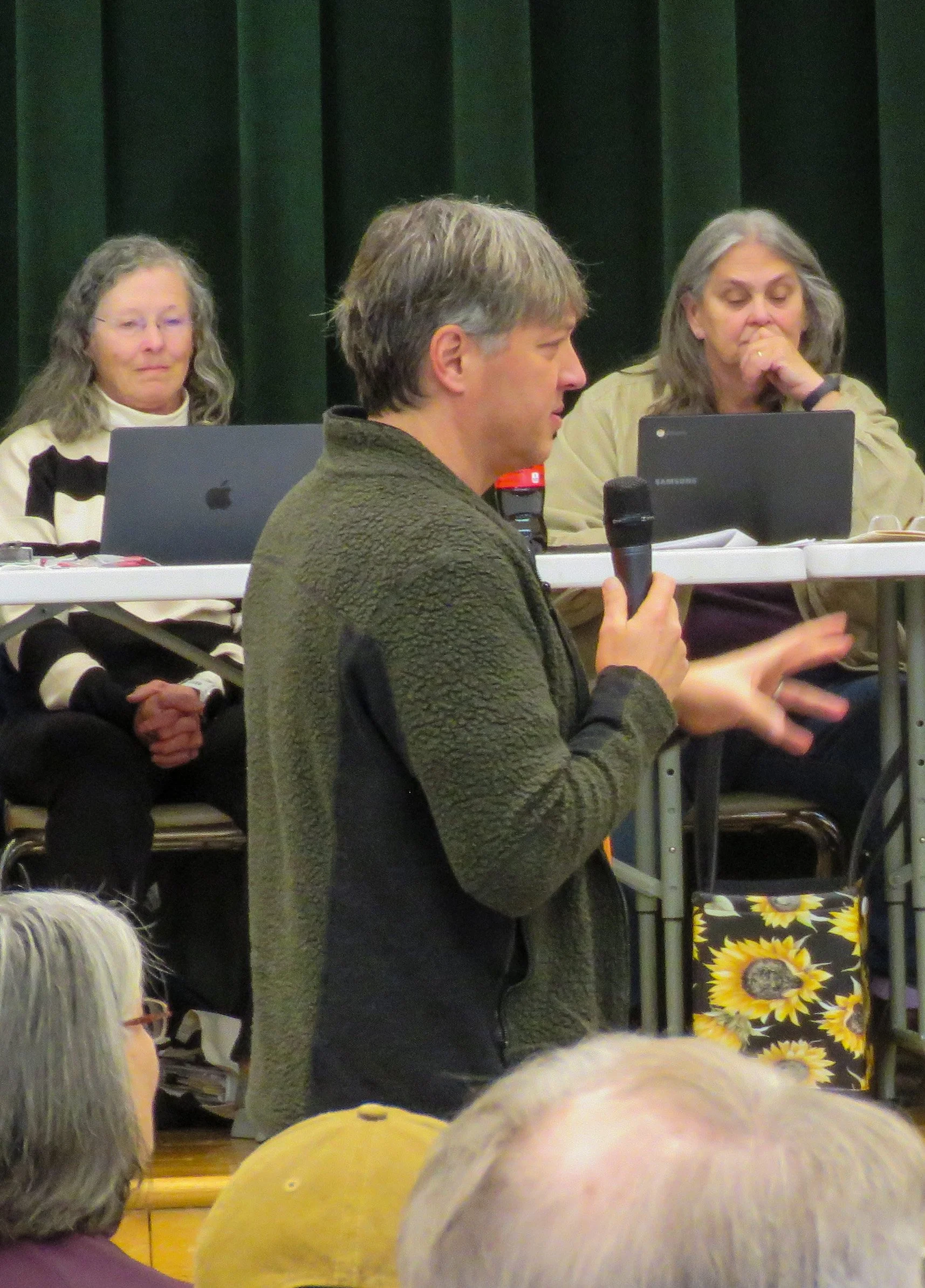
Lars Dickson asks a question of the Duxbury Selectboard at Saturday’s Have Your Say Day meeting. Photo by Shawnee Perry
Since 2022, Duxbury has decided all town business on Town Meeting Day using the Australian (paper) ballot system, which ended the tradition of gathering in person for the annual town meeting. The switch was made after seeing increased voting participation by ballot during the COVID-19 pandemic.
To give voters a chance to discuss the town budget and other issues before voting, the town established “Have Your Say Day,” where the selectboard takes comments and questions on the proposed budget before it’s put to a final vote.
“Duxbury is starting to serve as a model for other towns around Vermont,” said moderator Dan Senning, as the meeting opened at 9 a.m. He pointed out that several other towns, including Waterbury and Morrisville, have started similar non-binding discussions early in their processes.
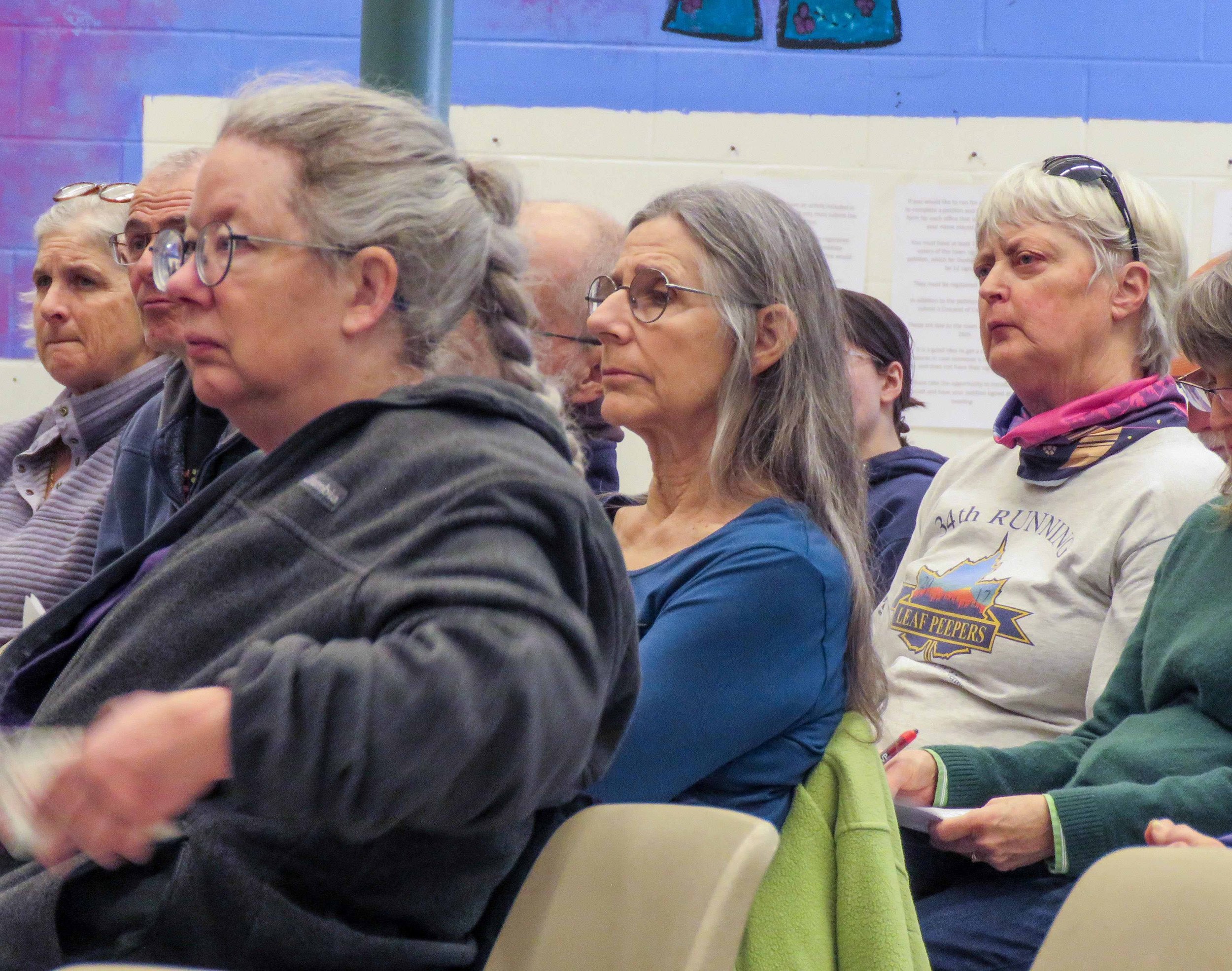
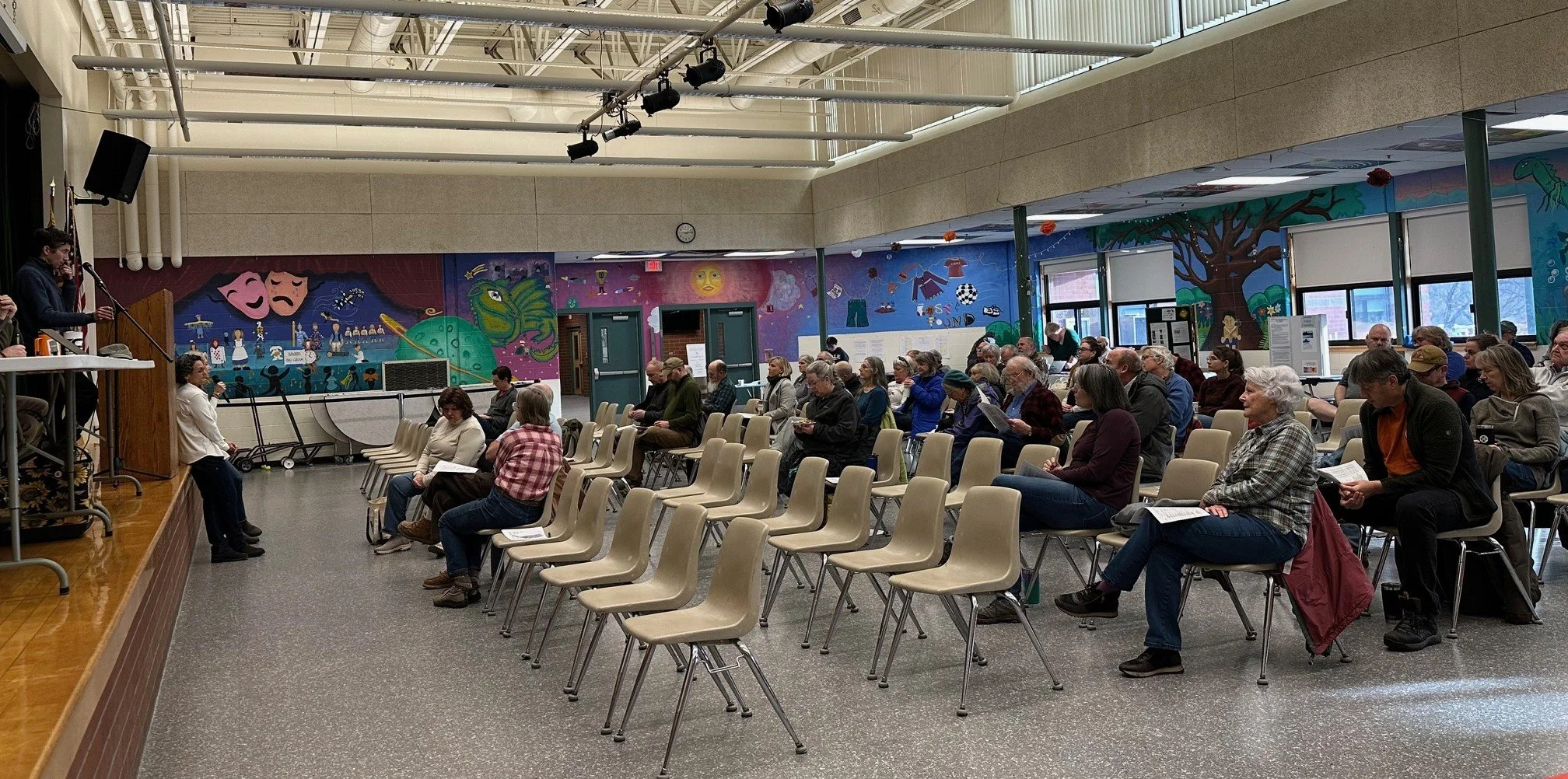
Attendance on Saturday was just shy of 60 people, down from earlier Say Day audiences that started off over 100 and hovered around 80 the past two years.
As has become the custom, attendees arrived with pies to share. Sweet and savory varieties filled a long table in the Crossett Brook Middle School cafeteria and Duxbury Historical Society members sliced and served, along with fresh coffee. A collection basket filled up with donations for the community group that had a nearby display of posters and postcards from the 1900s and even earlier.
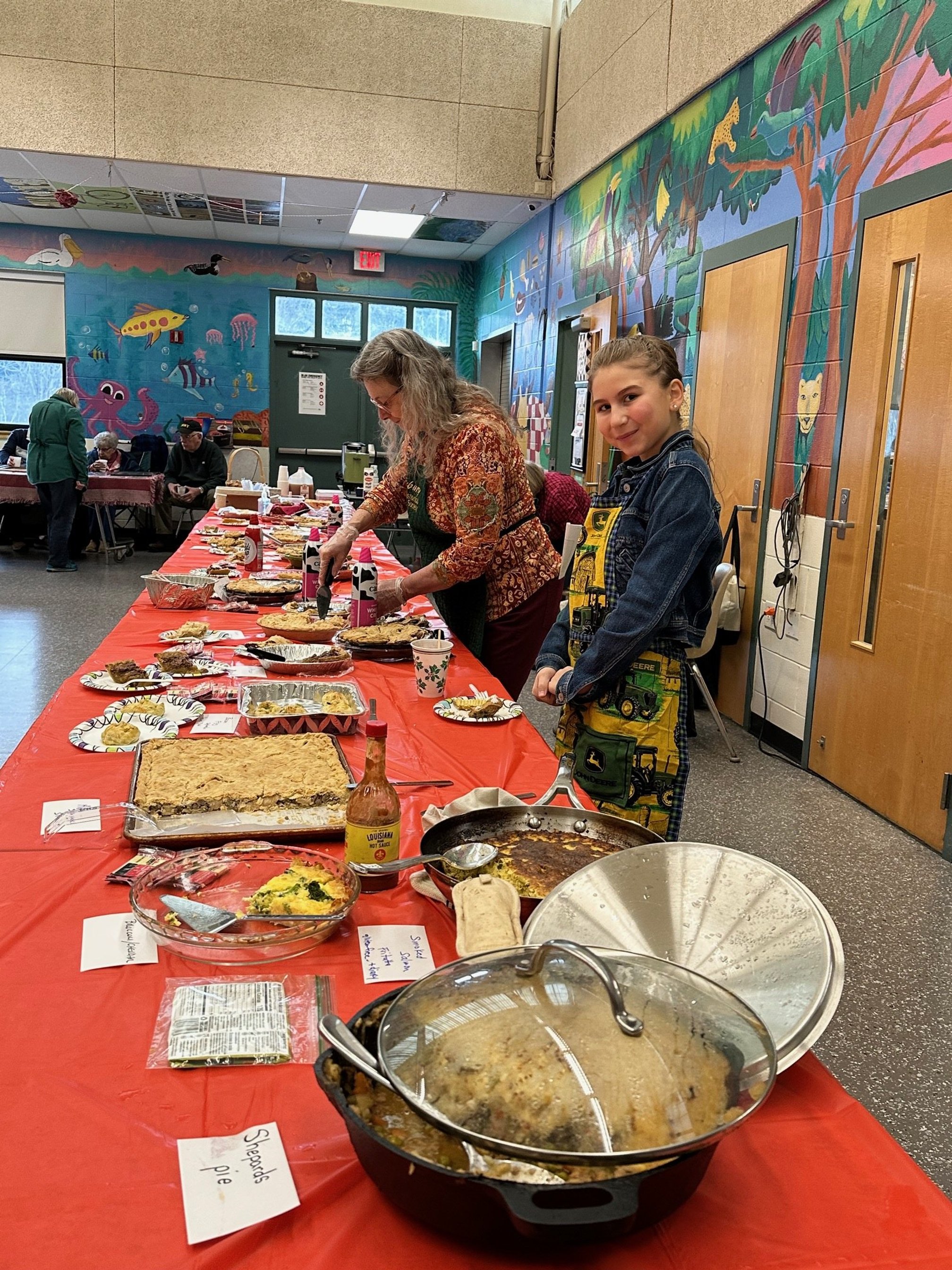
Fifth grader Jane McElroy helps serve up pie. Photo by Lisa Scagliotti
The main event opened with remarks from Duxbury’s two state representatives, Dara Torre of Moretown and Candice White of Waitsfield. The two Democratic lawmakers spoke briefly about the three issues they think will be most prevalent during this year’s legislative session, which convened on Jan. 6: health care, education and housing.
“We are all struggling with the cost of living,” Torre said.
In the wake of Gov. Phil Scott’s Jan. 7 State of the State address, where he took a hard line on the need to follow through on implementing Act 73, the education reform bill passed last session, the Washington-2 legislators were asked by former Duxbury representative to the Harwood school board Life LeGeros what they thought of the situation and what they were hearing from other legislators.
“We’re all struggling with affordability… Education funding reform needs to happen,” said White, who voted for Act 73.
One of new law’s controversial provisions is its call to consolidate Vermont’s school districts into much larger entities and ultimately reduce the number of schools in operation in Vermont. White acknowledged that consolidating school districts was “probably necessary,” but that “it needs to be done in a thoughtful way, not just in hopes of saving money. We can’t afford our current system, but there are some good parts.”

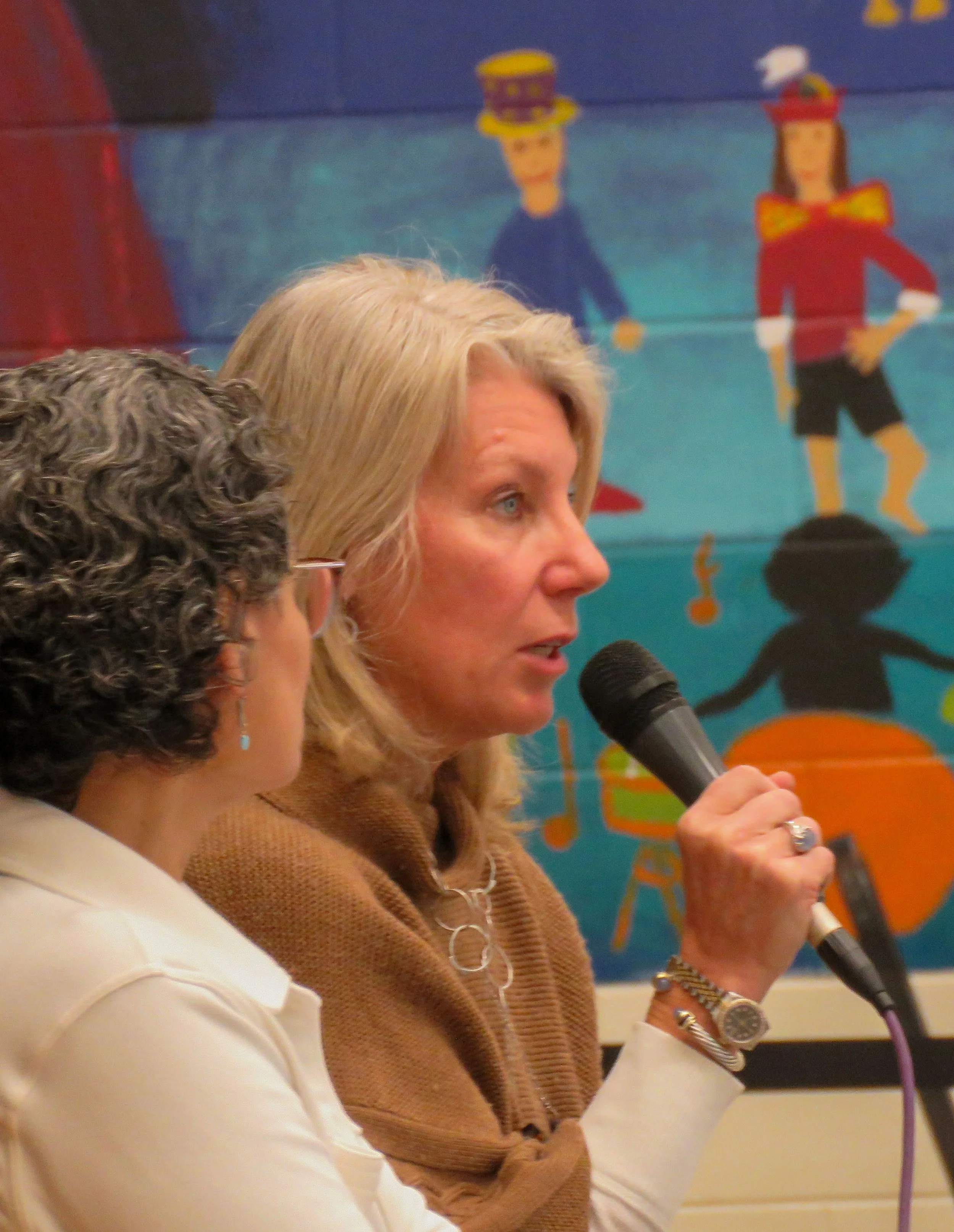
State Reps. Dara Torre, D-Moretown, left, and Candice White, D-Waitsfield, right, represent Duxbury in the Vermont House. Photo by Shawnee Perry
Torre voted against Act 73. “I’m prepared to be surprised. I expect that geography and trust will play huge roles,” she said. “This process is going to be spicy and probably long – and the longer we’re in session, the more expensive it gets.”
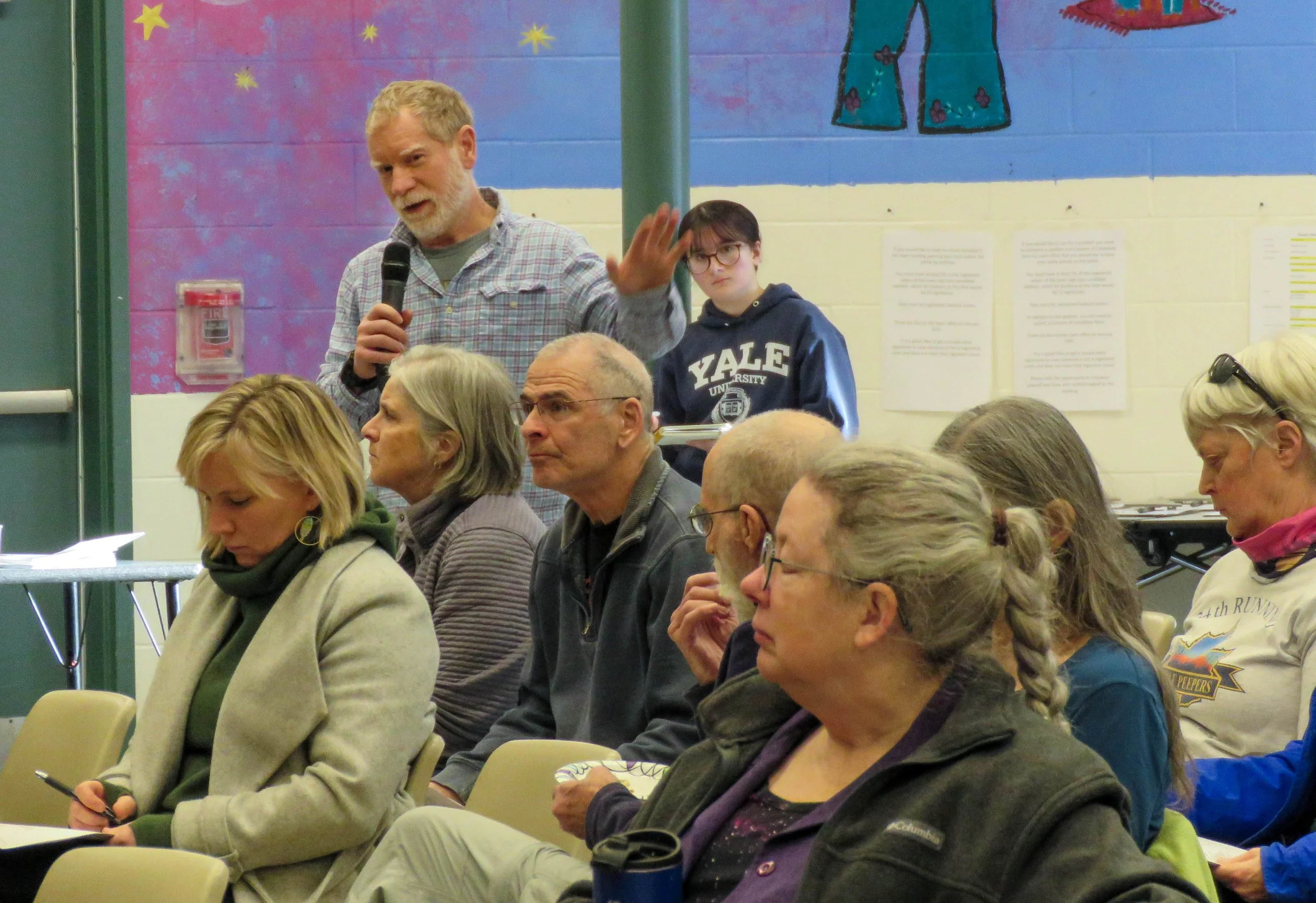
Richard Charland, former Duxbury Selectboard chair, pointed out that Vermont has the second-highest per-pupil costs yet declining standardized testing results. “What do you plan to do about this while also dealing with budget cuts?” he asked.
“We keep our sights on being realistic about the trade-offs,” Torre replied.




Town budget Q&A
Duxbury’s proposed budget for the upcoming fiscal year that begins on July 1 is $1.17 million, down about $130,000 from the $1.31 million voters approved last year. The draft includes some large reductions in highway costs, some attributed to a newly purchased loader and mower, town officials said. The biggest reductions come in highway maintenance. Proposed spending of $120,000 on gravel is down $20,000; sand and trucking for sand are down by $35,000; and a line for $10,000 for rental equipment is budgeted for zero for next year. Significant increases include an additional $11,000 towards road crew overtime and $5,000 for legal services.
The proposed budget allows for what board Chair Patrick Zachary called “quite a bit of surplus” to cover operating costs for at least three months before property taxes are collected in October. The board is also seeking to use it to pay for some capital expenditures, which would lower taxes and reduce the general budget.
“We’re trying to manage your money and make it as painless as possible,” said Town Clerk and Treasurer Maureen Harvey.
Carol Collins asked about the land the town is leasing out to Norwich Solar where a new solar array is under construction, across Vermont Route 100 from the town highway garage and offices. The project was approved by town voters in 2022. Its solar energy will help offset power costs for town buildings, mainly the town office and highway garage. The key benefit will be a $12,000 payment each year from the company, explained selectboard member Jamison Ervin.
None of the topics during the budget discussion led to requests that the selectboard revise the draft budget. The board will finalize it along with other items for the Town Meeting Day warning this month. The final version will be printed in the town annual report.
The board faced several questions about the ongoing town property reappraisal, which is expected to take until 2027 to be completed.
LeGeros asked whether town officials expect property tax bills will go up or down as a result of the reappraisal. “Will it make taxes go up, or is that factored in?”
Harvey responded, saying that property values will be closer to market value after the reappraisal. “Taxes don’t necessarily go up if values go up. It may or may not have an impact on your tax bill,” she said. Homeowners will be notified of their new property values after reappraisal.
Former Selectboard member Mike Marotto asked, considering the state’s affordability crisis and the increase in properties being used for short-term rentals such as Airbnbs, “Has the board considered promoting, or not, Airbnbs in the context of housing?”
Zachary responded that the board had not. “If someone owns their house,” he said, “it’s their business.”
David Wendt, who serves on the Duxbury Planning Commission, added that the town plan will be updated at some point in the next few years. That process can address the topic of short-term rentals in Duxbury, he said.
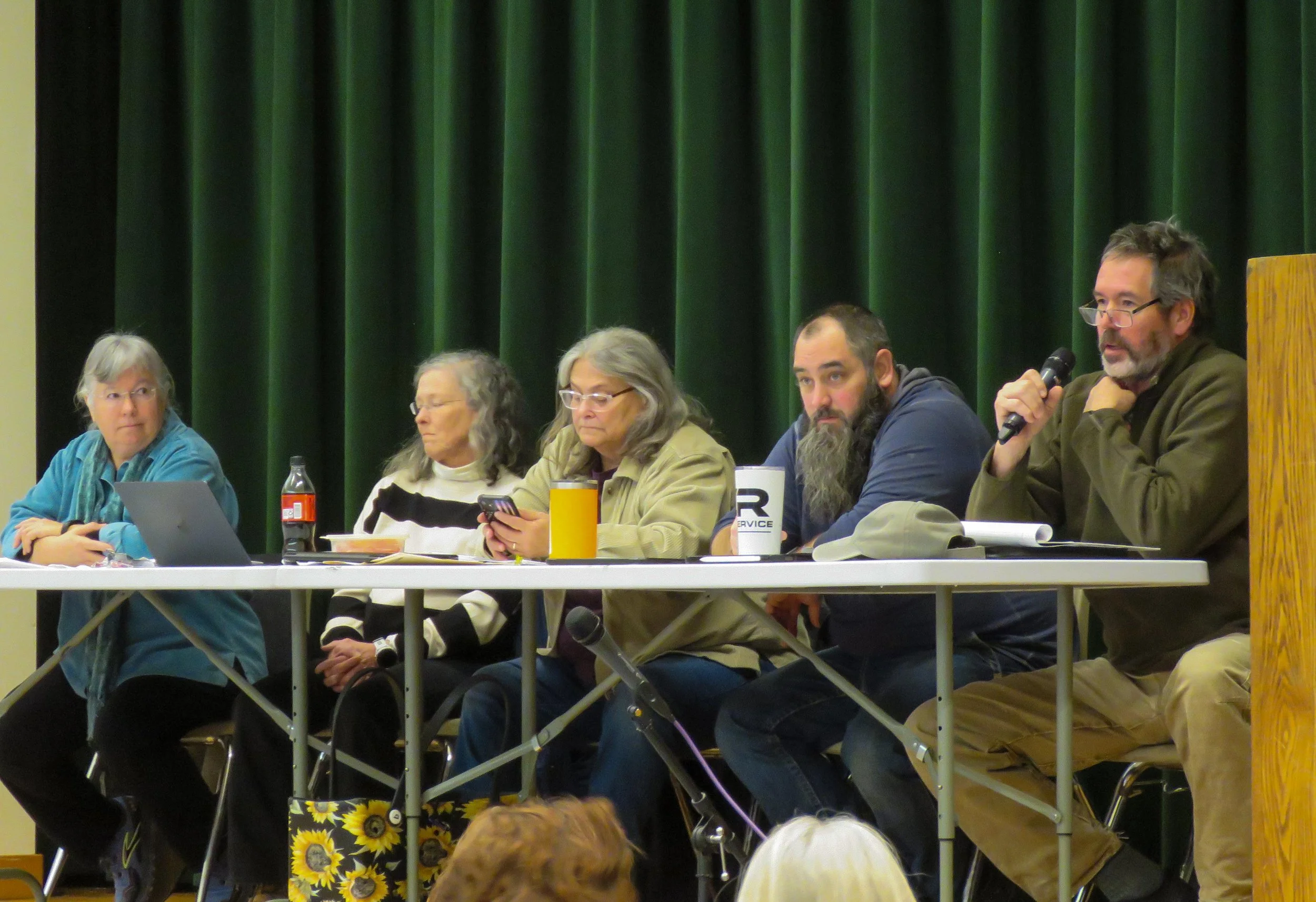
Duxbury Selectboard members (left to right): Jamison Ervin, Gwenna Peters, Mari Pratt, Matt Schroeder and Patrick Zachary. All but Zachary’s seat is on the March ballot. Photo by Shawnee Perry
On the March ballot
Multiple local offices are up for election on Town Meeting Day, which will be March 3.
Four of the selectboard seats will be on the ballot. Zachary is the only member not up for election this year. Mari Pratt and Matt Schroeder are both running for another one-year term. Gwenna Peters, who was appointed to the board last year, is running to finish out the remaining two years of her term. Ervin’s term is ending and she said she will not run for re-election. Her seat carries a three-year term. “I’m happy to share my experiences to anyone interested,” she said. “It’s an exceptional opportunity.”
Other offices on the ballot include town moderator, which Senning has announced he is running for again; one lister position; two Budget Committee seats, open to, as Moderator Senning put it, “anyone with a flair for budgeting”; a seat on the Cemetery Commission; and the first and second constable offices.
Both of Duxbury’s seats on the Harwood school board are on the ballot this year – Cindy Senning, who serves as the board’s vice chair, is at the end of her three-year term and she says she will run for re-election. Emily Doloff was appointed to fill a vacancy in 2025. She said she plans to file to run for the remaining two years of her term.
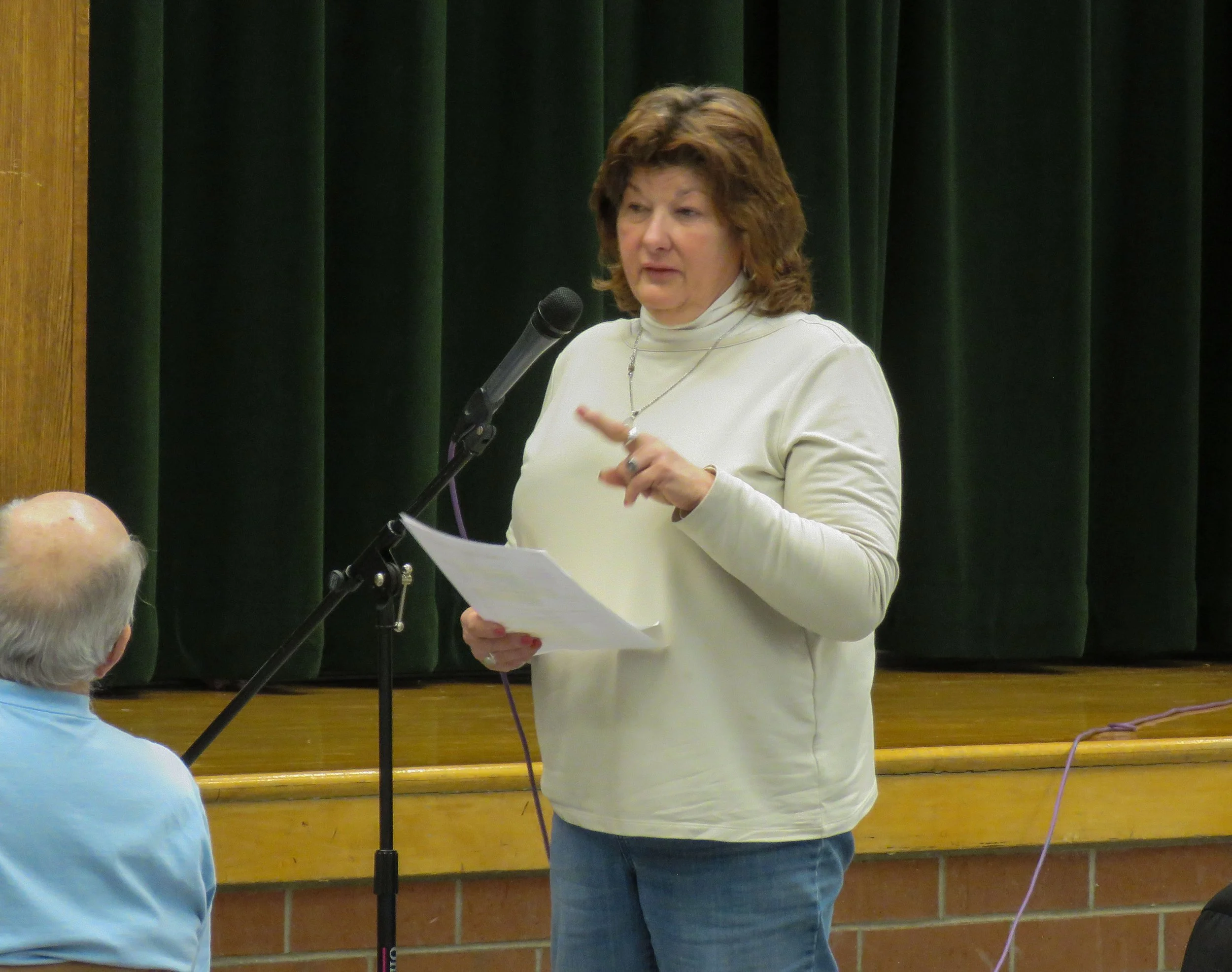
Duxbury Town Clerk and Treasurer Maureen Harvey. Photo by Shawnee Perry
Clerk and Treasurer Harvey is not up for election in March. However, she announced that she is looking to pass her baton as town clerk, ideally sometime this year. Her term ends in 2028, but she would like to step down before then. Harvey said she would be willing to continue as treasurer two days a week and train a new clerk that the selectboard could appoint before Town Meeting Day 2027. At that point, her successor would need to run for election, she explained.
Duxbury’s town clerk duties are paid for three days a week, she said. The town also has an assistant town clerk, who works one day per week. The clerk position would require some election training, and all records and parcel maps now are electronic and up-to-date, Harvey said.
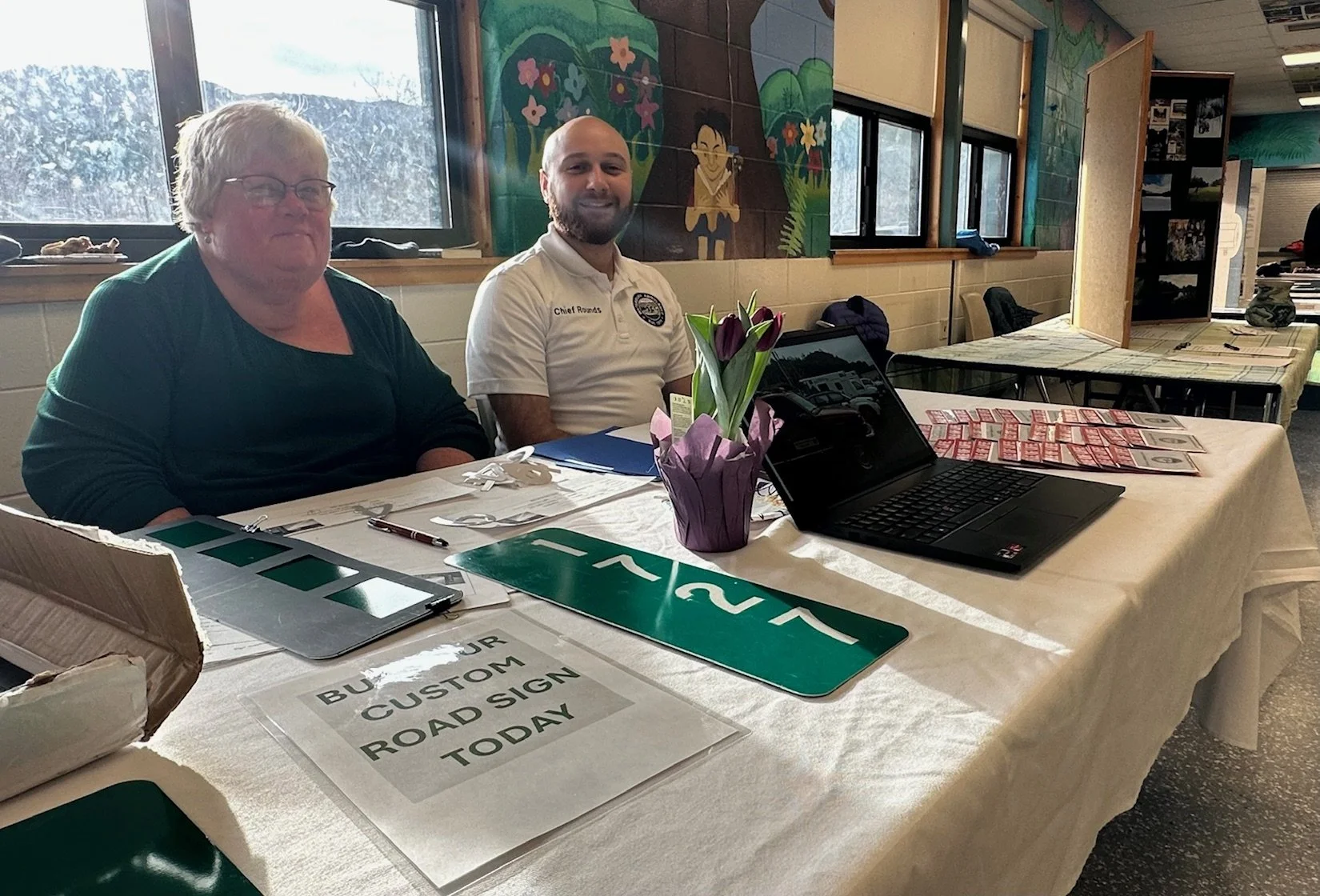
Anyone running for office must be a Duxbury resident. Candidates need at least 1% of registered town voters to sign their candidate petition, which comes out to 12 people for Duxbury. Petitions are due to the town office by Jan. 26, along with a candidate consent form. Those forms are available at the town office or in the information packet from Saturday’s Say Day meeting that’s posted on the town website, duxburyvermont.org.
Election Day is March 3, and ballots will be available for early voting 20 days prior. Duxbury will continue to use its drive-through voting format with the polls open from 7 a.m. to 7 p.m. on Town Meeting Day.
Claire Pomer is a senior from Waterbury at Harwood Union High School.