
Vt. Health Department: Measles virus detected in wastewater
February 11, 2026 | By Lisa Scagliotti The Vermont Department of Health has announced that it has detected evidence of measles in wastewater sampling done last week in Washington County.
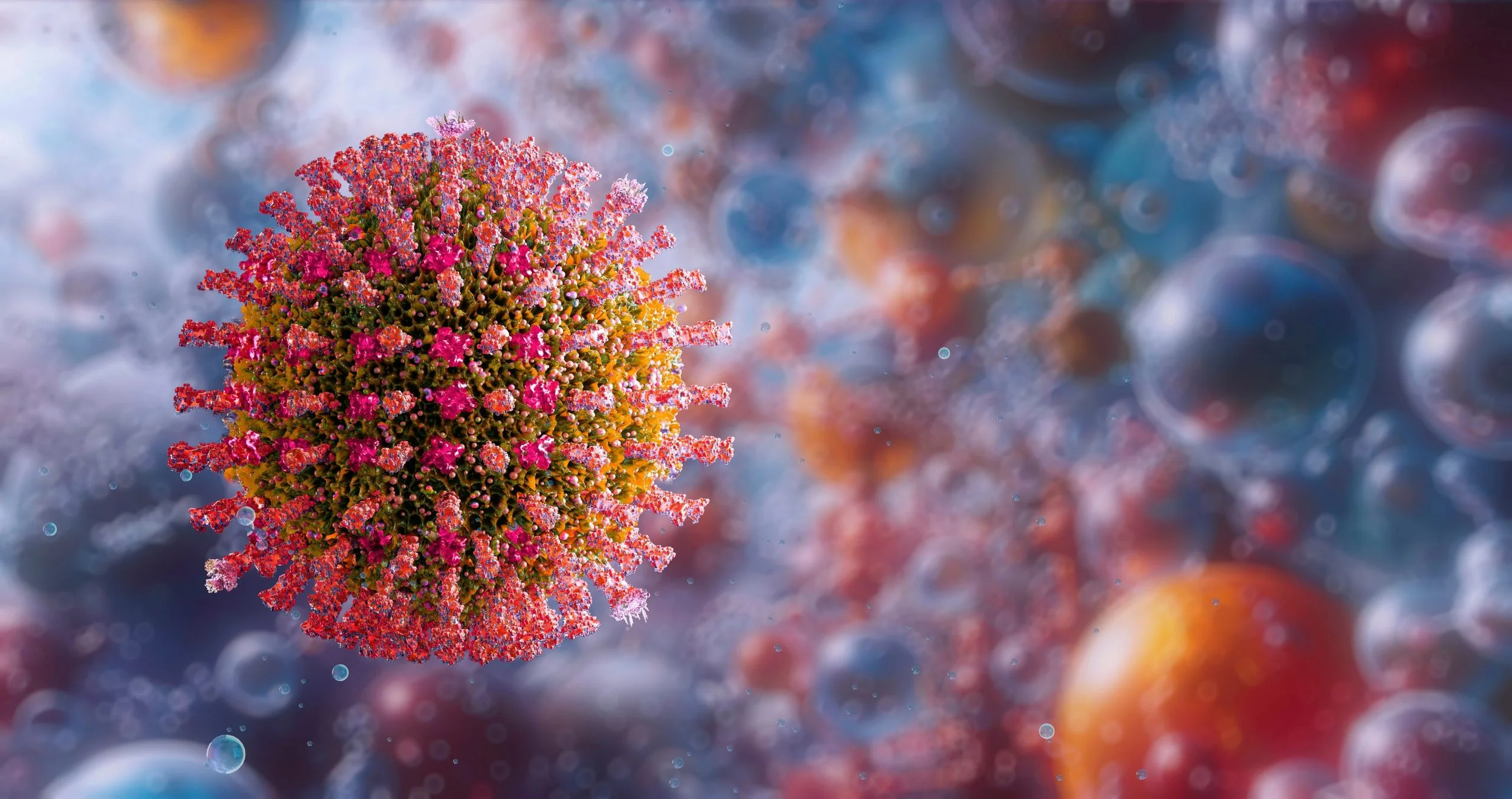
Closeup of the measles virus. CDC image
State Epidemiologist Laura Ann Nicolai shared information on Friday, Feb. 6, with health care providers, including school nurses across Vermont.
Measles virus was detected during routine testing of wastewater samples collected on Feb. 2-3 from a wastewater treatment facility in Montpelier, according to the Health Department.
“This detection is a sign that a person with measles has been present in the community,” Nicolai wrote in her communication. “Detection of measles in wastewater does not identify a measles case, and no active measles cases have been reported in Vermont.”
A department spokeswoman explained that the presence of measles virus in the wastewater sample could have been from an individual or individuals living, working or visiting the community.
“Wastewater signals can precede clinical detection and serve as an early warning indicator,” Nicolai noted.
Given that information and the highly contagious nature of the virus, health care providers are urged to “maintain heightened awareness for patients with symptoms compatible with measles” and to continue to promote the measles vaccine for those who are not vaccinated.
“Because of the high level of vaccination in Vermont, we are not asking the public to take any specific actions at this time,” Health Department spokeswoman Katie Warchut said. “But we do want providers to be aware and encourage people to get vaccinated so they are protected.”
Measles is a highly contagious respiratory virus that can cause serious illness, particularly in babies, young children, and people with weak immune systems.
Symptoms typically begin with a cough, runny nose, watery eyes, and a high fever that may spike to more than 104°. A rash of flat spots breaks out on the head and face, then spreads to other parts of the body.
The measles virus is airborne and can spread to other people when an infected person coughs or sneezes. The virus can stay in the air for up to two hours after an infected person leaves an area. People also can become infected if they touch a contaminated surface and then touch their eyes, nose, or mouth.
According to public health sources, the virus can be spread from four days before through four days after an infected person develops the rash, so someone with measles may not know they are infectious.
Since early 2025, measles cases have been rapidly increasing in the U.S. Nicolai in her memo noted that a large outbreak is currently affecting part of South Carolina and smaller outbreaks are occurring in Arizona and Utah. An active measles outbreak is also ongoing in Québec, with nine reported cases in recent weeks, according to the state Health Department.
Vermont reported two cases of measles in 2025 and two cases in 2024 – those occurred following just two cases that were reported in the decade prior, one each in 2011 and 2018, Nicolai shared in her memo.
Public health agencies across the United States use wastewater monitoring to check for evidence of highly contagious illnesses such as measles, influenza and COVID-19. State health departments report their data to the Centers for Disease Control and Prevention, where it is compiled and presented online using interactive maps for various illnesses.
Warchut noted that the Vermont Health Department maintains a dashboard with sampling data for flu and COVID-19, both of which are presently showing high levels in some of the communities where wastewater is checked. Those locations are Burlington, Essex Junction, Ludlow, Middlebury and Montpelier. The CDC’s dashboard shares data for additional diseases including measles, RSV and monkeypox.
Sampling cannot identify individuals or even the number of people who are sick. And it only captures data from wastewater treatment facilities, missing those who are on septic systems, babies in diapers, and locations that are not sampled.
Public health officials encourage anyone with symptoms of measles to contact their health care provider. Medical workers are asked to report suspected cases of measles to the state Health Department even before testing confirms the diagnosis.
There is no treatment for measles, but the MMR (measles, mumps, rubella) vaccine can prevent most cases. The Health Department encourages the public to check to ensure they are current with the MMR vaccines.
For more information about measles, visit the Vermont Health Department website at HealthVermont.gov/Measles.