
First responders gather for medical chopper-landing training in Waterbury
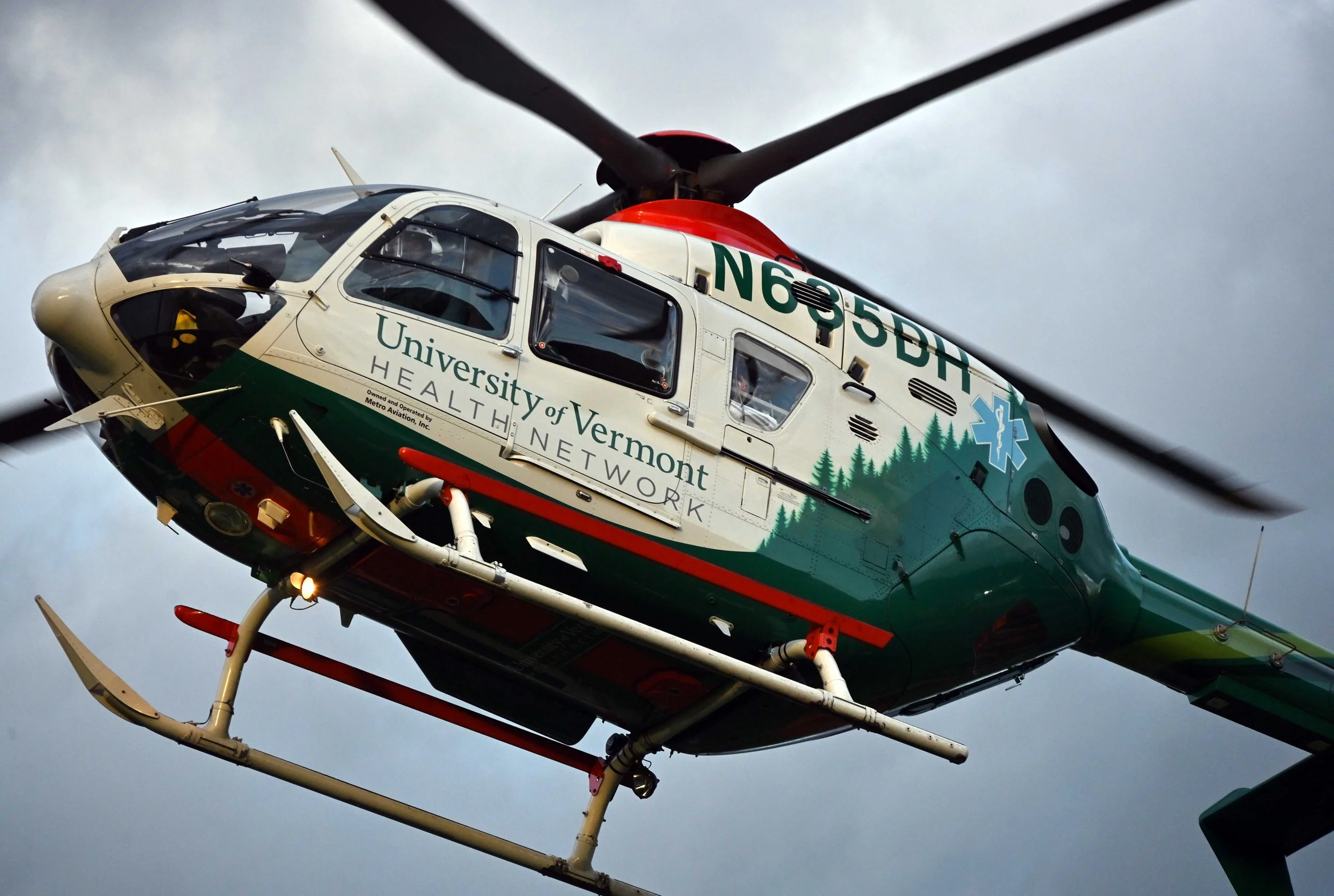
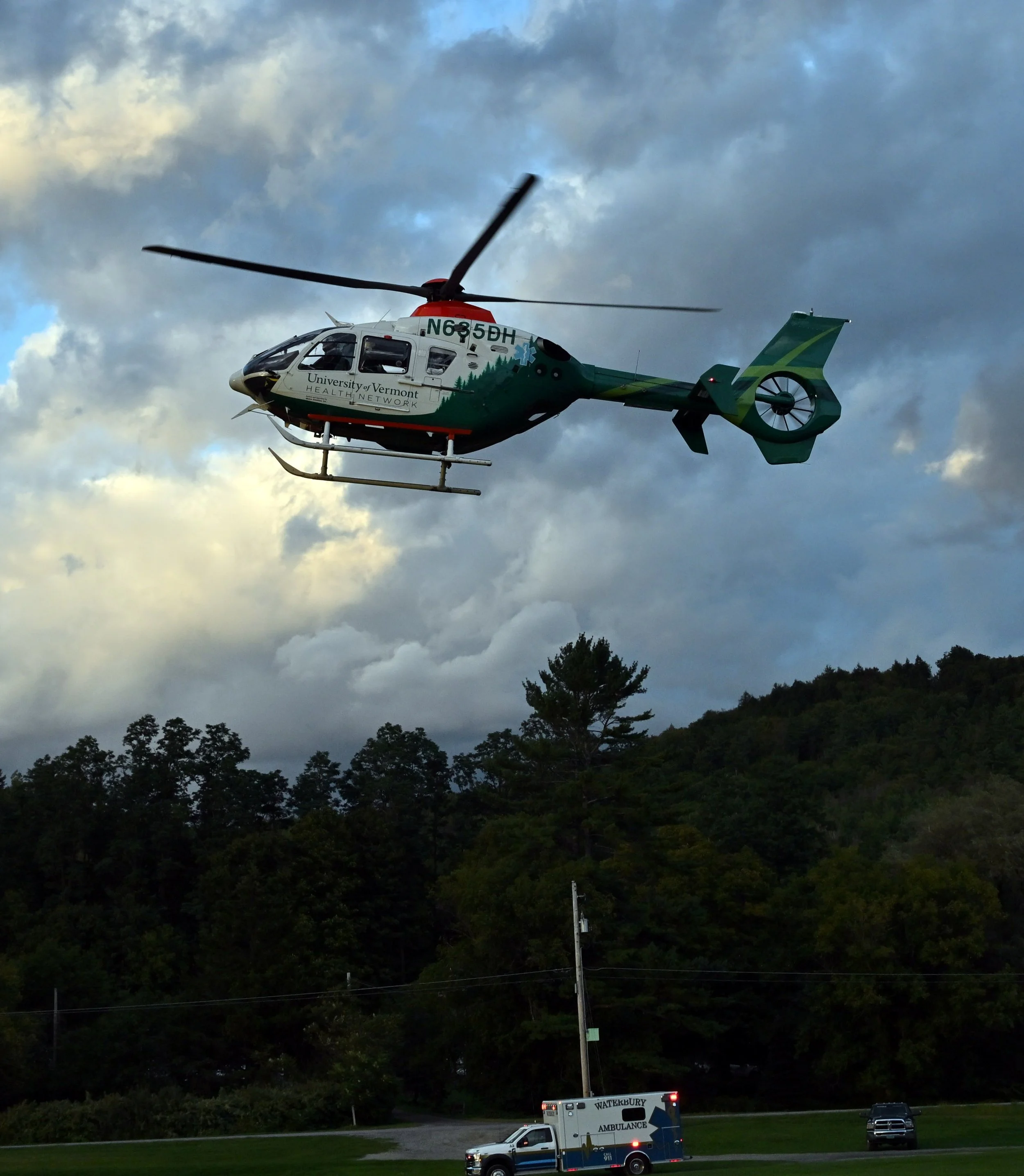
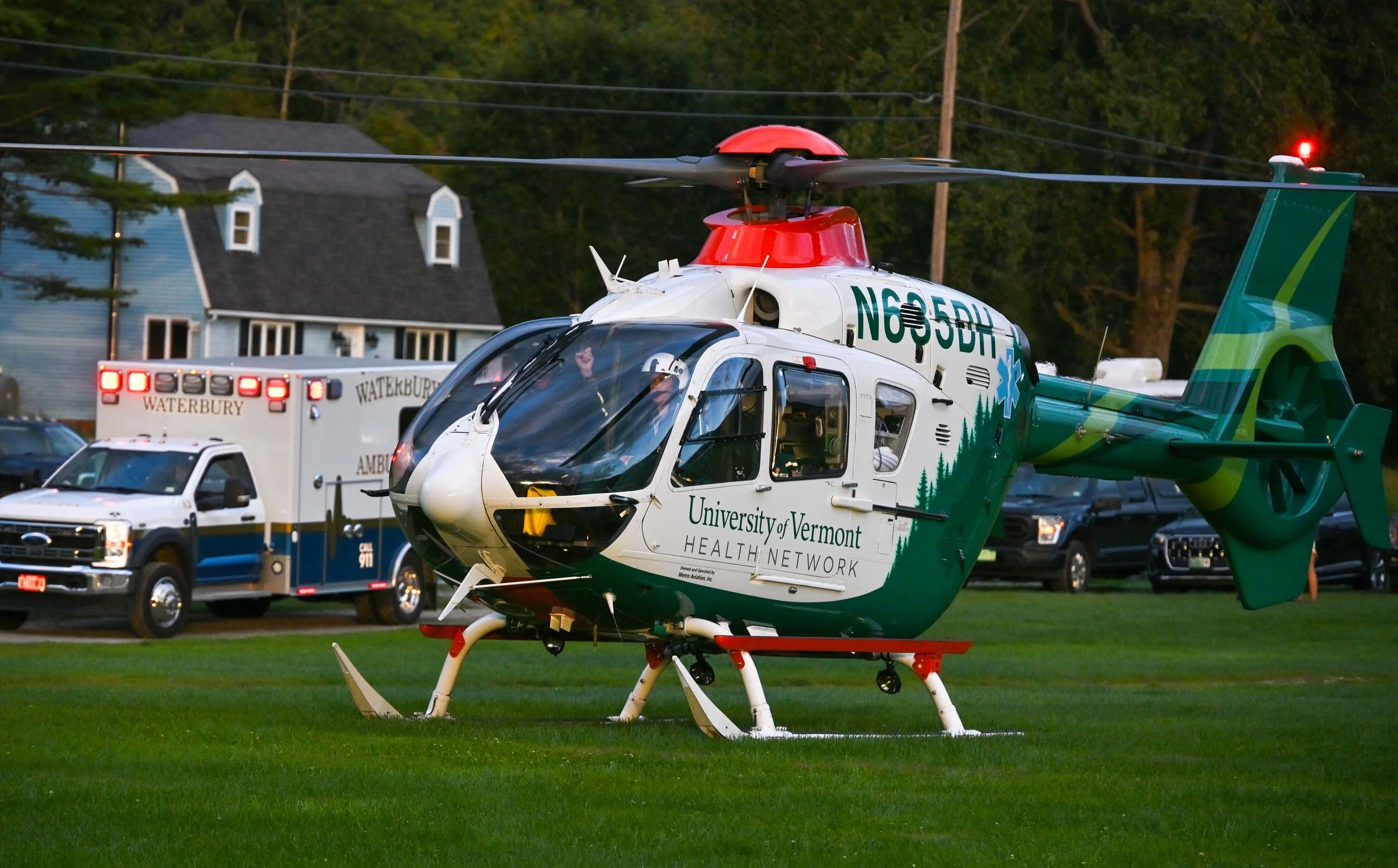
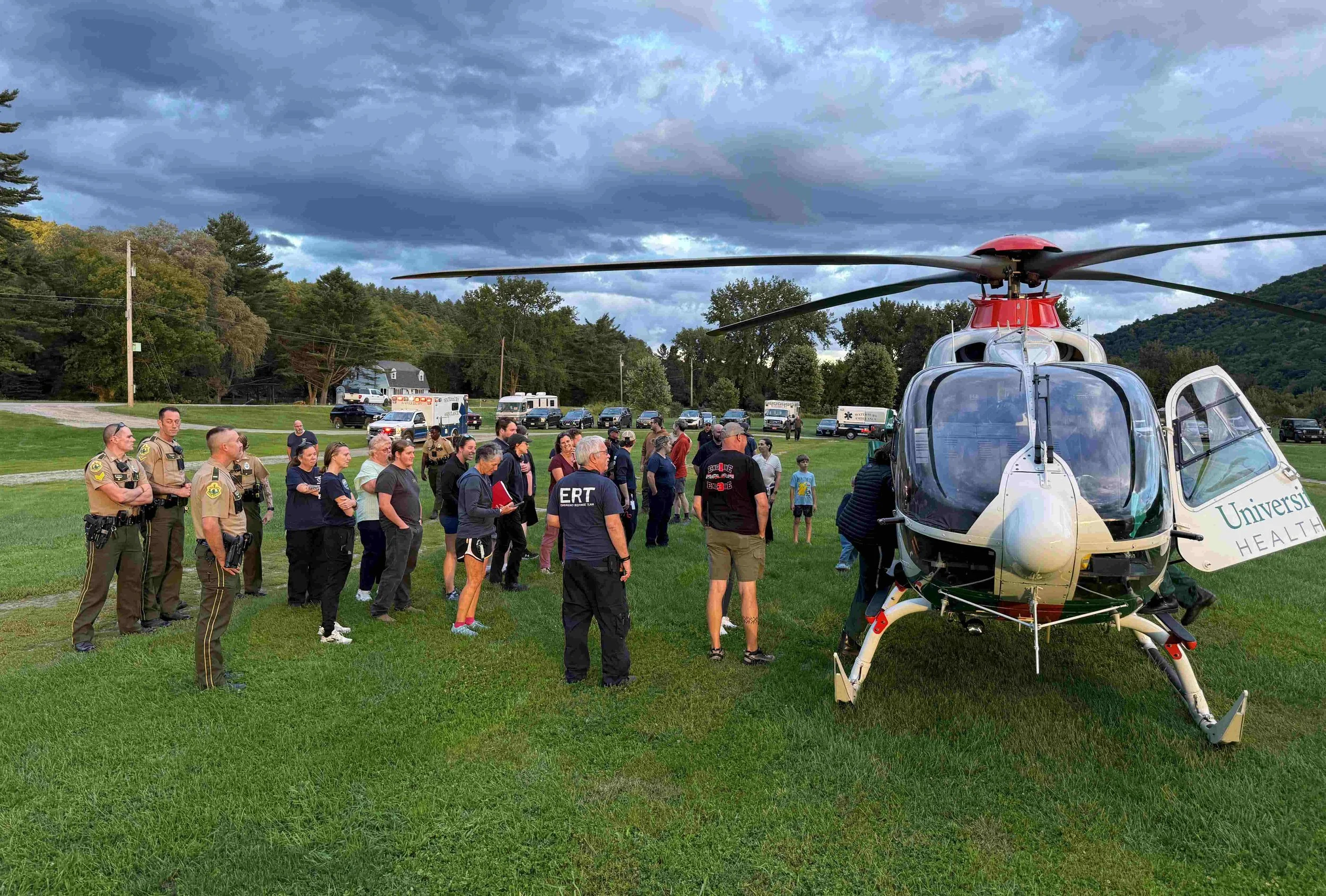
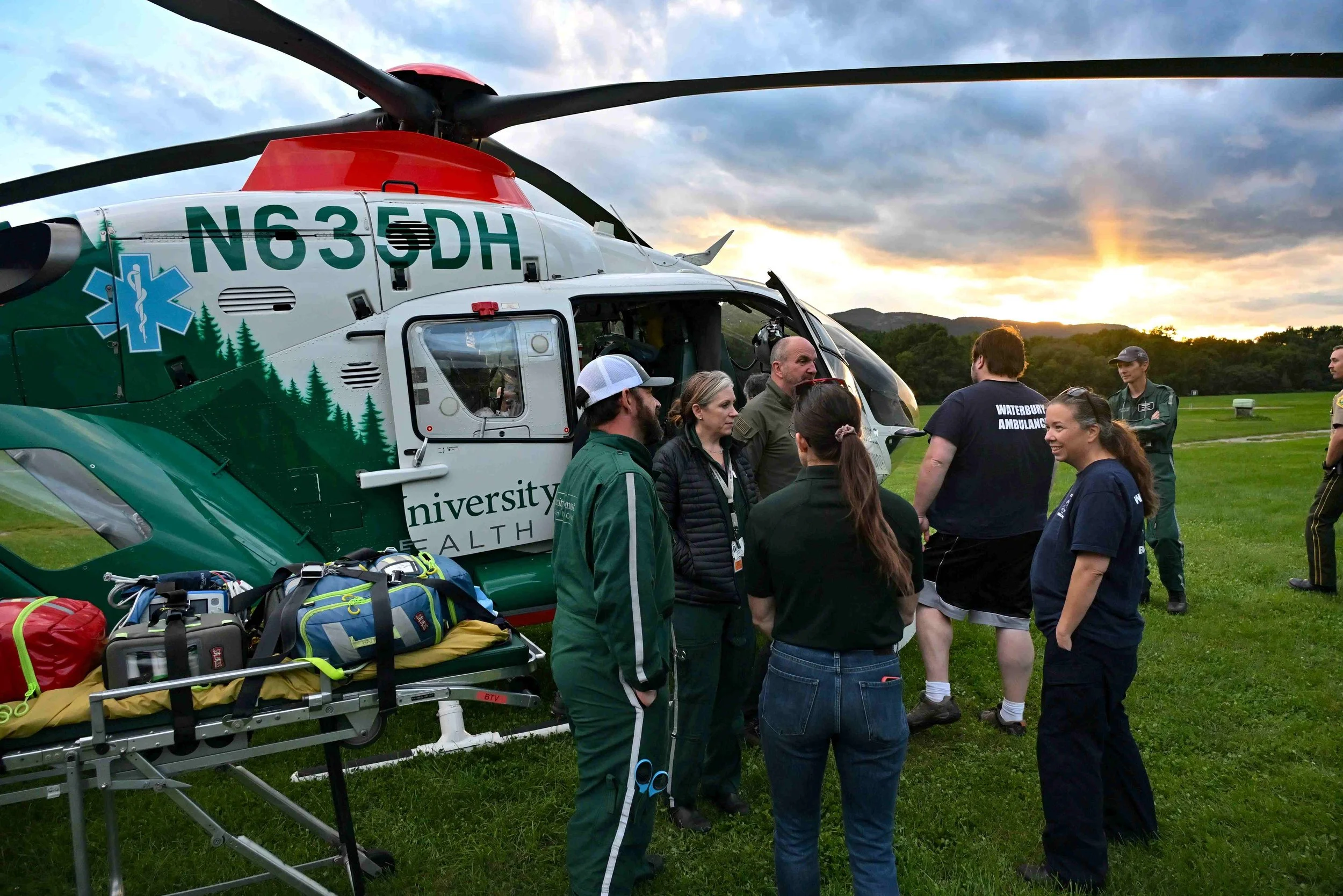
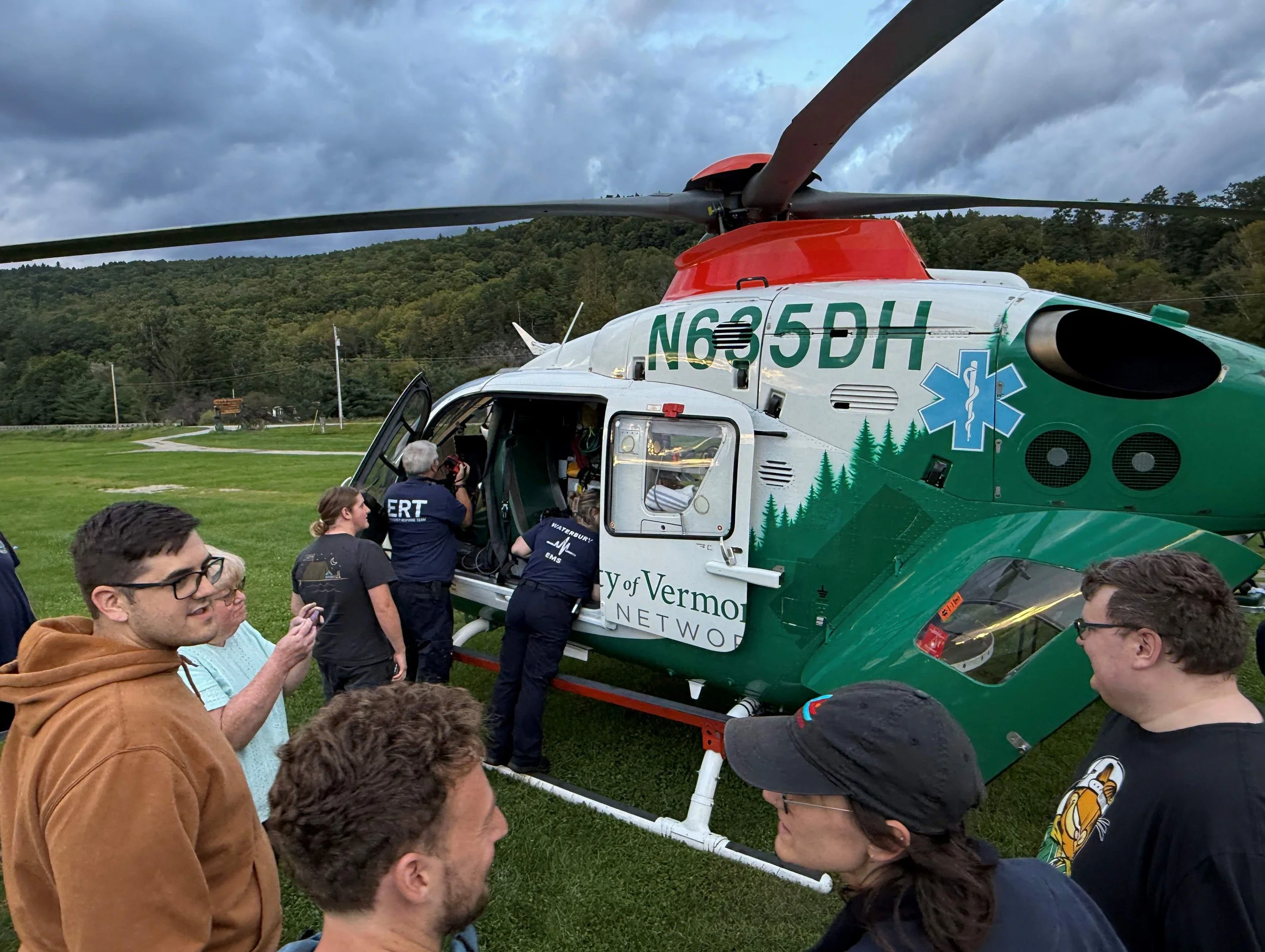
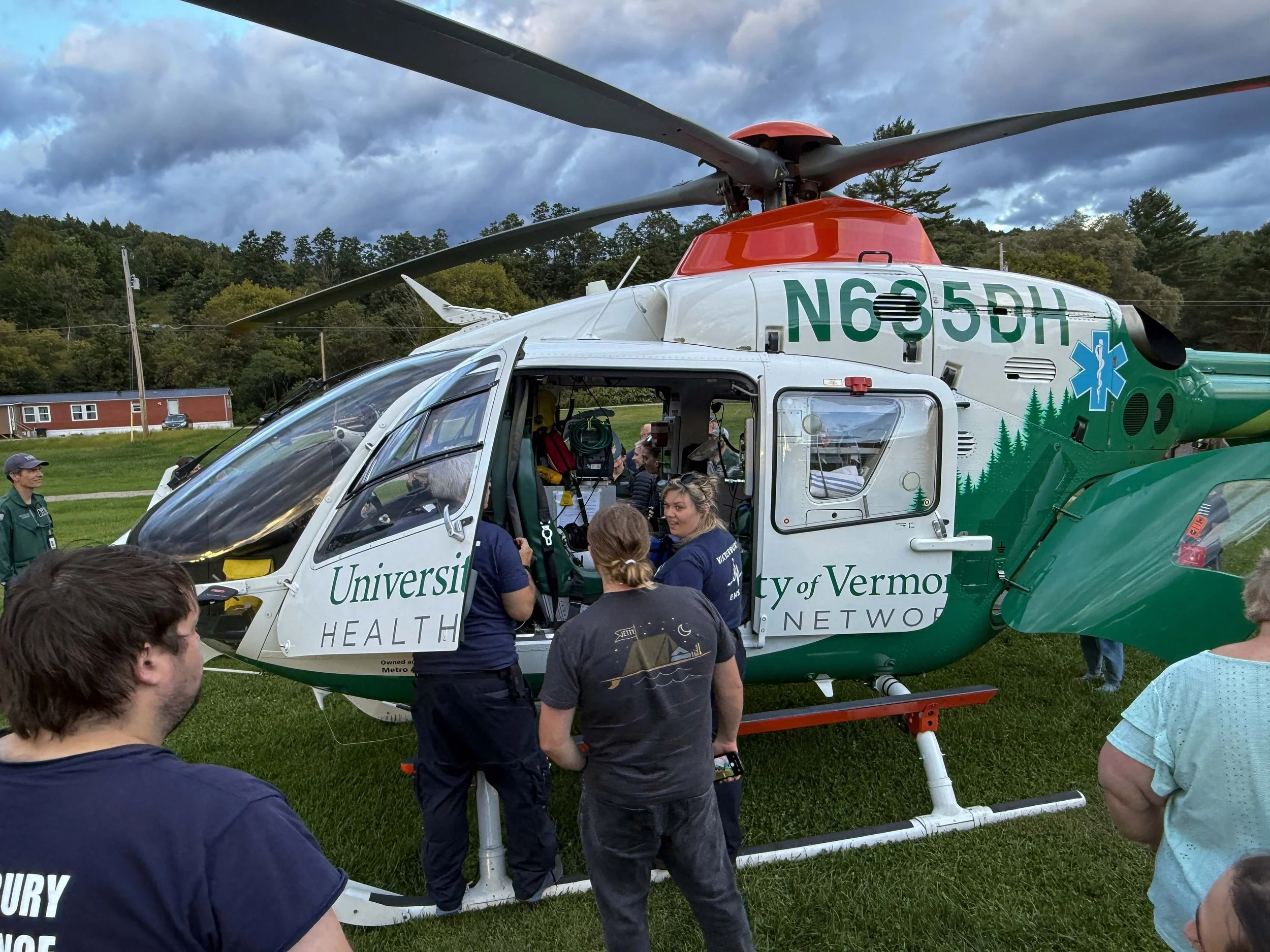
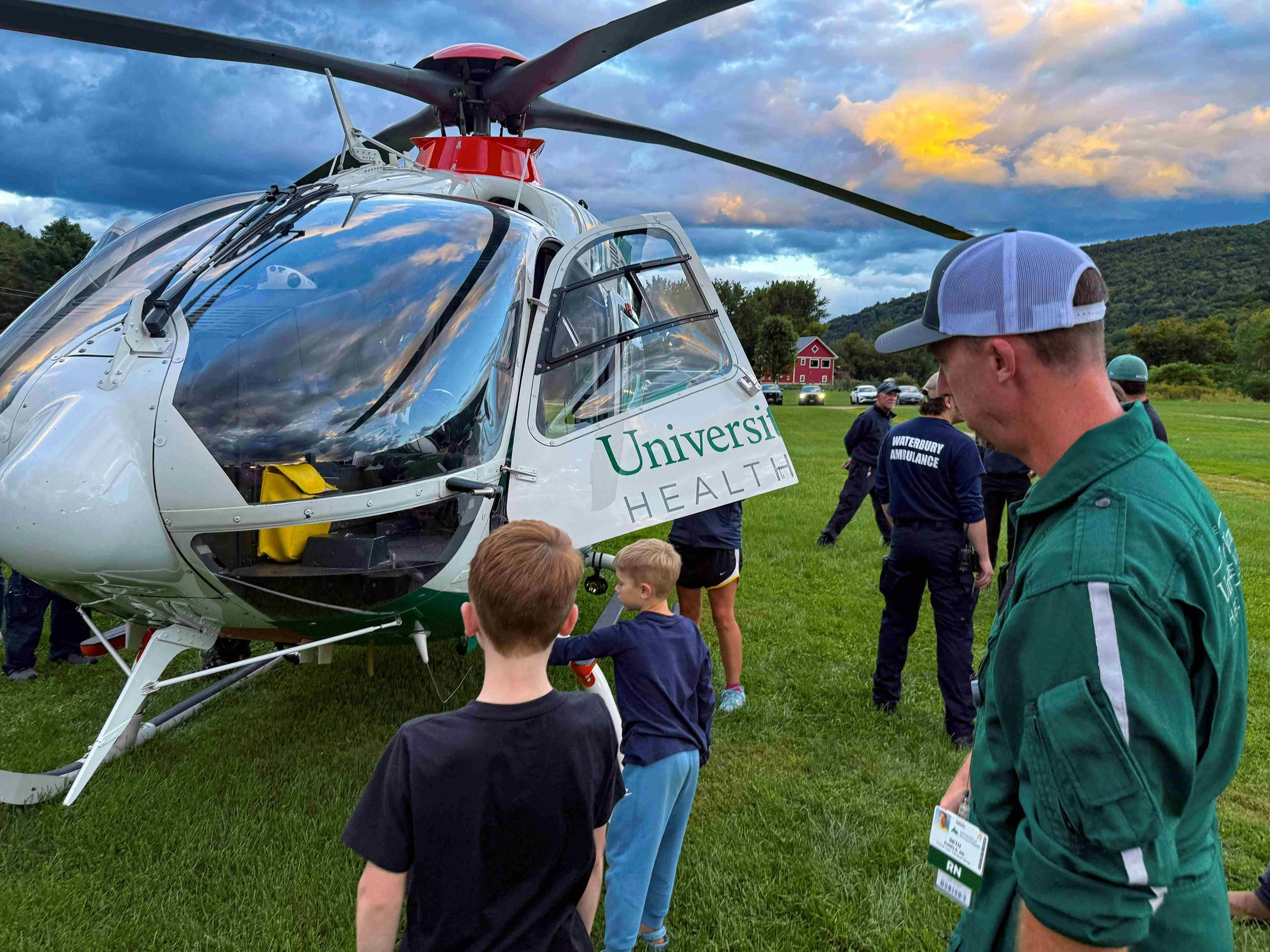
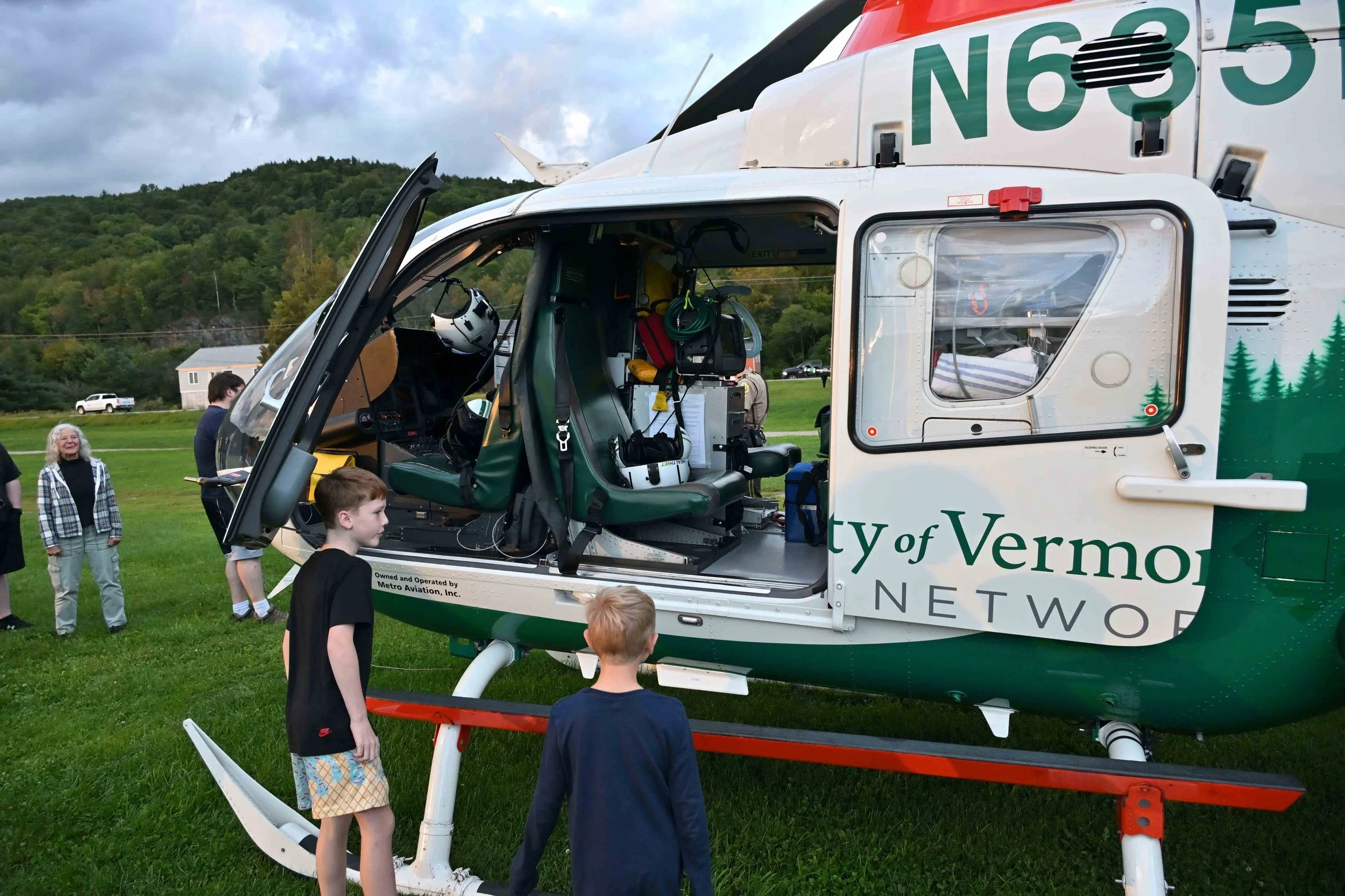
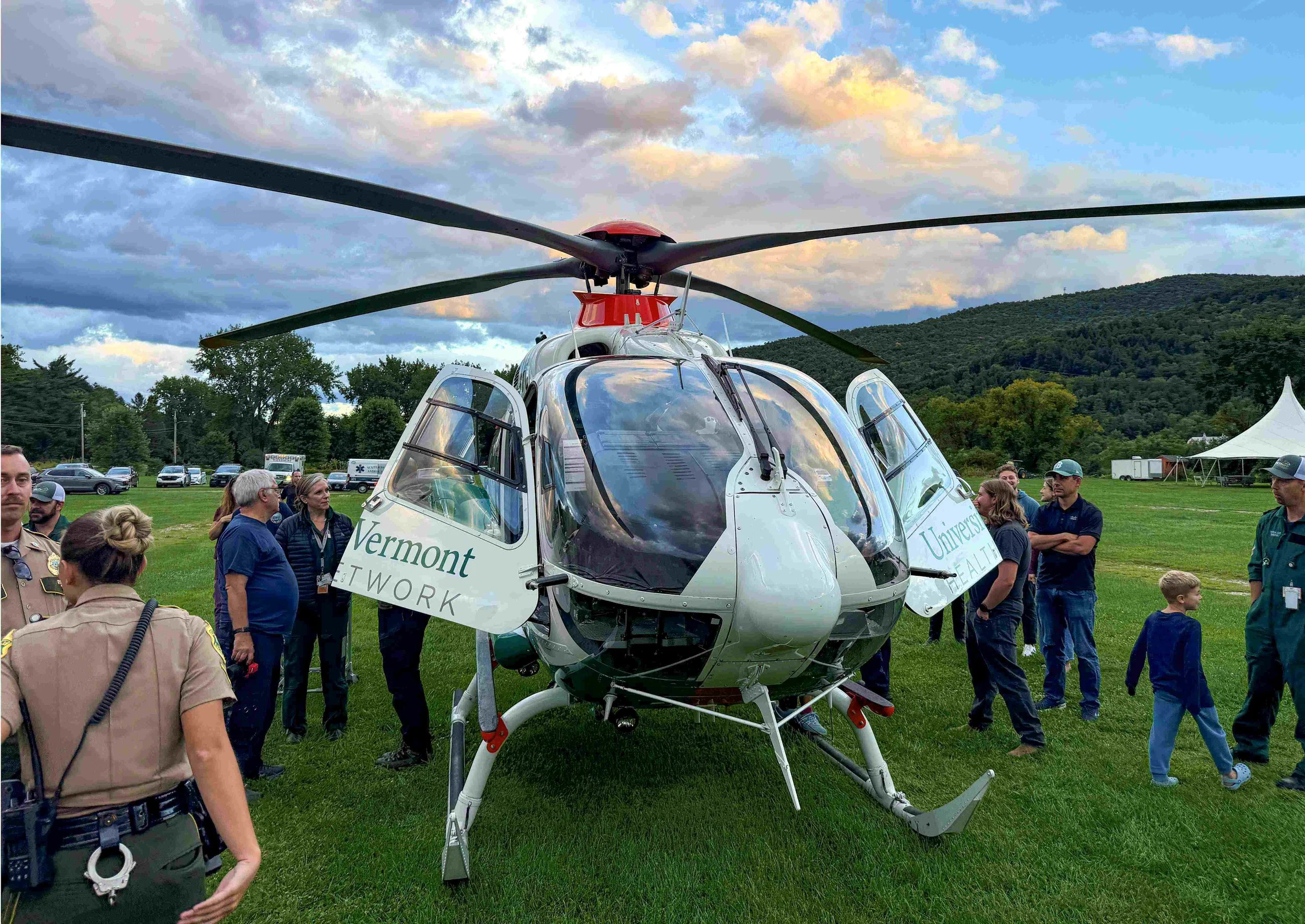
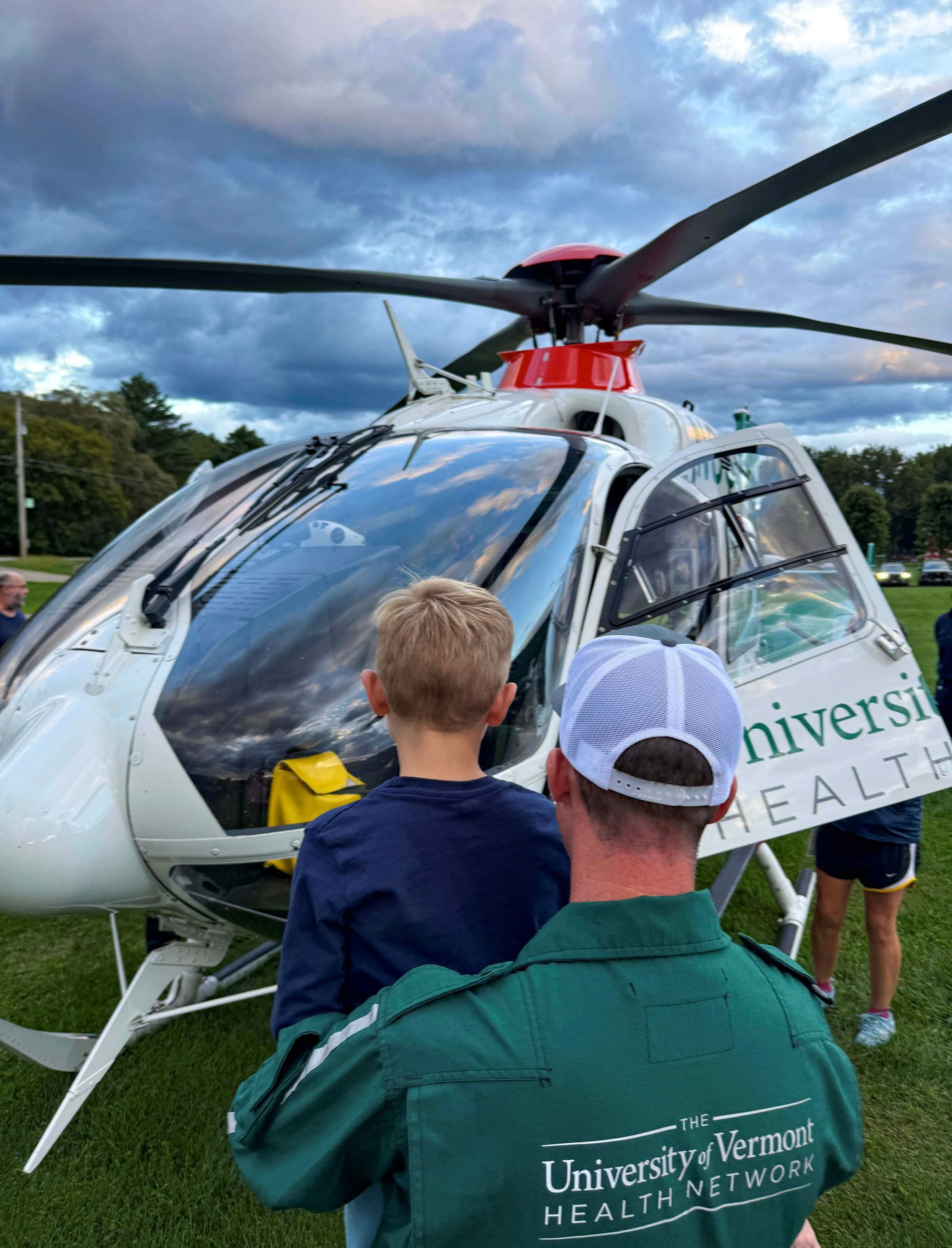
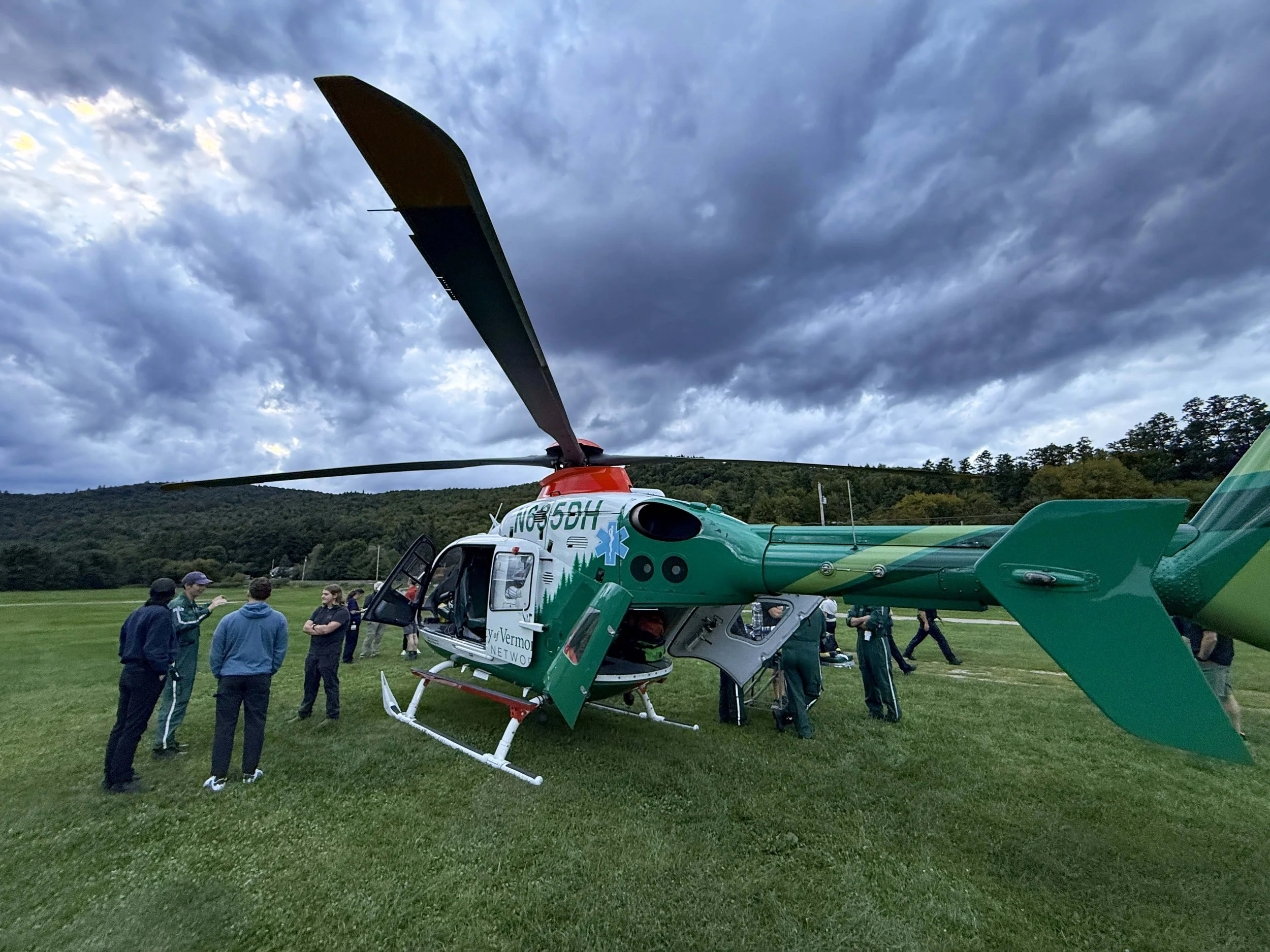
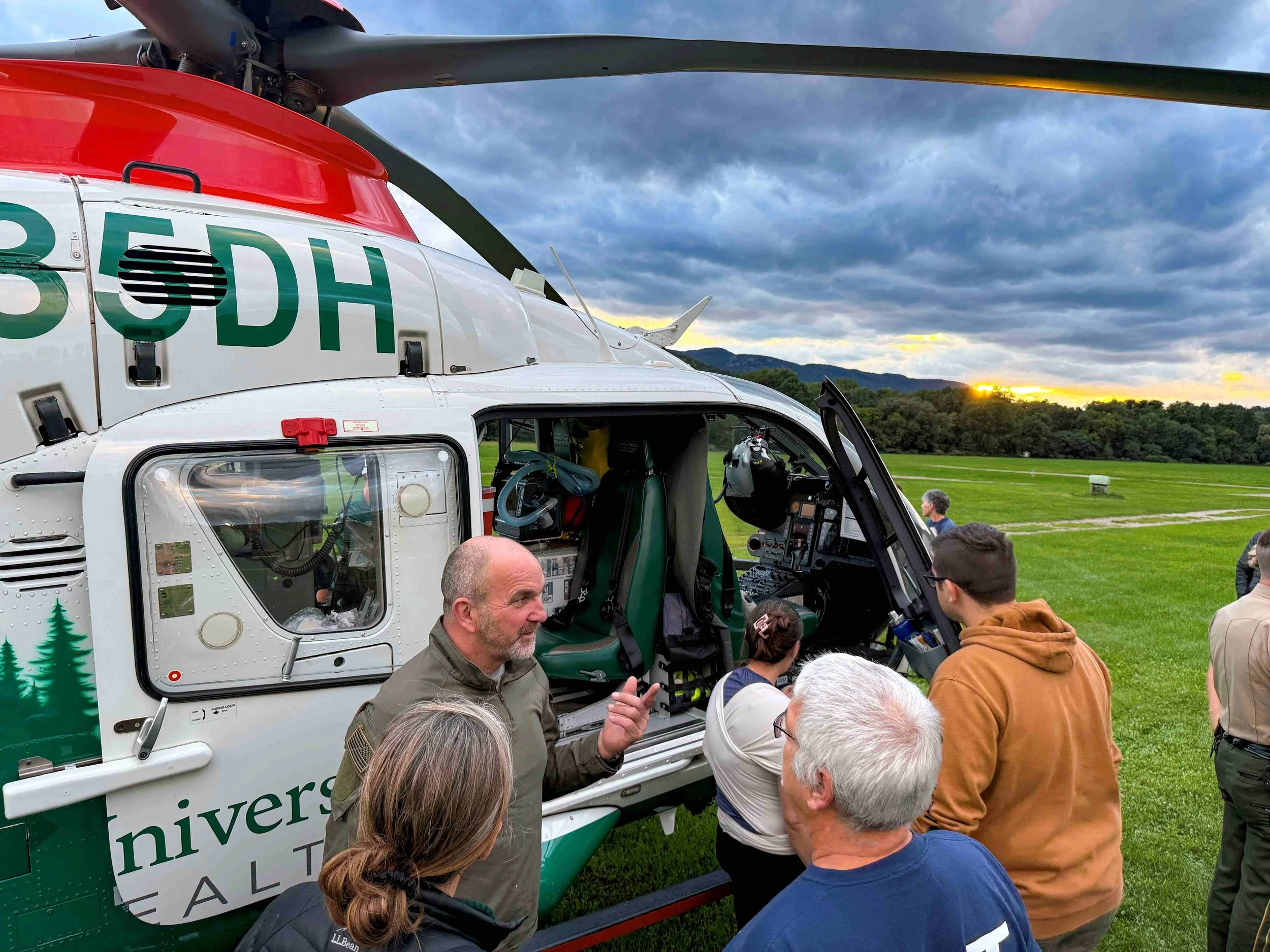
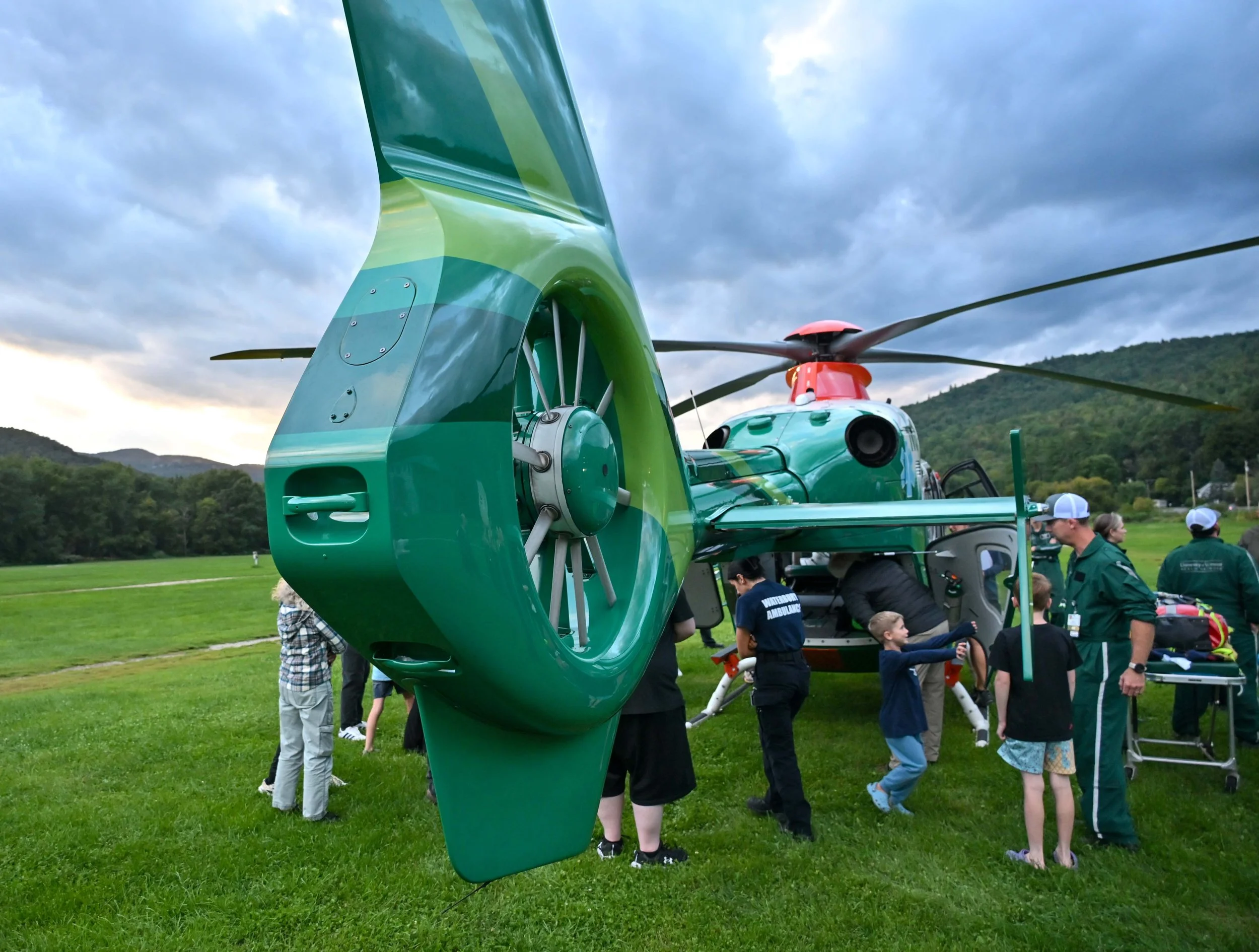
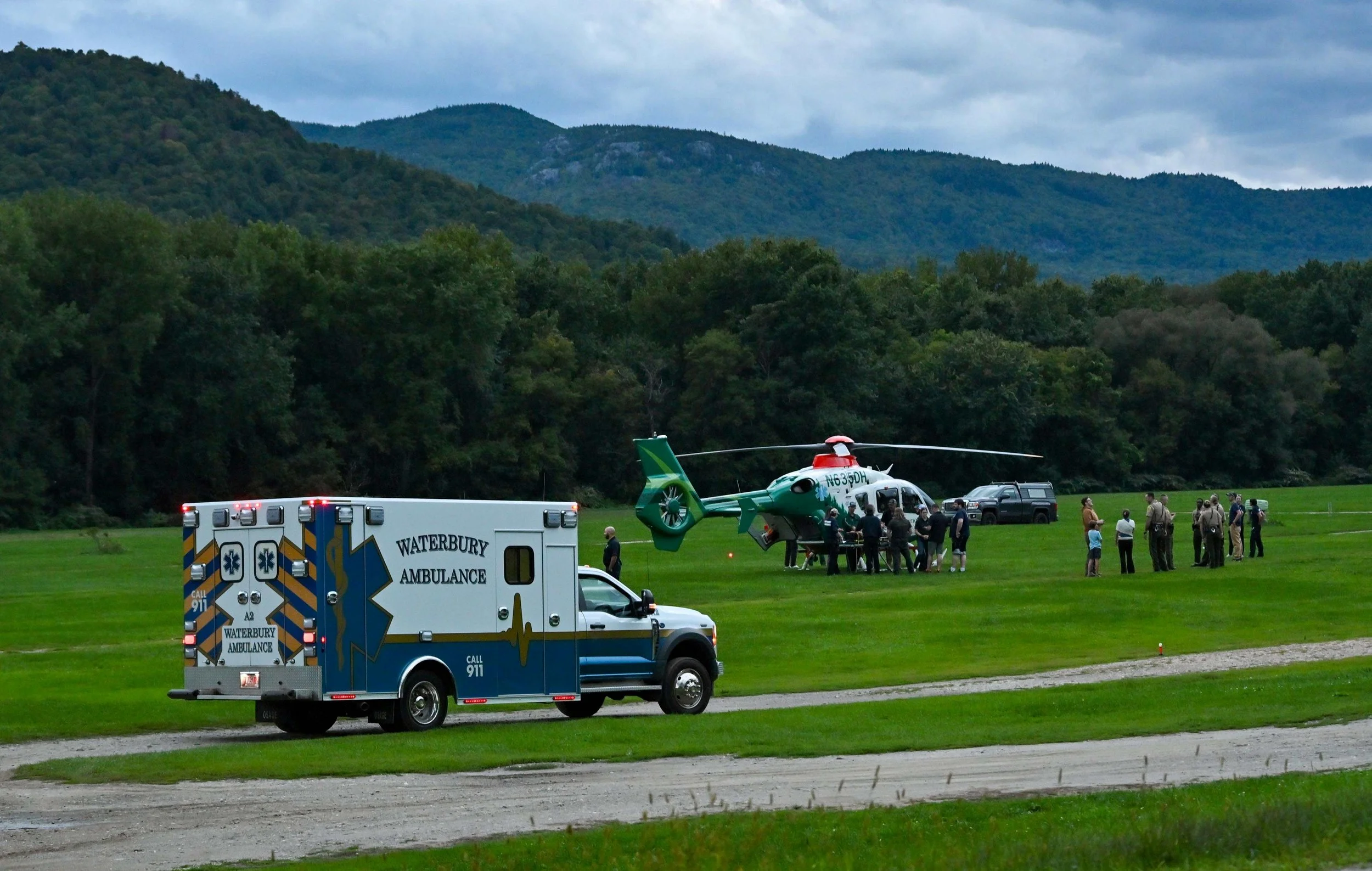
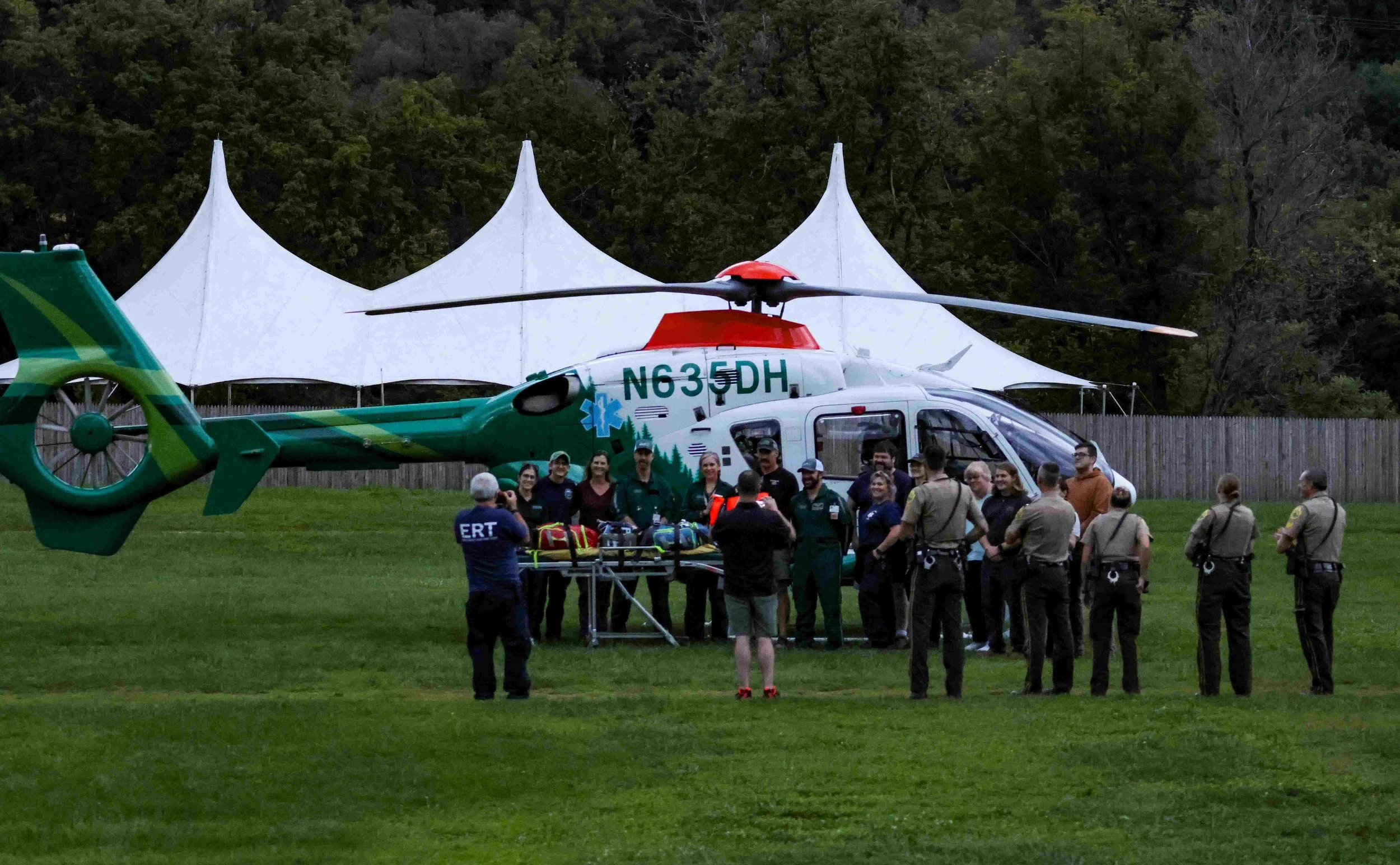
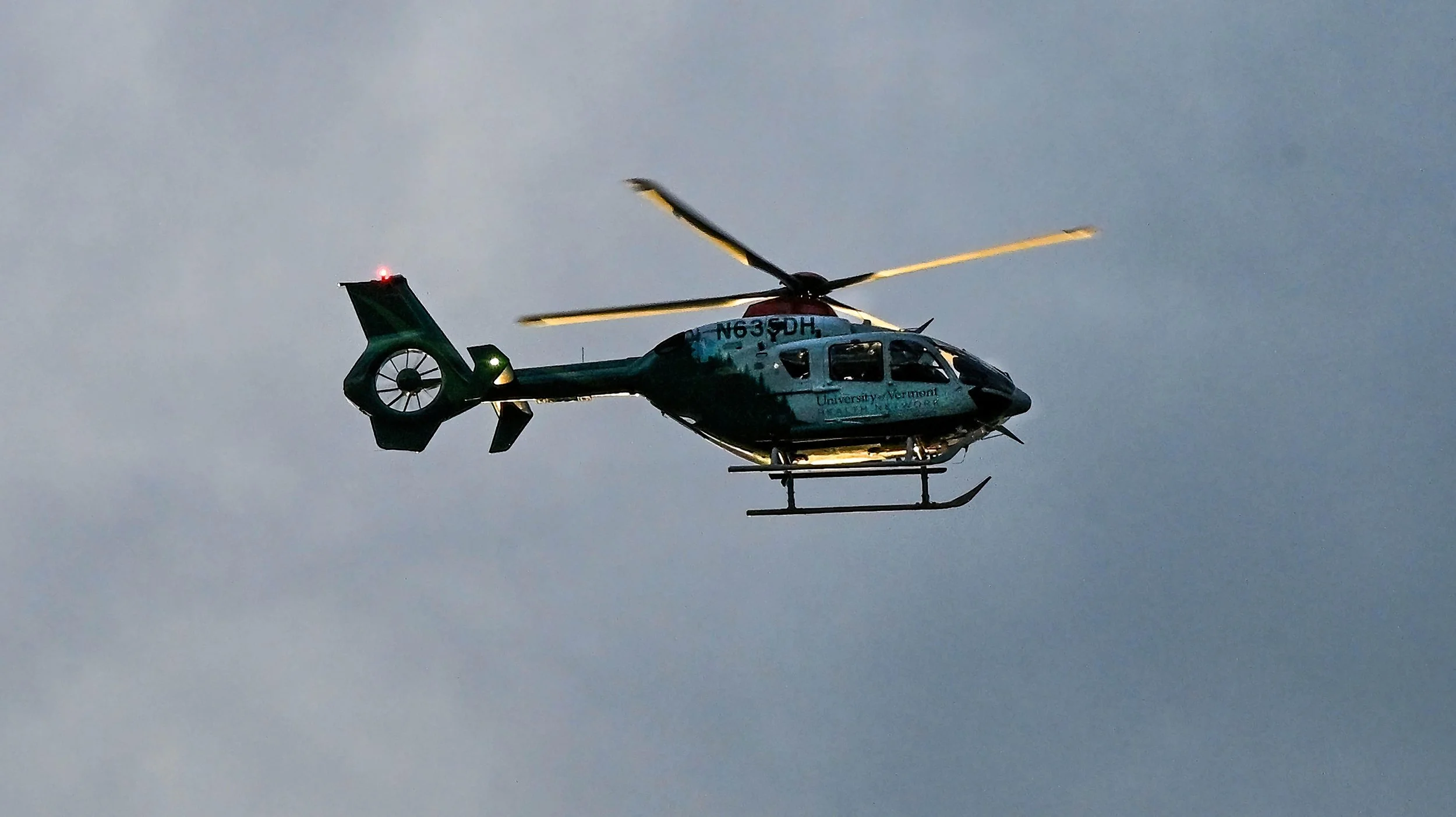
September 19, 2026 | By Lee Kahrs | CorrespondentUVM’s HealthNet 4 helicopter lands at Farr’s Field on Sept. 10 for a training with local first responders. Photo by Gordon Miller
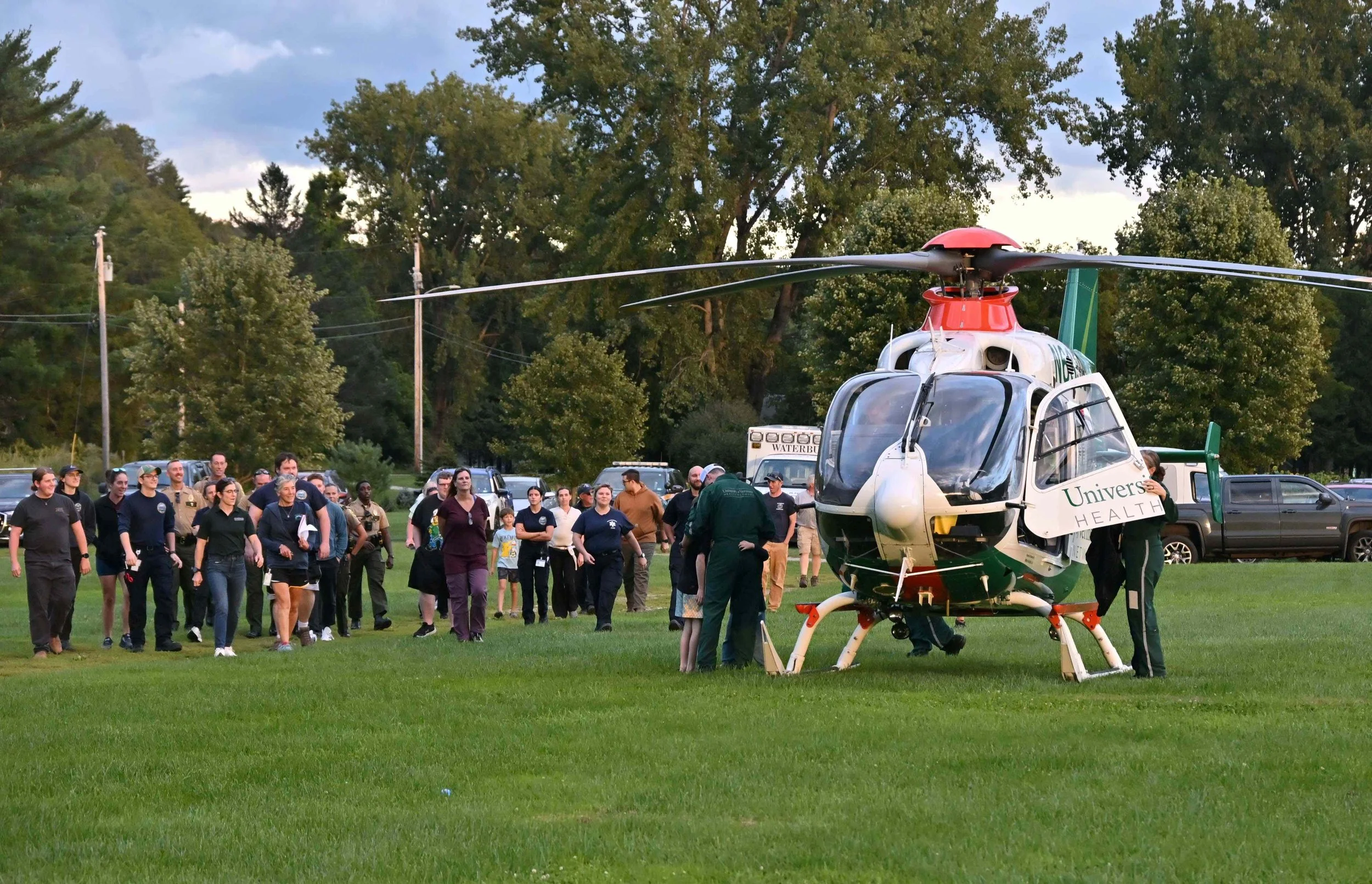
Roughly 50 first responders gathered at Farr’s Field last week for medical helicopter ground safety and landing zone training.
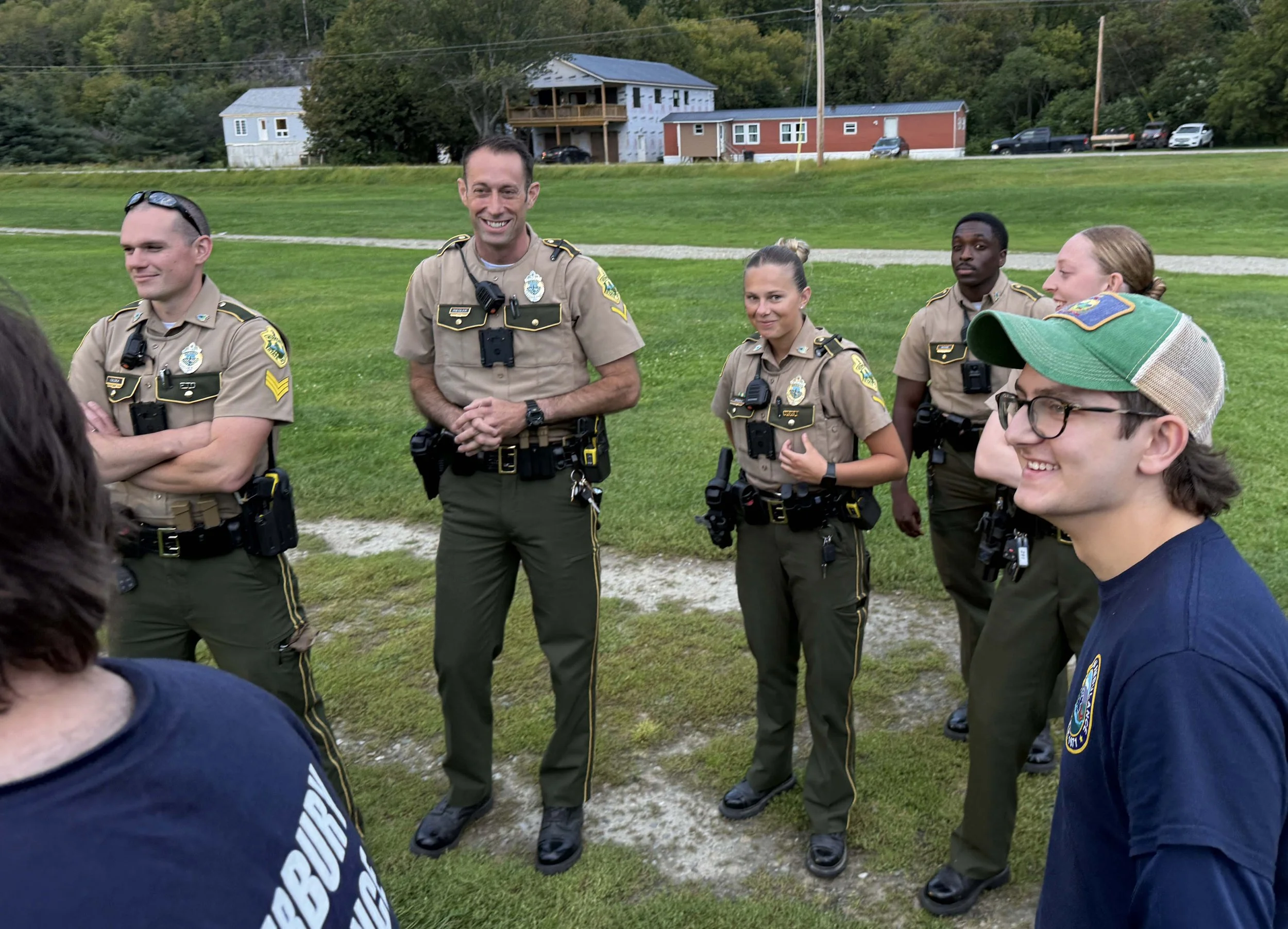
Waterbury Ambulance Service hosted the Sept. 10 training that included personnel from UVM HealthNet and HealthNet’s aircraft team based at Burlington International Airport, the Vermont State Police Berlin barracks and VSP Search and Rescue, Waterbury Fire Department, the ambulance service and its Waterbury Backcountry Rescue Team.
Waterbury Ambulance Service Chief Zach Rounds said the training was made possible by a donation from UVM HealthNet of a landing zone kit, a series of high-powered strobe lights that can be set up in any open area and are easily identifiable from the air.
Participants first spent roughly 90 minutes in classroom training at the ambulance station, learning about ground resources, critical care teams, when to call a medical helicopter, helicopter ground safety, critical care team operation, and ground resources.
Participating in the exercise were members of Waterbury Ambulance Service and its Backcountry Rescue Team, Waterbury Fire Department and Vermont State Police. Photo by Gordon Miller
They then headed to Farr’s Field where they were joined by the chopper and its crew. There they learned how to deploy the landing zone kit and work around a medical helicopter landing and taking off.
“It’s good to see it in training,” Rounds said, “so when we call them, they’ve seen it before, and they’re more comfortable in a real-life situation. And it allows our providers a little bit of perspective.”
Rounds added that he hopes they can offer this kind of training annually.
“We’ve done joint training with the fire department in years past, but it’s been three or four years,” he said.
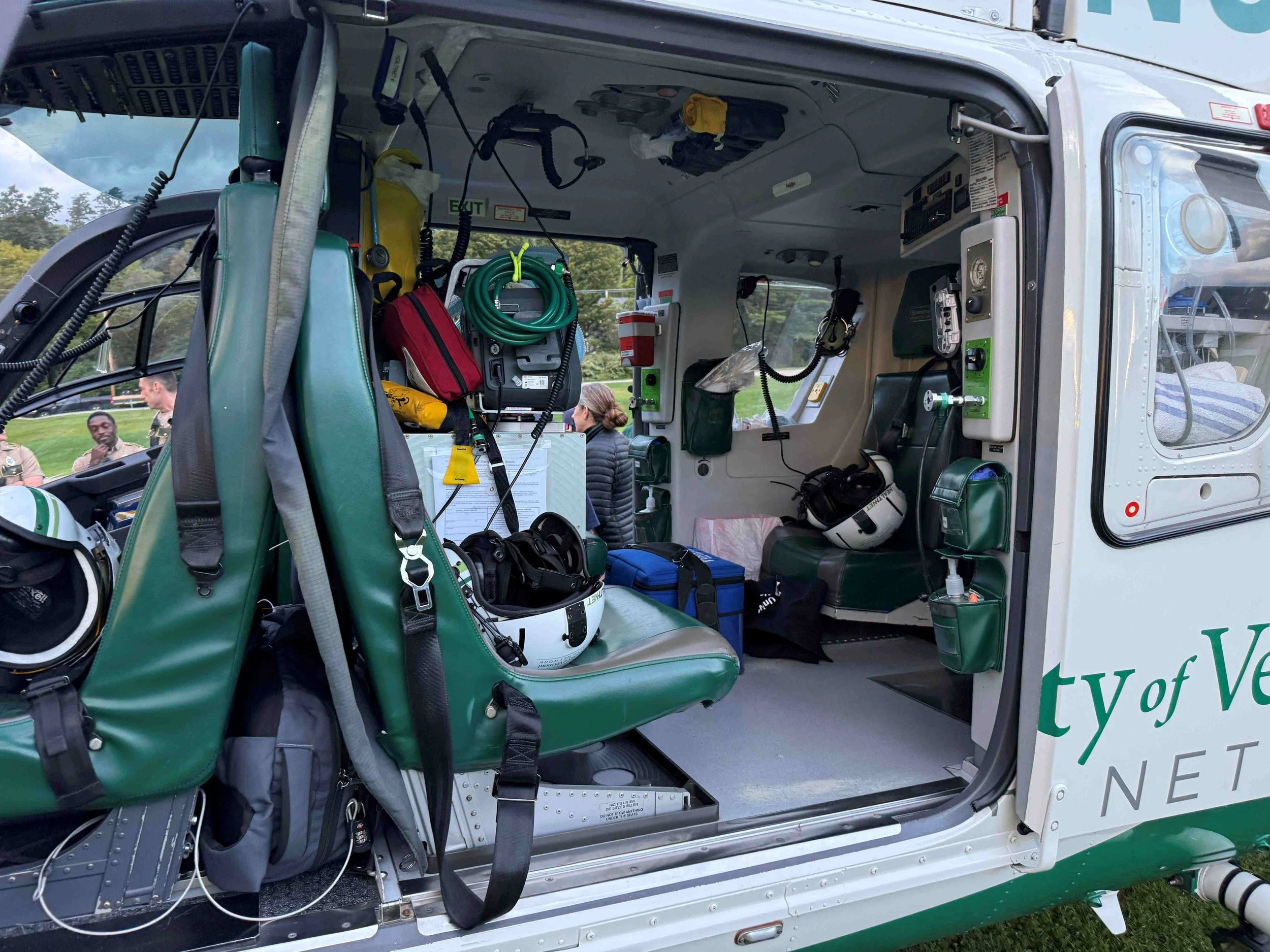
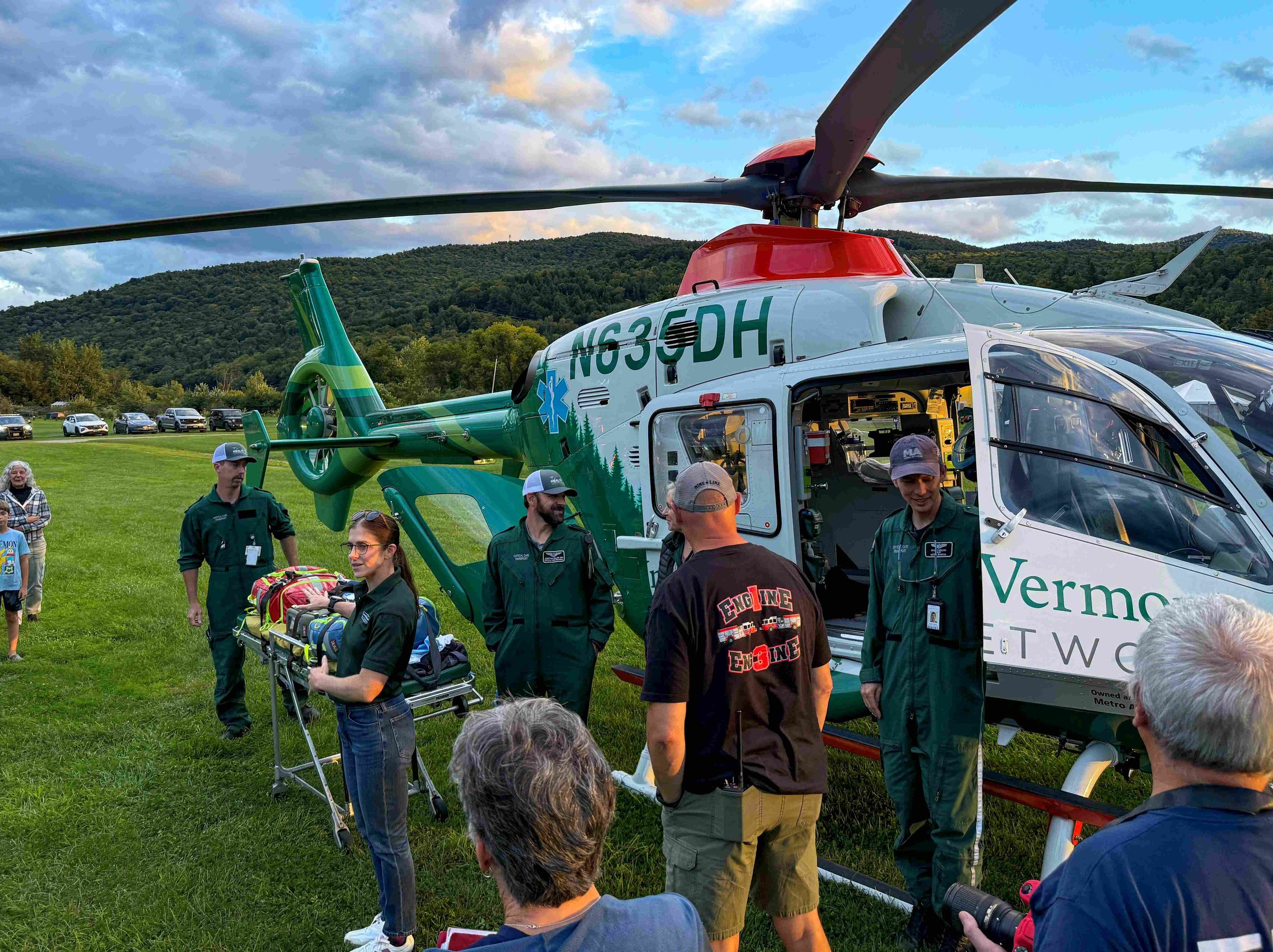
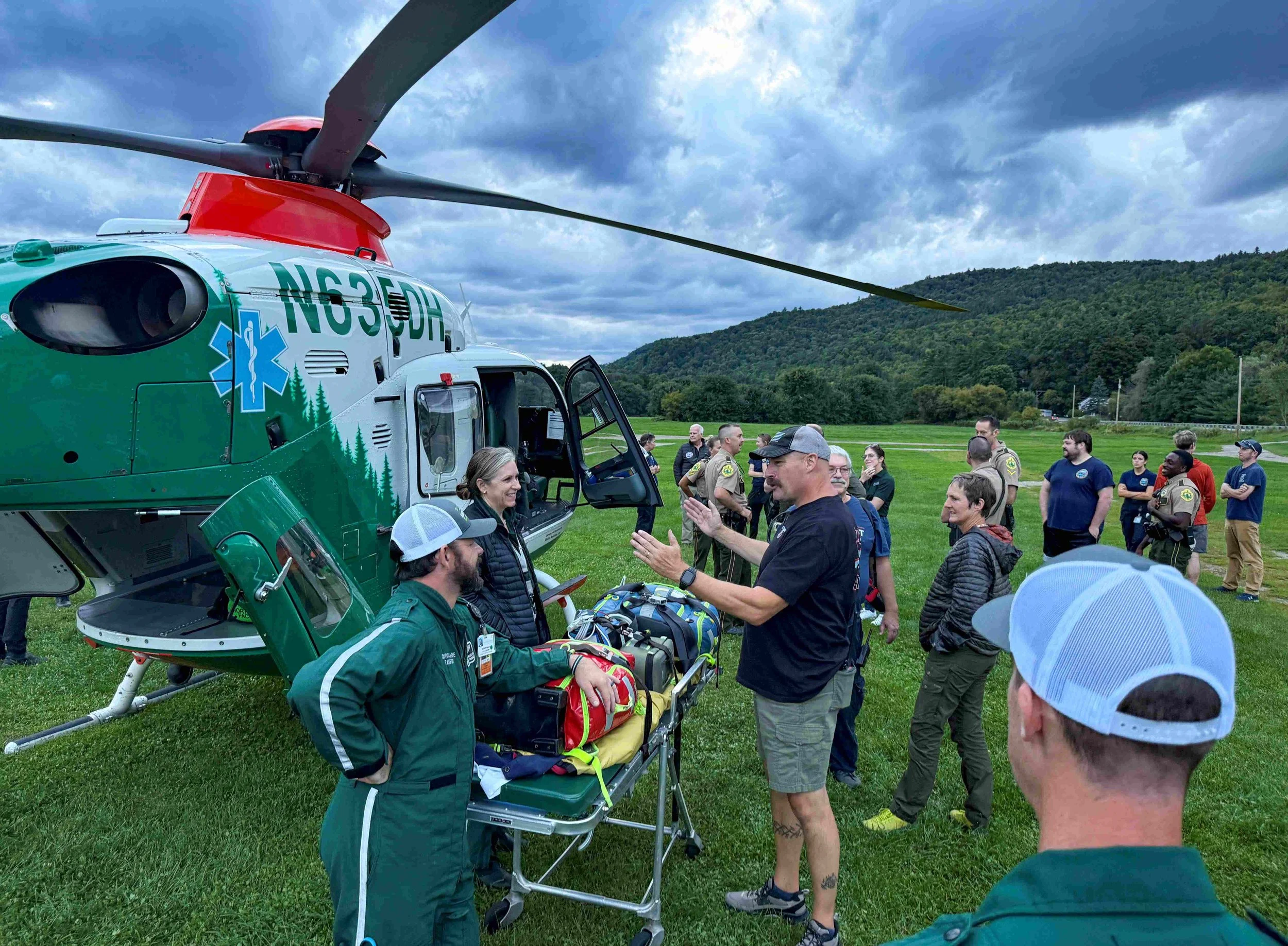
Because UVM Medical Center is only about 30 minutes from Waterbury, Rounds said that most of their patients are transported by ground. However, there are situations in which a medical helicopter would be called for faster transport. Some examples might be a heart attack or stroke victim, a multi-vehicle crash with prolonged extraction, or a multi-casualty incident that included burn victims (UVM Medical Center does not have a burn unit.)
“So it’s so important to be on it,” Rounds said.
After the training was completed, Rounds said Waterbury Ambulance decided that the landing zone kit will be kept on one of the Waterbury Fire Department’s fire trucks.
“We are always collaborating with the fire department on these calls,” Rounds said, “so if we call for a medical helicopter, we’ll call the fire department to set up the landing zone kit, and we don’t need to send personnel to the fire department to get the kit.”
Of course, the goal is to avoid having to make that call. Rounds said there hasn’t been a need for a medical helicopter in Waterbury since he took over as service chief in June 2025.