
From courtroom to bookstore: Amestoy talks ‘Winters’ Time’ and writing legal history
February 16, 2026 | By Katie Lyford | Correspondent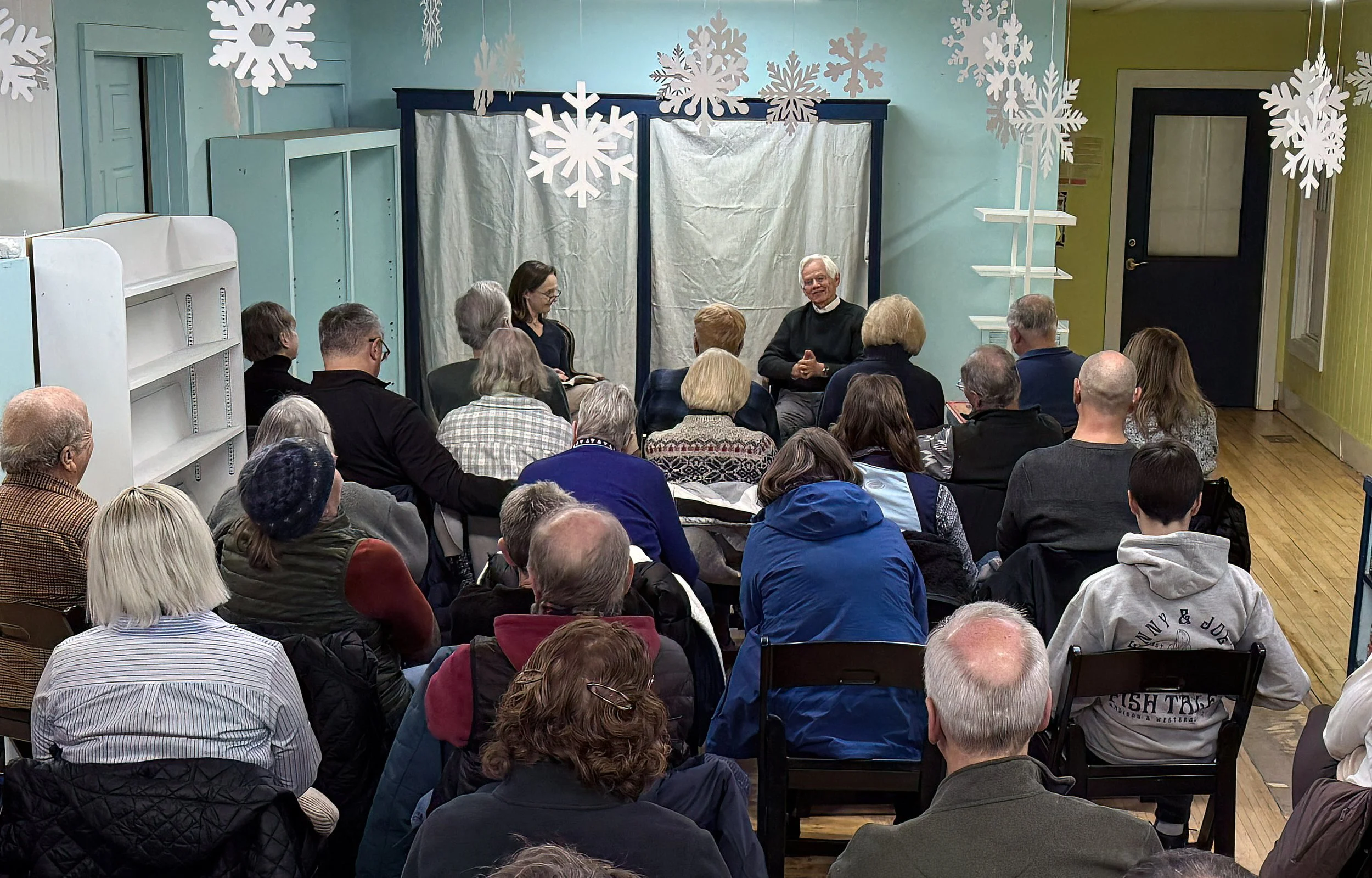
Bridgeside Books maxed out its audience space for readers to hear from former Vermont Supreme Court Chief Justice Jeffrey Amestoy. Photo by Gordon Miller
Jeffrey Amestoy is no stranger to the law.
He has been an attorney, Vermont’s attorney general, chief justice of the Vermont Supreme Court, and a fellow at the Center for Public Leadership at Harvard Kennedy School.
Since his retirement from the law, he has taken on a new role as an author, remaining immersed in the legal world. A Waterbury resident, Amestoy recently visited Bridgeside Books, where he answered questions in a room full of readers eager to hear about his latest project.
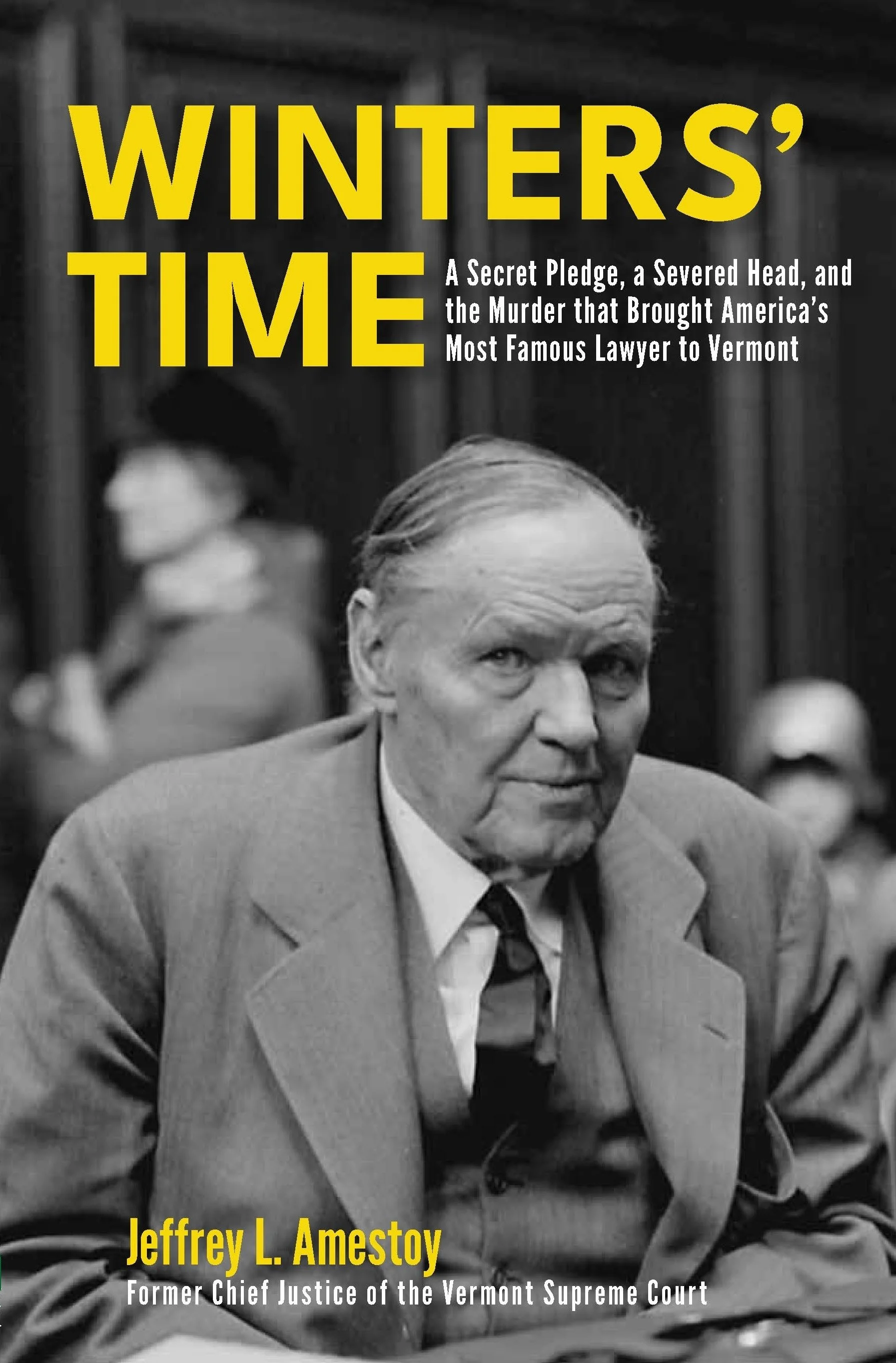
Book cover image courtesy of the Vt. Historical Society
Amestoy was interviewed by Cheryl Casey, president of the Waterbury Historical Society, which co-sponsored the event. During the hour-long discussion, Amestoy shared how he went from working in the highest court to becoming a small-town author, sharing interesting facts about what went into his writing of “Winters’ Time: A Secret Pledge, a Severed Head, and the Murder That Brought America's Most Famous Lawyer to Vermont,” published last year by the Vermont Historical Society.
The story delves into the November 1926 murder of Cecelia Gullivan in her home in Windsor, Vermont. Police charged John Winters, a machinist at the Cone Automatic Machine company of Windsor, where Gullivan was the company treasurer. Winters was convicted in a high-profile trial. For his appeal, he landed one of the nation's most famous defense attorneys, and the case ultimately went to the Vermont Supreme Court.
Typically a private man, Amestoy captured the attention of the audience that was thrilled to have the chance to hear him speak in public. With a large turnout and Amestoy being soft-spoken, it was sometimes hard to hear him, but that didn’t detract from his ability to draw in and engage the audience.
Casey led the discussion, posing some questions Amestoy was hesitant to answer, but he did so with reflection and grace, and a bit of humor. “Usually, I am conducting one of these events myself, and I cover the first section of the book, expecting attendees to read the book to learn the rest,” he quipped.
Most questions from both Casey and audience members revolved around the particulars of the case, the book’s title, and the process of going from research to publication. And, of course, when to expect his next book. Many of his answers left room for the audience to seek more.
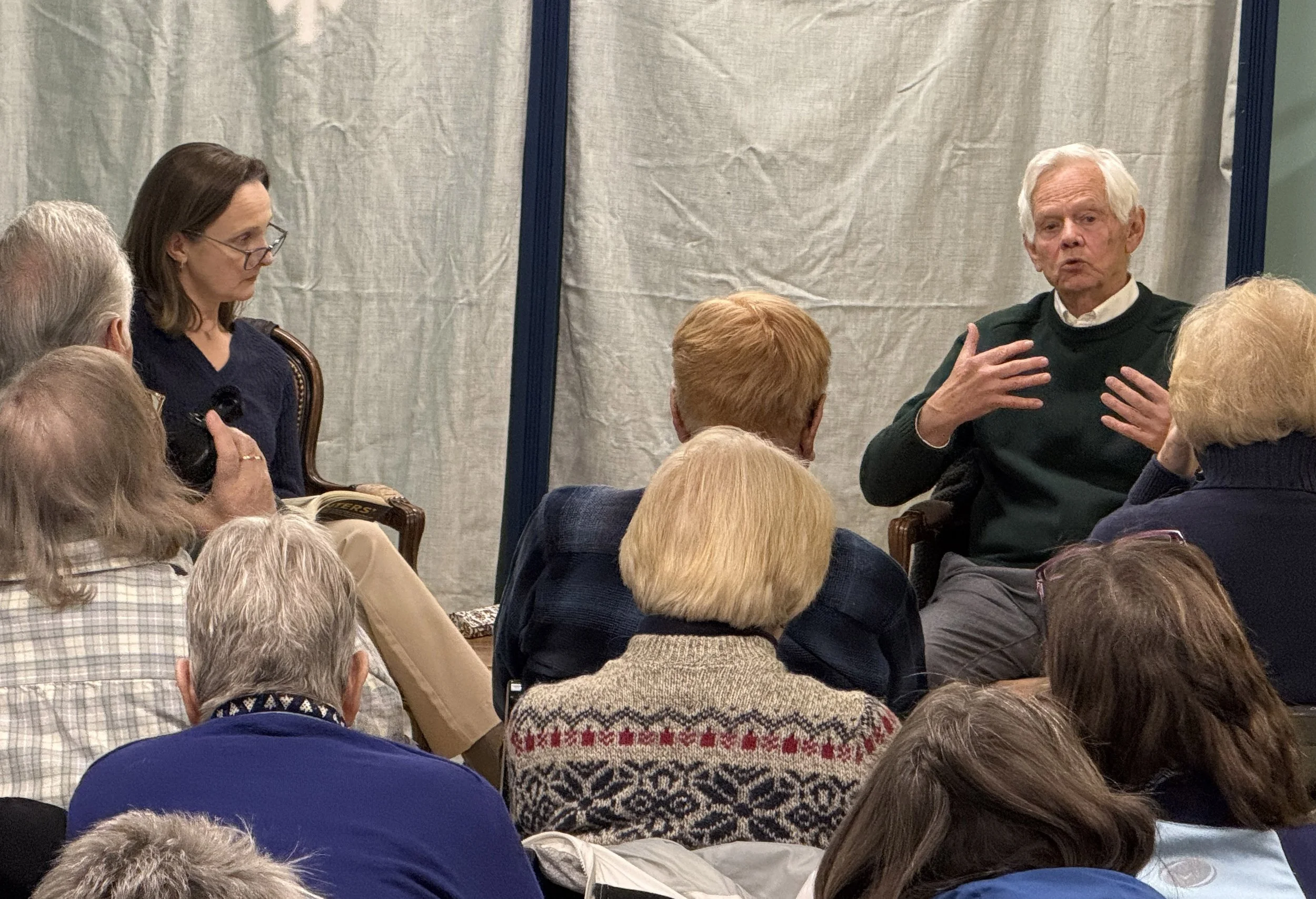
Jeffrey Amestoy (right) answers questions from Cheryl Casey (left) of the Waterbury Historical Society and a Waterbury audience at Bridgeside Books recently. Photo by Gordon Miller
Amestoy said he had long wanted to write about the John Winters murder case, having learned of it on his first day as a lawyer in the same court where the Winters trial took place, the Windsor County Courthouse in Woodstock.
Intrigued by a photo on the wall outside the courtroom, he recalled asking what it was from and being shocked to learn it was from what was notably the most famous case in Vermont history, having taken place in the 1920s. But it was the appeal that most surprised Amestoy, because it brought America’s most famous defense attorney at the time, Clarence Darrow, to Vermont.
The bookshop audience was surprised to learn that the reason the book’s subtitle does not name Darrow directly was based on market research. “My team reported that most people did not know who Clarence Darrow is,” Amestoy said, as some in the crowd gasped in shock.
Amestoy attested to Darrow’s notoriety in his day, explaining that few Americans at the time were more recognized by name than Darrow. “When I first learned of his involvement in the case, my response was, that’s like Babe Ruth coming to Vermont to play in a little league game,” he said.
Later in his career, Amestoy again encountered the Winters trial while working on another case where legal issues from Winters were relevant. Asked about that experience and how the Winters case shaped his argument, he noted that seven issues were raised on appeal, six of which were affirmed by the Supreme Court. One centered on courtroom recreations, including the use of a bloody bed from the crime scene. “That went to what kind of demonstration could be brought in front of the jury,” Amestoy explained.
There were several legal precedents and twists in the case involving due process, unique exhibits (including a severed head), and the death penalty, Amestoy recounted.
The Winters case also offers a rich view of the culture at the time, including a jury composed entirely of male farmers, Amestoy pointed out. The victim, Cecelia Gullivan, was a prominent female figure. And the appeal was sparked by an unusual promise from Darrow’s son, for which he never expected to be called on, but which nonetheless brought him to Vermont and became its own story.
Amestory said that one of the most interesting parts for him was reviewing the news archives related to the case. This brought the events to life for him, revealing details he had not previously considered.
As for the writing process itself, Amestoy shared that he always enjoyed writing, pointing out that much of his legal work involved extensive writing. He said he often catches himself allowing legalese to creep into his writing and that he works hard to catch this and find a way to create something that most people can understand.
Reflecting on his writing projects, Amestoy shared that he was first drawn to the notion of writing about historic legal cases after attending an event featuring Pulitzer Prize–winning historian and bestselling author David McCullough. “Here was this guy, so energetic and so into his writing,” he recalled, saying it inspired him to begin writing.
He was successful from the start, earning the Hughes-Gossett Prize by the Board of Editors of the Journal of Supreme Court History with his 2010 essay titled, “The Supreme Court Argument That Saved the Union: Richard Henry Dana Jr. and the Prize Cases.”
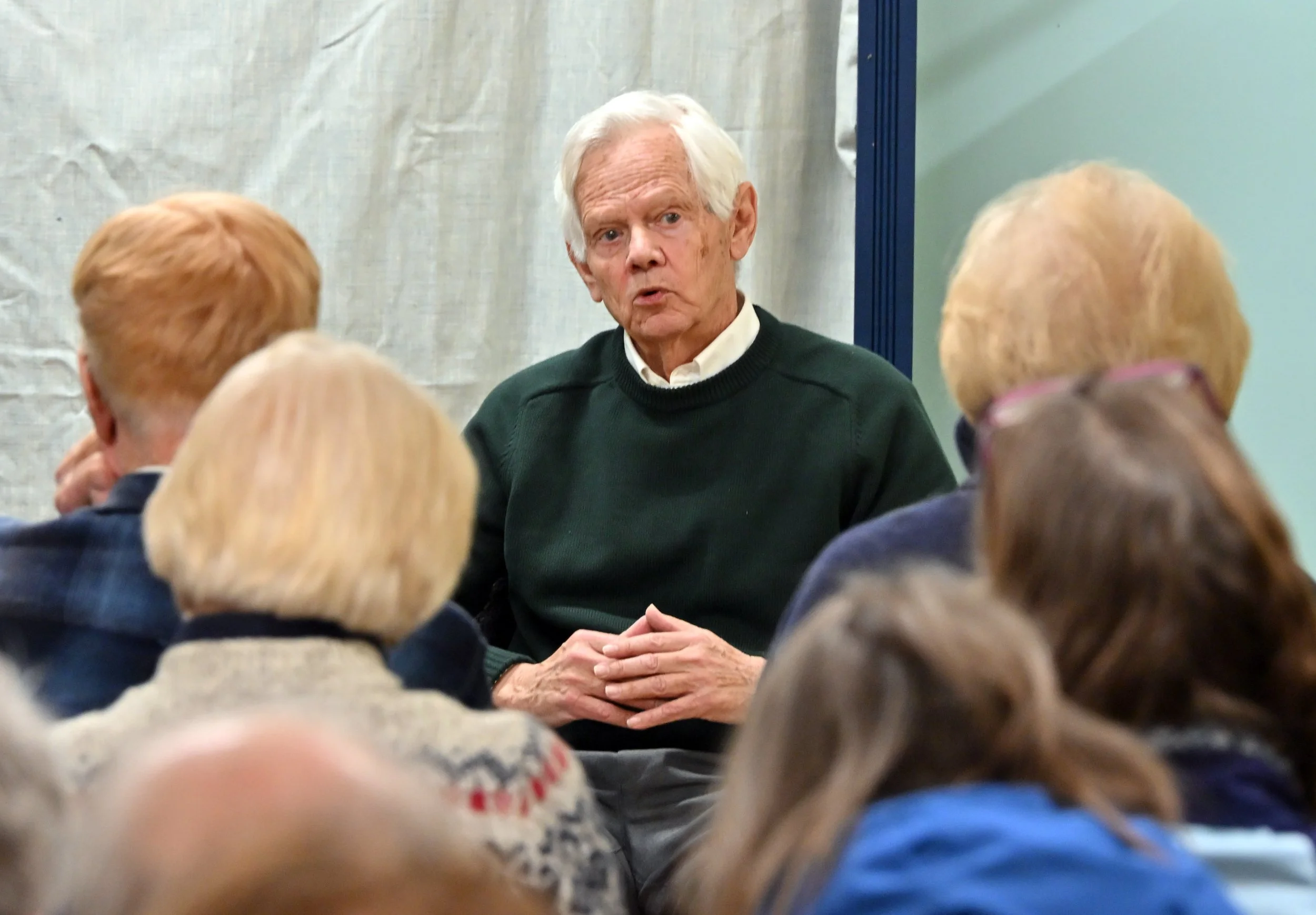
Jeffrey Amestoy discusses his latest book, "Winters’ Time: A Secret Pledge, a Severed Head, and the Murder That Brought America's Most Famous Lawyer to Vermont," published recently by the Vermont Historical Society. Photo by Gordon Miller
That project led to Amestoy’s first book, “Slavish Shore: The Odyssey of Richard Henry Dana Jr.,” published in 2016 by Harvard University Press. Amestoy's research included reading thousands of archived letters and journal entries to tell the story of the 19th-century lawyer whose defense of fugitive slaves before the U.S. Supreme Court influenced the tide of the Civil War. The book version of the story also won critical acclaim in literary and legal circles.
With that early success as an author, many had expected more from Amestoy sooner. However, he said it wasn’t until the pandemic that he was afforded the time to take on a project of the magnitude of the Winters case, in which the transcripts alone totaled around 1,000 pages.
Amestoy said he dedicated countless hours to his research. One of his greatest challenges was the conundrum all writers face: “Is it more painful to go on or more painful to stop?” he said, explaining the difficulty of finding the right place so the narrative continues without going overboard.
He said he first finished with more than 400 pages, but after editing, the final version came to just over 100 pages.
Asked about his next story, Amestoy playfully replied, “When you’re an author, you go into a cocoon phase. My wife has already been through two of these. I’m not sure she’s ready for another one yet.”