
Home demolitions begin under FEMA buyout program
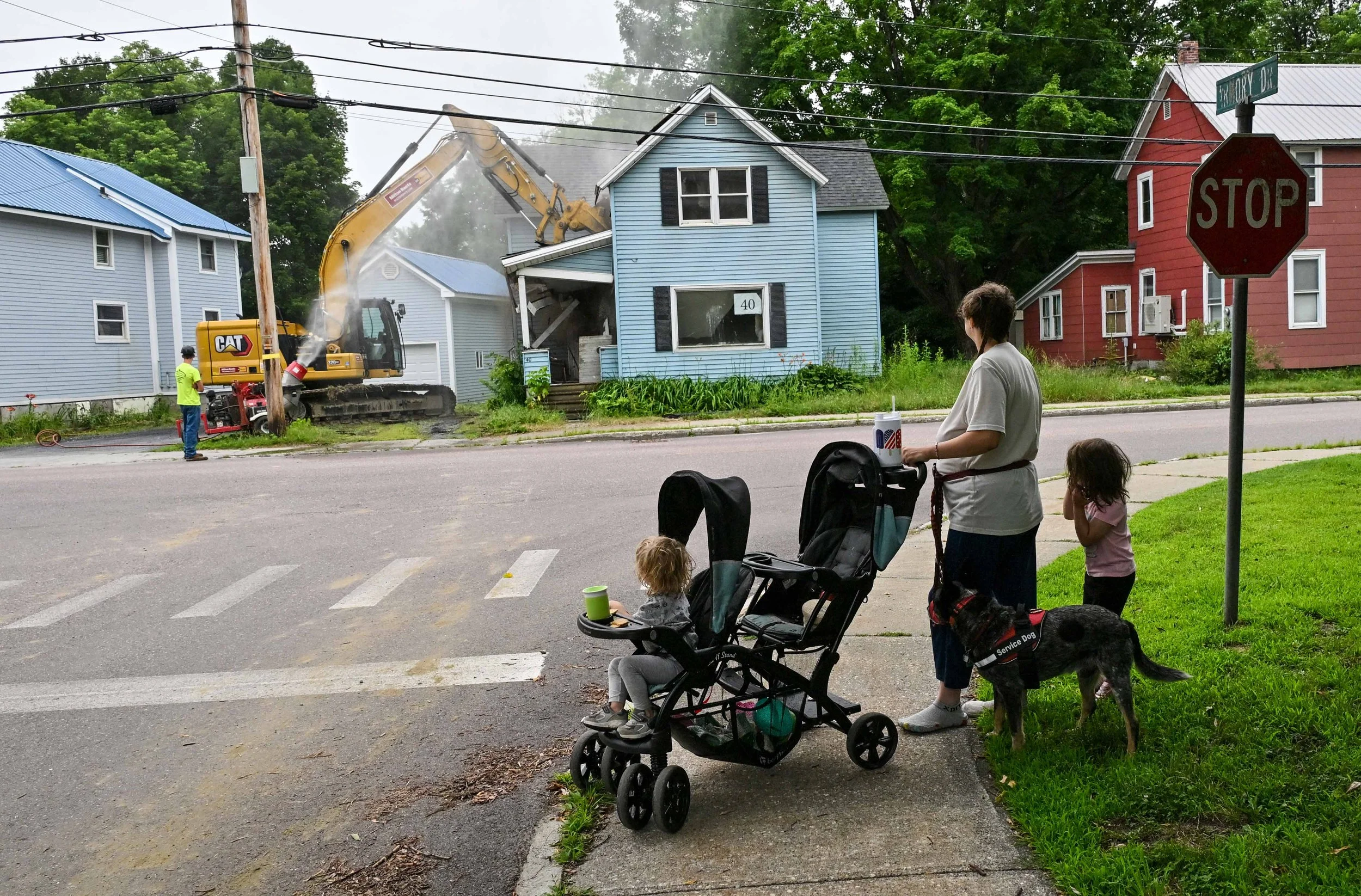
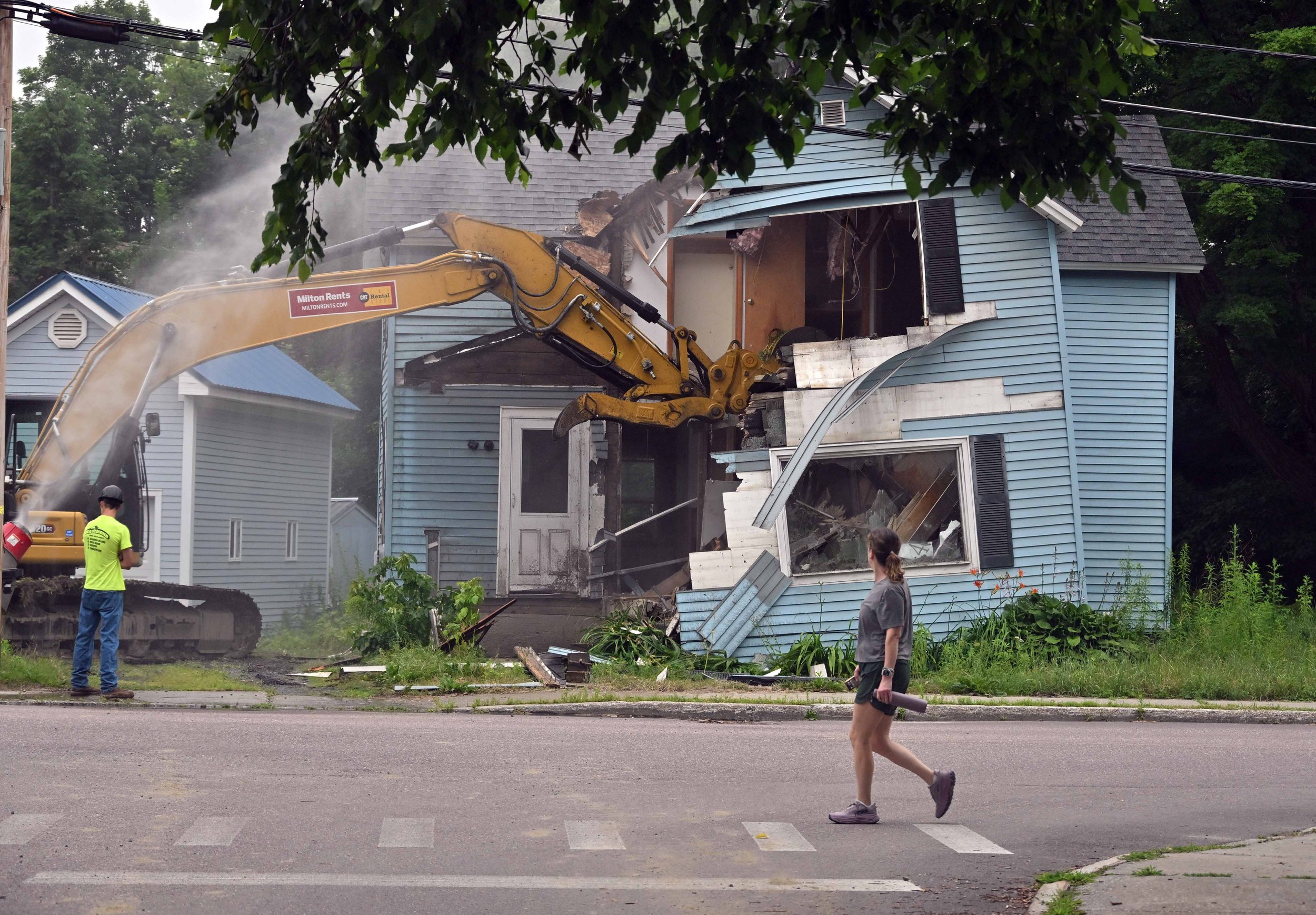
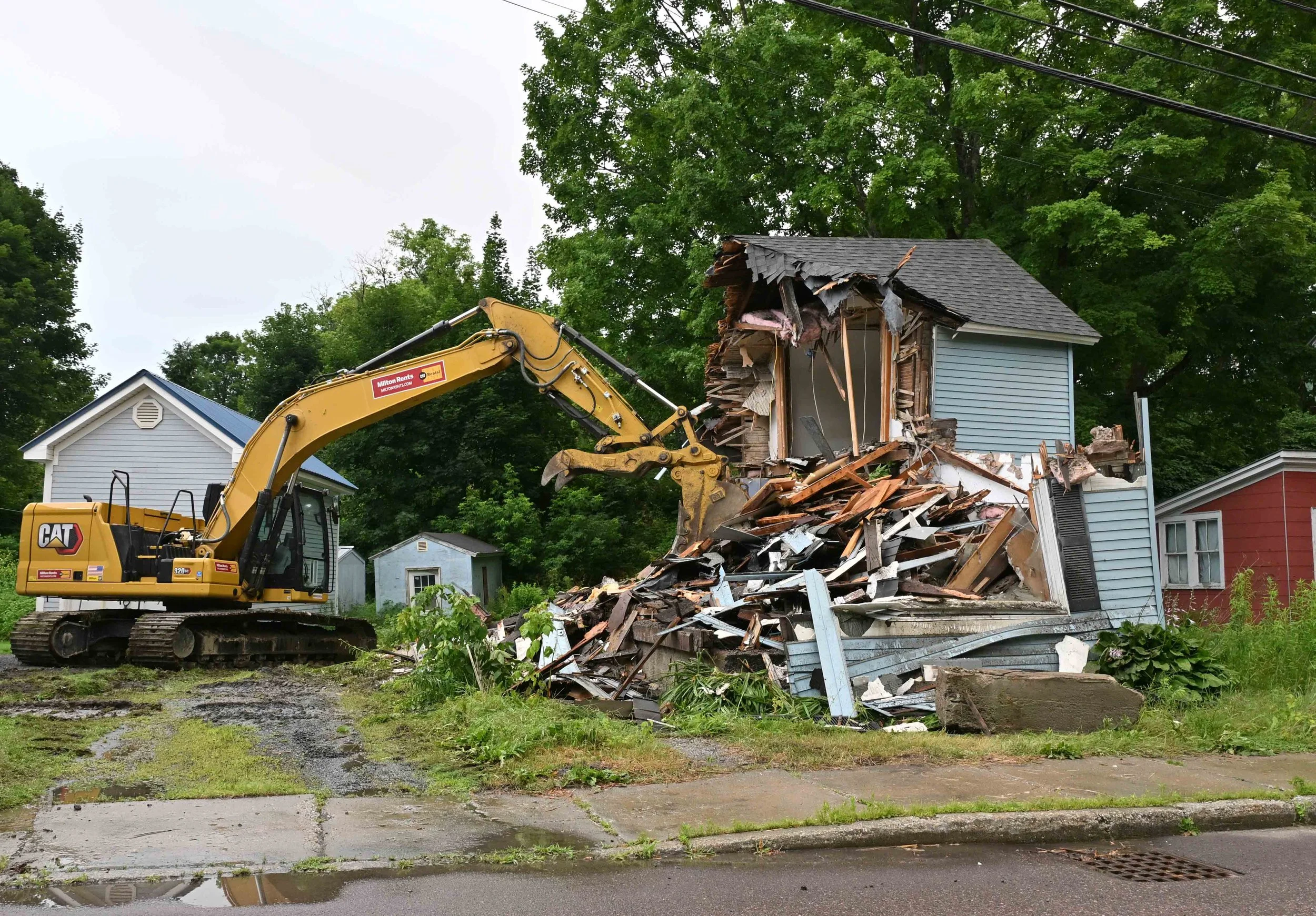
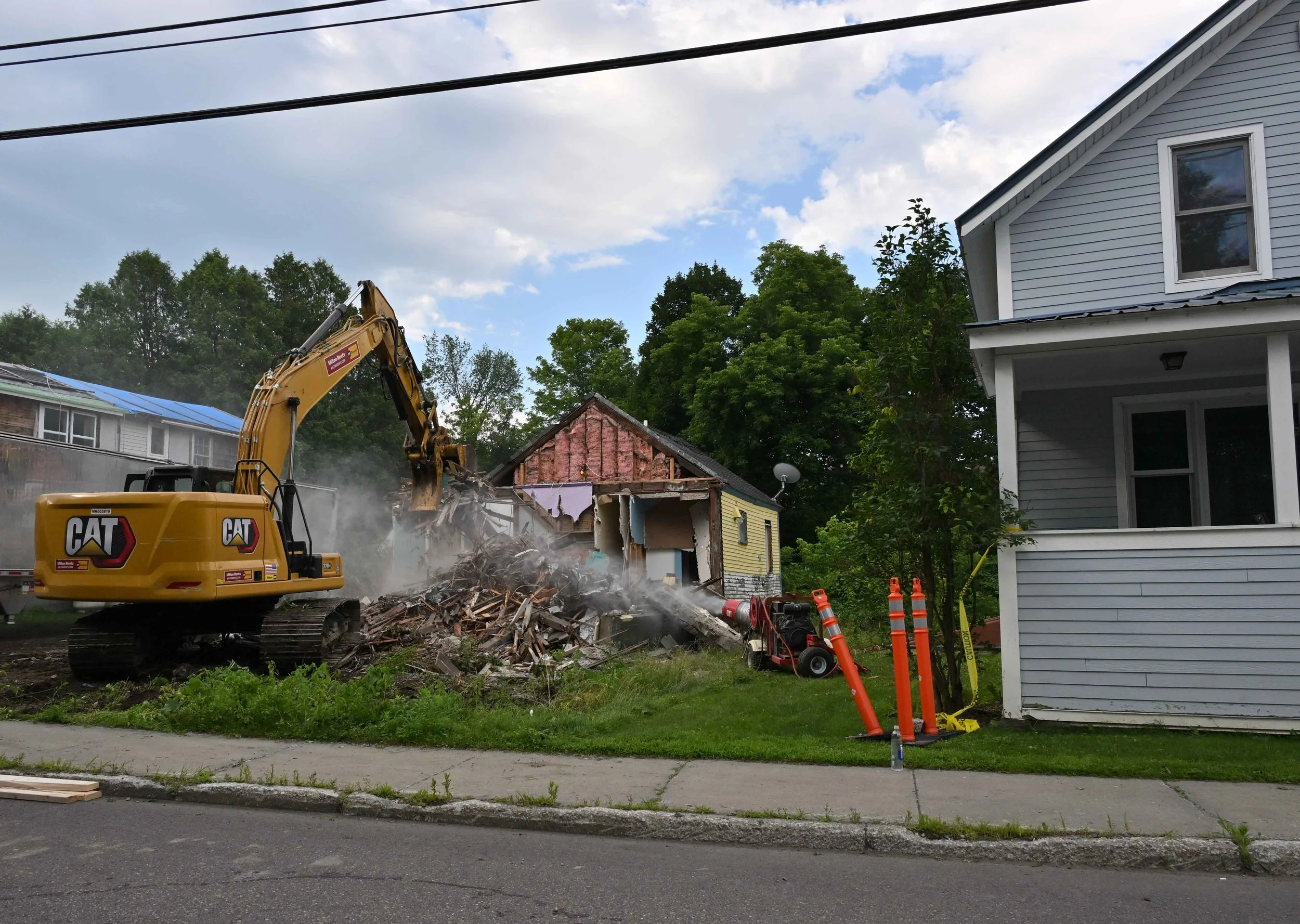
August 6, 2026 | By Emily Rodin | Community News Service Demolition at 40 Union Street takes place in mid-July. Photo by Gordon Miller
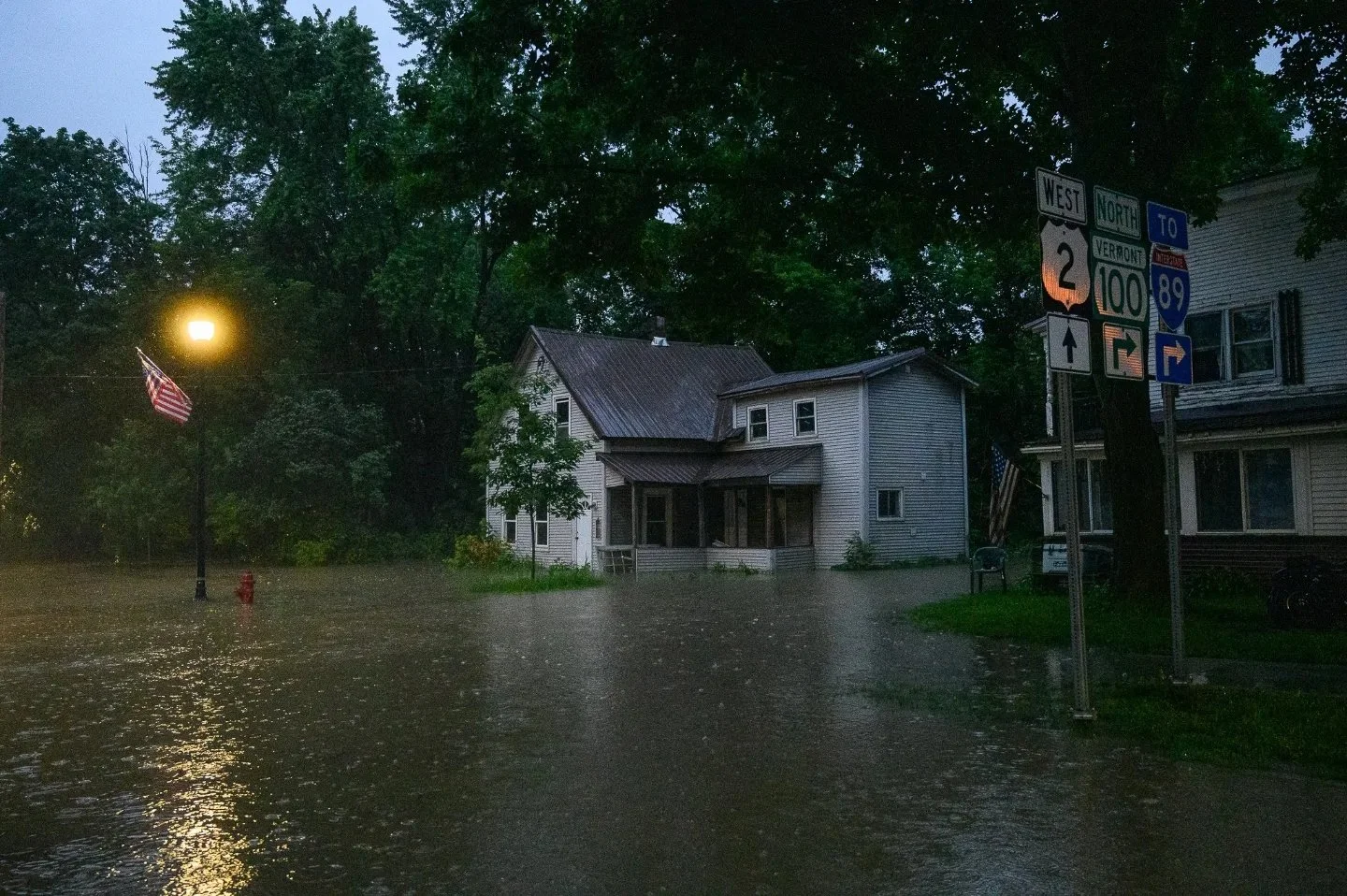
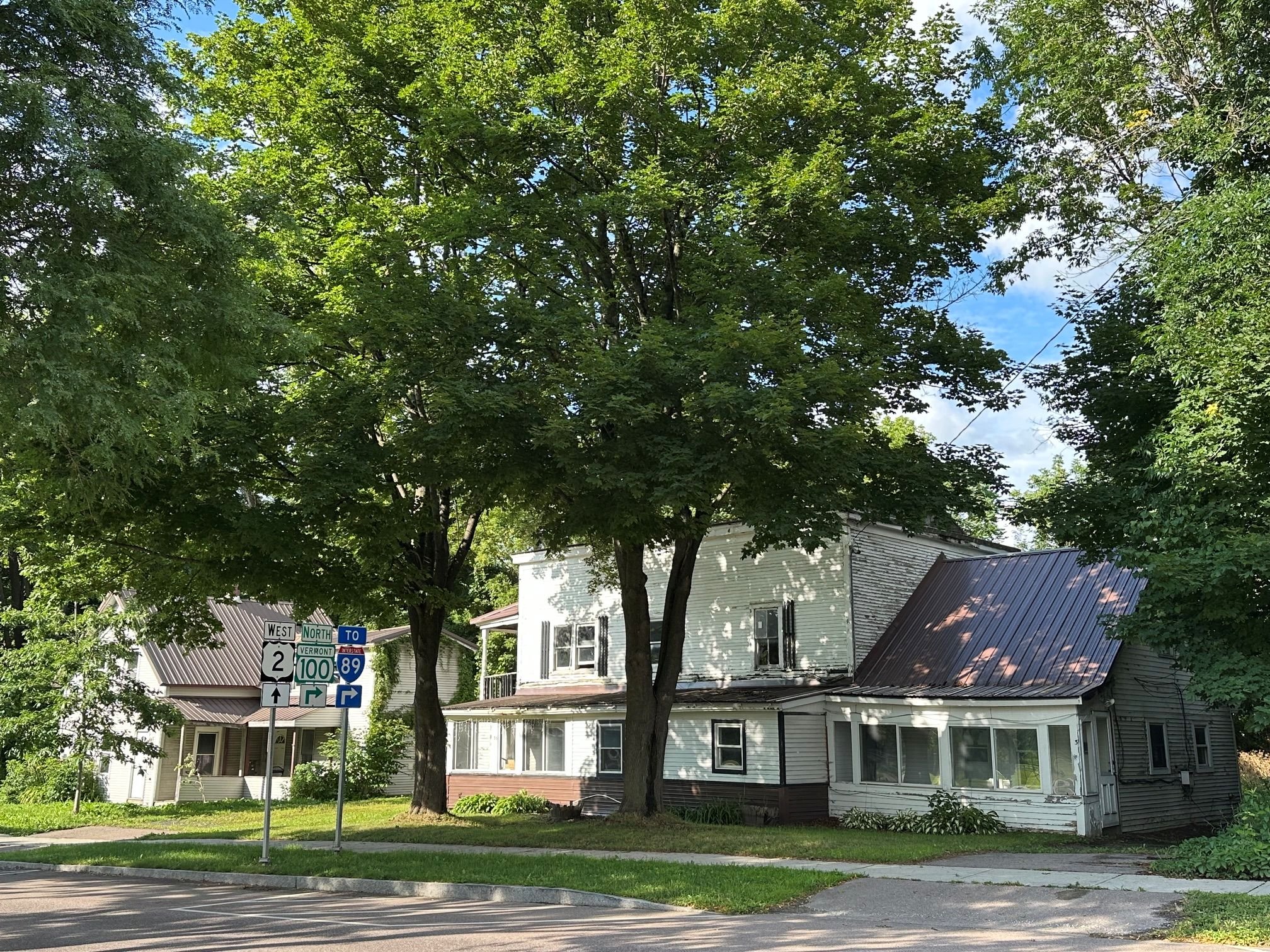
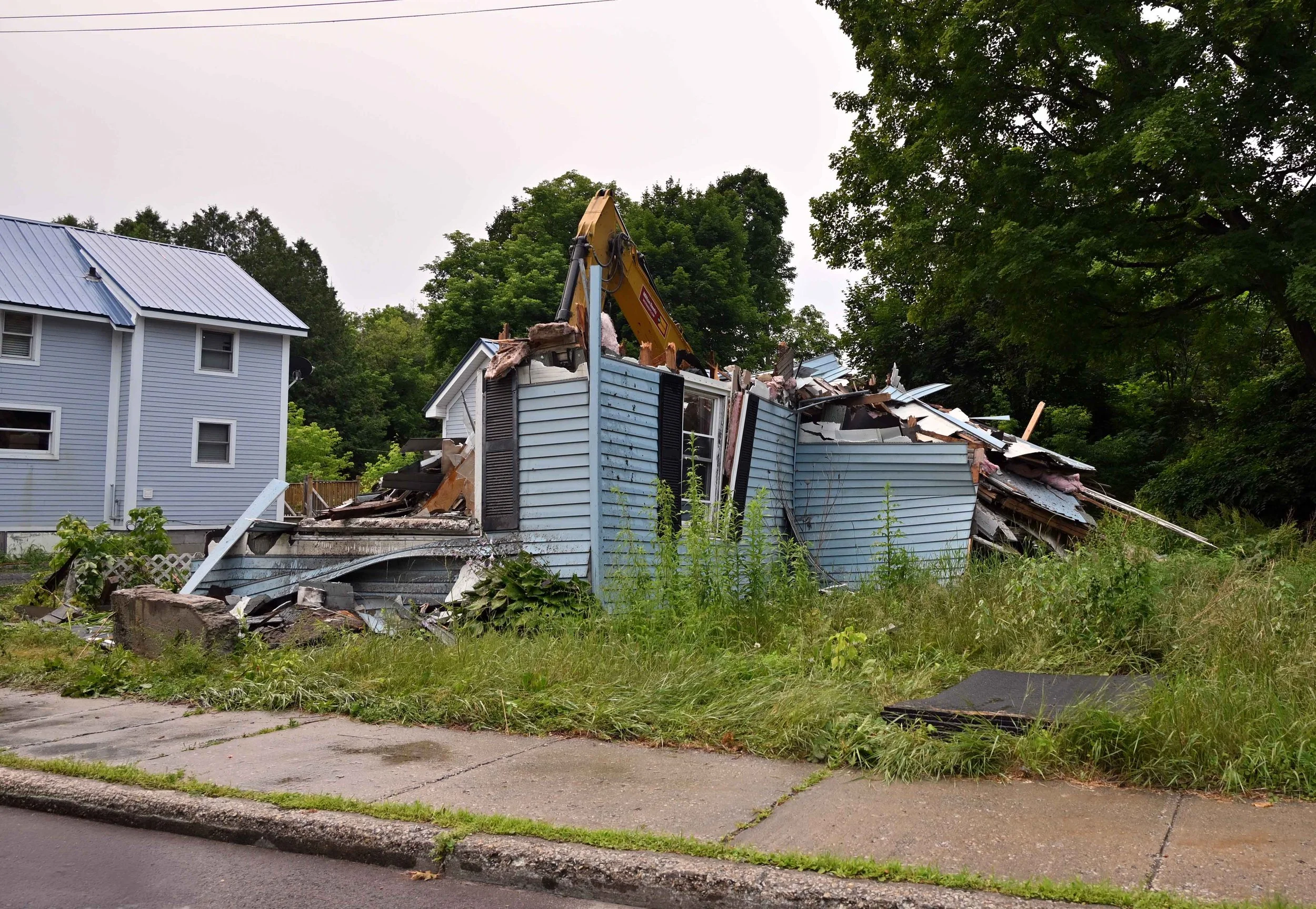
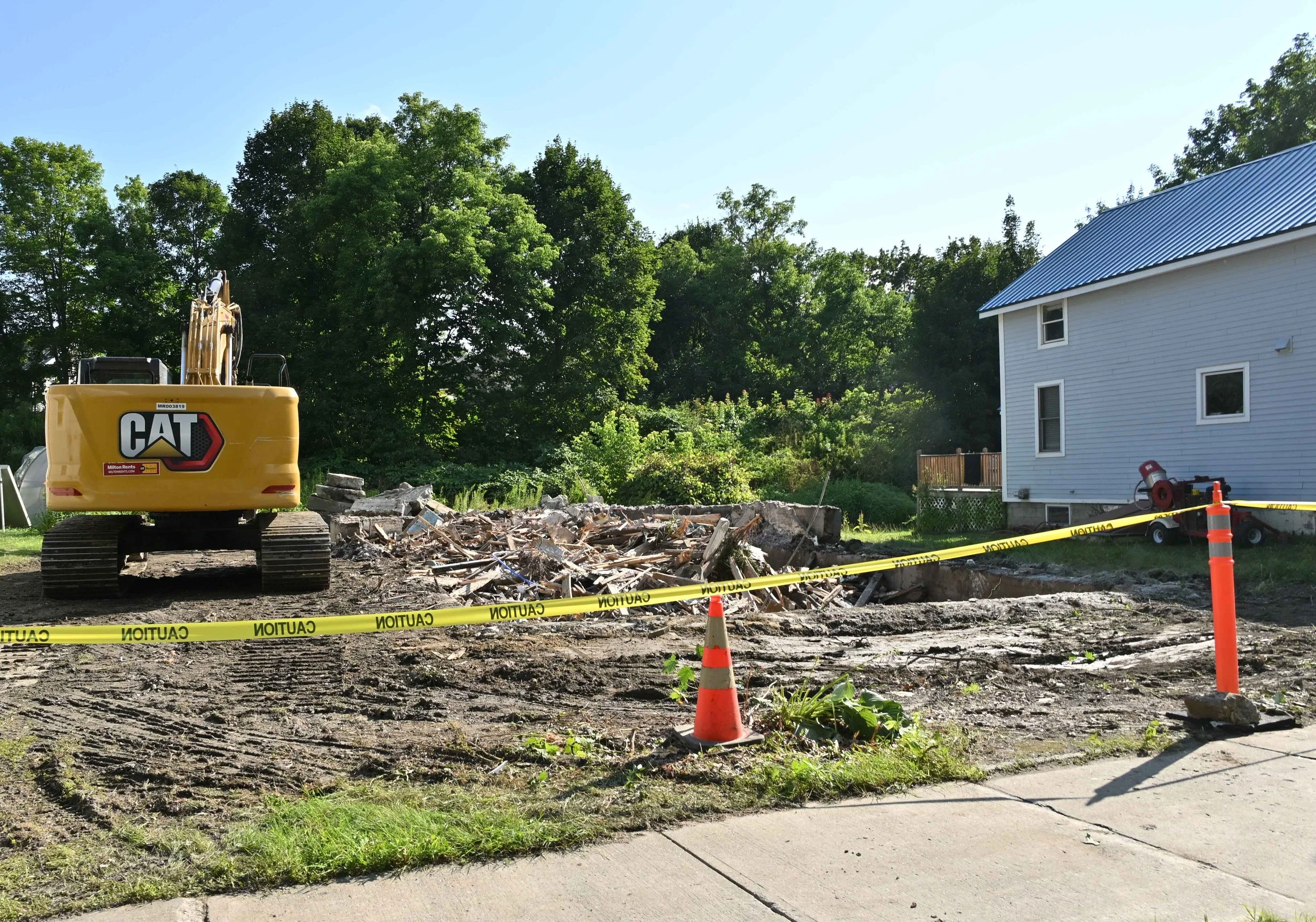
Two flood-damaged homes on Union Street in downtown Waterbury were demolished last month through a Federal Emergency Management Agency buyout program. The tear-downs mark the latest step in Waterbury’s effort to reduce future flood damage, in which homeowners have to weigh difficult choices about whether to leave, rebuild or adapt.
In addition to the homes at 36 and 40 Union Street torn down in mid-July, the houses at 33 and 35 North Main Street are also confirmed for demolition. Exactly when that will happen is unclear because the town has to wait for FEMA to release funding at each stage of the buyout process, according to Cheryl Casey, Waterbury zoning administrator.
“We are already far beyond how much time we were originally told the process would take,” Casey said in an email.
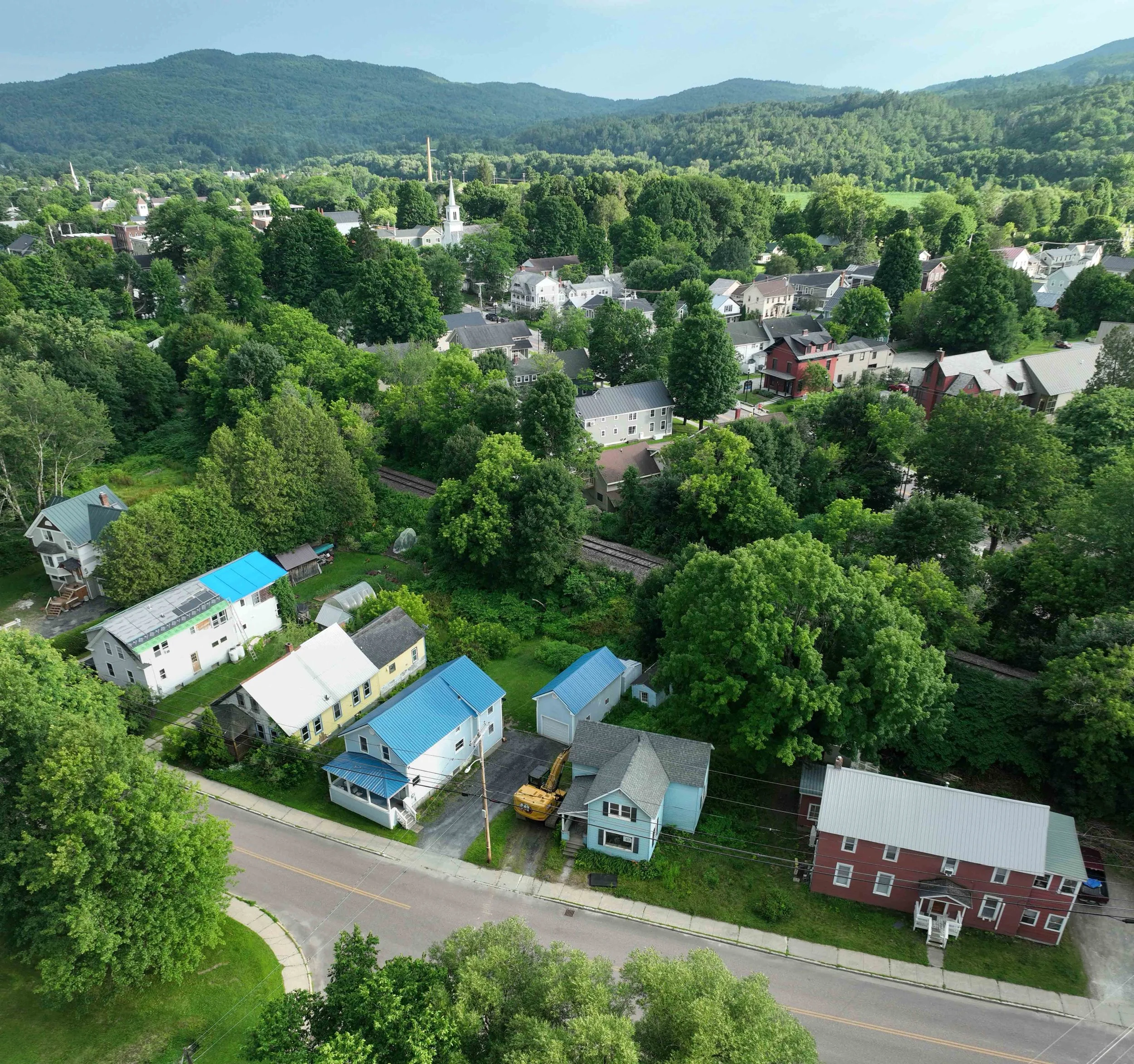
July 24: An aerial view of flooding along Lower Union Street (center), North Main (left of the tracks), and Armory Drive (right) as well as Dac Rowe Park (top). Photo by Gordon Miller
The town has experienced four major floods in recent years: Tropical Storm Irene in August 2011, followed by floods in July and December 2023, and July 2024. Since then, many residents have weighed how to best make their properties more resilient to future flooding. Some have pursued FEMA buyouts, while others have opted to renovate, such as raising homes above flood level.
The buyout program is for properties that are vulnerable to flooding and damage, according to Stephanie Smith, deputy director at Vermont Emergency Management.
The voluntary buyout program allows homeowners in flood-prone areas to sell damaged properties at their pre-flood market value, after which they are torn down. The town will then own the vacant parcels and must maintain them as open green space in perpetuity. The federal government covers 75% of the cost of the buyout process while the state pays the remaining 25%. For the two properties on Union Street, the federal grant money added up to $621,675, Smith said.
Interim Municipal Manager Bill Woodruff said that a total of nine property owners have submitted applications for buyouts. Six have been awarded, including the four homes on Union and North Main streets, plus one at 1930 U.S. Route 2. The sixth homeowner at 21 Elm Street withdrew from the process. Three other applications are still awaiting an answer from FEMA: 38 and 42 Union and 1634 U.S. Route 2.


Through the state’s Hazard Mitigation Funding Programs, homeowners can apply for property buyouts, structural elevations and other reconstruction assistance. However, because funding is limited, most of those funds are directed toward property buyouts, which are viewed as a more effective long-term recovery strategy, Smith said.
Lugene Pitman previously owned the now-demolished home at 36 Union Street. When Tropical Storm Irene hit the town in 2011, the house was flooded with 42 inches of water, she recalled. Pitman fixed the damage, installing a new furnace, hot water heater and fuse box.
Pitman moved to Florida in 2021, renting out her Waterbury home and listing it for sale. When the house flooded in 2023, she decided to apply for the buyout program.
“All the things that I had fixed over the years, which takes a lot of money and a lot of time, were just ruined again,” she said.
At first, she was skeptical of the buyout process, but now that it’s complete, Pitman said she’s pleased with her decision.
“The buyout program was a lifesaver for me,” Pitman said. “It was a last-ditch effort to have an income for the rest of my life.”
Other options
Still, some Waterbury residents have decided to make their homes more flood-resilient instead of taking the buyout.
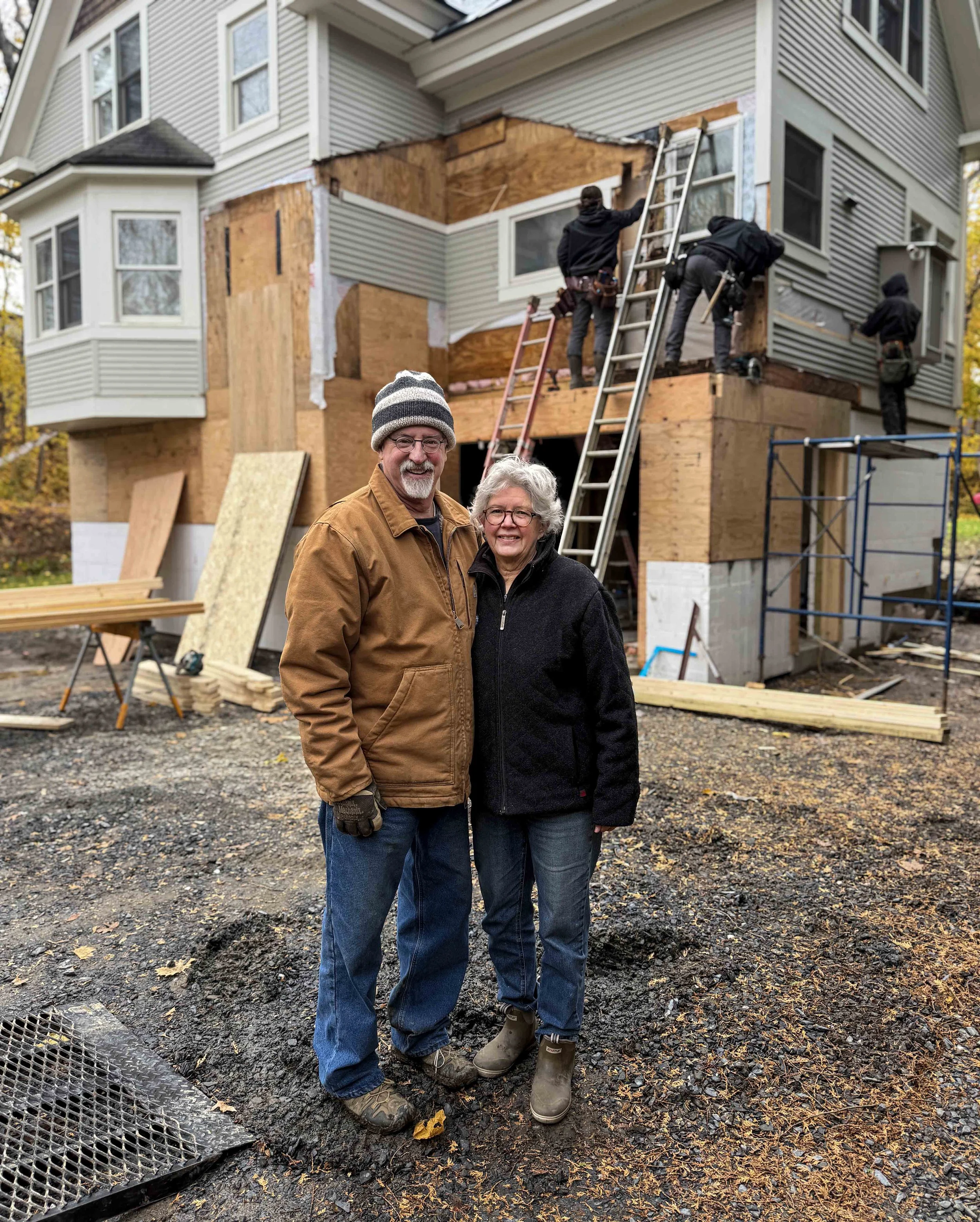
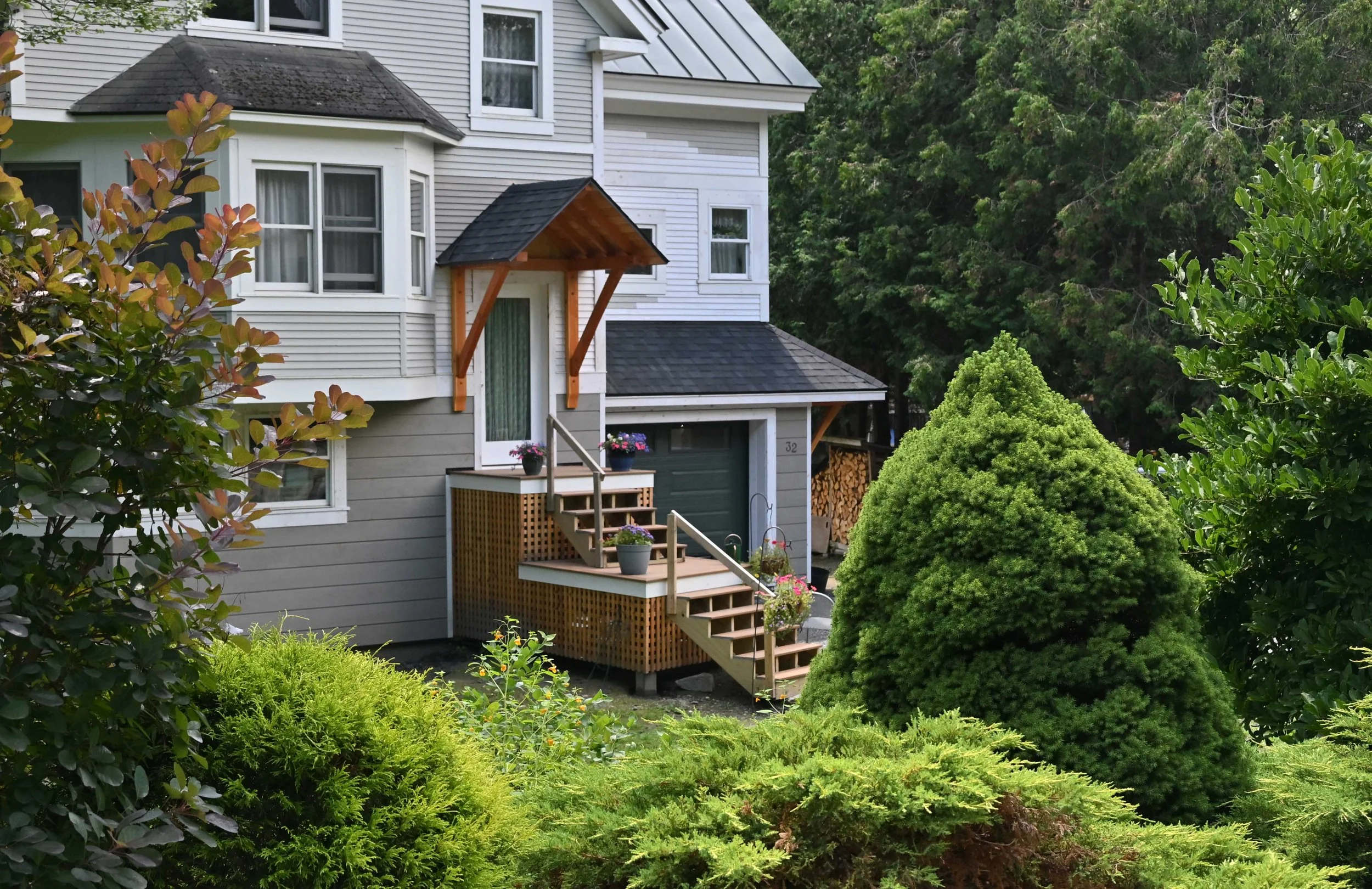
Rick Weston and his wife Karen live at 32 Union Street, a few doors away from where two of their neighbors’ homes were torn down recently. For the Westons, Tropical Storm Irene was catastrophic, sending nine inches of water into the first floor of their house. Subsequent floods never reached the first floor, but they still had to pump four feet of water out of their basement.
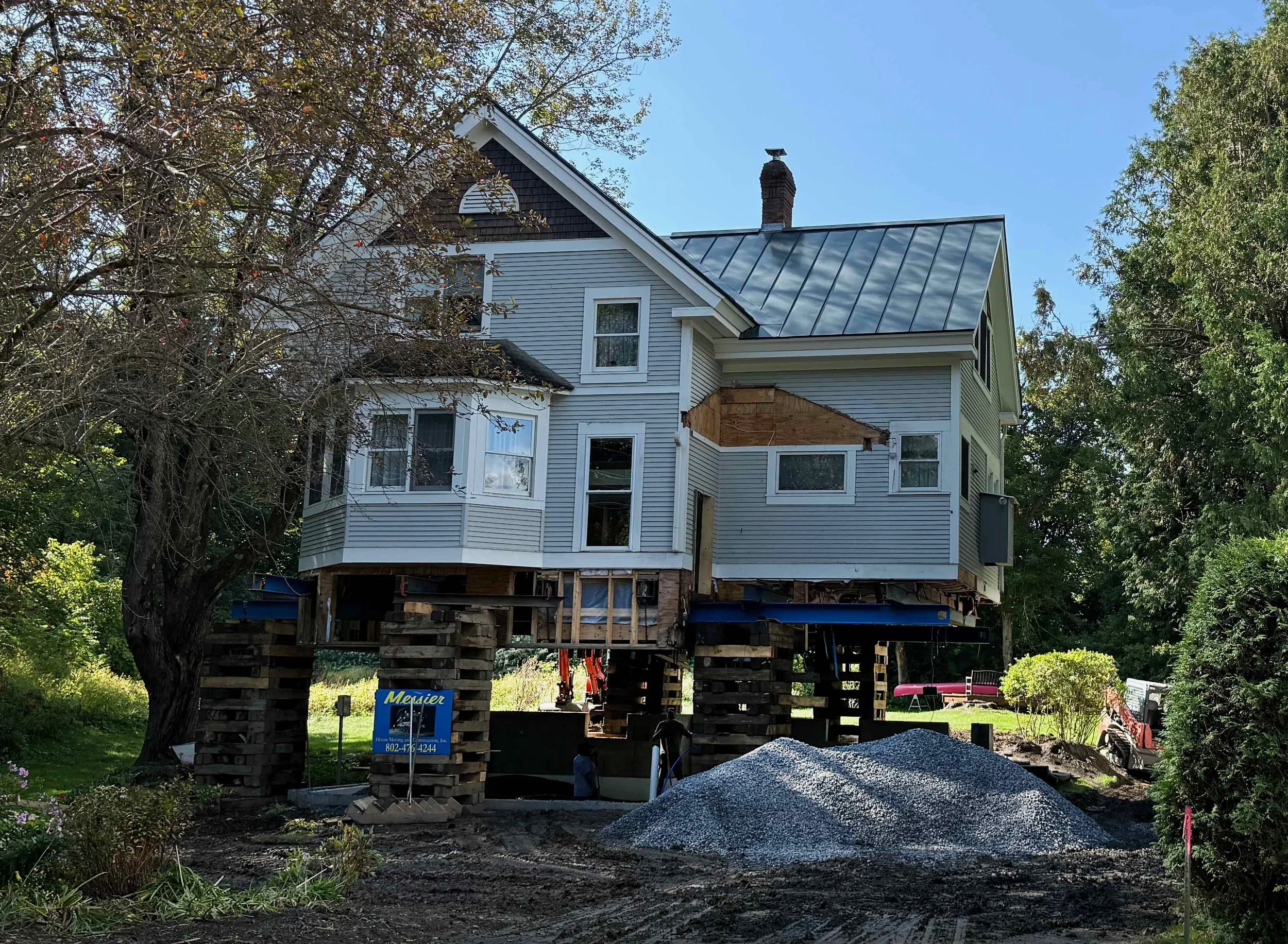
After the July 2023 flood, the Westons decided to raise their home’s foundation. But the project turned out to be costly. When they learned that FEMA would be more likely to pay for buyouts than to help elevate their home, they decided to shoulder the $200,000 cost on their own.
Weston said he doesn’t see much sense in tearing down a home when the state, which is facing a housing shortage, already has too few of them. Now, the first floor of the house is four feet above peak flooding during Tropical Storm Irene in 2011 and eight feet above the flood levels reached in 2023 and 2024. The elevation created space beneath the house for a floodable storage area and garage.
July 2023: Receding flood water leaves mud behind along Randall Street. Photo by Gordon Miller
“We wanted to stay in Waterbury. We made an explicit, conscious decision to recommit to Waterbury,” Weston said.
For other residents, elevating their house proved too costly.
Skip Flanders has lived at the corner of Elm and Randall streets since 1979. When his home flooded during Irene, he and his wife, Cathy, considered elevating their home.
“But it didn’t turn out to be a very practical thing to do for the cost versus the value of the house,” Flanders said.
After the more recent flooding, Flanders applied for the buyout programbut ultimately decided not to move forward because the amount he would have received was not enough to purchase another home nearby. The options in town were also limited, he said.Instead, he sealed up part of the stone foundation of the house with concrete and moved the electrical panel and furnace upstairs, out of the basement.
Brian Kravitz, another homeowner on Randall Street, also moved the heating and electricity systems up to his first floor, in addition to raising and leveling the backyard. Kravitz has lived in his duplex on the side closest to Randall Meadow for 23 years.
“When I bought here, yeah, I knew I was in a 100-year floodplain,” Kravitz said. “I moved in here knowingly.”
Randall Meadow is the large open field typically planted with corn each year that sits between the Randall Street neighborhood and the Winooski River. The town has received a federal Community Development Block Grant for disaster recovery that it wants to use for a major flood mitigation project that will involve excavating to lower the field to create more room for future floodwater as a buffer to protect the neighborhood and the downtown. The preliminary study for that project is just getting underway this summer.
Mike Dacey, executive director of CReW, a flood recovery and community resilience nonprofit, said he’s seen most homeowners take a similar route as Flanders and Kravitz have chosen.
“The whole home elevation is extremely costly and out of reach for most people, and the buyouts are a very long process and not really what a lot of people are looking to do,” Dacey said.
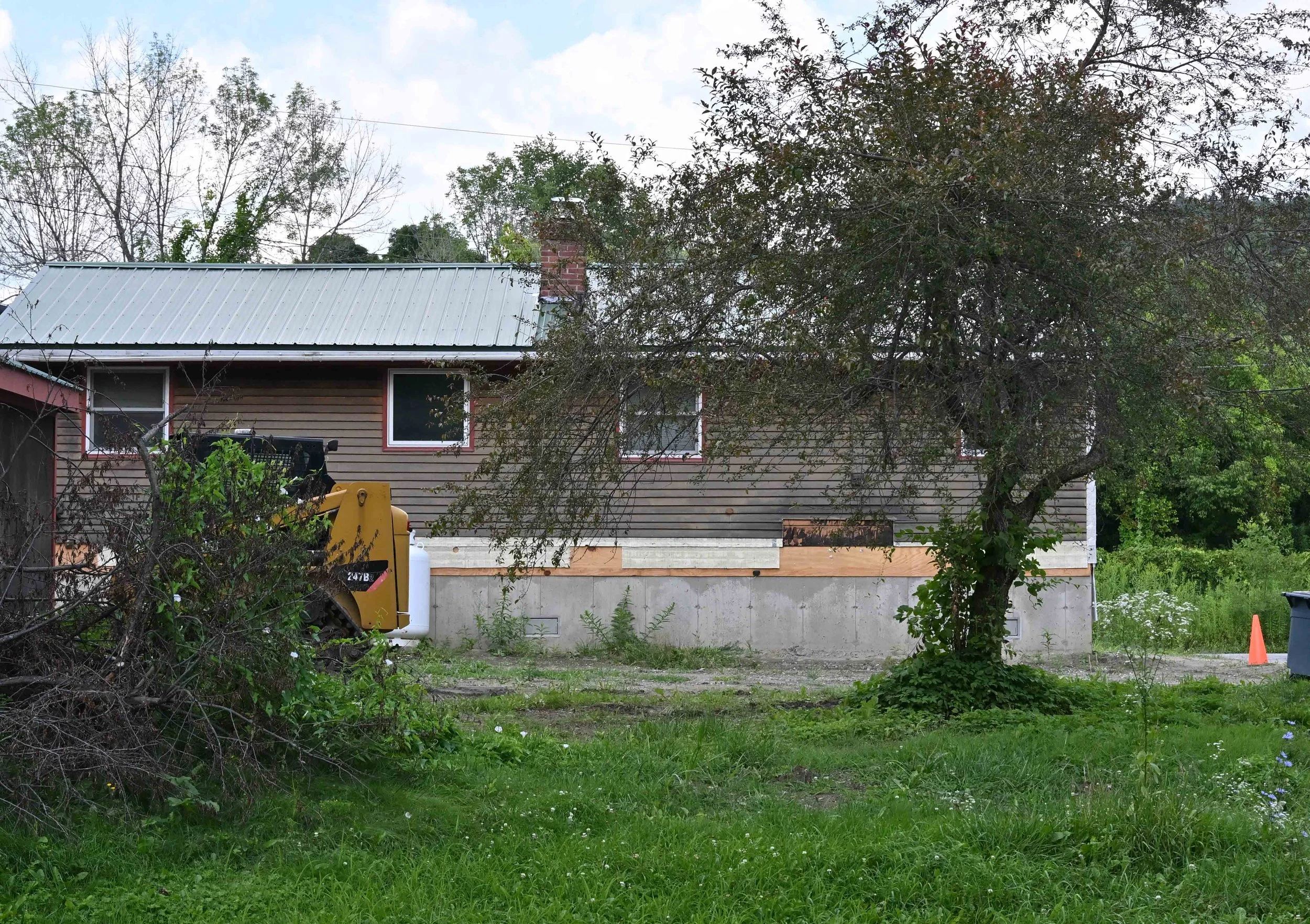
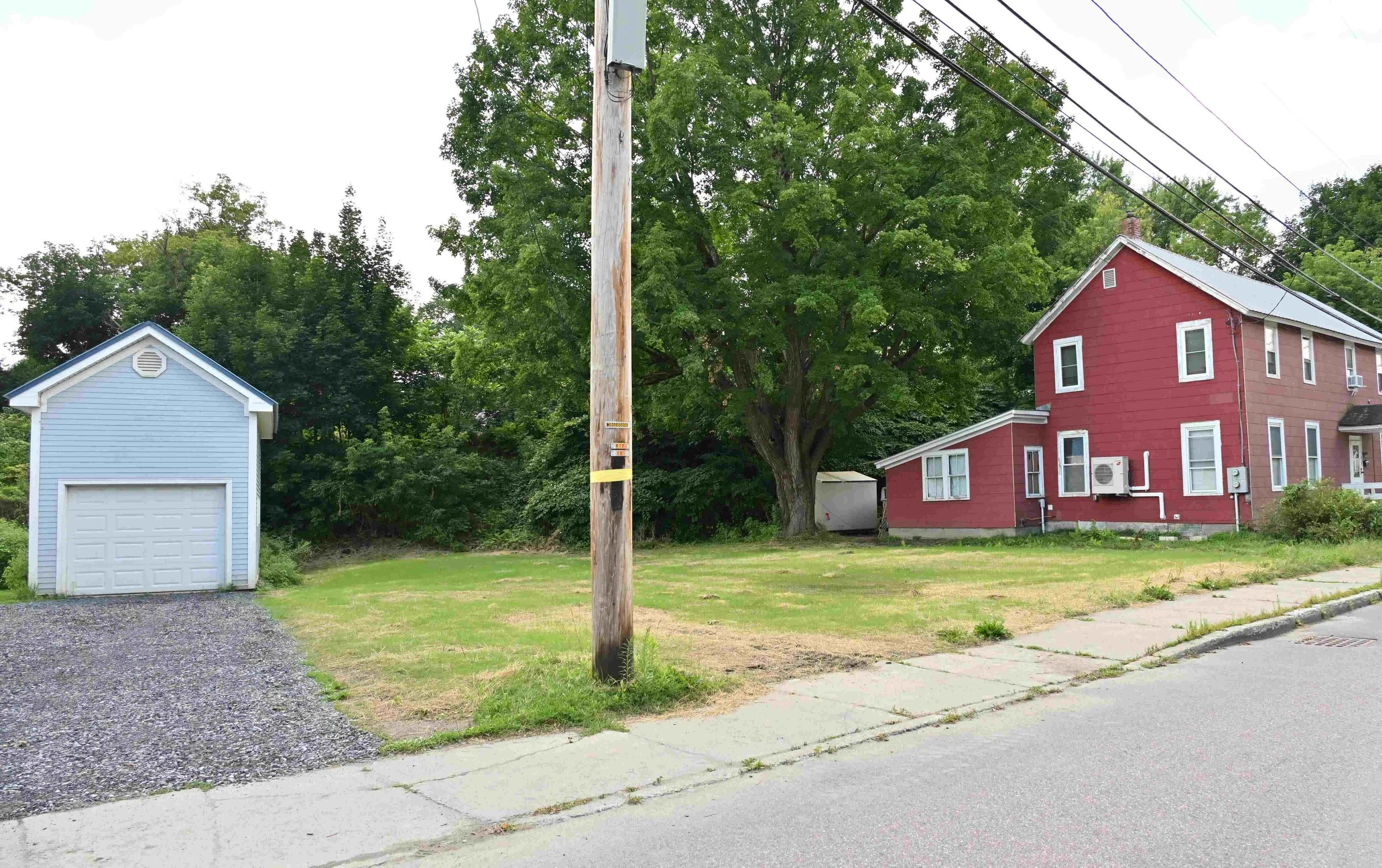
Grass is already growing on the now-vacant lot at 36 Union St. Photo by Gordon Miller
Bill Shepeluk, a board member of CReW and former Waterbury town manager, encourages homeowners to make small adjustments now, such as moving important equipment above flood level, in order to avoid costly damage in the future. Such steps are a big part of the work of CReW to assist property owners with long-term resilience efforts to be better-prepared for the next flood. Formed in 2023, CReW’s focus is to assist residents of Waterbury and adjacent towns of Duxbury, Bolton, Moretown and Middlesex.
As for the town’s grand list, Shepeluk – who also serves as town treasurer – says he isn’t too worried about a drastic loss of taxable property since only two houses have been torn down so far. But he acknowledged the loss of the homes and functional land.
“It’s really two vacant lots. It’s hard, really, to make a park out of that,” Shepeluk said. “I’m not sure it’s gonna do anything except maybe grow grass or, I hope not, weeds.”
Emily Rodin is an intern for UVM's Community News Service through Report for America's Local News Internship Program.