
November 24, 2026 | By Katie Lyford | Correspondent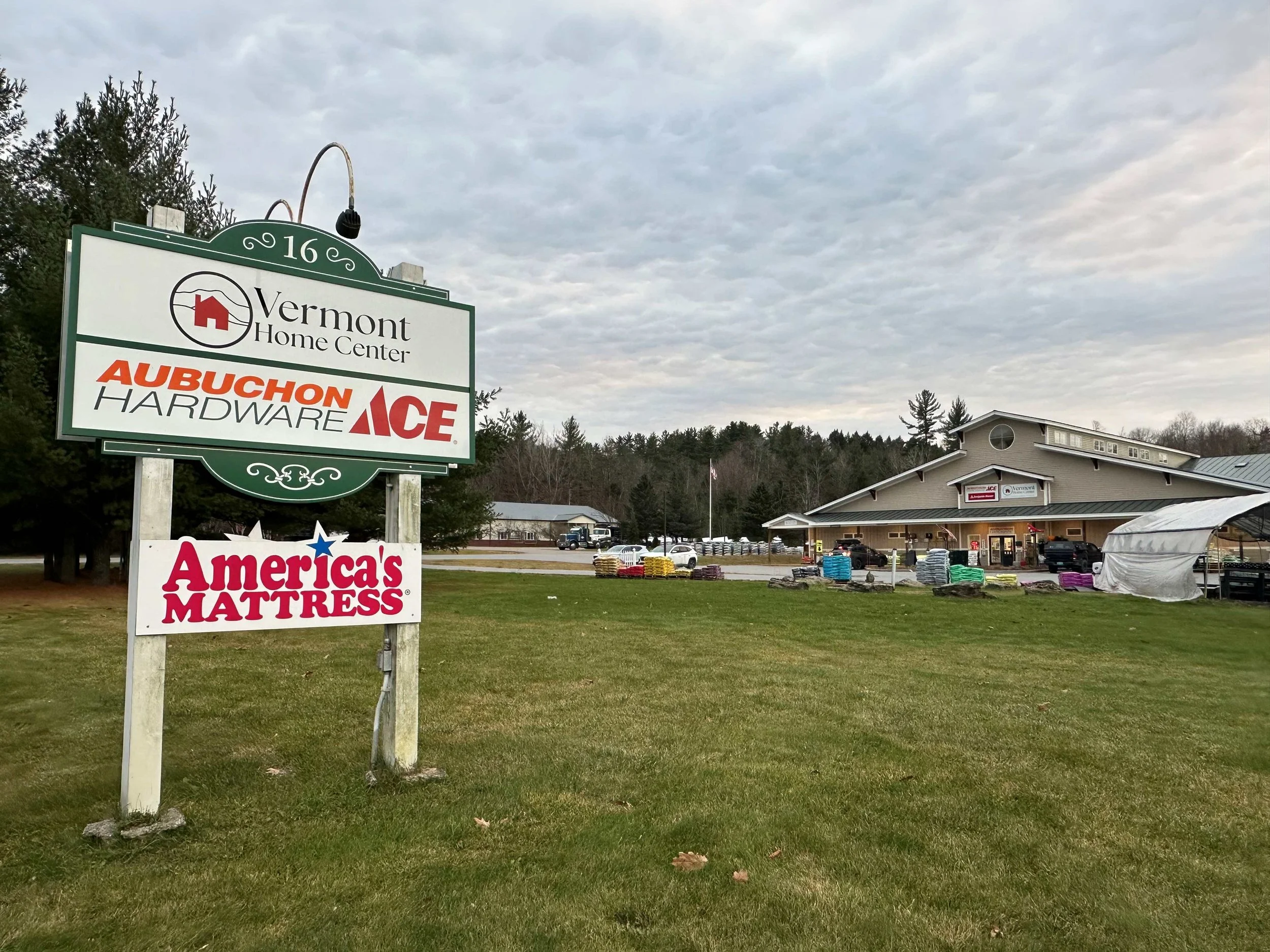
Aubuchon Ace Hardware is one of a handful of businesses in Moretown's northern commercial hub that would contribute to local option taxes. Photo by Lisa Scagliotti
The Moretown Select Board is considering asking voters on Town Meeting Day to consider adopting a local option tax that could add 1% to the current state taxes on retail sales, meals and alcohol, and lodging.
The adjacent communities of Waterbury and Waitsfield recently added the local taxes, which currently are levied in some fashion approximately 50 Vermont cities and towns, according to the Vermont Tax Department.
Sasha Elwell, Moretown Select Board assistant and assistant town clerk, said the proposal is still in the preliminary stages, with the goal of bringing it to voters on Town Meeting Day, which will be March 2.
Town officials can propose adding a 1% local tax to one, two, or all three of the categories. Meals and alcoholic beverages are considered one category and would be applied to both if this category is adopted.
The local option would add 1% to the state’s current taxes for each of those categories, which are: 6% for retail sales, 9% meals tax, 10% alcohol tax, and 9% tax on rooms.
The rooms category encompasses all lodging, including short-term rentals such as Airbnbs. The local option sales tax would apply to all items already covered by the state’s sales tax. It does not apply to the sale or rental of motor vehicles which are subject to the motor vehicle purchase and use tax.
While Moretown may not have as many storefronts or tourist attractions as some neighboring municipalities in Vermont, “It’s more than you’d think,” Elwell said.
In addition to businesses in Moretown village, the town’s main commercial hub is just outside of Waterbury near the intersection of U.S. Route 2 and Vermont Route 100 with Aubuchon Ace Hardware, Bicycle Express, Snowfire Auto and other businesses.
Elwell noted that the sales tax is also applicable to online shopping.
Select Board member Sam Rosenberg estimates that local option tax revenue could bring in approximately $42,000 per year after the state takes its 25% share.
The state uses its portion of the local option tax collections to fund its Payment In Lieu Of Taxes program that compensates municipalities around Vermont for state buildings and land instead of paying local property taxes.
Rosenberg said that a presentation at the Mad River Valley Chamber of Commerce inspired him to suggest the issue in Moretown.
“It’s basic math on my end,” he said. “If the town is ever gonna need to raise taxes by 1%, at any time in the future, then if we do this now, and some percentage of that 1% is paid for by people who don't live in Moretown, then we've saved the town of Moretown money.”
Until recently, municipalities needed both voter and legislative approval to adopt local option taxes. In 2024, the Vermont League of Cities and Towns advocated for the passage of a new law removing legislative approval and simplifying the process.
According to the Vermont Tax Department, there has been a substantial increase in municipalities voting to add local option taxes since then; 13 towns adopted them in March alone.
Towns can use local option tax revenue for various municipal needs, including road work, public safety, parks, capital projects and other taxpayer-funded priorities, according to the Vermont League of Cities and Towns.
Rosenberg said the next step in Moretown is for the Select Board to decide how the new tax revenue would be used. He said it will be important to propose specific uses for the funds when asking voters to approve the measure in March.
Neighboring examples
Moretown officials don’t have to look far to see the impact local option taxes could have on municipal revenue. The additional sales taxes are an alternative to the property tax that Waterbury added in July 2024 and Waitsfield added in July this year.
Waterbury so far has seen about $230,000 per quarter from local option taxes. The 2026 budget anticipates $925,000, according to the town report. The Waterbury Select Board created several broad categories of expenses that it would voters use option tax funding to pay for: capital expenses and infrastructure, debt reduction and special reserve funds, affordable housing, economic development and community vitality efforts. So far, Waterbury has used local option taxes to pay for gravel road maintenance, sidewalks, repairs to the town pool, funding affordable housing and emergency preparedness efforts, and policing services from the Washington County Sheriff’s Department.
Waitsfield voters just approved adding local option taxes in March and they went into effect in July. Town officials there estimate that they will generate about $600,000 annually and they anticipate spending the new revenue on bridges and culverts, road paving, the fire department and the new town garage project.
Rosenberg said he hopes Moretown voters will agree that the benefits of adding the new taxes would outweigh possible concerns, including affordability for locals. “The most important thing to me is that it’s not a regressive tax. Anything that’s a basic, everyday need is excluded. So we’re not hitting people who can't afford it,” he said.
While local option taxes could be added to non-essential purchases such as lodging, restaurant meals and alcohol, adding it to the sales tax would add 1% to the cost of all everyday items already subject to Vermont’s sales tax.
Katie Lyford is a community reporting fellow with the Journalism New England Career Lab.