Round 2 of rabies vaccine bait drop begins Aug. 1
July 28, 2026 | By Waterbury Roundabout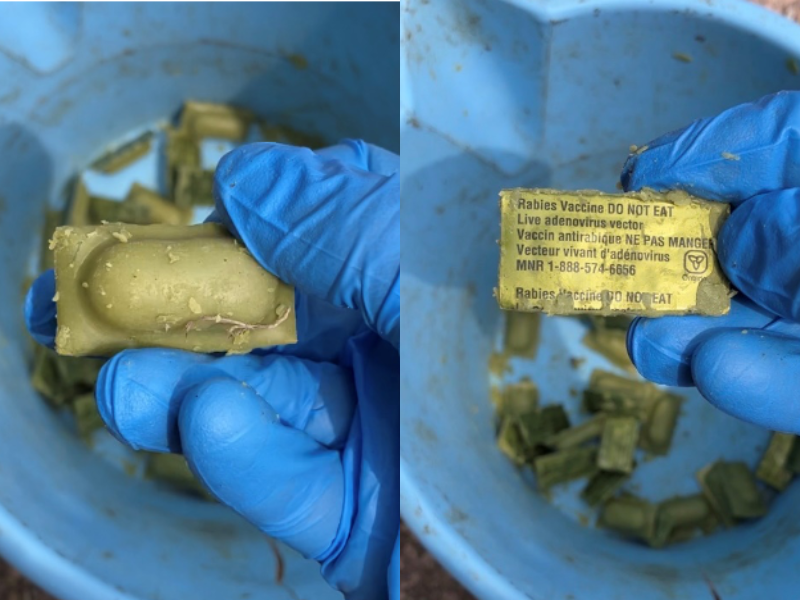
Both sides of the rabies vaccine bait packs. Photos courtesy Vermont Department of Health
Another round of rabies vaccines for wildlife will be distributed around Vermont starting on Aug. 1, according to the Vermont Department of Health.
This August rabies vaccine bait drop is the typical time this exercise is done. This year, an earlier round of vaccine was dropped around the state at the beginning of May, given the increasing number of cases of rabies found in wild animals, health officials explained.
The U.S. Department of Agriculture’s Wildlife Services coordinates with the Vermont departments of Health and Fish & Wildlife to conduct the drops, which are primarily done from low-flying aircraft.
The August rabies bait distribution will deliver approximately 915,700 rabies vaccine baits in areas of Addison, Caledonia, Chittenden, Essex, Franklin, Grand Isle, Lamoille, Orange, Orleans and Washington counties and in parts of New York and New Hampshire.
“Vaccinating wildlife against rabies remains an important tool to help protect people and animals, and slow the spread of rabies in Vermont,” said Dr. Natalie Kwit, state public health veterinarian with the Health Department.
Rabies activity has risen sharply in recent years, with 66 rabid animals reported in both 2024 and 2025 – more than double the previous 10-year annual average number of cases.
So far this year, 36 rabies cases have been reported, 20 in the past three months. These include 15 raccoons, nine skunks, eight bats and three foxes, according to Health Depatment records.
Nearly every county in Vermont has been affected, with many cases concentrated in Orleans County. Officials are working to understand why more animals are testing positive for rabies, and surveillance efforts to monitor the increase are ongoing.
Over the next month, baited vaccine – in the form of a sweet-smelling oral bait that is attractive for raccoons and skunks to eat – will be distributed across 10 counties by airplane in rural areas, by helicopter in suburban areas, and by hand in residential areas.
State health officials shared that in instances where an active rabies outbreak is underway, baiting twice per year during the spring and summer/fall is more effective because more animals can be targeted for vaccination over a longer timeframe. They say that the bait packets are most effective for at least 10-14 days once distributed. Most baits are consumed by wildlife in the first 3-5 days.
More information, including a full list of towns where bait will be distributed, is online on the Rabies Vaccine Bait Drop Fact Sheet from the Health Department.
Rabies is a viral disease that is deadly if people don't receive medical care before symptoms start. It is primarily spread through the bite of an infected animal. In Vermont, the disease is most often detected in raccoons, skunks, foxes, bats and woodchucks – but pets and livestock can also get rabies if they have not been vaccinated. Human rabies cases in the U.S. are most commonly caused by contact with bats.
Tips to protect people and pets:
If you are bitten by an animal, wash the wound well with soap and water and contact your health care provider.
Do not touch or handle wild or stray animals, even young ones. Learn more about what to do when you encounter a wild animal from the Department of Fish and Wildlife.
Call the Vermont Rabies Hotline (1-800-4-RABIES) if you see a sick or strangely behaving animal, are bitten by a wild animal, or wake up to a bat in your sleeping area.
Contact local law enforcement regarding concerns about stray pets.
Make sure pets and livestock are up to date on vaccination.
Keep pets indoors at night and supervise them when outside.
During the rabies bait drop, leave vaccine baits where they are and call the Rabies Hotline if a pet or child eats or brings one home.
More about rabies in Vermont, including interactive data, is online at HealthVermont.gov/rabies.