UVM grad students to share Waterworks research with EFUD board
April 30, 2026 | By Sarah Andrews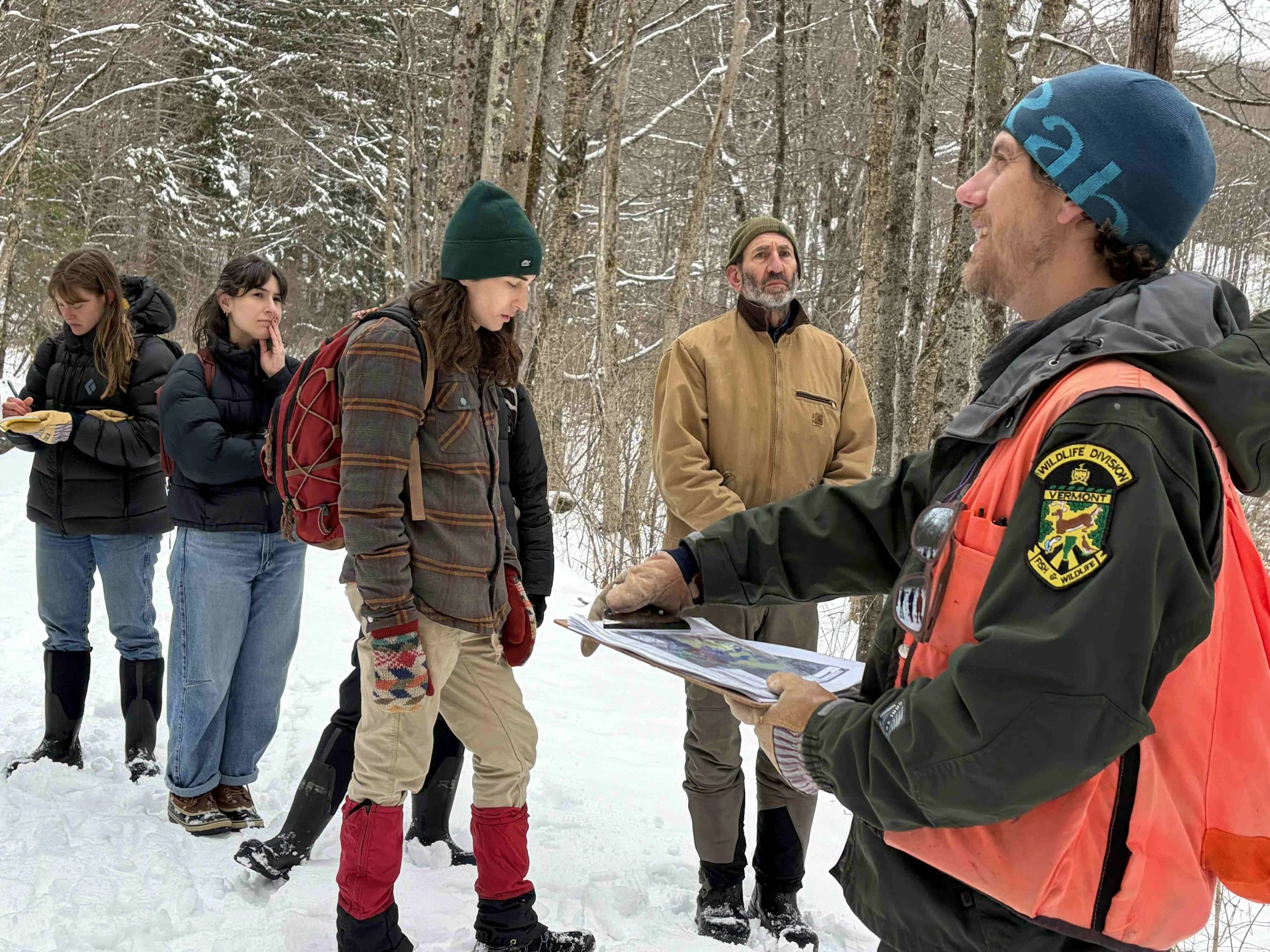
Bob Zaino from the Vermont Department of Fish & Wildlife addresses the UVM group as they begin their site work in March. Photo by Sarah Andrews
Tucked away at the edge of Putnam Forest, between beaver dams and northern hardwood trees, is one of Waterbury’s most valuable resources: the watershed that serves as the town’s primary source of drinking water.
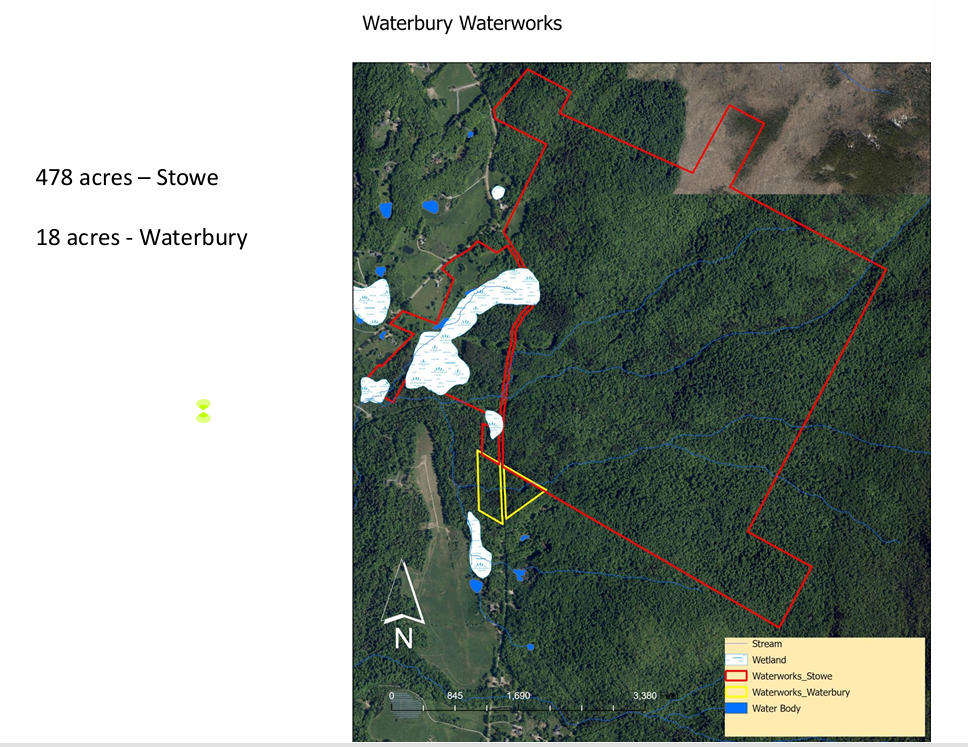
The nearly 500 acres – 18 acres in Waterbury and 478 acres in Stowe – are owned and managed by the Edward Farrar Utility District. The utility district's primary responsibility is to provide safe, reliable drinking water for Waterbury residents, as well as wastewater management.
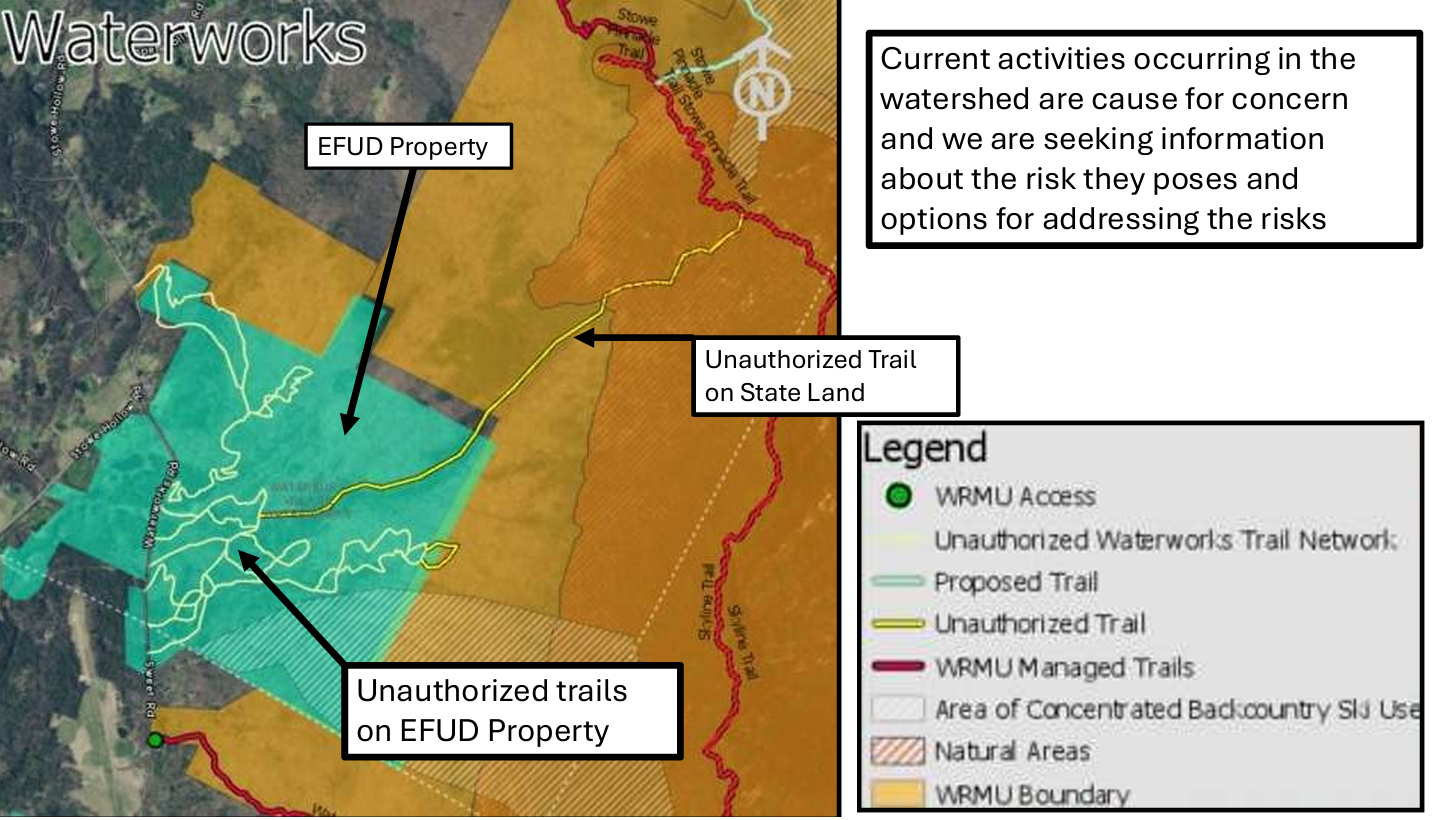
Over the years, the Waterworks land has taken on another purpose. Mountain bikers and outdoor enthusiasts have forged trails across the land, making it a popular spot for recreation.
P. Howard “Skip” Flanders chairs the EFUD Board of Commissioners. He says that years ago, the land was even used as a dumping ground.
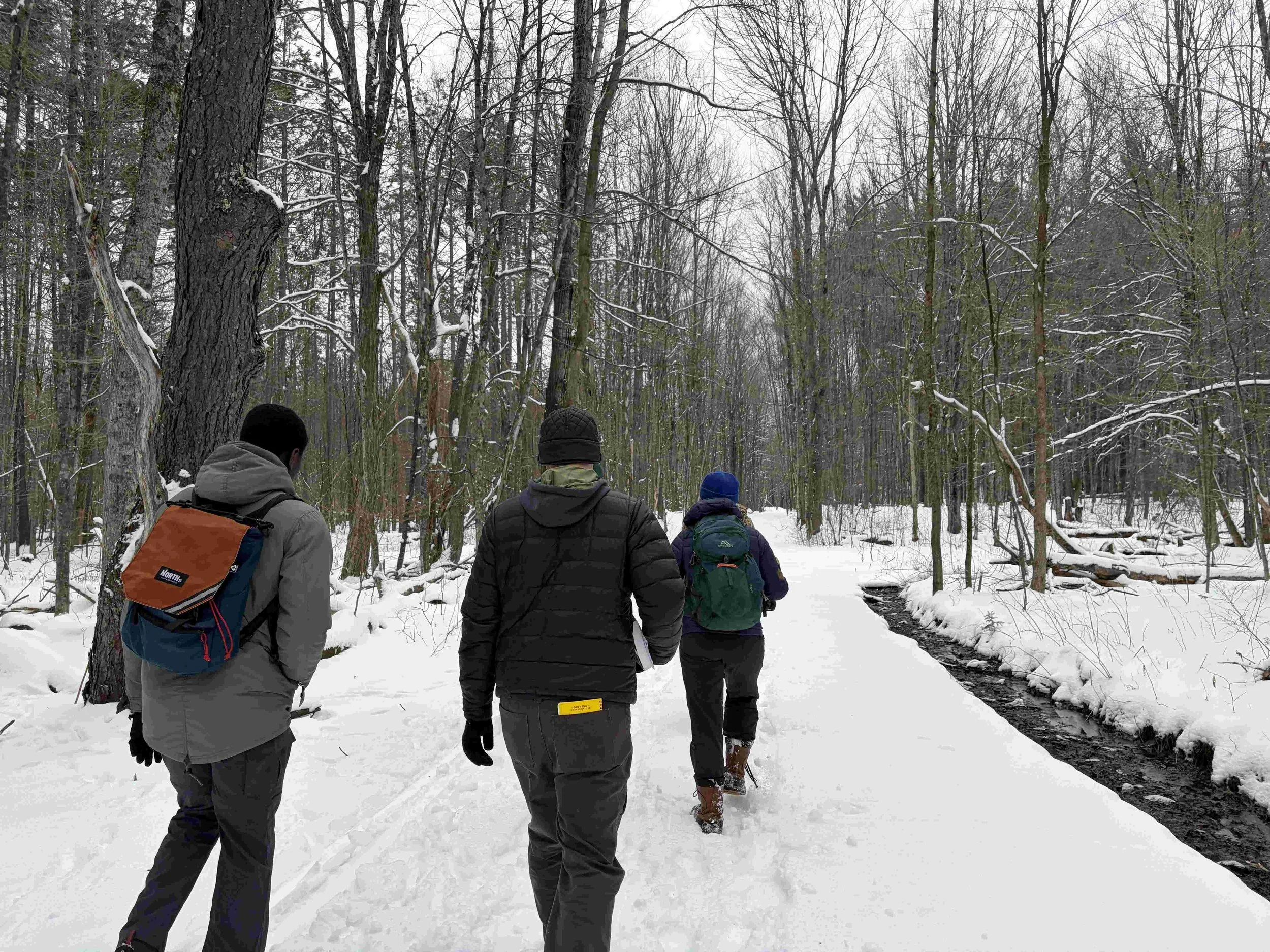
Photo by Sarah Andrews
“It used to be, 10 or 15 years ago, if you had an old couch to get rid of and you didn't want to pay the landfill, you'd drive on the back road and throw it out,” Flanders said. “Pretty surprising that land you didn't own, you'd go on to and take these liberties.”
The chief concern of the EFUD board is that human activity on the Waterworks land will increase the potential for contamination of the watershed. “The more activity you have up there, the more likely you’ll have some sort of contamination,” Flanders said.
Last summer, staff discovered new, unauthorized mountain biking and cross-country ski trails on the property. In response to the increased activity, the EFUD board directed staff to block off the trails, closing the land to recreation in September.
The decision to close the trails was met with some public opposition, as the area has been popular for hiking and hunting for many years. Since the closure in September, EFUD has held two public information sessions to share information about the Waterworks history, EFUD’s role, and issues around land management. The meetings in December and March were well-attended by members of the public who have asked questions and shared their concerns.
“The district commissioners and staff approach decisions with respect to this land with a core belief: This source water must be protected to serve the district in perpetuity,” officials wrote in a notice announcing the public forums. A date for a third information session is yet to be set.
Utility district officials said that more research is needed to determine the best way to balance recreational use with the land’s primary purpose to provide safe and reliable drinking water.
Involving student researchers
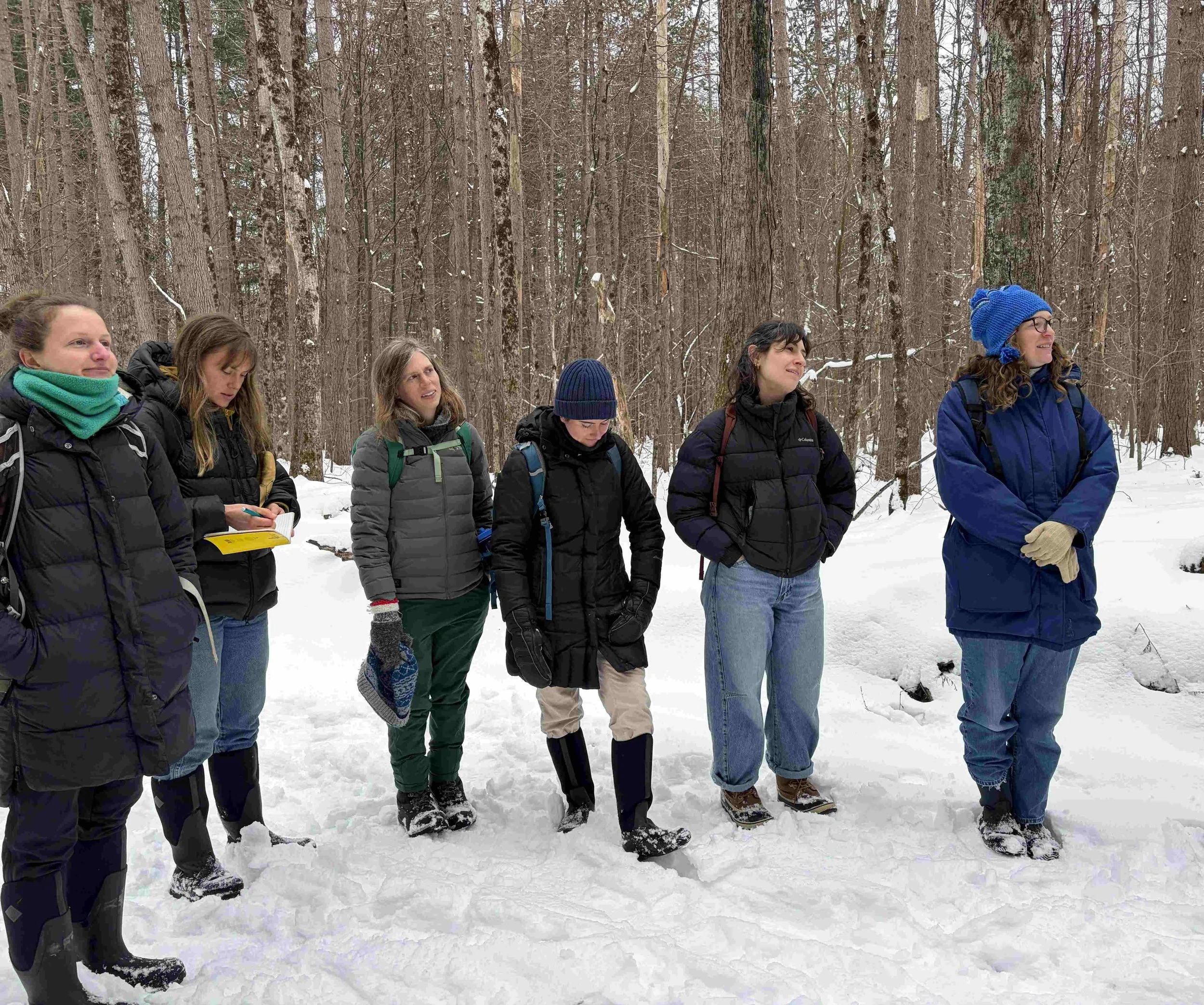
Students meet on site at the Waterworks in March. Photo by Sarah Andrews
To aid in this research, Josh Lincoln from the Waterbury Conservation Commission recruited a group of University of Vermont graduate students. The UVM Field Naturalist program selects a parcel of land each year to study and collect data on. The group studies plants, animals and non-living features of the land, compiling its research into a presentation at the end of the semester.
Lincoln said that the district commissioners are excited about the collaboration. “They would very much love to learn everything they can about this area,” Lincoln said. While the class will not make any policy proposals to EFUD, its research will help guide decisions moving forward. “Anything they can do to learn more about it is going to be useful,” Lincoln added.
In exchange for their research, the program will receive $1,000 from EFUD. “We're really excited to have somebody looking at this data to identify what we have, and all this work for $1,000. That's a pretty good deal,” Flanders said.
The group first met with the EFUD commission at the end of January to learn about the history and use of the watershed. Because the students are mainly conducting research during snowy months, the initial phase of their project relies heavily on studying land-use history and existing data.
On March 23, the students met at the Waterworks land to break ground on their data collection. Joined by Bob Zaino, a Natural Community Ecologist with the Vermont Fish and Wildlife Department, the students started to identify the various natural communities that the 500 forested acres are home to.
Much of the discussion centered on identifying areas of the land that may be rare or critical habitats. Zaino reminded the students that the research they are doing “tells a story,” encouraging the naturalists to consider all aspects of the land, from trees to soil types. “It gives us a way to think about the conservation context of a place, which can help us make land management choices,” Zaino told the students.
While students identified tree species and bedrock boundaries, instructor Sophie Mazowita explained the group's goals moving forward. The program focuses on conservation while emphasizing the “layers” of human and non-human activity that shape a landscape.
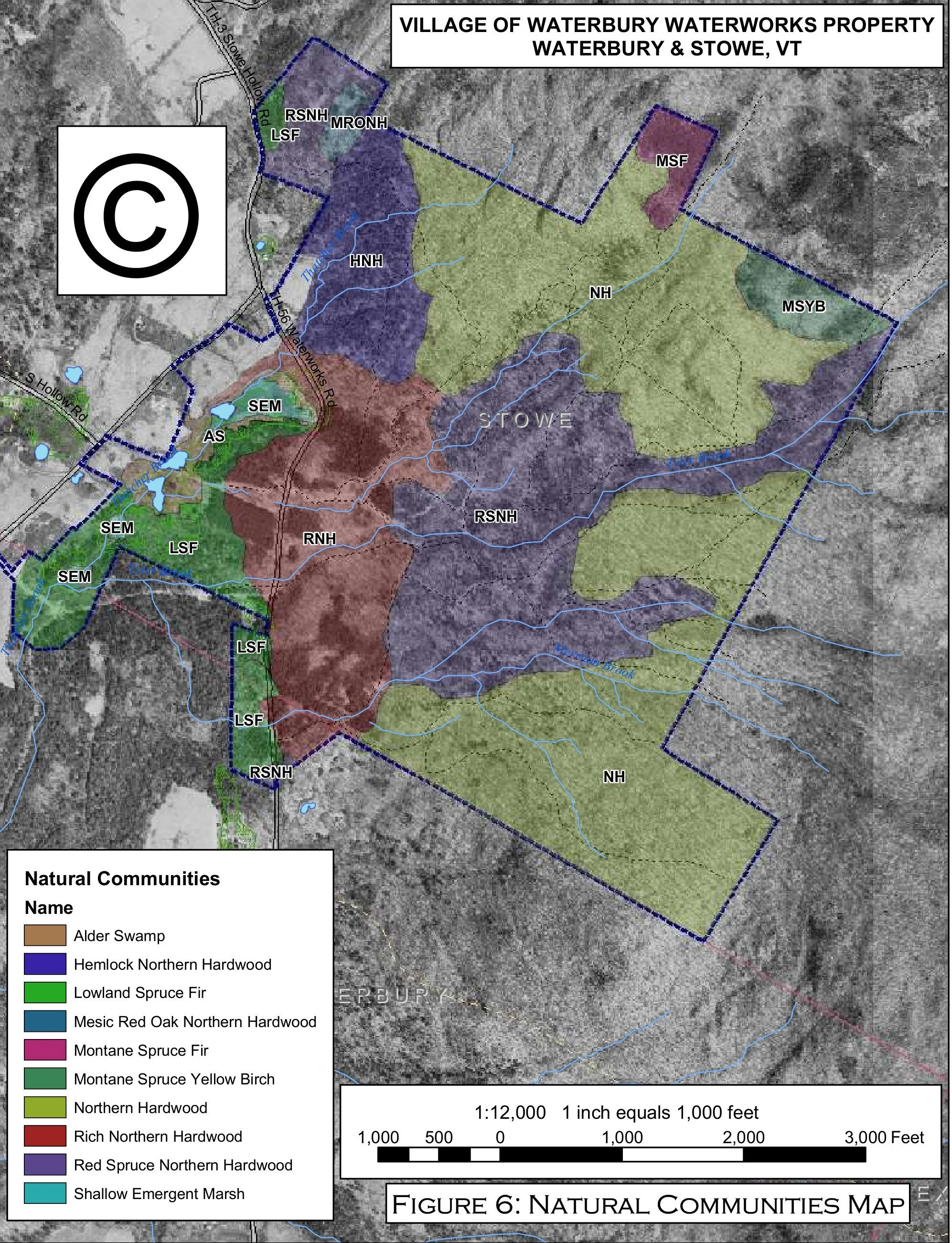
The students will collect data and present a report on four areas: plants, animals, human history and enduring features, including soils and geological characteristics. When talking about the data collection, Mazowita reminded students about the implications of their research. “What they’ll [EFUD] want to know is what the significance of that is,” Mazowita said. “What is the story that goes with a rich hardwood forest or a lowland swamp?”
The group's research is not focused on the water treatment process or the watershed itself. Instead, they will look at the landscape as a whole, identifying areas of the land that may have critical resources or species to inform EFUD’s land management going forward.
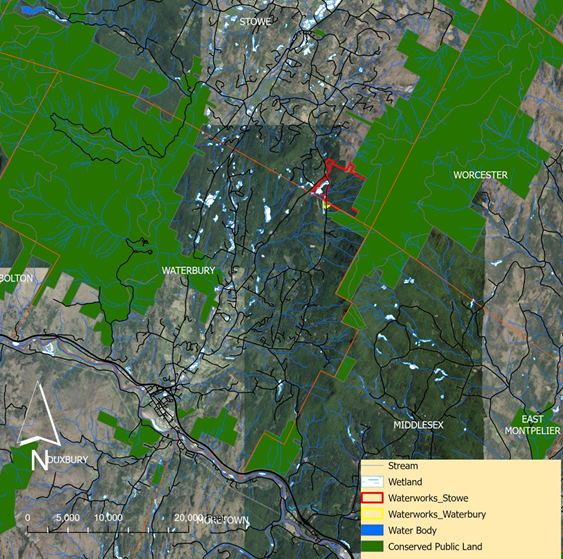
The Waterworks land is crucial due to its location on the Shutesville Hill Wildlife corridor, which is the only viable connection between the Green Mountains and Worcester range. Mazowita says the current management supports that crucial wildlife habitat connection, but that further knowledge can inform conservation efforts.
“There's definitely room to expand upon what's been offered in their resource management plan, or even just draw their eye toward what are the most relevant features,” Mazowita said. “We're just trying to dig into that history, make sure that the land owners are aware of it, whatever they might want to do.”
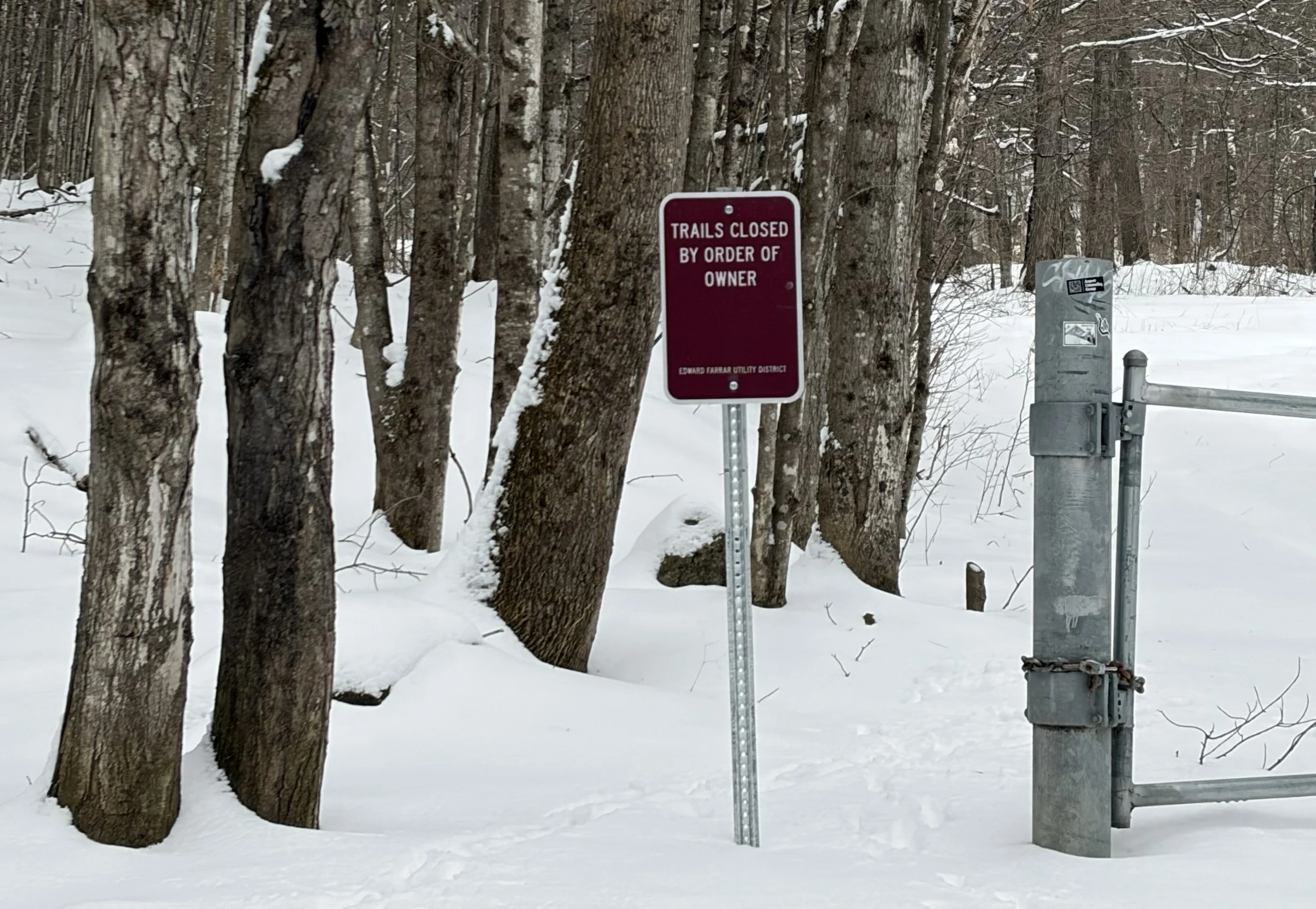
Trails at the Waterworks will remain closed until EFUD creates a new use policy later this year. Photo by Sarah Andrews
The UVM Field Naturalist students will present their findings at a public meeting on Wednesday, May 6, from 9:30 a.m. to noon, in the Steele Community Room at the town offices.
Flanders and district commissioners hope that the data will inform a long-term policy. That policy will likely be decided sometime in the early fall. Until then, the trails will remain closed to the public this year.
“What we do today will be important long into the future, so you want to make sure you've thought of everything,” Flanders said.
See more information about the Waterworks on the EFUD website at WaterburyVt.com. A recording of the first public information session held on Dec. 11 is posted on ORCAMedia.net. Minutes and presentation materials are posted from the Dec. 11 and the March 19 public information meetings.