
Waterbury Ambulance Service to curb lights-and-sirens use
January 20, 2026 | By Sarah Andrews | Correspondent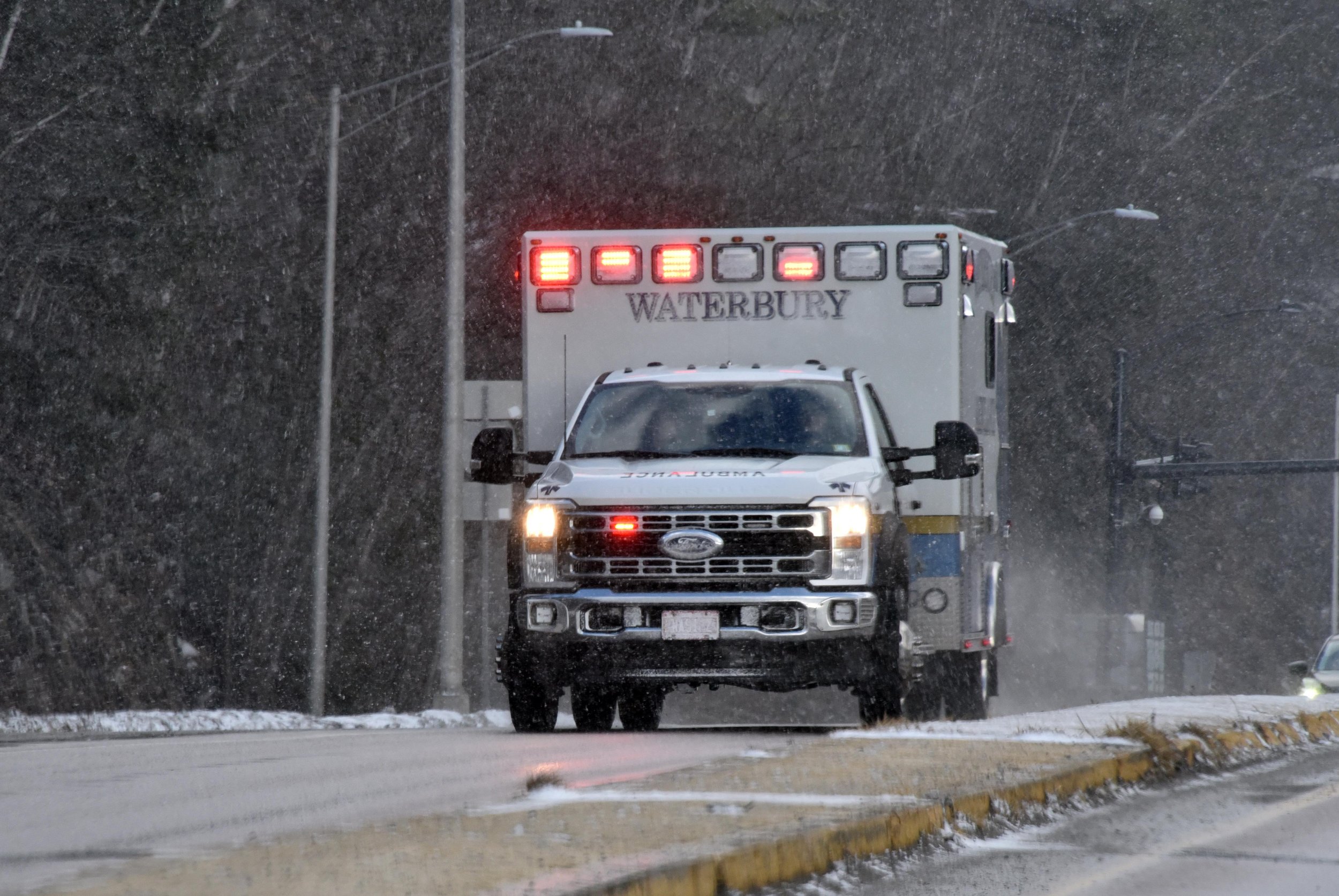
A Waterbury Ambulance travels on Vermont Rt. 100 in Waterbury with lights on. File photo by Gordon Miller
Waterbury ambulances will be less disruptive on the roads following a new policy to limit the use of lights and sirens when responding to non-life-threatening calls.
According to Ambulance Chief Zach Rounds, the policy change is an effort to reduce distractions for other drivers on the roads and maintain a steady and safe flow of traffic while his crews are out on emergency responses.
Rounds described the new approach to the Waterbury Select Board at its meeting on Jan. 5.
Waterbury Ambulance Service is implementing this change to address national data and state guidance that demonstrate the correlation between lights-and-sirens responses and EMS vehicle crashes, Rounds said.
“We’re in line with national guidance, as well as Vermont EMS guidance to reduce lights and sirens usage across the board due to [their] increase in traffic incidents for the community as we are making our way through town,” Rounds said.
Data from the National Association of EMS Physicians show that limiting the use of lights and sirens significantly improves patient outcomes in non-life-threatening calls.
A 2022 joint statement from the association along with the American Ambulance Association, the American College of Emergency Physicians and a number of other national and international EMS organizations explains that using lights and sirens is intended shorten the time it takes for emergency responders to get to a scene or to arrive at a hospital, “but only a small percentage of medical emergencies have better outcomes from lights and sirens use.”
Multiple studies have shown that using lights and sirens can shorten travel times by up to several minutes, but those time savings come with risk. Using lights and sirens also increases the chance of a vehicle crash by 50%, the data show. “EMS vehicle operations using lights and sirens pose a significant risk to both EMS practitioners and the public,” the joint statement notes.
While there has never been an EMS vehicle crash in Waterbury, Rounds said the new policy is part of the service’s plan to modernize its approach, in line with other EMS statewide and nationally.
The chief emphasized that the policy does not end the use of lights and sirens, and the situations where that use is limited will not negatively impact patient care. He said Waterbury’s EMS crews will maintain the same level of urgency in response to all calls.
“We will still be using lights and sirens. It does not mean we’ll be taking the call any less seriously.” Rounds said.
In line with these changes, drivers should follow standard traffic patterns when in the vicinity of ambulances on the road. Rounds said that drivers should only pull over for emergency vehicles if they are using warning devices.
Rounds was at the select board meeting to discuss the ambulance service’s 2026 budget request from the town that will be included in the budget voters will consider on Town Meeting Day.
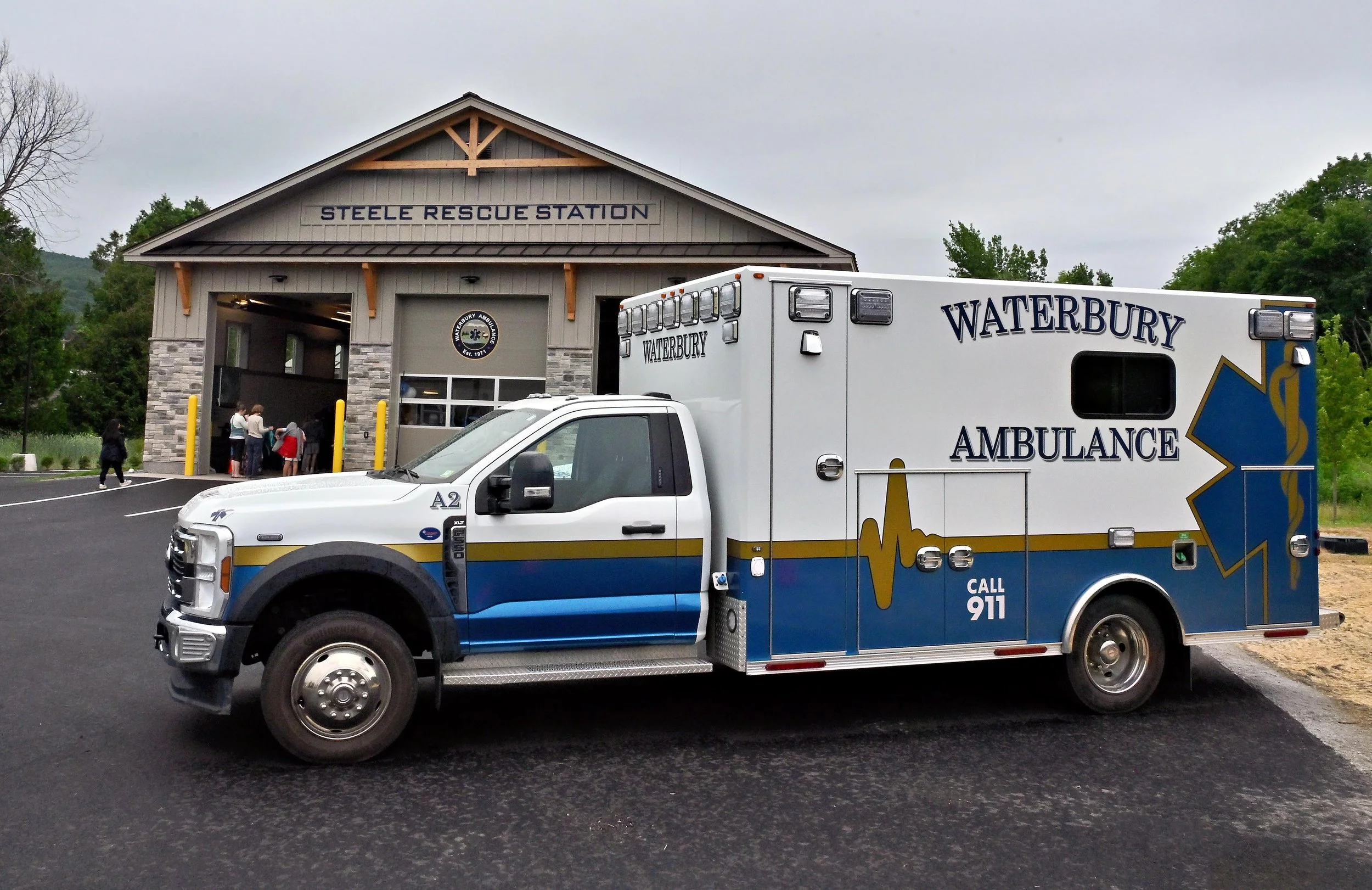
Waterbury Ambulance Service now staffs its new station with a crew 24/7. Photo by Gordon Miller
Waterbury Ambulance has requested an 8% budget increase to meet its demand for service and limited revenue from insurance and payments. The town allocated just under $200,000 for Waterbury Ambulance in 2025. The 2026 budget draft increases that to just over $215,000.
Rounds addressed increased payroll expenses, noting that the agency has implemented more competitive pay for paramedics, which has improved staff recruitment. The new ambulance station has also allowed Waterbury Ambulance to have staff on site 24/7, he said.
Rounds also explained that the agency’s move to its new station on Demeritt Place in downtown Waterbury last summer has been paid for and that the budget request solely pertains to operating costs for the coming year.
Waterbury Ambulance Service responded to 677 calls in Waterbury and Waterbury Center in 2025, including 11 calls for its Waterbury Backcountry Rescue Team. According to data Rounds shared with the board, falls, illnesses and traffic accidents account for just under 40% of the agency’s calls in Waterbury.
Rounds, who joined Waterbury Ambulance in 2025, said he will begin sending town officials monthly reports on its calls that it can share with the community. Board Chair Alyssa Johnson said that information could be added to the town website, waterburyvt.com, on its Public Safety page under Departments.