
Fellowship frees up Harwood teachers to deepen student engagement
November 28, 2025 | By Matt Henchen and Jonah Ibson Thanks to landing one of Vermont’s most prestigious fellowships for secondary school educators, we have the opportunity this school year to turn our attention toward taking a bold step to deepen student learning and engagement.
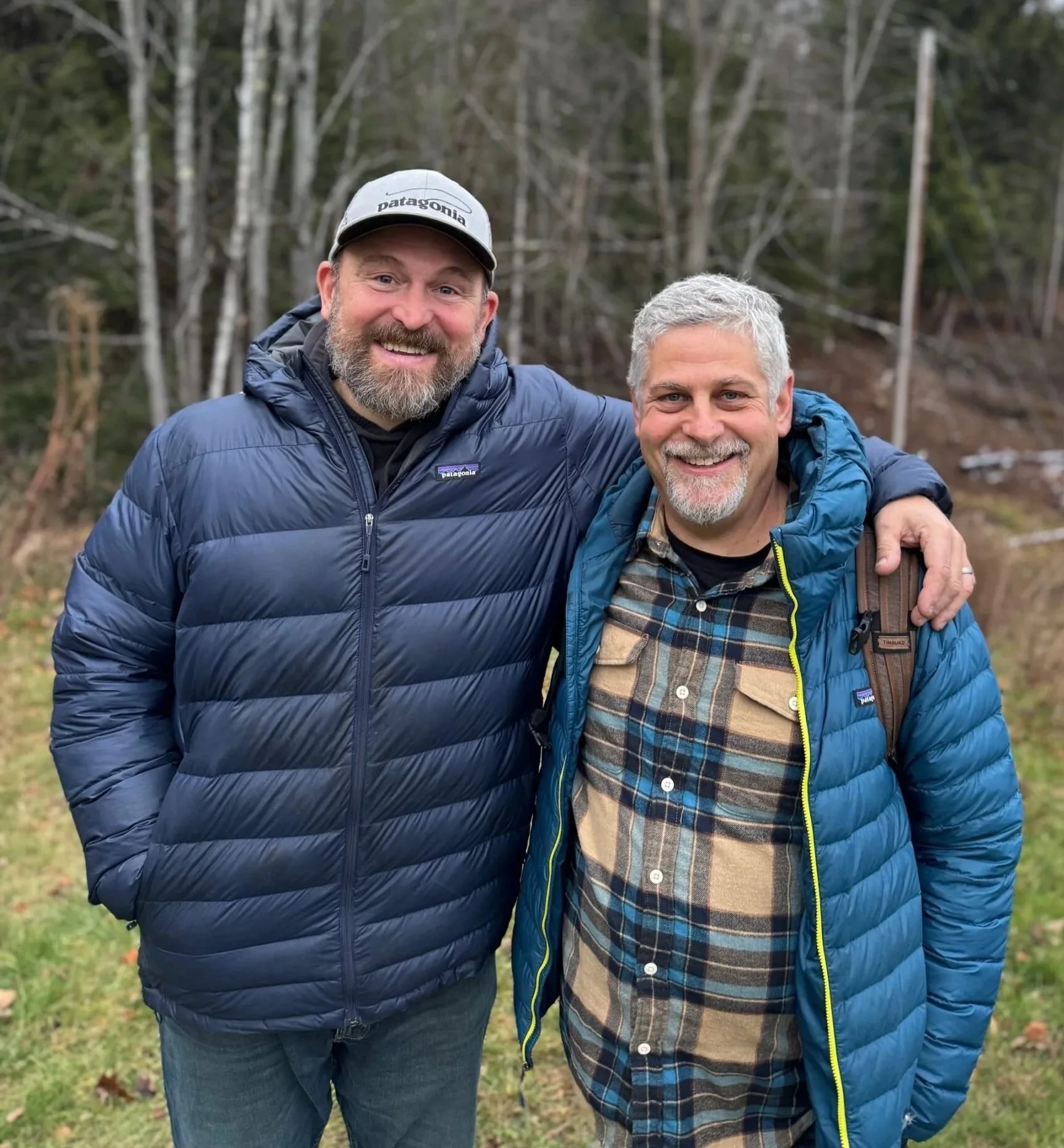
Harwood teachers Matt Henchen and Jonah Ibson are Rowland Foundation Fellows this academic year. Courtesy photo
Last spring, we were selected to be Rowland Fellows by the Rowland Foundation for the 2025-26 school year. This fellowship provides a grant of up to $150,000 to support innovative projects that positively impact the climate and culture of schools in Vermont.
We’d like to explain what that involves, and we would like to invite the community to join us in this effort.
Our project is centered on deliberative dialogue, a practice that emphasizes listening, reflection, and meaningful participation in decision-making. We want to create spaces where students, teachers, families, and community members can be heard. It’s about sharing power with the community, connecting learning to purpose, and building understanding about the complex realities of education today.
To guide this work, we have established a Collaborative Work Group that meets weekly and brings together a diverse range of voices from across the school community. Members include Harwood junior Dahlia Jordan and senior Sawyer Popowicz; teachers Becky Allen (Math), Peter Arsenault (Physical Education), Susannah Cowden (Science), Brian Boyes (Music and also a former Rowland Fellow), Sarah Popowicz (Connected Learning), Lynda Cummings (Special Education), and Erin Dezell (Guidance); as well as Harwood Principal Megan McDonough. This group provides insight, guidance, and feedback, ensuring that the project is inclusive, responsive, and rooted in the needs and aspirations of the broader school community.
Strengthening community connections is a central goal of the project. We want to hear from the community, provide a chance to share our perspective, and use deliberative practices to uncover common ground and identify concrete ways to improve the quality of our public schools. This is about fostering better, more resilient, and more sustainable communities.
Deliberative dialogue goes beyond simple democracy; it creates meaningful, structured conversations where diverse stakeholders can share concerns, appreciations, and ideas to explore complex issues and collaborate on actionable solutions. Aristotle captured the essence of this practice, writing: “We deliberate not about ends, but about the means to attain ends.”
Historically, deliberative dialogue has supported non-violent communication and collective reasoning from ancient Athens to the Haudenosaunee Confederacy to early Quaker meeting houses.
Our project also seeks to enshrine deliberative decision-making as the “Harwood Way.” Building on Harwood Union’s longstanding commitment to personalization, student-centered learning, and democratic decision-making, the project expands on Harkness-style dialogue work pioneered by former colleague, history teacher Kathy Cadwell.
Unlike Harkness, deliberative dialogue shifts the focus from analyzing texts to examining collective experiences and truths, aiming to guide the community toward next steps. The project also hopes to revitalize and institutionalize the Harwood Change Process initially developed by 2009 Rowland Fellow Jean Berthiaume and former principal Duane Pierson that empowers students and other stakeholders to advocate for meaningful school-level change.
Deliberative practices in action at Harwood Union have already produced leading innovations in our state. In 2024, structured dialogues with students, parents, and staff informed the school’s transition to a cellphone-free environment, placing human relationships at the heart of learning. Using lockable pouches to store phones during the day, the school prioritized human connection as the key to meaningful learning. As one of Vermont’s first fully phone-free high schools, Harwood Union saw tangible benefits: students engaged in more face-to-face conversation, stronger peer connections, and a greater sense of community, while teachers observed increased focus in class and improved scores. This initiative demonstrates how collective, values-driven decision-making can produce measurable improvements in school climate and student well-being.
The project also incorporates cutting-edge research on student motivation and neuroscience, recognizing that adolescents learn best when they feel a sense of relevance, agency, and autonomy, which are conditions that activate reward pathways and enhance memory and engagement. Inspired by the book, “The Disengaged Teen,” by Jenny Anderson and Rebecca Winthrop, we aim to foster more agentic engagement – giving students real ownership and influence over learning through goal-setting, project design, and shaping classroom norms.
We also will emphasize transcendent thinking, encouraging students to move beyond immediate tasks to consider larger societal questions and the broader impact of their learning – for example, connecting local sustainability projects to global climate issues or exploring the ethical dimensions of emerging technologies. This combination of neuroscience-informed practice and agentic, transcendent engagement aims to help students think deeply, take initiative, and connect learning to meaningful real-world contexts.
Principal Megan McDonough emphasizes the potential impact, pointing out that Harwood has a deeply rooted practice of collective decision-making. “This fellowship provides yet another opportunity to continue growing student engagement and authentic agency to help students see increased relevance and purpose in their lives at Harwood and beyond,” she said.
We would like to invite members of the broader community to participate in these conversations. We’d love to have you read “The Disengaged Teen” and join us in dialogues about fostering agency, engagement, and student thriving at Harwood.
Anyone interested in contributing to the future of education at Harwood Union High School is encouraged to email us at mhenchen@huusd.org and jibson@huusd.org.
At Harwood since 2007, Matt Henchen is a civics and social studies teacher and head of the school’s History Department. English teacher Jonah Ibson has been teaching at Harwood since 2013, having previously taught for 10 years at Lamoille Union and Waits River School. They each are teaching half-time this year while pursuing their fellowship initiatives.
Learn more about the Rowland Foundation and this year’s fellows online at therowlandfoundation.org. Follow Henchen and Ibson’s project and read updates about their work in deliberative dialogue at Harwood on their blog at deliberatelyhuman.org/blog