Op-Ed: Are solar panels Vermont’s new sacred cow?
July 19, 2025 | By Alison DespathyAre solar panels Vermont’s new sacred cow? What does Vermont mean to you? If farms, forests and stewardship come to mind, please read on.
In 1925, Vermont had over 3.3 million acres of agricultural land. Fast forward to 2022 and this number has dwindled to 543,096 acres.
From the Vt. Agency of Agriculture, Food and Markets
Many factors have led to declines in agricultural land over the years, but a recent contributor to this alarming trend is industrial-scale solar development, which brings ecological devastation and threatens food security. Steep reductions in agricultural land, specifically due to industrial solar, are happening nationwide, with several states such as Oregon, Pennsylvania, and New Jersey passing laws and crafting legislation to protect agricultural land.
Out-of-state commodities investors, global corporations and renewable energy developers are purchasing and leasing land in Vermont because it is comparatively cheap, and subsidies and tax incentives for renewable energy development exist, as well as high market rates for the ownership of this “renewable energy.” Nearly all large solar projects developed by “Vermont solar developers” are sold to out-of-state hedge funds and investment banks after permitting or construction. This situation is creating the perfect storm for Vermonters and our cherished environment to be preyed upon while wealthy renewable energy developers and investors reap the benefits.
Vermont is poised to become an industrial solar plantation with developers selling high-value renewable energy power and Renewable Energy Credits to the highest bidders. The power does not have to be used or stay in Vermont and other states can buy this power or the credits and claim they have met their state's “renewable energy mandates.” Corporations can also purchase these credits to claim they are a “green” company, which then boosts their Environmental-Social-Governance rating and attracts investors.
Keep in mind, there is NO energy transition happening. With the massive expansion and implementation of Artificial Intelligence and the internet of things in all sectors, energy consumption will continue to increase exponentially. Governments, healthcare, education, industry, Hollywood, sports teams and individual use of AI all contribute to this unfathomable growth and its unimaginable power and data storage demands. These technologies consume land, water, and energy at rates never witnessed before. People have been sold a lie when it comes to the “energy transition.”
The days of reduced consumption are long gone. Striving for continued efficiency remains a worthy goal, yet industrial-scale solar power in our often cloudy Vermont, when sited in the wrong place, is inefficient, unreliable, and destructive to entire ecosystems and food security.
It all sounds hypocritical because it is.
How do Vermonters feel about this?
On June 3, I visited a proposed industrial solar site in Fair Haven. This project would cover 110 acres – yes, 110 acres of absolutely beautiful, high-quality agricultural land. This project is under review at the Vermont Public Utility Commission.
The black blocks on this site plan indicate proposed solar panels on 110 acres of agricultural land in Fair Haven. From the project plans submitted by VT Real Estate Holdings.
It was heartbreaking to walk this land and picture it with the topsoil ripped off and the earth heavily compacted and covered with industrial solar panels, causing erosion and permanently compromising the health of this farmland. Especially given the fact that taxpayers are subsidizing this development – a form of corporate welfare: The power purchase agreement does not have to be established prior to approval, Vermont does not hold any guarantee of the power, Vermonters may be on the hook for higher electricity rates and increased transmission and distribution costs, developers are positioned to rake in unimaginable revenue, and the permanent loss of Vermont's agricultural land is guaranteed.
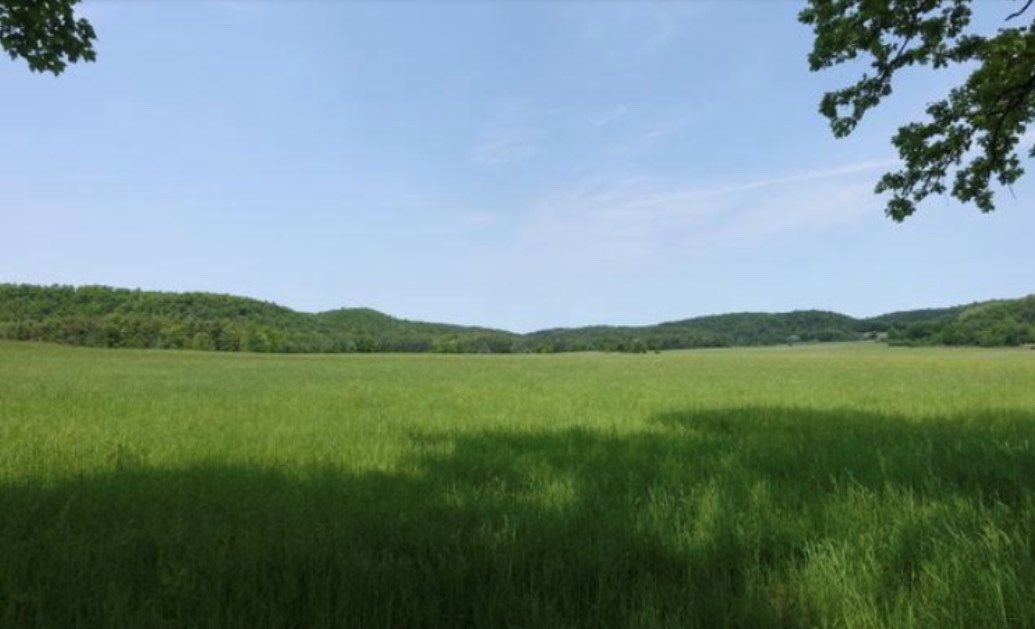
Proposed site for industrial solar plantation on high-quality agricultural land in Fair Haven. Photo courtesy of Annette Smith, Vermonters for a Clean Environment
This is clearly a lose-lose situation for Vermont. Sadly, this Fair Haven project is only one of several industrial-scale solar projects proposed at this time by the Connecticut-based commodities trading company, Freepoint Commodities, also known as VT Real Estate Holdings.
In Shaftsbury, Freepoint Commodities has also applied to the state for a 20MW solar project, which has drawn significant opposition from the surrounding landowners and communities. The Shaftsbury project would cover 80 acres of prime agricultural land and rolling hillsides. This project includes 45 acres of deforestation with documented compromise to ecosystems and native species. There is also discussion of Freepoint's 50MW industrial solar project proposal in Panton, which would host a 300-acre industrial solar plantation on mostly agricultural land.
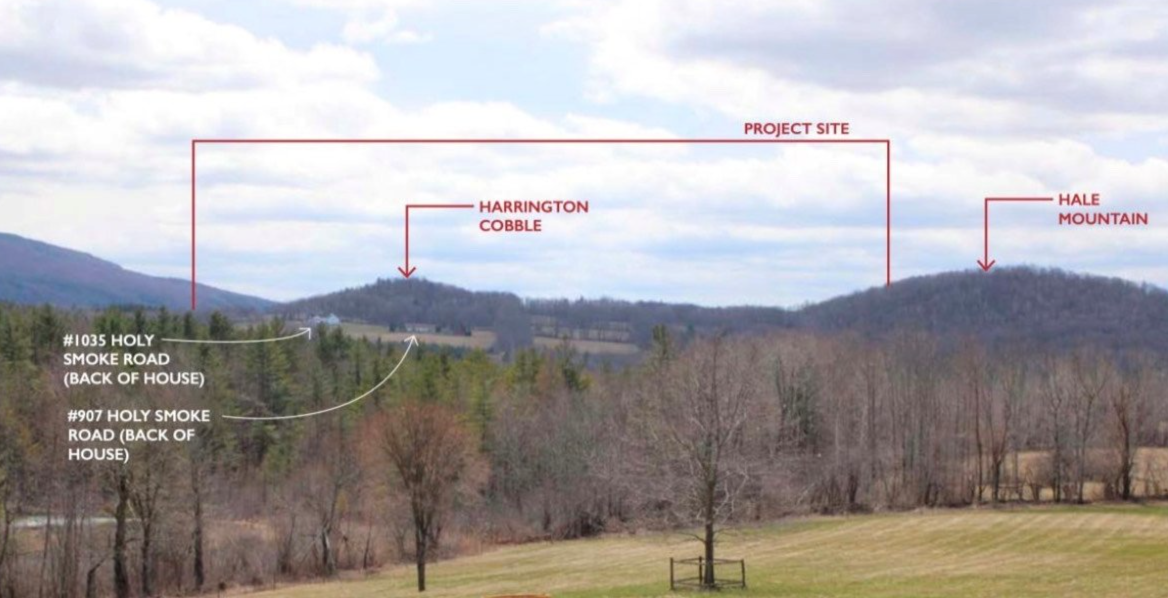
The red line indicates the proposed industrial solar project site in Shaftsbury on 80 acres of agricultural and forest land. Photo courtesy of landscape architect Samantha Anderson as a witness for intervenors in the regulatory review. Documents online here.
For years, the Vermont Agency of Agriculture, Food and Markets has been educating legislators at the State House about the alarming loss of prime agricultural land. The Democratic leadership has taken zero action to protect prime agricultural land and prevent Vermont from this predatory behavior by well-funded, lawyer-heavy renewable energy developers.
The controversial Renewable Energy Standard was passed last session by the supermajority, despite the governor's veto. This standard mandates aggressive requirements for renewable energy in Vermont, yet fails to address these unresolved issues of siting and project placement, appropriate industrial solar regulations, expensive distribution and transmission costs, ratepayer protections, and the unreliable nature of renewable energy, especially in Vermont.
Special interests such as Renewable Energy Vermont, a well-funded trade group representing renewable energy developers, designed this legislation and lobbied hard for the new energy standard. Democratic leadership further overlooked significant details, such as property and education tax rates for renewable energy projects that benefit investment banks and hedge funds.
Grassroots environmental groups such as Vermonters for a Clean Environment, as well as the Department of Public Service, attempted to address these deficiencies and were ignored. Vermonters for a Clean Environment has continually advocated for the proper siting of renewable energy projects. Annette Smith, the group’s executive director, has regularly shared information and reports encouraging solar development on the built environment – meaning parking lots, buildings, homes, landfills, brownfields – in order to protect Vermont's deeply cherished ecosystems, forests and agricultural lands.
Rep. Rob North, R-Ferrisburgh, introduced a recent bill to repeal the Renewable Energy Standard due to the risks of intermittent renewable energy and the heavily increased costs to Vermont ratepayers. Gov. Phil Scott's administration has also offered a bill to amend the standard in an attempt to address the gaps that place Vermonters and our environment at risk.
Alison Despathy lives in Danville.