
Op-Ed: Protect Our Wildlife led the charge on monumental land-posting change
May 8, 2026 | By Brenna Galdenzi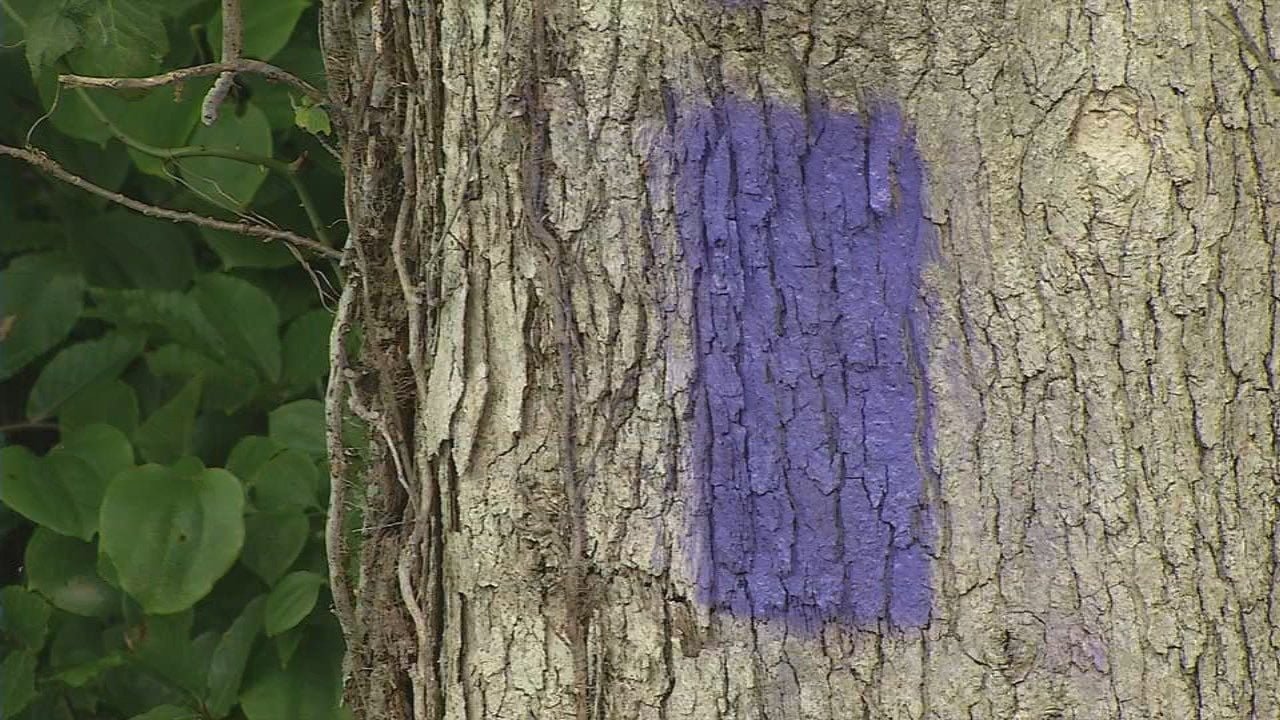
A proposal to allow landowners to mark posted land with purple paint was not included in the new legislation. Courtesy photo
The Vermont Fish & Wildlife Department commissioner set off a chain of events he likely didn’t anticipate when the department’s land-posting change last fall made it more difficult for Vermonters to post their land. The department changed the long-standing practice of allowing landowners to date their posted signs annually—at a time of their choosing—to a fixed January date, and Vermonters pushed back hard.
The change prompted the legislature to introduce bill H.723, originally drafted to codify Vermonters’ right to date their posted signs at a month of their choosing, with each posting valid for 365 days. Broader discussions soon followed, raising the question of why landowners are required to date signs at all, given that most other states do not impose this requirement and none require annual dating.
H.723 was subsequently strengthened to include a purple-paint provision, offering a more durable way for Vermonters to post their property. A simple paint stripe would mark land as posted, as is already allowed in the state of Maine and 20 other states. The bill also retained the option of using posted signs but removed the requirement to date them. In addition, a reasonable-person clause was included, recognizing that posted signs can be torn down or blown away. One witness before the House Environment Committee described a December 2025 incident in which a warden could not take legal action because some posted signs had incorrect dates or had been torn down.
The department and lobbyists representing trappers and hounders opposed this version of the bill, arguing that it constituted an attack on hunting. This oft-used claim fell flat, as many hunters post their own land and believe they should have the right to determine what activities are allowed on their private property. Rural Vermonters, including farmers, also voiced support for H.723.
Ultimately, the legislature compromised by removing the purple-paint provision while preserving the rest of the bill’s language, resulting in a less burdensome posting requirement that better protects landowners.
On April 30, Gov. Phil Scott signed the bill into law. It goes into effect immediately and makes two crucial changes that will help Vermonters:
• It entirely removes the requirement to date posted signs (signs do not require the landowner to write any information on them)
• It protects landowners by including a reasonable-person clause. For example, if one sign is torn down or blows away, the land will still be legally posted.
As for the purple-paint option, Vermonters will return in the future to advance this common-sense posting method that simplifies enforcement and also addresses the common problem of signs being destroyed.
For now, we celebrate this step forward.
Brenna Galdenzi is president of Protect Our Wildlife, a Stowe-based nonprofit organization founded in 2015 with the mission of making Vermont a more humane place for wildlife.