
Op-Ed: Who will speak outside the language shelter?
January 27, 2026 | By Bill SchubartAware that clarity and honesty don’t guarantee popularity, real leaders focus on what they want to convey. They tell it like it is, formulating straightforward, declarative language that conveys their thoughts and plans for action.
But when challenged for clarity on their own positions on contentious issues, many politicians, subservient to and daunted by those who keep them in power, defer to what I would call “word shelters.” We see MAGA foot soldiers in Congress marching to the beat of their leader’s drum and parroting handy “talking points” such as “to prevent waste, fraud and abuse.”
By way of example on the Jan. 22 PBS Evening News: “Sen. Chuck Grassley, R-Iowa, asked Russell Vought, Trump's nominee to lead the Office of Management and Budget, about government whistleblowers, especially those who expose improper government spending and action.” His reply: "I think the whistleblowers play an enormous role in helping us weed out waste, fraud and abuse."
Meanwhile, our widely popular and likable governor, when asked about the serious financial challenges facing his constituents, evokes “affordability,” a catch-all phrase that shields its user from specific prescriptions for addressing it or what he plans to do about it. “Affordability” is a careless euphemism lumping together real problems in public education, healthcare, housing, criminal justice, the environment, public transportation, rather than starting the vital process of in-depth analysis, discussion, articulation, and action.
Our governor laid out a plan for reducing the cost of public education, but then largely failed to engage constituents in the conversation. This led many to pushback. So his New Year State-of-the-State Address became, for the most part, a my-way-or-the-highway diktat.
To his credit, the recent ICE execution of Alex Pretti in Minneapolis did elicit a forceful condemnation from our governor: “At best, these federal immigration operations are a complete failure of coordination of acceptable public safety and law enforcement practices, training, and leadership… . At worst, it’s a deliberate federal intimidation and incitement of American citizens that’s resulting in the murder of Americans. Again, enough is enough.”
But the statement was made with no reference to President Trump, Stephen Miller, Vice President J.D. Vance, or Homeland Security Secretary Kristi Noem, the architects of ICE and U.S. Border Patrol’s murderous onslaught against Minneapolis citizens. What is our governor afraid of? May Hanlon, executive director of the Vermont Democratic Party, was clear: “Performative neutrality in the face of clear harm is not leadership,” she wrote in a clarion call to Vermonters.
Evasive language may be seductive. After all, who isn’t opposed to “waste, fraud and abuse” or who doesn’t want to tackle “affordability.” But these language umbrellas and talking points do little more than allow their users to evade answers that might lead to solutions and offend those to whom they owe political fealty.
Where’s the clear-spoken leadership we need?
I’ll spare you another self-evident diatribe about how, as a nation under Trump and Steven Miller and their technocratic acolytes, we’re becoming more like the Weimar Republic every day. You probably know that already, or at least are beginning to wonder about it.
Though born in Manhattan, I’ve lived in Vermont for 79 years. I’ve been politically aware since Governor Dean C. Davis’s term from 1969-1973. Governors Tom Salmon, Madeleine Kunin, Dick Snelling, Howard Dean, Jim Douglas, and Peter Shumlin were all at least acquaintances, if not, in some cases, confidantes.
In retrospect, I would say that, with the exception of governors Davis, Kunin and Snelling, who were powerful initiators – and for a different reason, Howard Dean and Peter Shumlin – that the others, like our current governor, were competent guardians of the status quo. Dean and Shumlin tried to innovate in the healthcare crisis. The solutions they both sought in the three branches of government were largely unsuccessful, but helped focus attention on the depth of the problem.
As yet, we don’t know if our apparently popular governor is running for another term or not. There’s been only one declared challenger, Professor Esther Charlestin from Middlebury. Political scuttlebutt and some hints from the candidates themselves, such as appearing at town hall discussions around the state, suggest that either Vermont State Treasurer Mike Pieciak or Vermont Attorney General Charity Clark might consider a run.
Assuming that a field of credible candidates eventually declares in time for debates before Nov. 3, Vermonters will confront a serious choice. Are we going to choose the candidate we like or the candidate we need to begin to tackle Vermont’s crippling challenges hidden under the word umbrella, “affordability?”
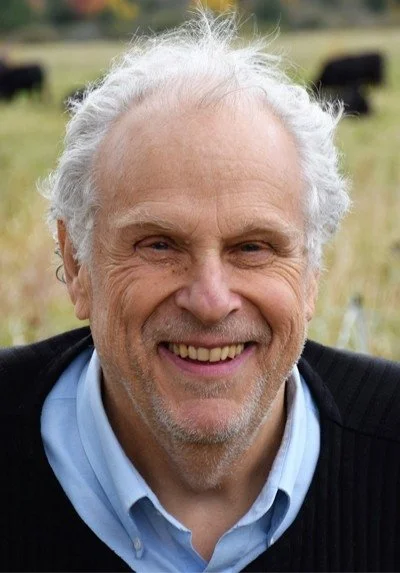
Bill Schubart lives and writes in Hinesburg.