Fish & Wildlife briefs: Spring turkey hunt, deer hearings, and more
April 24, 2026 | By Waterbury RoundaboutThe Vermont Department of Fish and Wildlife has issued a number of announcements so far this month. Here’s a rundown of news about hunting seasons, regulatory proceedings coming up, as well as wildlife tips for the general public and some youth fish-art contest winners.
Youth & novices start the spring turkey hunt
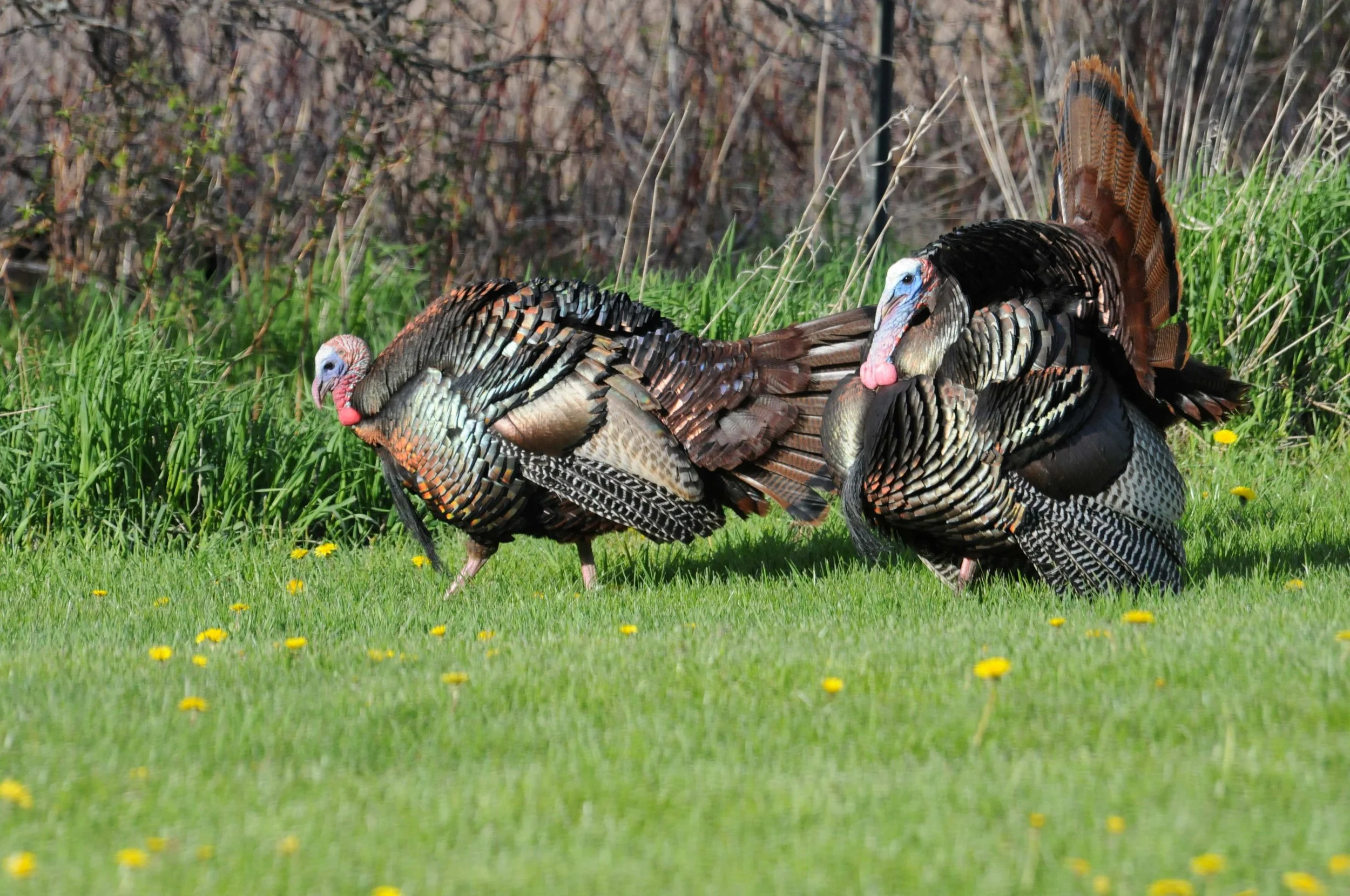
Vermont Fish and Wildlife re-established native wild turkeys when it released 31 wild birds from New York in 1969-70. Today, Vermont has a wild turkey population of more than 45,000. Photo courtesy VTF&W
Spring turkey hunting season begins with youth and novice weekend, April 25-26, and the regular season runs May 1-31.
“The youth and novice turkey hunting weekend provides an excellent opportunity for experienced hunters to teach young or new hunters how to safely and successfully hunt wild turkeys,” said Toni Mikula, Vermont’s wild turkey biologist.
To hunt turkeys this weekend, a young hunter must be 15 or under. They must have completed a hunter education course and possess a hunting license, a turkey hunting license, and a free youth turkey hunting tag.
In addition, an individual age 16 or older who has purchased their first hunting license in the past 12 months also may hunt turkeys as a novice on April 25-26. They must have a hunting license, a turkey hunting license and a free novice tag.
The youth or novice must be accompanied by an unarmed licensed adult over 18 years of age. Shooting hours for the weekend are one-half hour before sunrise to 5 p.m. Landowner permission is required to hunt on private land during the youth-novice turkey hunting weekend.
The youth or novice may take one bearded turkey on the weekend and two bearded turkeys in the regular May hunting season.
Shooting hours during the May 1-31 turkey season are one-half hour before sunrise until noon, and two bearded turkeys may be taken.
A shotgun or archery equipment may be used to hunt turkeys. Shot size must be no larger than #2. Vermont Fish and Wildlife recommends hunters use highly effective non-lead shotgun shells.
Successful hunters in Vermont’s spring turkey seasons must report their turkey within 48 hours to the Vermont Fish and Wildlife Department. This can be done at a local big game reporting station or online at Vermont Fish and Wildlife’s website.
Last year, youth and novice hunters took 617 and 26 turkeys, respectively, during the April weekend hunt. During the regular spring hunt, 5,131 bearded birds were reported.
“Combined with the 419 turkeys taken during the fall season, hunters harvested in excess of 150,000 servings of locally sourced, free-range turkey meat in 2025,” Mikula said.
Before 1969, Vermont had no wild turkeys. Vermont Fish and Wildlife re-established native wild turkeys when it released 31 wild birds from New York in 1969 and 1970. Today, Vermont has an estimated wild turkey population of more than 45,000.
“To go from essentially no turkeys in Vermont before 1969 to a booming population that can provide over a hundred thousand meals each season – as well as wildlife viewing opportunities statewide – is a conservation success anyone who cares about wildlife can be proud of,” Mikula said.
More information is online in Vermont Fish and Wildlife’s 2026 Turkey Hunting Guide and the 2025 Turkey Harvest Report.
Deer hearings scheduled for May 5, 7
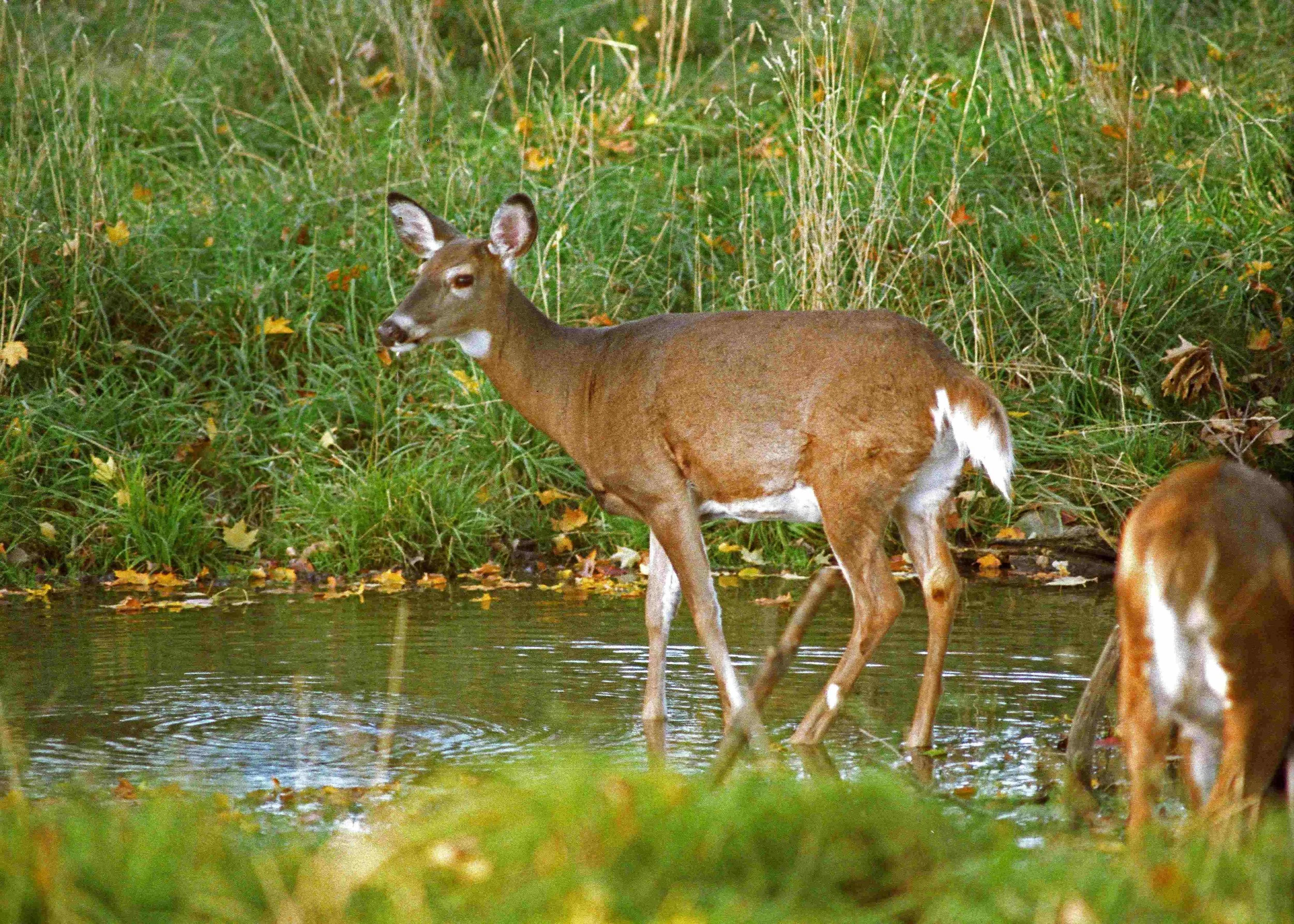
Vt. Fish & Wildlife Dept. and the Vt. Fish & Wildlife Board will hold public hearings May 5 & 7 to get input regarding the 2026 Antlerless Deer Harvest Recommendation. Vt. Fish & Wildlife photo by John Hall
The Vermont Fish and Wildlife Department and Vermont Fish and Wildlife Board will hold two more public hearings on May 5 and 7 to solicit input on deer and the department’s 2026 Antlerless Deer Harvest Recommendation.
The hearings are scheduled to start at 6:30 p.m. on Tuesday, May 5, at U-32 Middle & High School in Montpelier and on Thursday, May 7, at the Kehoe Conservation Camp in Castleton.
The department’s 2026 Antlerless Deer Harvest Recommendation is available on Vermont Fish and Wildlife’s website. In addition to the public hearings, anyone can leave a comment on the proposals by emailing ANR.FWPublicComment@vermont.gov. Comments must be received by May 15.
Deer ages available online
Hunters who provided the Vermont Fish and Wildlife Department with a tooth from their deer last year can now find out how old their deer was by visiting the department’s website.
Hunters turned in a total of 1,817 usable deer incisor teeth in 2025, according to wildlife officials. When added to the 1,367 deer examined by biologists during the youth and regular November seasons, the department was able to get accurate ages for 3,184 deer.
“We are thankful to the thousands of hunters who supported our deer management efforts by providing us with a tooth from their deer,” said Deer Project Leader Nick Fortin. “This age information helps us estimate deer population size and assess the health of deer. It is also critically important for understanding the effects of hunting regulations on the deer population and buck age structure.”
The oldest deer harvested were 15-year-old does taken in Bradford and Pittsford. The oldest buck was 13 years old and was taken in Lincoln. This was the oldest buck ever documented in Vermont.
To find out the age of a deer they reported, a hunter needs to enter their Conservation ID number on the website.
Apply by June 17 for a 2026 moose hunting permit
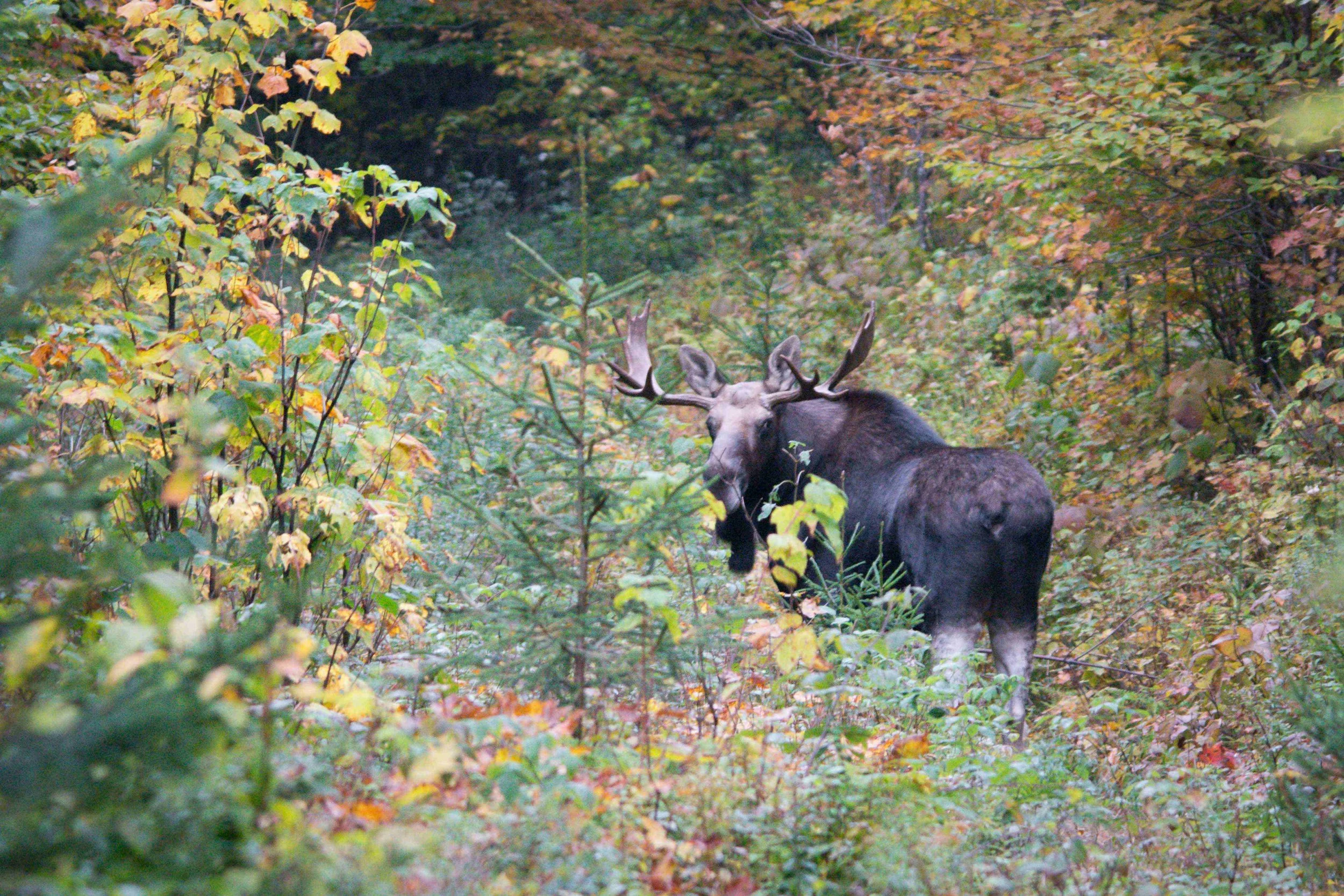
A bull moose in the Victory Basin Wildlife Management Area in the Northeast Kingdom. Vt. Fish & Wildlife photo
The Vermont Fish and Wildlife Board voted on April 1 to have 65 either-sex moose hunting permits and 20 antlerless moose hunting permits available this year for a hunt limited to Vermont’s Wildlife Management Unit E in the northeastern corner of the state.
The hunt is expected to result in a harvest of 40 to 50 moose, or about 6% of the current moose population in that region, according to wildlife biologists.
Permit applications are now available on the Vermont Fish and Wildlife Department’s website. The deadline to apply is June 17, and the permit lottery drawing is July 15.
Wildlife officials say that the goal of the 2026 moose harvest recommendation is to improve the health of moose in WMU-E by maintaining a lower number of moose and thereby reducing the abundance and impact of winter ticks.
“Moose are abundant in WMU-E with significantly higher population density than in any other part of the state,” said Nick Fortin, the state’s moose project leader. “The higher moose density supports high numbers of winter ticks, which negatively impact moose health and survival.”
Ongoing monitoring of moose health in northeastern Vermont shows the population continues to be negatively impacted by winter ticks. Birth rates are low, and many calves do not survive their first winter, officials explain.
“Research has shown that lower moose densities support relatively few winter ticks that do not impact moose populations,” Fortin said. “Reducing moose density decreases the number of available hosts which in turn decreases the number of winter ticks on the landscape.”
Lottery applications for moose permits are $10 for Vermont residents, $25 for non-residents. Lottery winners then need to purchase resident moose permits for $100 or non-resident moose permits for $350. Lottery winners are also required to hold a current Vermont hunting or combination hunting and fishing license.
Hunters who held a permit within the past five years are not eligible to apply for a permit or to buy a bonus point.
Five permits this year will be available to Vermont military veterans; three permits will be available for Special Opportunity recipients with life-threatening illnesses; three permits will be auctioned in accordance with regulations.
The 2026 Moose Harvest Recommendation and related information about moose research and management are available on Vermont Fish and Wildlife’s website.
Don’t touch! Young wildlife belong in the wild
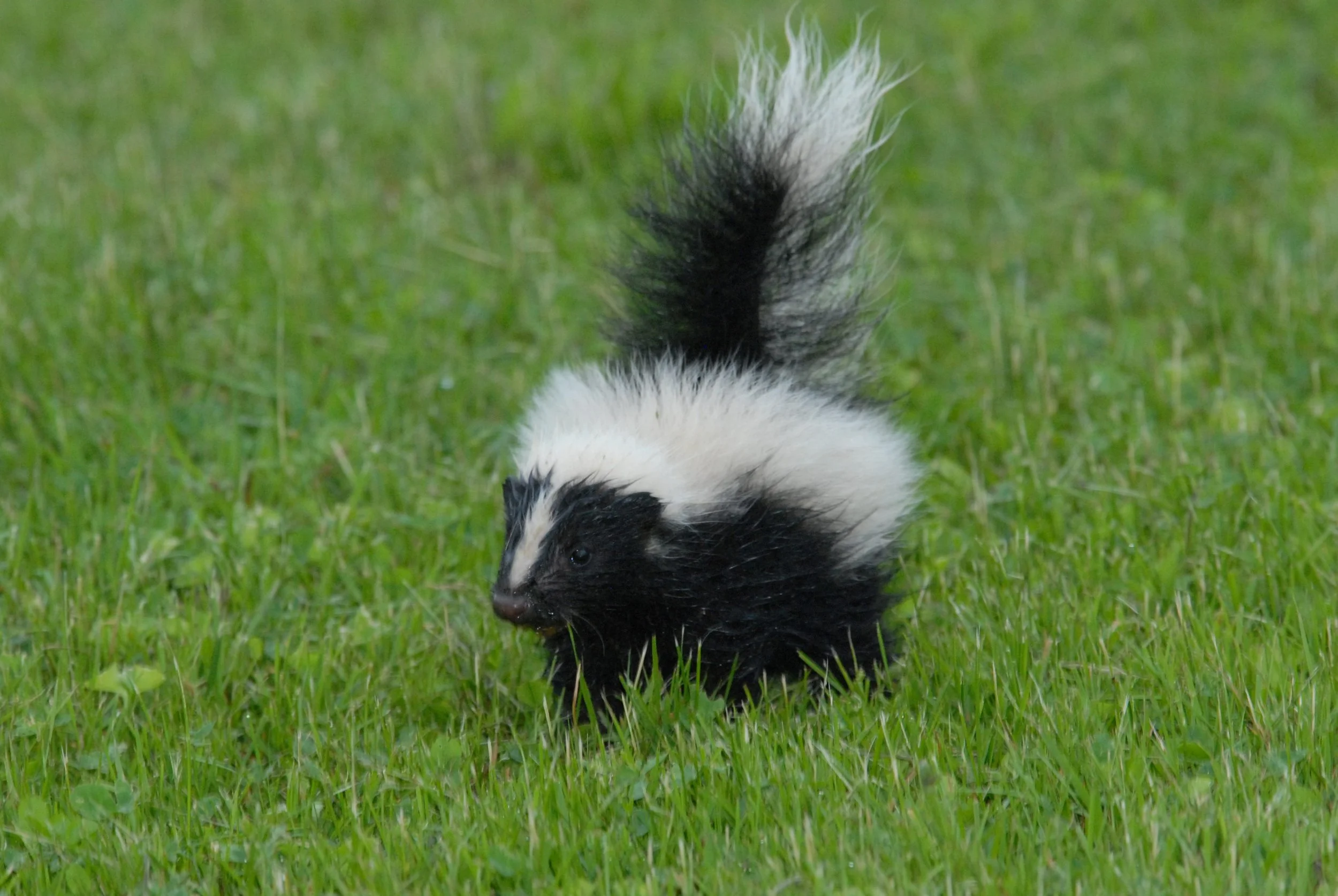
Picking up young wildlife can do more harm than good. It’s also against the law. VTF&W photo by John Hall
Watching wildlife is enjoyable, especially when young animals appear in the spring, but it is best for humans to keep their distance.
Picking up young wildlife can do more harm than good, according to the experts at Vermont Fish and Wildlife Department -- and it is also against the law.
Often when people see young animals alone, they mistakenly assume the animals are helpless or lost, in trouble, or needing to be rescued. Bringing young wildlife into a human environment often results in permanent separation from their mothers and a sad ending for the animal.
Handling wildlife could also pose a threat to the people involved. Wild animals can transmit disease, and angry wildlife mothers can pose significant dangers.
Fish and Wildlife scientists encourage wildlife watchers to respect the behavior of animals in the spring and early summer, and to resist the urge to assist wildlife in ways that may be harmful. Here are some tips:
Deer and moose nurse their young at different times during the day and often leave them alone for long periods of time. The juvenile animals are not lost. Their mother knows where they are and will return.
Young birds on the ground may have left their nest, but their parents will still feed them.
Young animals such as foxes and raccoons will often follow their mother, who is usually nearby but just out of sight to a human, happening upon the baby.
Wild animals can carry rabies, parasites and other diseases that are harmful to humans. Healthy-looking young raccoons, foxes, skunks, and bats may also be carriers of the deadly rabies virus. Rabies cases have been on the rise in Vermont in recent years, and several baby animals tested positive last year. Do not handle found wild animals or try to keep them as pets. Doing so could result in animals needing to be euthanized for rabies testing.
Many wildlife species will not feed or care for their young when people are close by. Obey signs that restrict access to wildlife nesting areas, including hiking trails that may be temporarily closed.
Keep domestic pets indoors, leashed or fenced in, and vaccinate them for rabies. Dogs and cats kill many young animals each year, and pets that roam free are at higher risk for rabies.
Avoid projects that remove trees, shrubs and dead snags that contain nests during the spring and summer.
For the safety of all wildlife, taking a wild animal into captivity is illegal, even one you suspect is sick, injured or has been abandoned.
For information about what to do when you encounter an animal in the wild, and to discuss questions and concerns about rabies, please call the Vermont Rabies Hotline at 1-800-4RABIES (1-800-472-2437).
K-12 student fish art contest winners announced
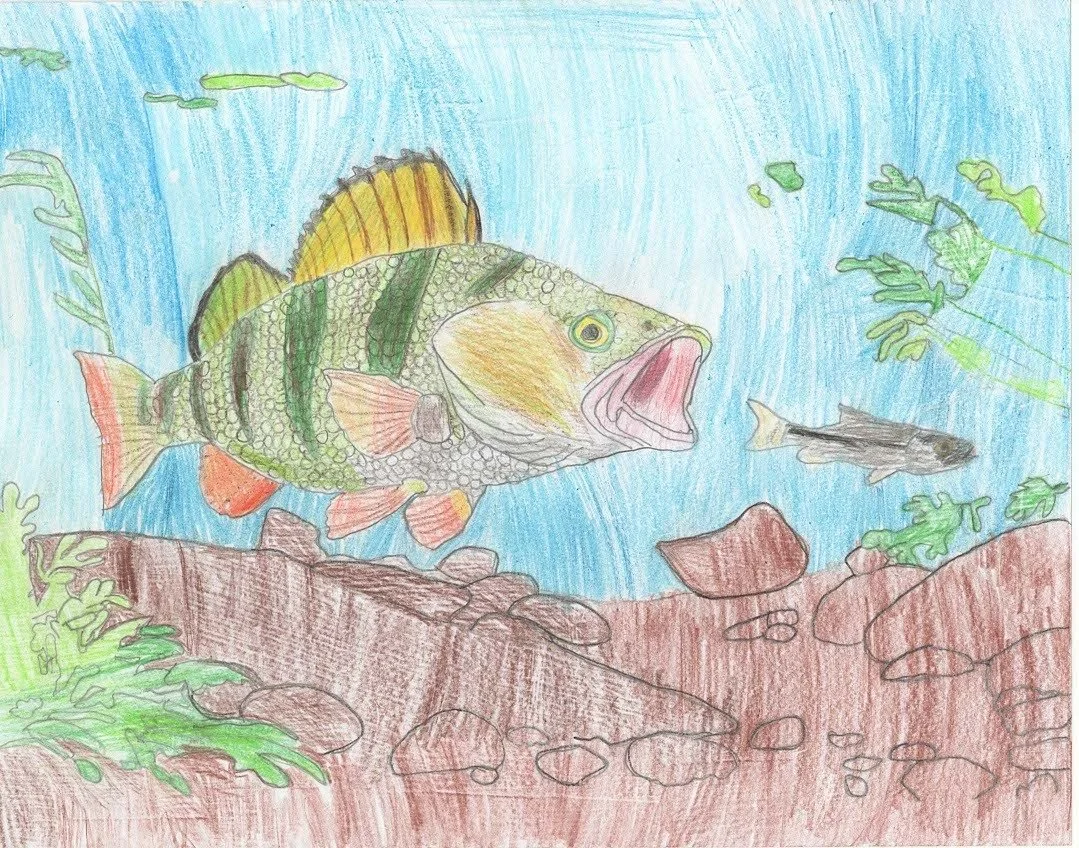
McKenzie Carpenter of Sutton won first prize in the grade 4-6 category with this yellow perch illustration. Courtesy photo
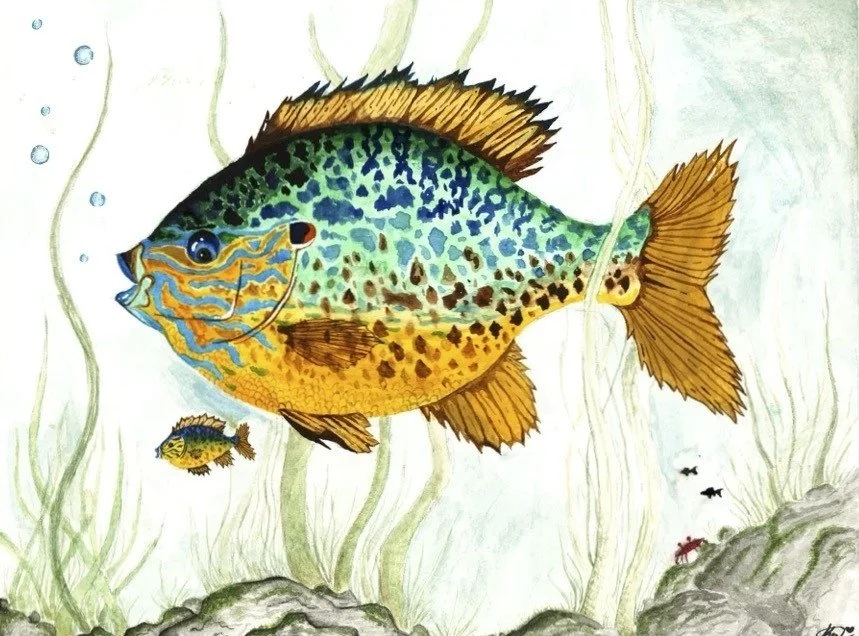
West Newbury student Kara Willet won first prize in the grade 10-12 category for this pumpkinseed sunfish artwork. Courtesy photo
The Vermont Fish and Wildlife Department recently announced the Vermont winners of the 2026 Art of Conservation Fish Art Contest in partnership with Wildlife Forever.
The department received 337 submissions from Vermont students in grades K-12. Participants selected a fish species found in Vermont waters and submitted an illustration and one-page creative essay on the species.
“The Fish Art Contest is a way for Vermont students to use their creativity and strengthen their knowledge and connection with our environment,” said Vermont Fish and Wildlife Department Education Specialist Corey Hart. “We continue to see schools across Vermont incorporate the contest in unique ways.”Hart said schools incorporate the contest into their curriculum in a variety of ways that involve science, art and English classes.
“The ways to utilize the contest both in and out of the classroom are numerous and result in unique learning opportunities for Vermont students,” Hart said. “We congratulate all of the participants on a job well done and look forward to next year’s contest.”
Three top prize winners were chosen in grade categories of K-3, 4-6, 7-9 and 10-12. They receive a fishing rod and reel, and their art is entered into a selection process to be featured in the department’s forthcoming 2027 Fishing Guide and Regulations publication.
Green Mt. Conservation Camp still has summer openings
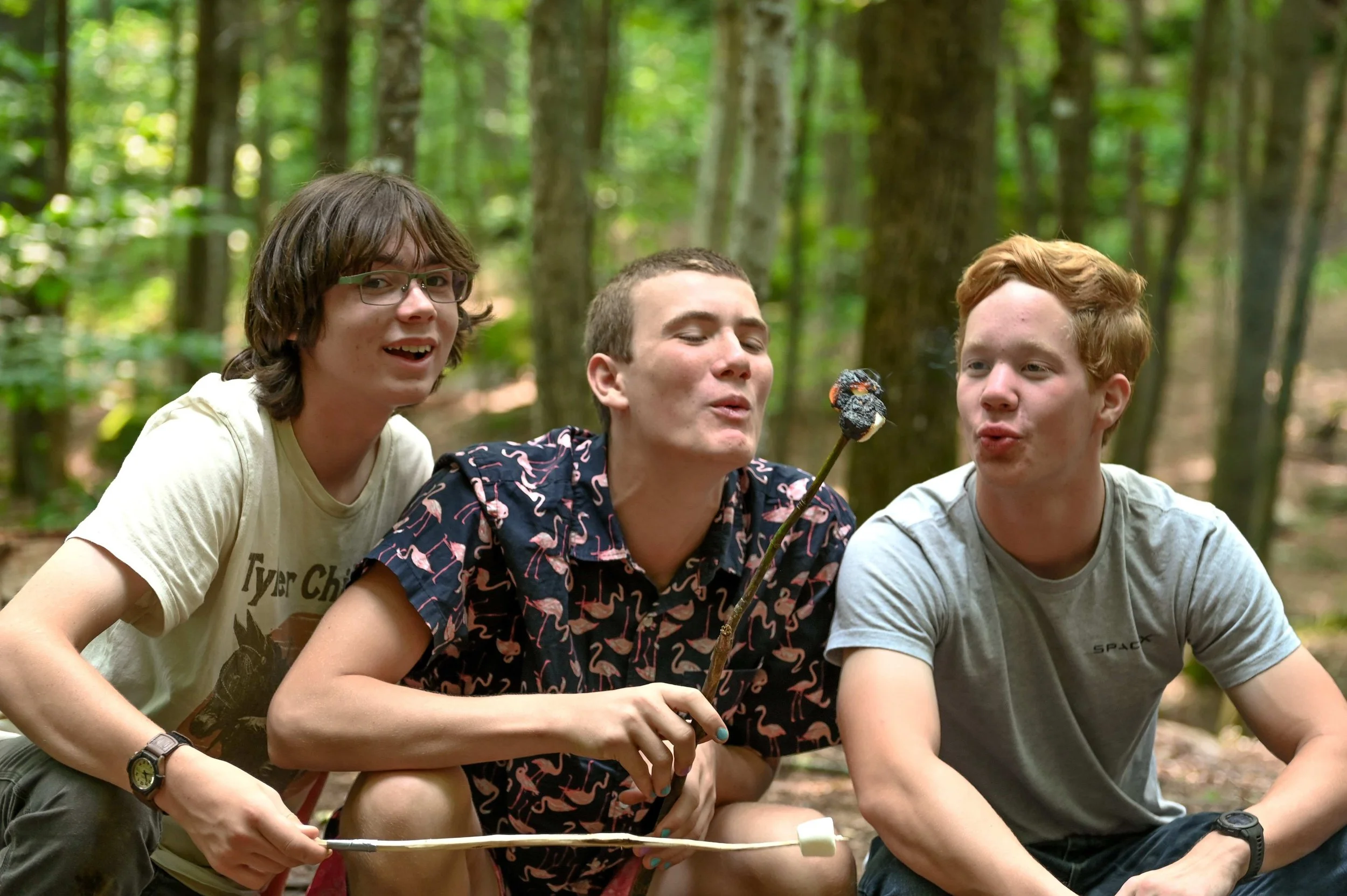
Registration is still open for VErmont Fish & Wildlife Department’s Green Mountain Conservation Camp. Courtesy photo
Youngsters ages 12-14 who are looking to get away to summer camp soon can still sign up for the Vermont Fish & Wildlife Department’s Green Mountain Conservation Camp.
Campers gain outdoor skills and learn about wildlife conservation at Lake Bomoseen in Castleton and Buck Lake in Woodbury. Campers participate in hands-on learning about wildlife conservation, ecology, forestry, orienteering, safe firearm and archery techniques, canoeing, fishing, swimming and more.
Openings are still available in all of the girls sessions and several of the boys sessions, according to Fish & Wildlife Education Specialist Hannah Lafont. “We’re lucky to be able to serve just shy of 1,000 youths every summer with week-long sessions in June, July and August. That setup allows families the flexibility to sign their campers up later in the season than is possible at many other summer camp programs,” Lafont said.
Enrollment is open to new campers, and previous campers ages 16 or younger are also invited to come back for another summer.
“As a former GMCC camper myself, I know just how impactful this program can be for everyone, and especially for young women,” Lafont added. “We are connecting girls with hands-on STEM opportunities through our immersive program in the outdoors, often calling on professionals in the field to teach the campers first-hand. Our campers learn about natural resource conservation while building critical skills in leadership, confidence, connection and perseverance.”
Registration is open and will remain so until all camp sessions are filled. Tuition is $300 per week, including food, lodging and equipment. Financial aid is available.
Session schedules, information and registration are available online at vtfishandwildlife.com. For more information, contact FWGMCC@vermont.gov or call 802-522-2925.
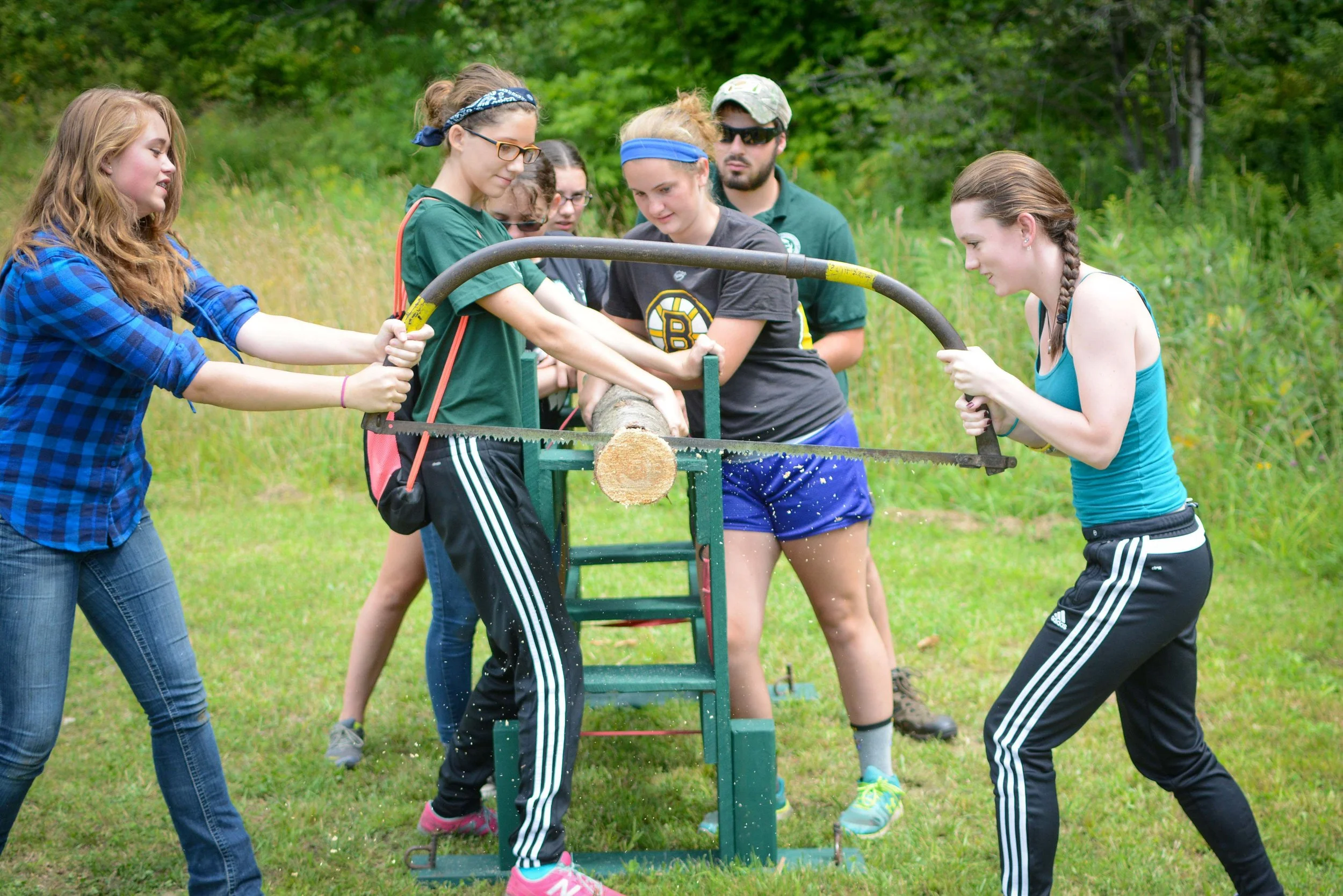
Girls at Green Mt. Conservation Camp during a sawing exercise. Vt. F&W photo