
Ripples from the Reservoir | July edition
July 10, 2026 | By Sheila Goss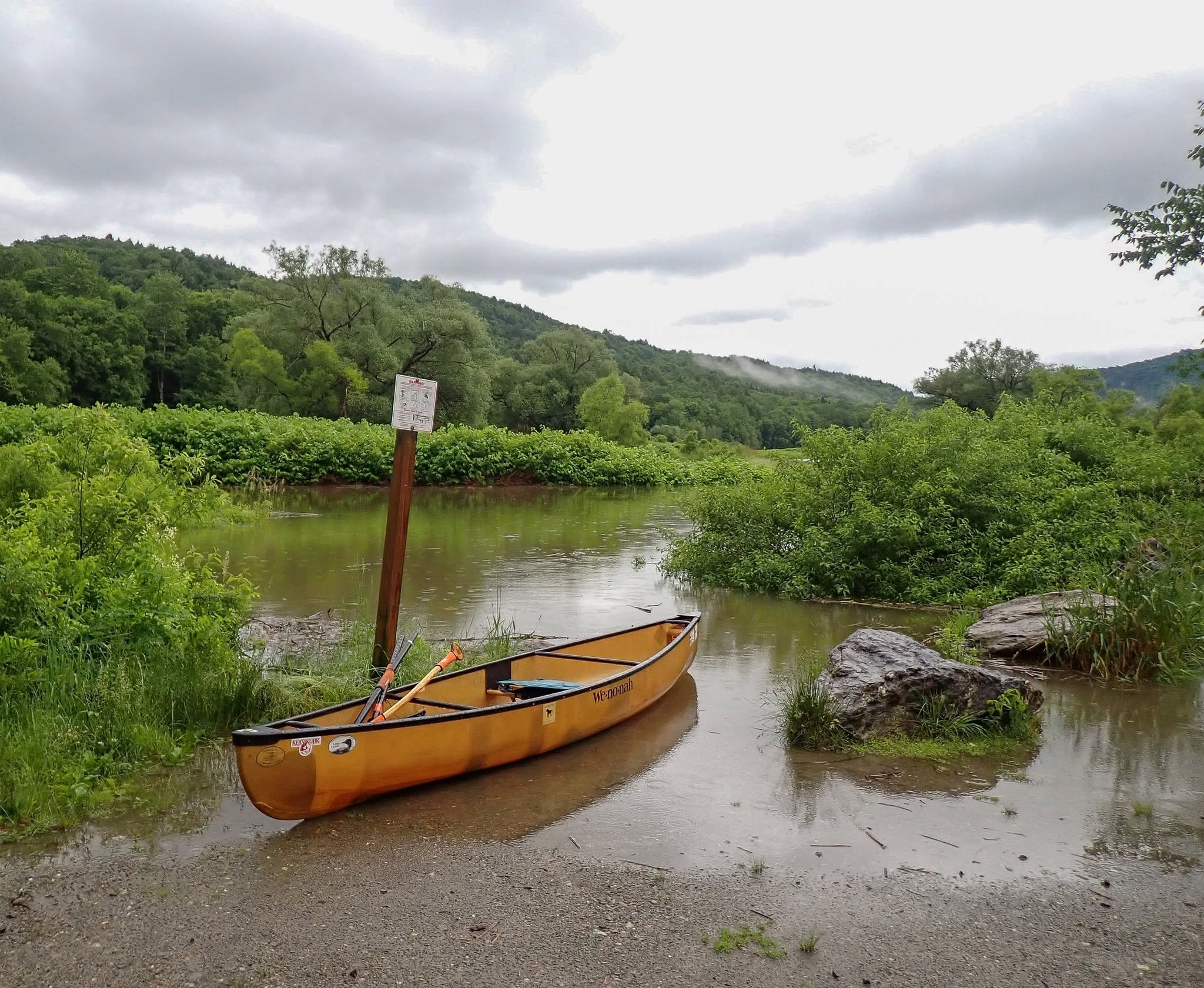
High water at the Cotton Brook access area. Photo by Sheila Goss
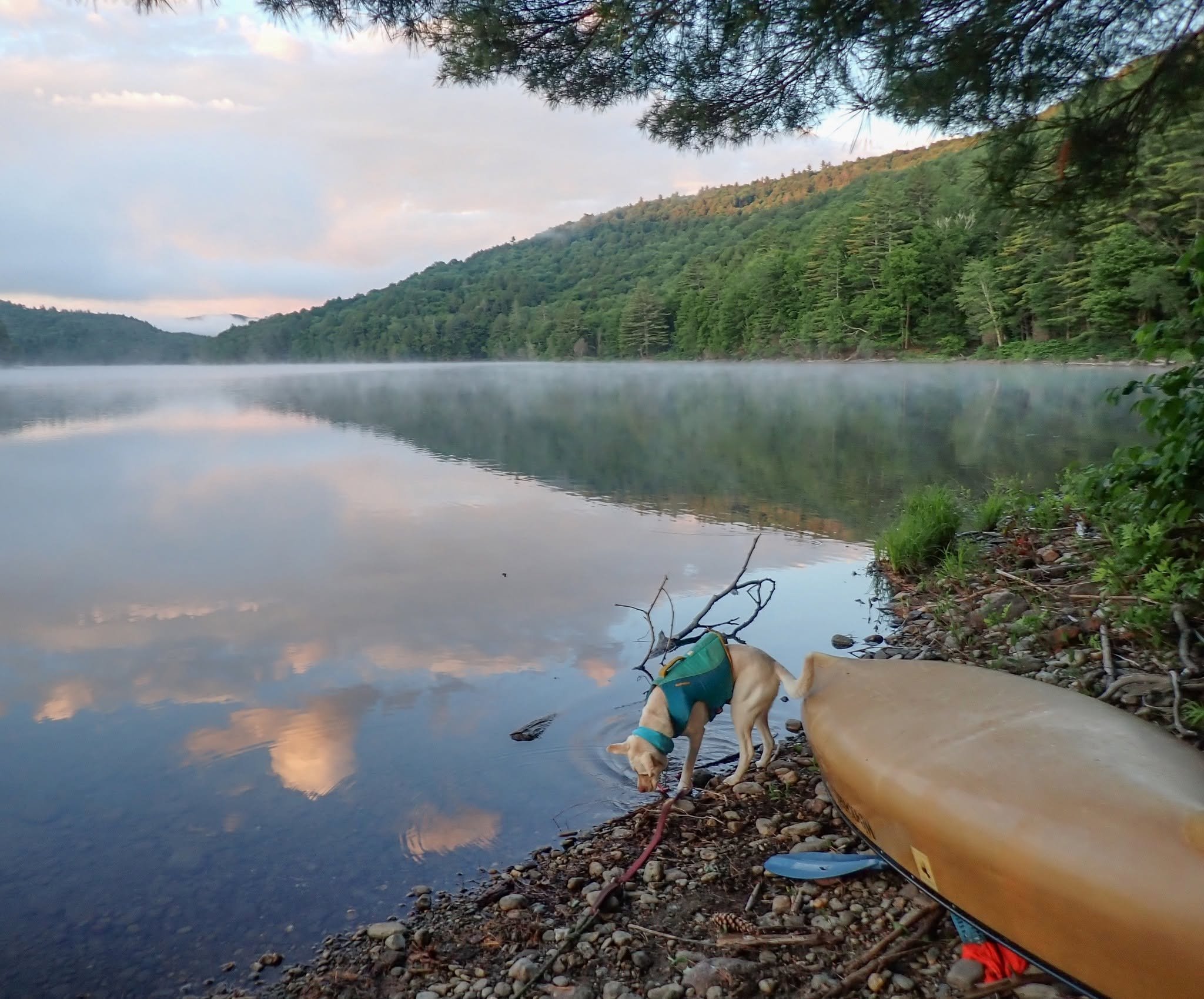
Quiet early morning on remote camp site. Photo by Sheila Goss
We welcomed summer with a high-water event causing temporary closure of some state park facilities around the reservoir, tornado warnings, and a blistering few days of uncomfortable heat and humidity.
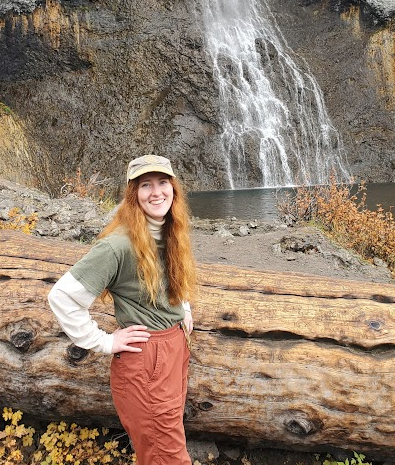
New Friends of Waterbury Reservoir board member Madelyn Milsark. Courtesy photo
The cooling waters of the Reservoir are a great respite from the hot temperatures and the chaotic business of daily life.
The Friends of Waterbury Reservoir are also welcoming two new board members this year: Madelyn Milsark and Tom Berry. Their willingness to share their talents, interests, time, and concern for the Waterbury Reservoir is much appreciated. John Bauer and Eric Davis will continue on our board as alternates.
Visitors to the reservoir may have met some of our Aquatic Invasive Species Greeters at the access areas by now. Our crew this year includes Phil Bobrow, a noted local photographer and convivial fellow who works primarily at the Blush Hill boat launch. We are fortunate to have additional greeters this year, Caylee Marsan and John Gange, who you will meet at the dam and the day use boat launches. These are hard-working folks, dedicated to keeping our waters free from any new aquatic invasive species. Be sure to stop and say hello to them and learn about our mitigation efforts.
Loons, eagles and the circle of life
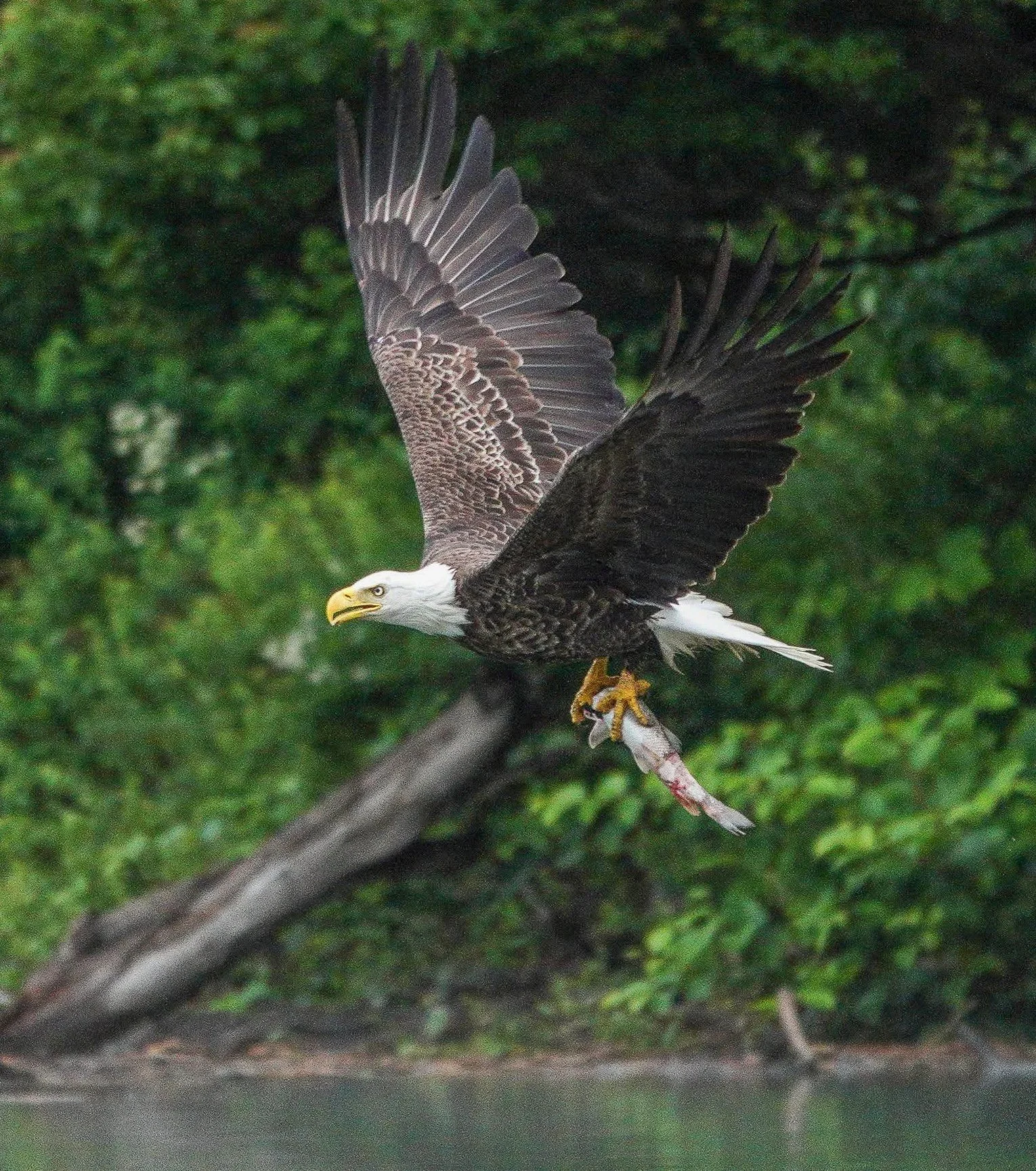
An eagle carries fish up to its nest. Photo by Sheila Goss
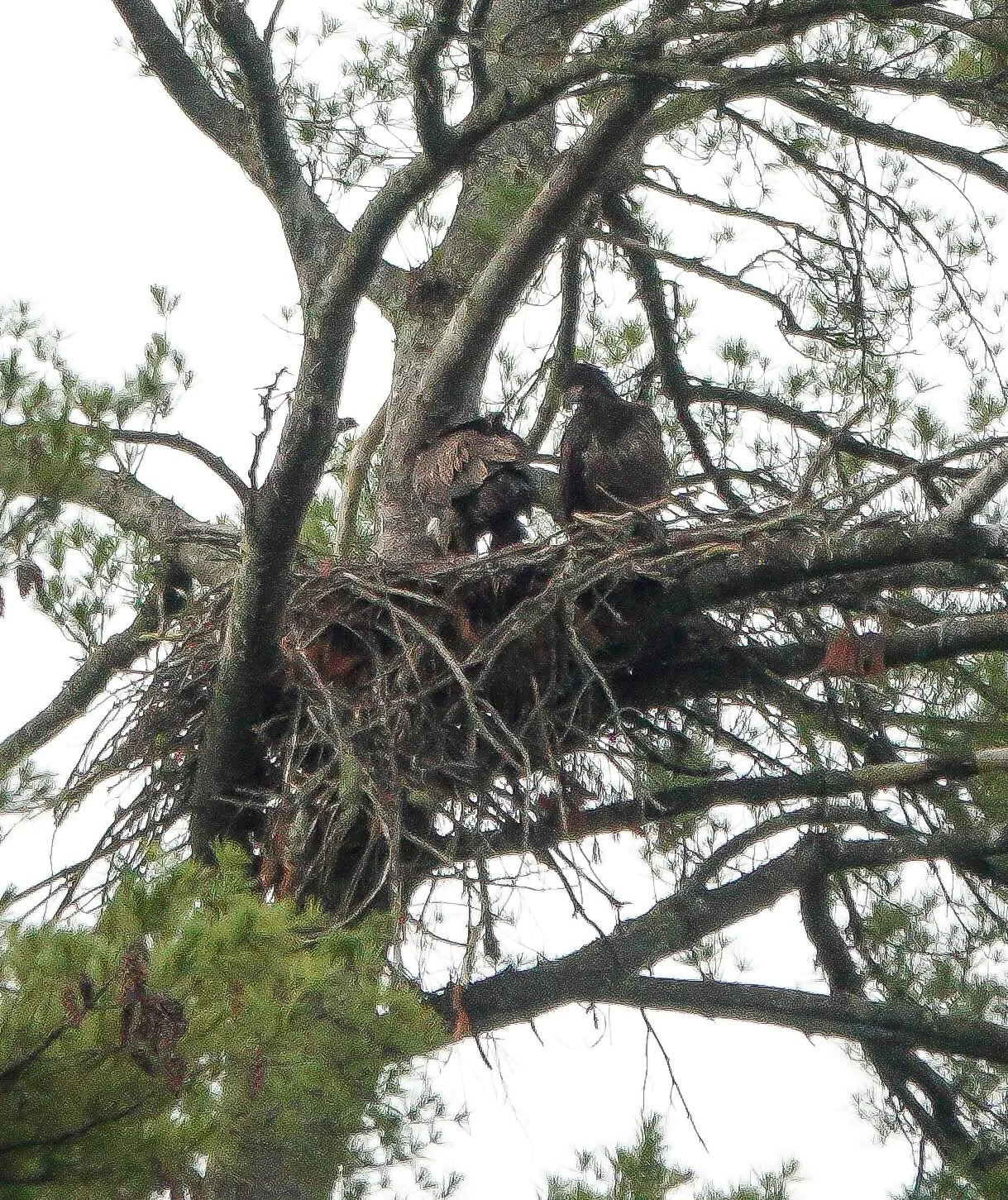
Eaglets in their nest. Photo by Sheila Goss
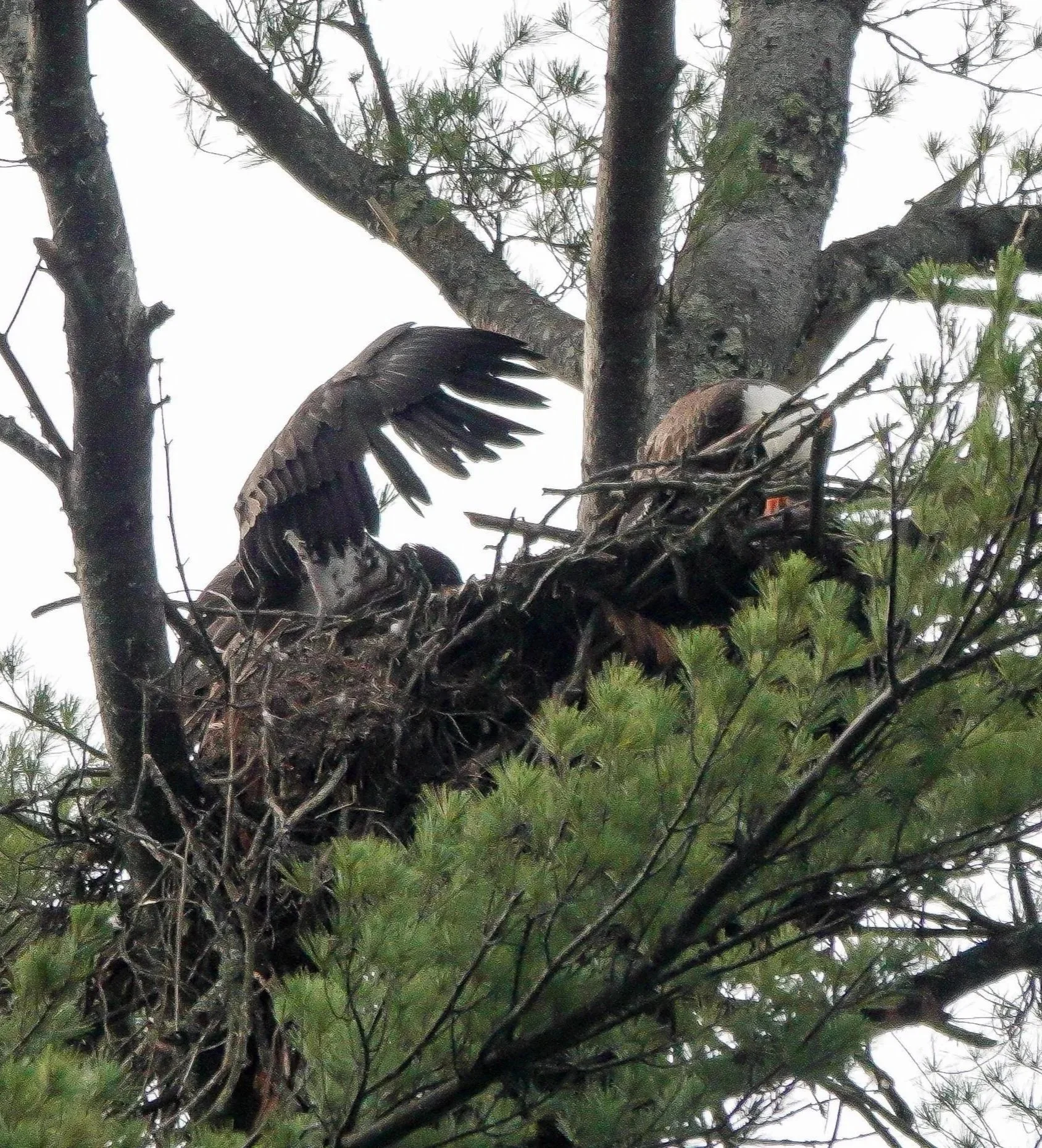
Eaglets and adults share a large fish. Photo by Sheila Goss
Wildlife is thriving in the reservoir! As feared, the loons attempted to nest mid-reservoir, and both attempts were quickly washed out by rising water. This may have been a new pair that chose a different location from prior nests at the northern end. Or perhaps they decided that nesting a quarter mile from an active eagle nest was not a wise plan?
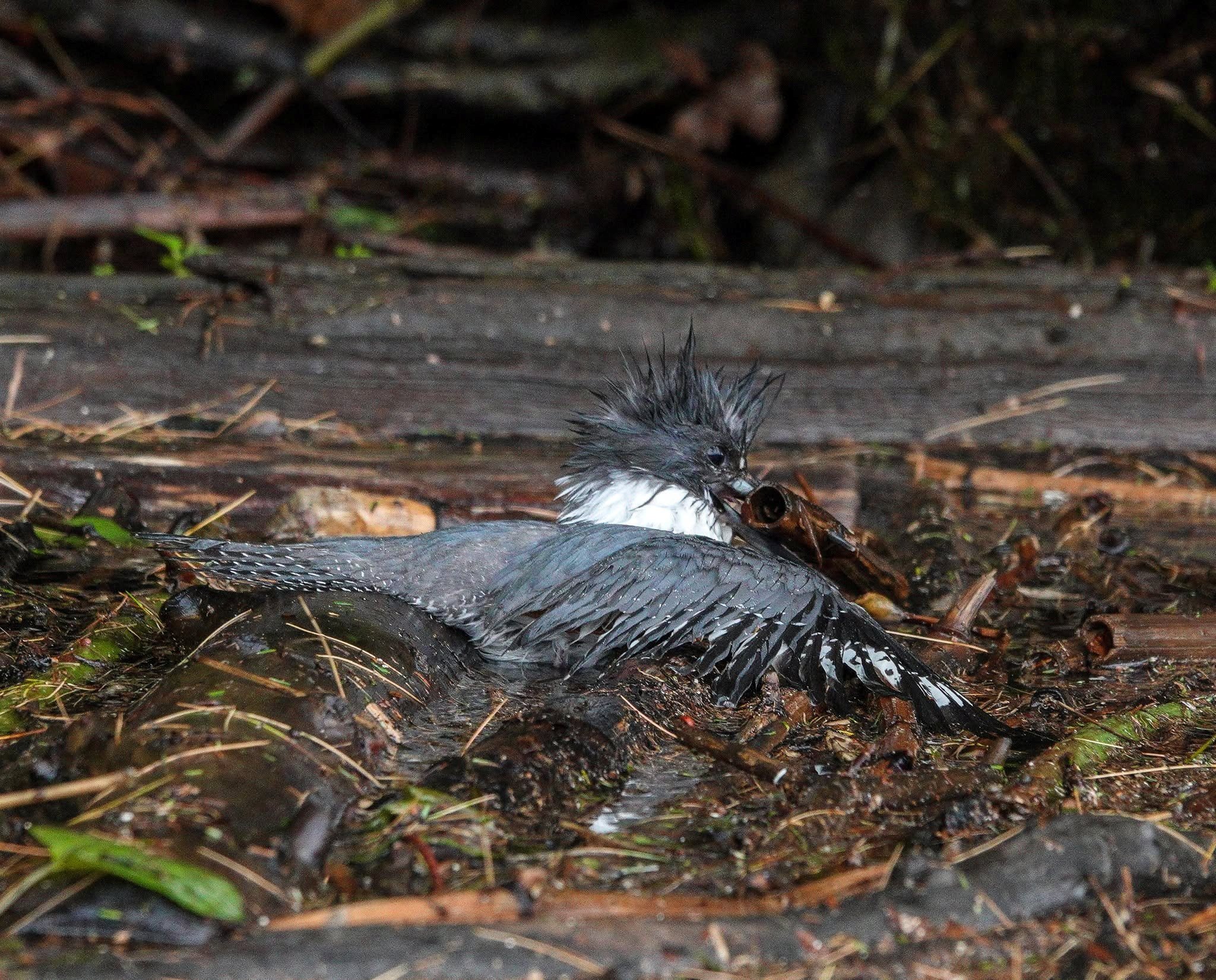
A grounded/injured belted kingfisher on a debris mat. Photo by Sheila Goss
As for eagles, the eaglets are as big as the adults now. They have recently begun to move out of the nest onto branches adjacent to the nest and have begun wingersizing – flapping their wings to build up flight muscles. The parent birds continue to bring them fish and other foods, but the eaglets are left alone for much longer periods now.
During the recent high-water event, when there were large areas of wood and stick debris mats on the water, I found an injured kingfisher struggling to fly with a stick caught in its beak. I carry a foldable net with me, and was strategizing how to recover the kingfisher to get her in my canoe hoping to safely transport her to the Vermont Institute for Natural Sciences for rehab, when Mother Nature took over: One of the adult eagles swooped down right over me and grabbed the kingfisher, taking it up to the nest to feed the eaglets. At least the poor little bird didn’t go to waste, and the eaglets seemed to relish the meal!
Projects with partners
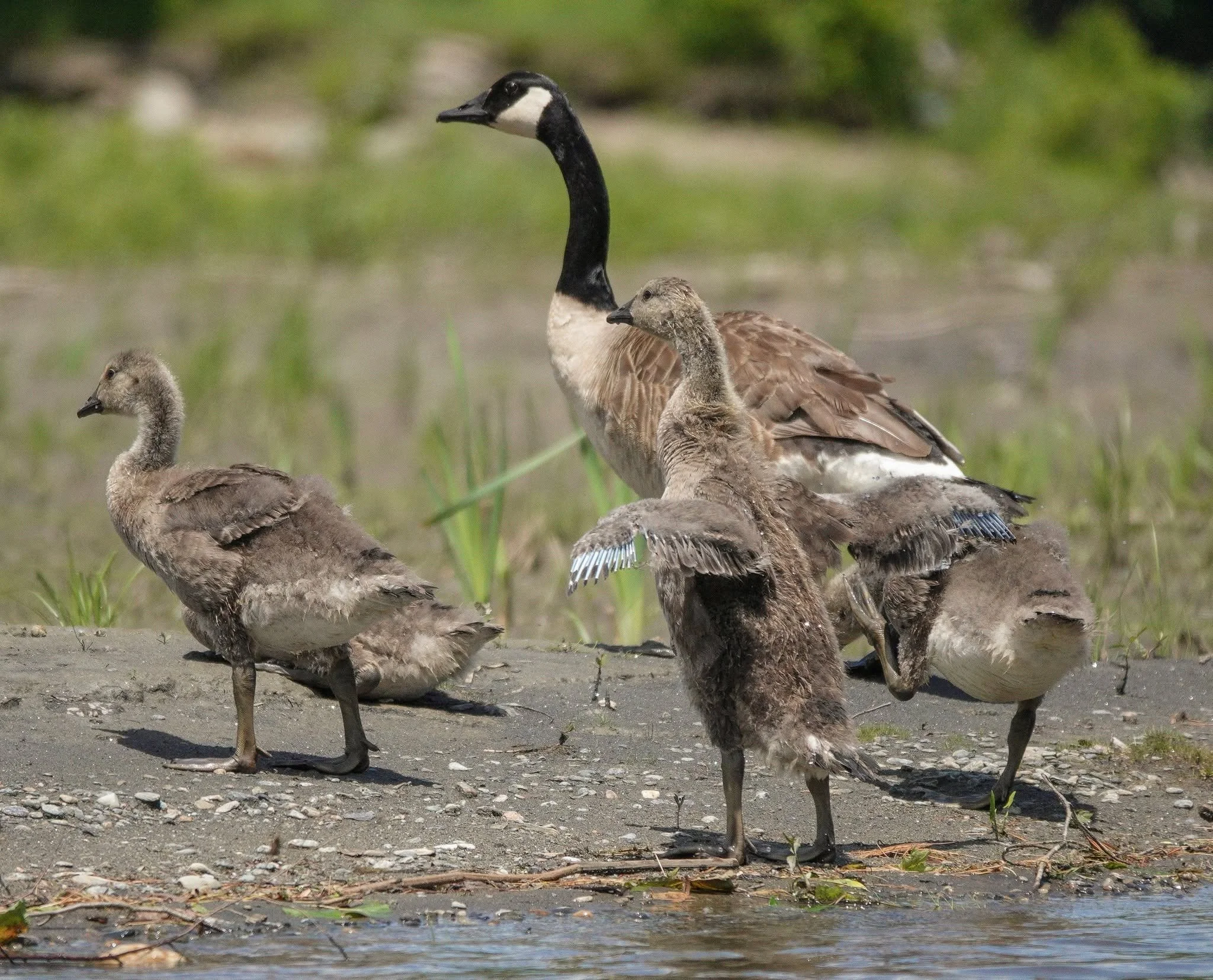
A gosling exercises its growing wings. Photo by Sheila Goss
The Friends group was recently fortunate to be selected for a Sunshine Fund benefit at Lawson’s Finest Liquids in Waitsfield. This two-week fundraiser will greatly support our ongoing projects to improve the reservoir’s habitat, wildlife, and experience for all users. On June 20, board members visited Lawson’s Tap Room in Waitsfield to share information about the reservoir with many guests. Meeting with members of the reservoir community is always valuable because we welcome comments, concerns and questions. We welcome community involvement and suggestions for ways that we can improve the reservoir experience.
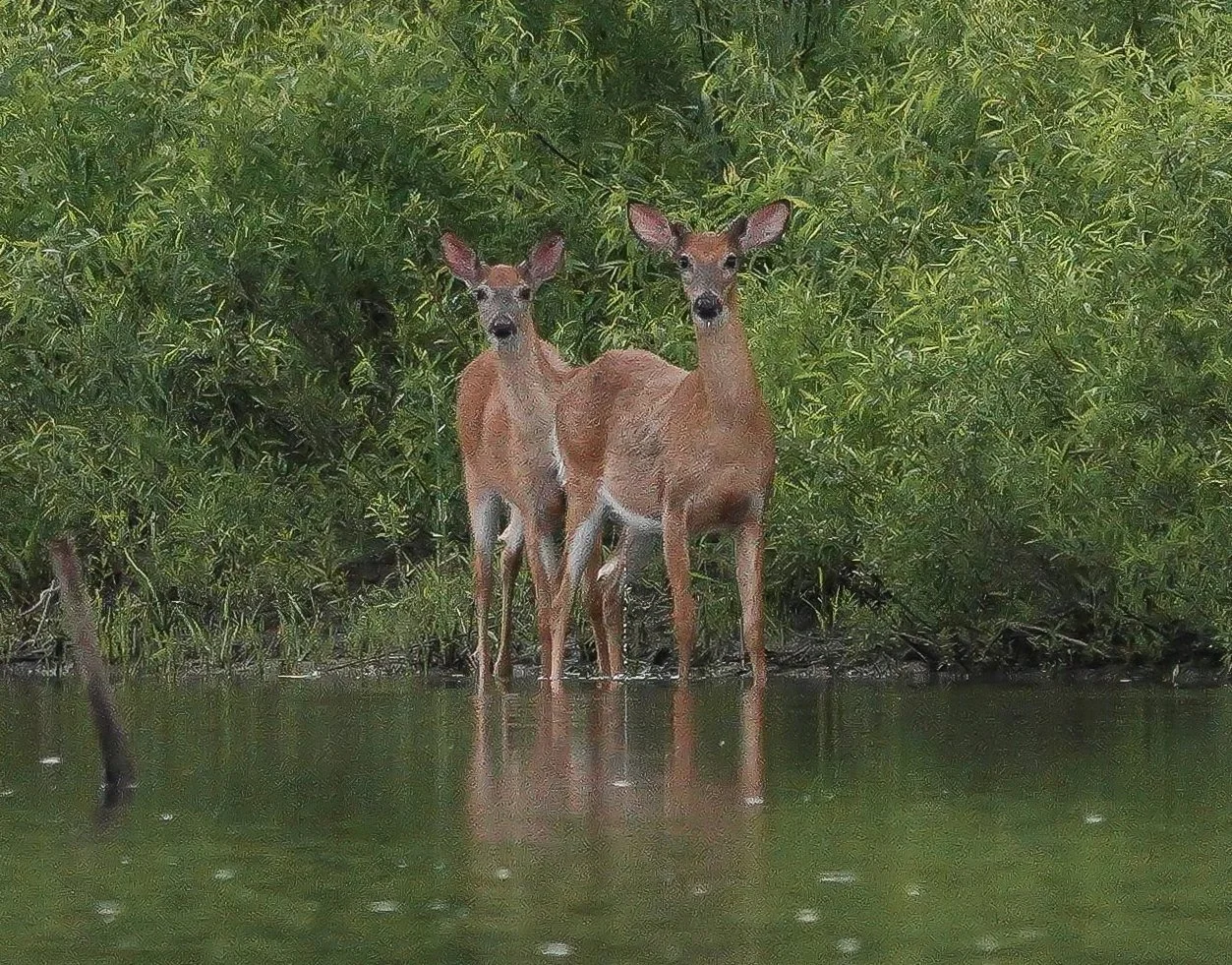
Deer spotted at the Cotton Brook access. Photo by Sheila Goss
We also are proud to partner with the Vermont Department of Forests, Parks and Recreation and contribute to their efforts to keep the reservoir a beautiful and shared resource. One of our recent projects, thanks to the generous contributions of our community partners, is to replace the missing or damaged buoys used to mark the no-wake zone boundaries. The no-wake zones are in effect 24/7, year-round, even when buoys are not in place. Especially in the busy summer months, having clear, visible, and obvious buoys contributes to the safety for all users and enforces our commitment to ensure continued shared opportunities for the various user groups on the reservoir. Look for them soon!
Reminder: Sounds (and voices) carry
Enjoy the reservoir this summer; autumn will be here before we know it! Have fun but stay safe, and respect other users, please.
One issue we have encountered on the reservoir (especially in the quieter no-wake zone areas) is folks forgetting how easily and far sound travels on the water. Not all music is appreciated by others, and we have heard conversations that we know were not meant for our ears. Although it may be funny at times, please remember that others on the water may want a bit more peace and quiet, which also makes it easier to hear the fascinating array of bird sounds that surround the reservoir.
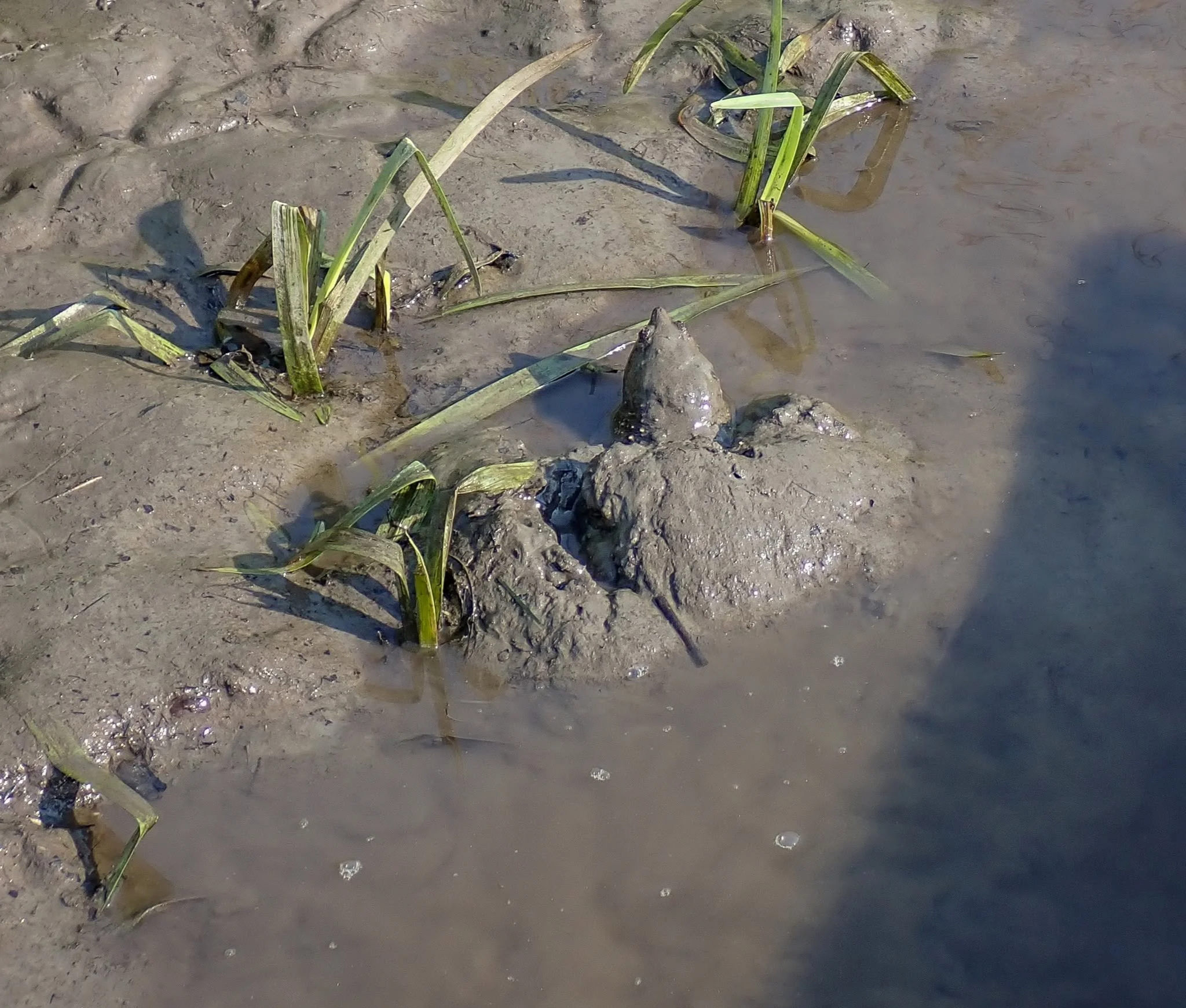
A large snapping turtle emerges from mud at the inlet to Cotton Brook. Watch your step! Photo by Sheila Goss
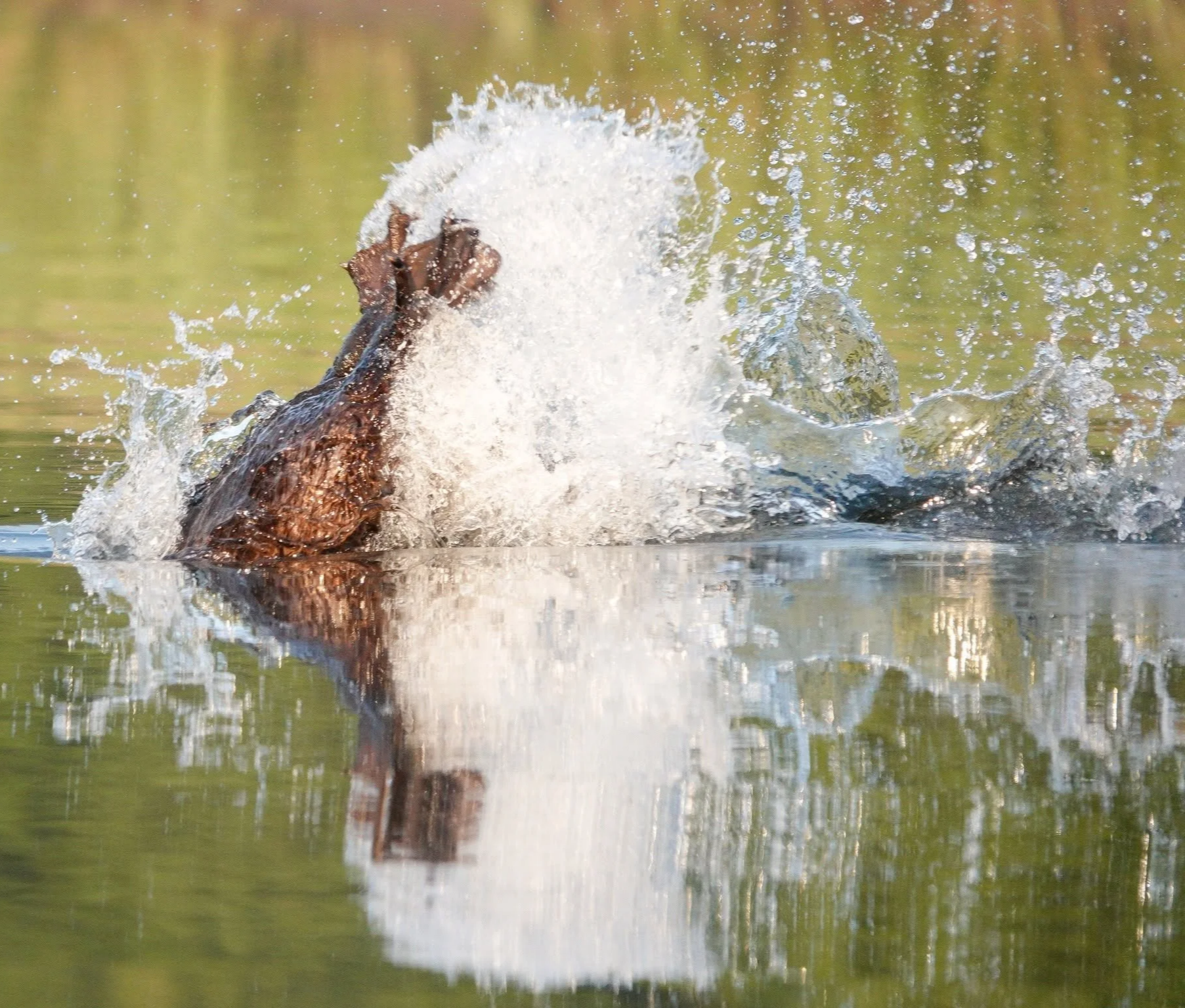
A beaver dives away from the camera. Photo by Sheila Goss
Sheila Goss, of Stowe, is vice president of the nonprofit Friends of Waterbury Reservoir. Learn more and contact the group at friendsofwaterburyres.org.