
Ripples from the Reservoir: Late summer edition
September 7, 2025 | By Sheila Goss and Francine Chittenden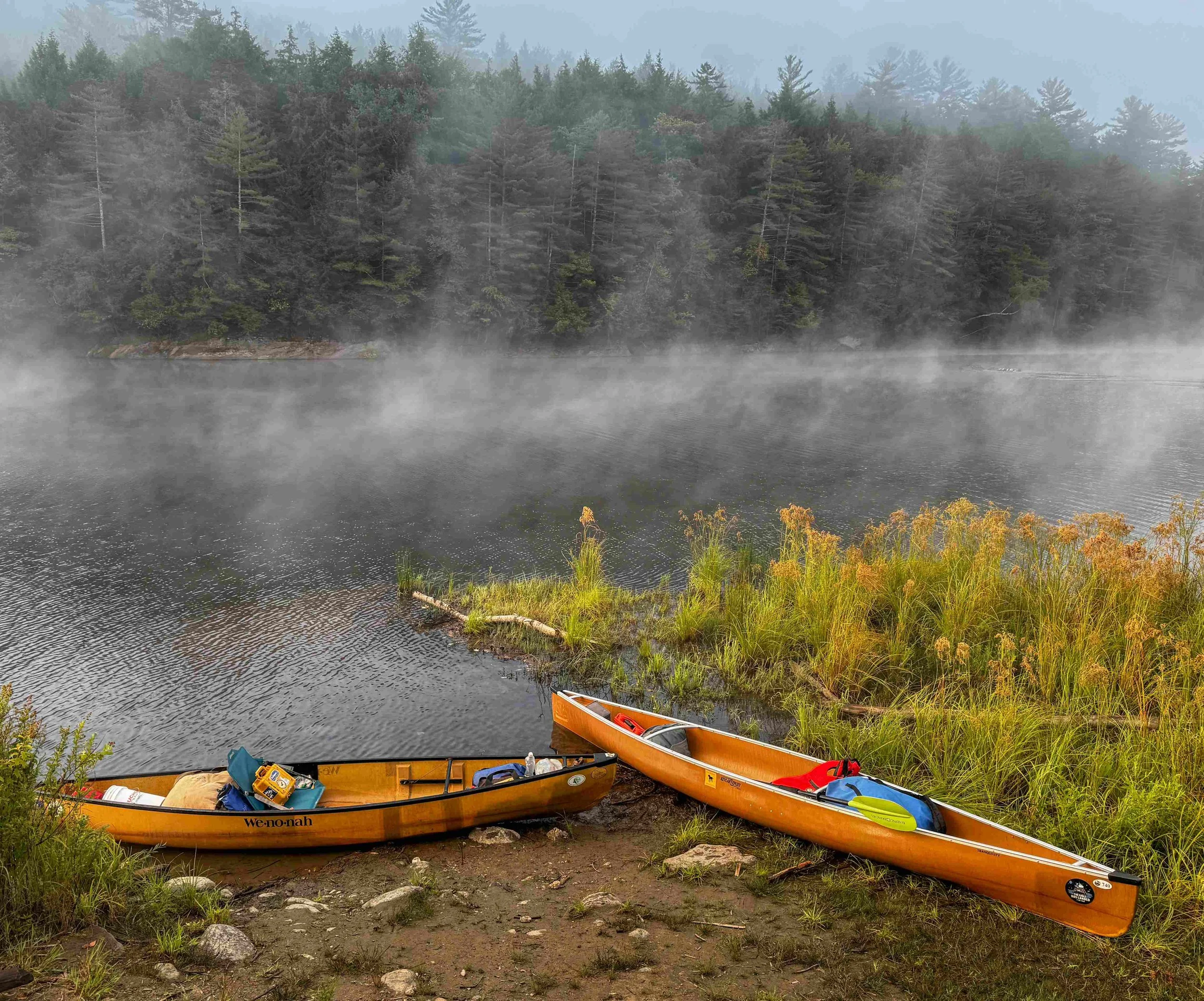
Canoes on shore near a remote campsite along the Waterbury Reservoir. Photo by Sheila Goss
August came to a close with the vibrant greens on the hillsides beginning to show speckles of early oranges, yellows and reds, telling us we need to prepare – fall foliage will be here soon!
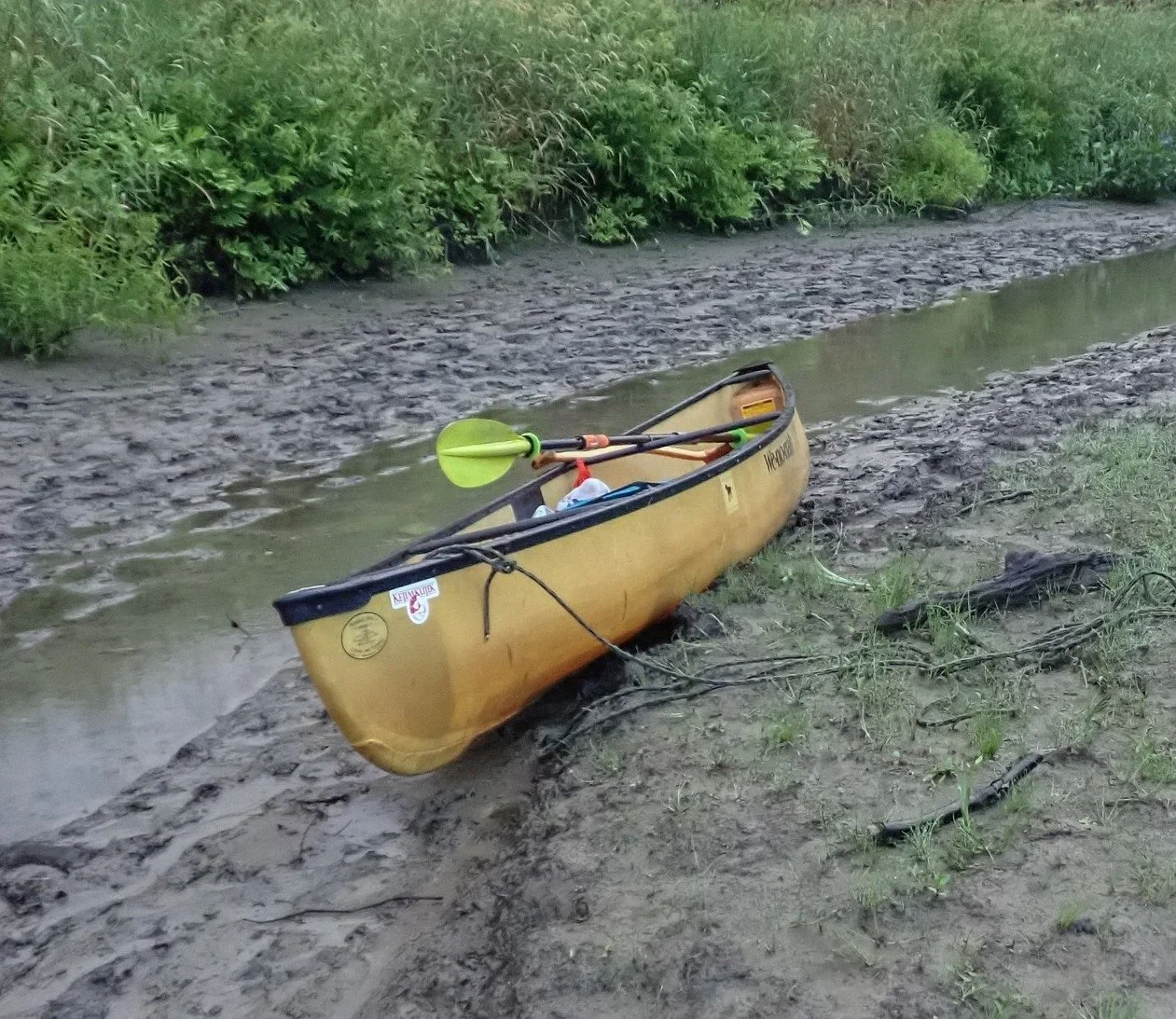
Muddy conditions due to low water at the Cotton Brook boat access. Photo by Sheila Goss
On the hot days that marked most of this summer, the reservoir was bustling with activity. Yet water levels have been low, and an accumulation of mud and silt created a few weeks of interesting paddling for those putting in at Cotton Brook.
Some recent rain has helped somewhat, with water levels more conducive for power boating, fishing, water skiing, paddling and swimming.
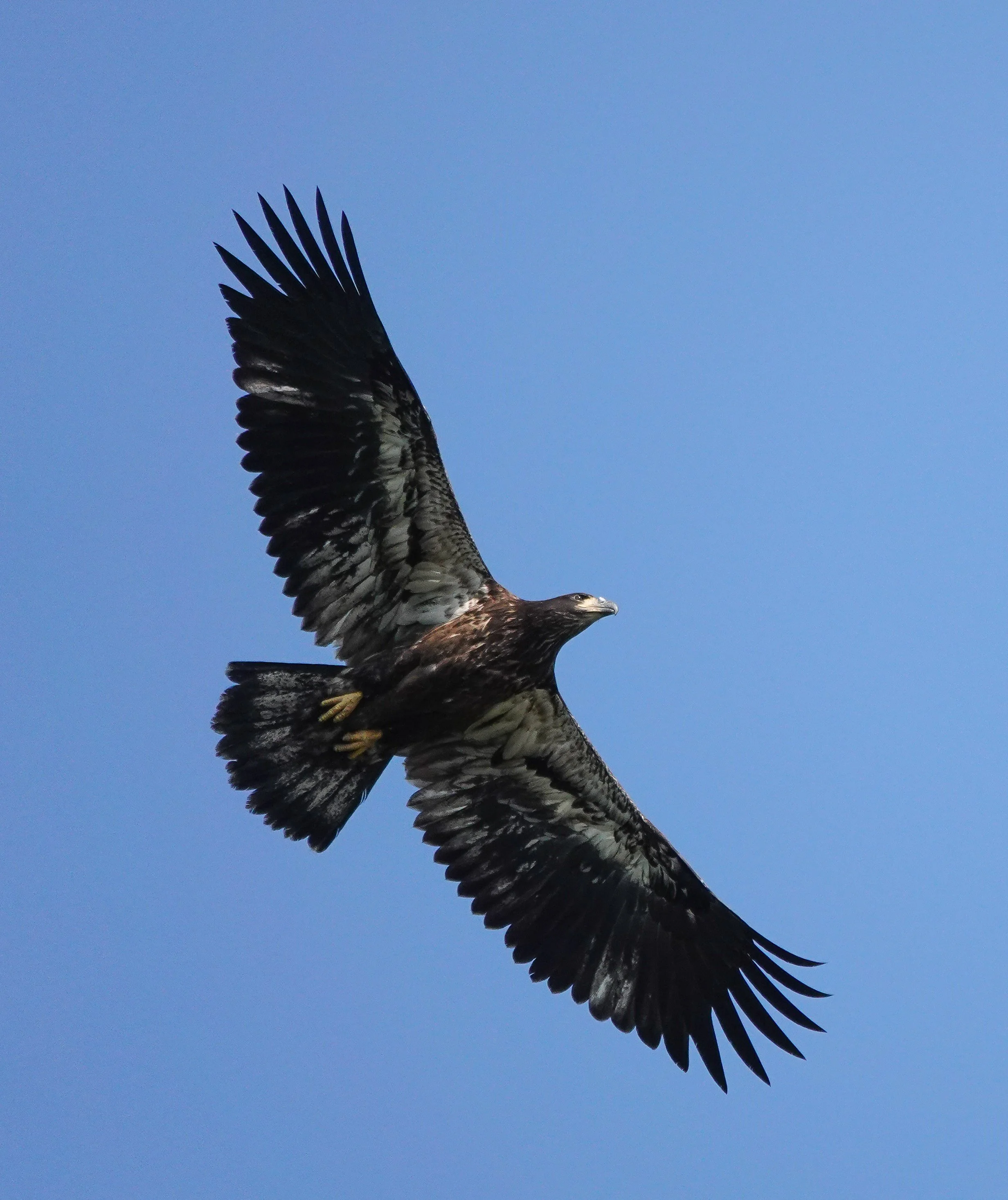
Some of the most interesting activity lately though, has been in the air. We must mention flying as two eaglets have fledged and can be seen flying between the trees near their nest. They are learning to fish, but the adults will still bring them some tasty perch.
The eagles’ nest collapsed over a period of about a week, so it was a good thing they had developed some independence. They still hang around the nest site, where all that remains are a few sticks where once a safe haven existed. The nest could have fallen for several reasons, including lots of vigorous jumping and squabbling by the large eaglets, poor design by an inexperienced pair of adults, or damage from storm winds and rain.
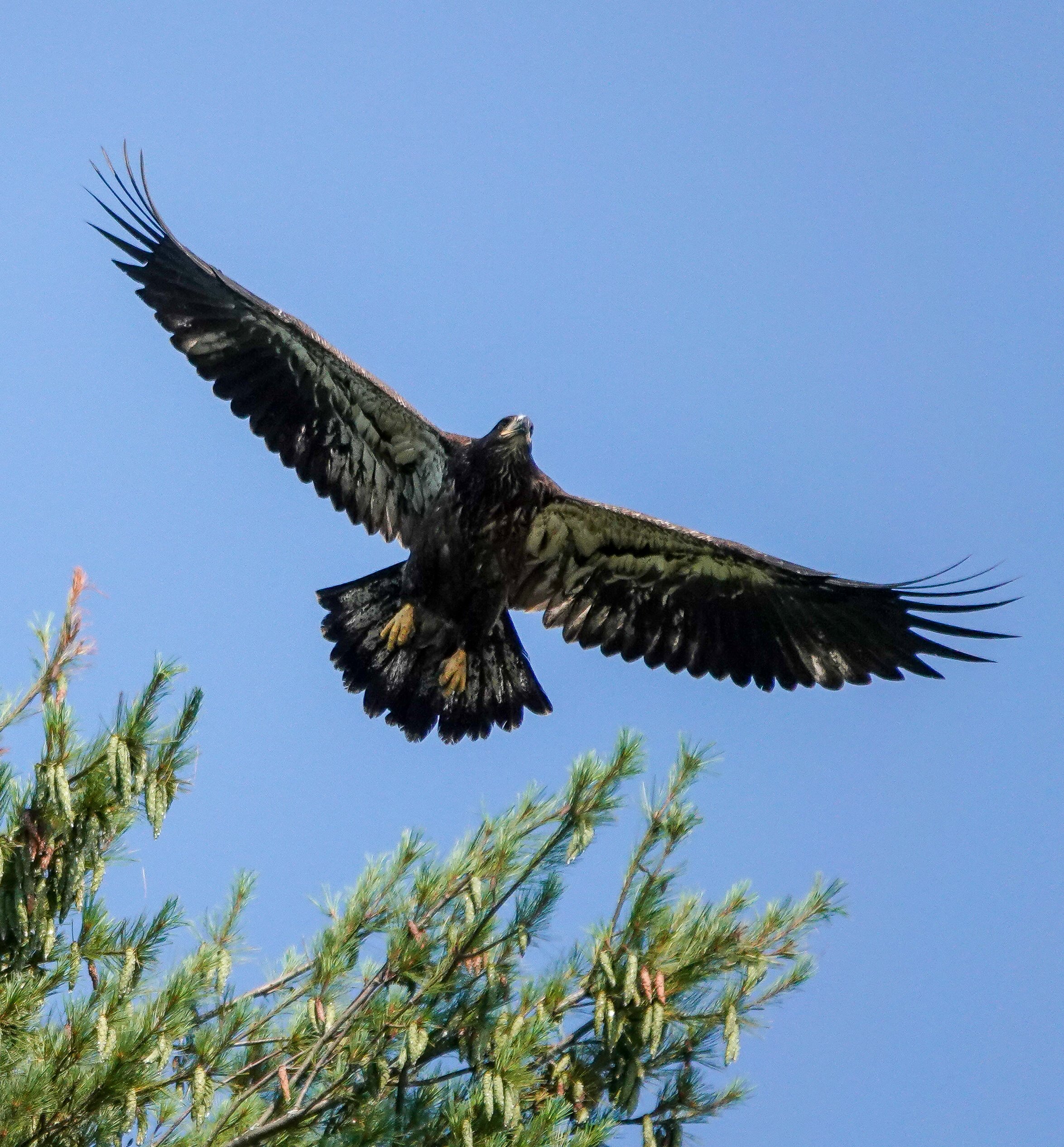
A young eagle stretches its wings. Photo by Sheila Goss
We will have to wait until spring to see if the adults rebuild at this location or seek out another tree.
While on a recent eagle-monitoring session, a boatload of folks asked if I was seeing the male or female, as they thought only the males have the iconic white head and tail. I let them know that eagles do not get the classic white head and tail until they are around 5 years old. They go through a transition from their fledgling dark brown to the more recognizable coloration.
It is also not possible to visually tell male from female eagles; however, if two eagles are seen together, the larger of the two will be the female.
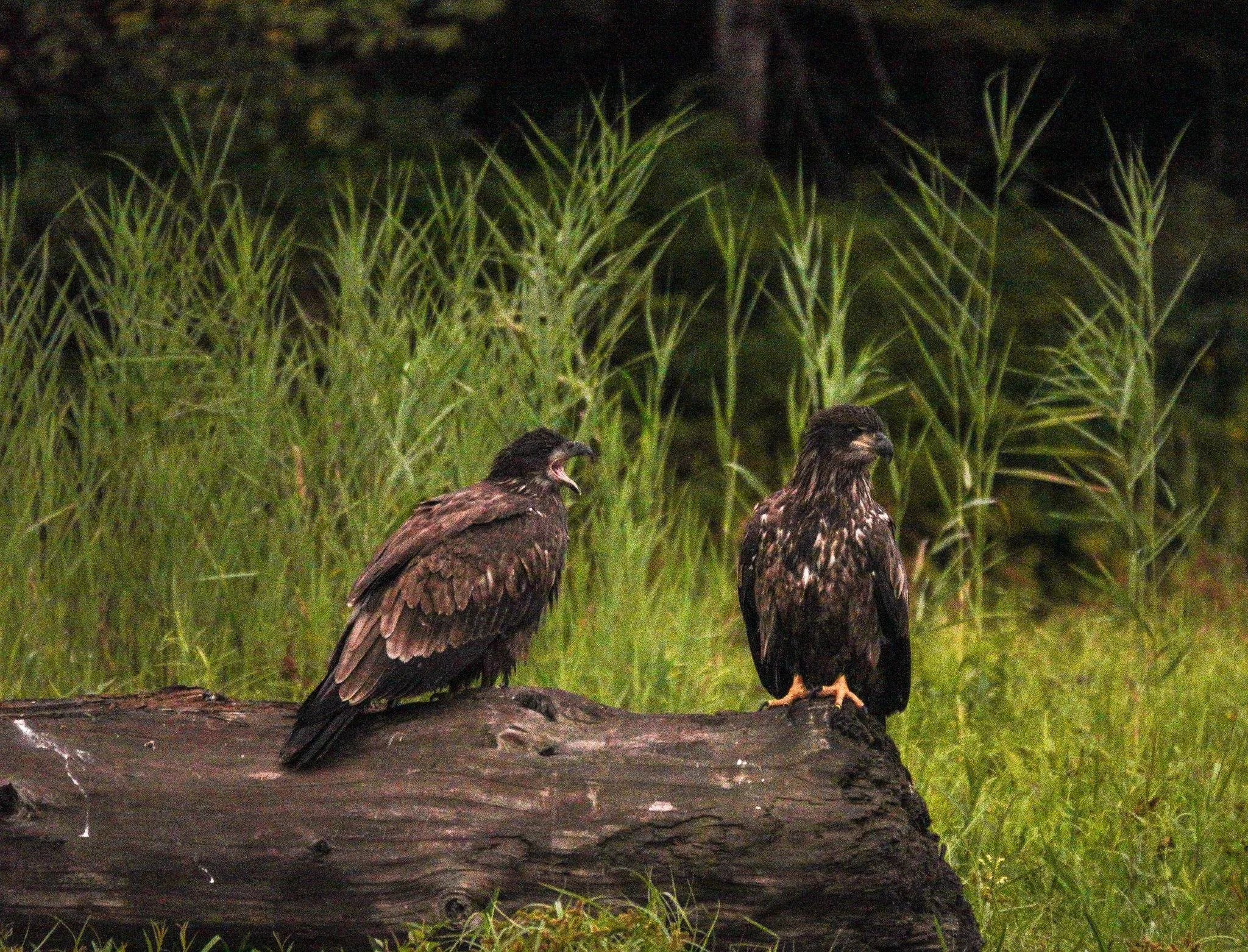

Fledgling eaglets have outgrown their nest and practice taking flight at the Waterbury Reservoir recently. Photos by Sheila Goss (Click to enlarge)
Loon update
Our loon raft is going to be disassembled, and a lighter, more transportable raft will be tried next season. Recently, the foliage and a 2-foot-high mud cake were cleared from the raft. But since doing this, small mounds of mud have appeared back on the bare raft. Are the numerous beavers nearby putting the mud and sticks there? There is a trio of loons hanging around the reservoir, but they have not been seen near the nest raft for a while.
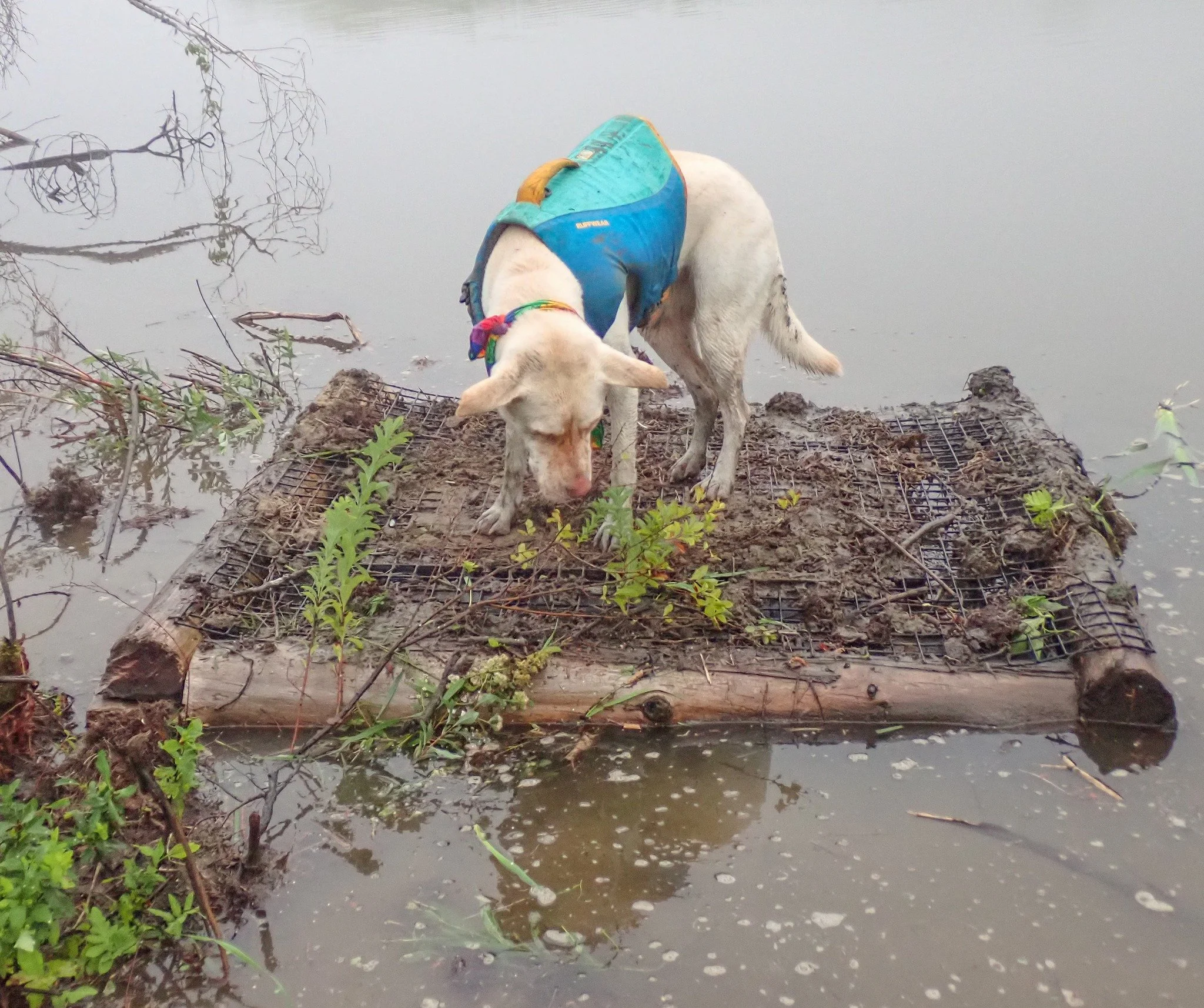
Yellow lab Kanootti inspects the loon raft that did not host a loon family on the reservoir this summer. Photo by Sheila Goss
Some folks recently reported observing a “loon in distress,” but video and descriptions of the concerning behavior indicated that it was just very vigorous grooming and preening. This activity can go on for quite a while, is very loud, and creates quite a splash. We do appreciate reservoir users who share our concern for the well-being of these great birds.
Our invasive species greeters have ended their season at the reservoir. We are grateful for all their hard work in helping keep the reservoir as clean as possible. They interacted with many boaters and had the opportunity to explain how reservoir users can help prevent aquatic invasive species from migrating between lakes.
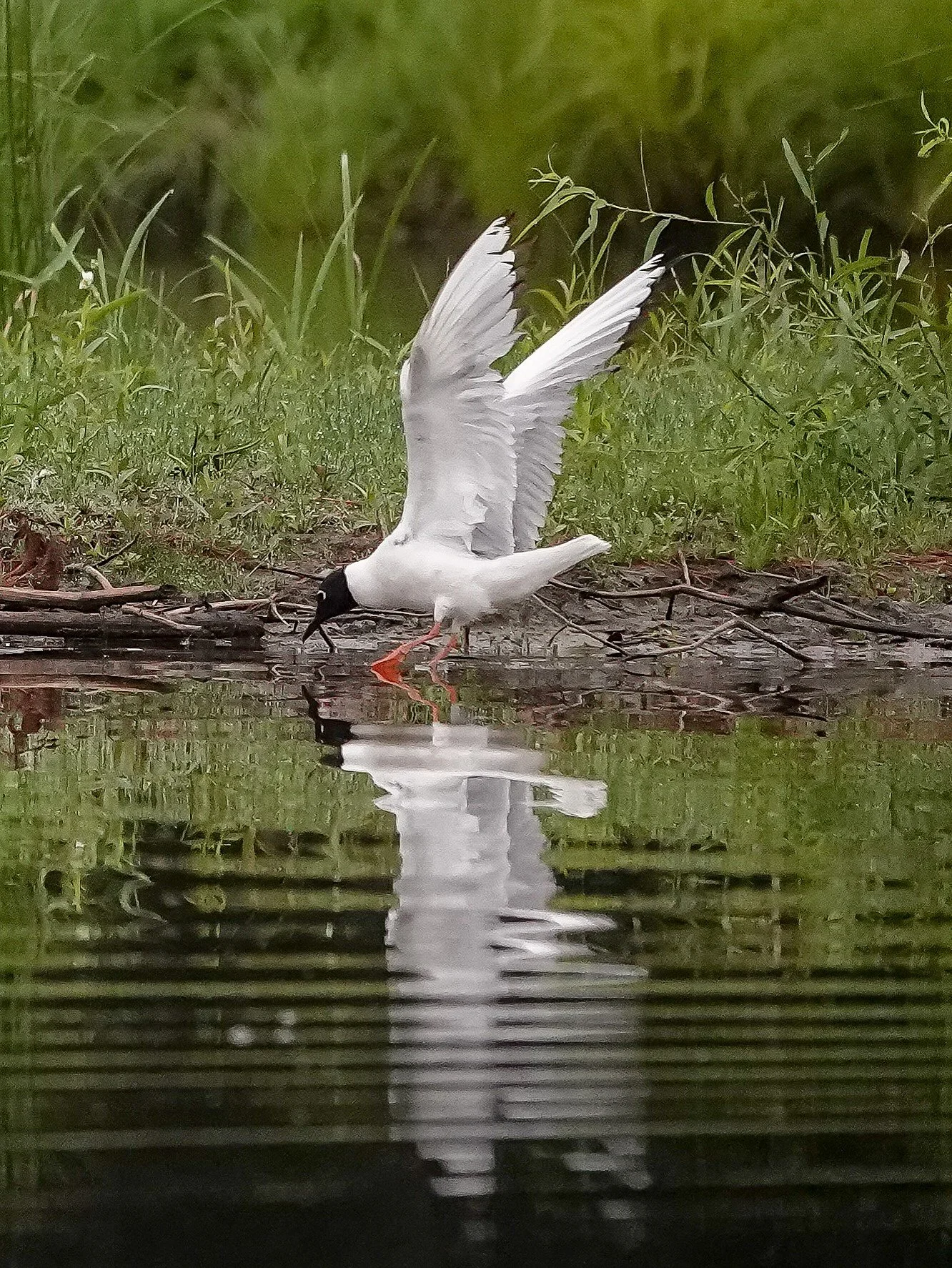
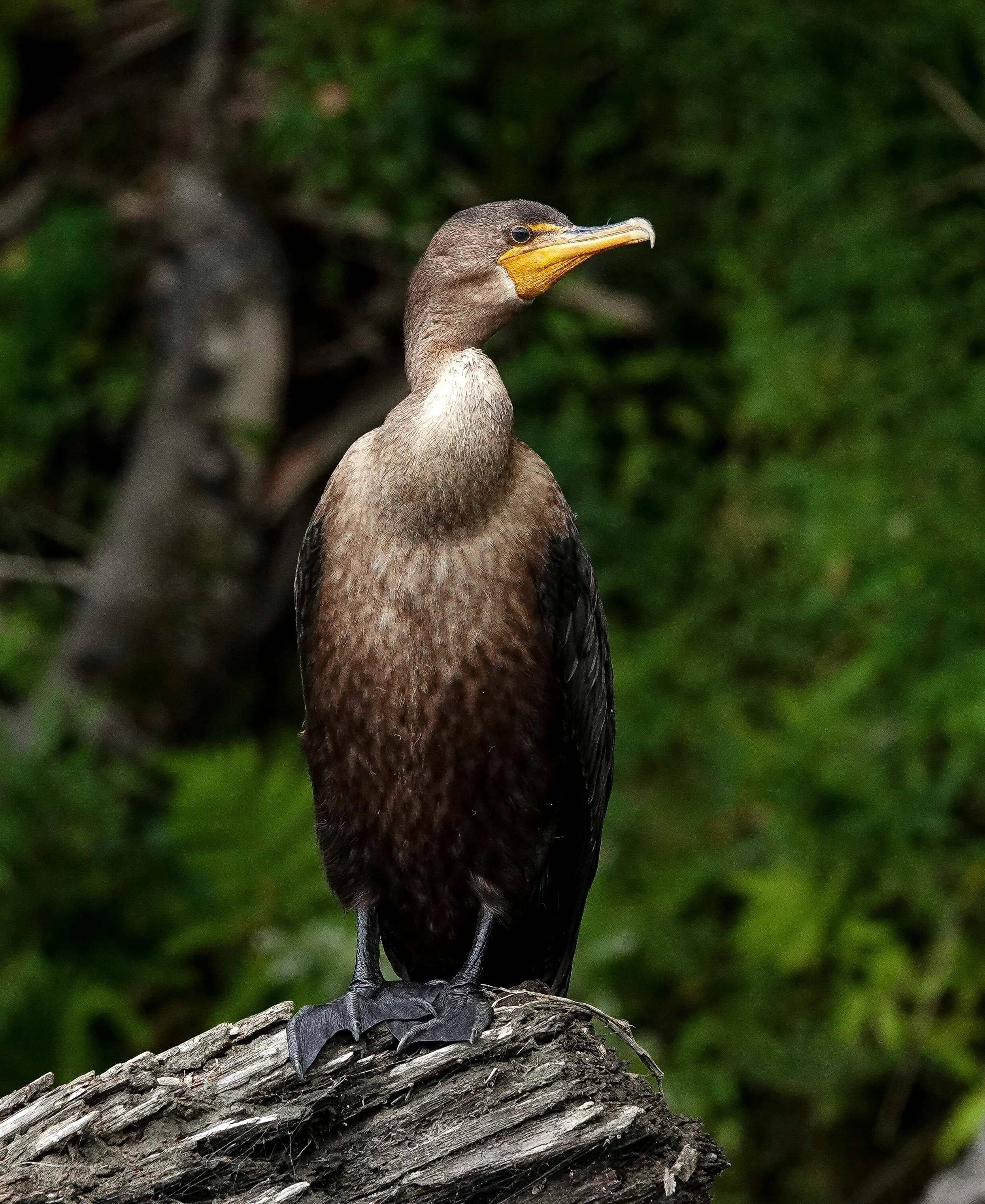
Photos below by Sheila Goss. Click to enlarge.
Wake sports rules under review
Recently, the Vermont Agency of Natural Resources has been in the news. They are considering an update to the Rules of Public Waters, especially regarding wake sports. This updated rule would put the Waterbury Reservoir on the list of lakes where wake sports are prohibited.
This would not affect water skiing, tubing, or fishing, but rather, just the sport of wake surfing. Wake surfers use boats with heavy ballast tanks that allow the boats to create large waves (up to 5 feet high) that allow a surfer to surf in the wakes of the boat without the use of a tow line. The members of the Friends of Waterbury Reservoir Board of Directors agree that wake surfing is an innovative, exciting, and appealing activity – we just feel it is out of place on the Waterbury Reservoir. Our concerns are centered around safety, ecological impact, invasive species prevention, and possible negative wildlife impacts. For more information about his rule-making process, check out the Agency of Natural Resources site here.
Have a happy and safe late summer on the water!
Sheila Goss, of Stowe, is vice president of the nonprofit organization, Friends of Waterbury Reservoir; Waterbury resident Francine Chittenden is the group’s treasurer. Learn more and contact the group on their website, friendsofwaterburyres.org.