
By a wide margin, voters approve $51.9M Harwood budget
March 4, 2026 | By Lisa Scagliotti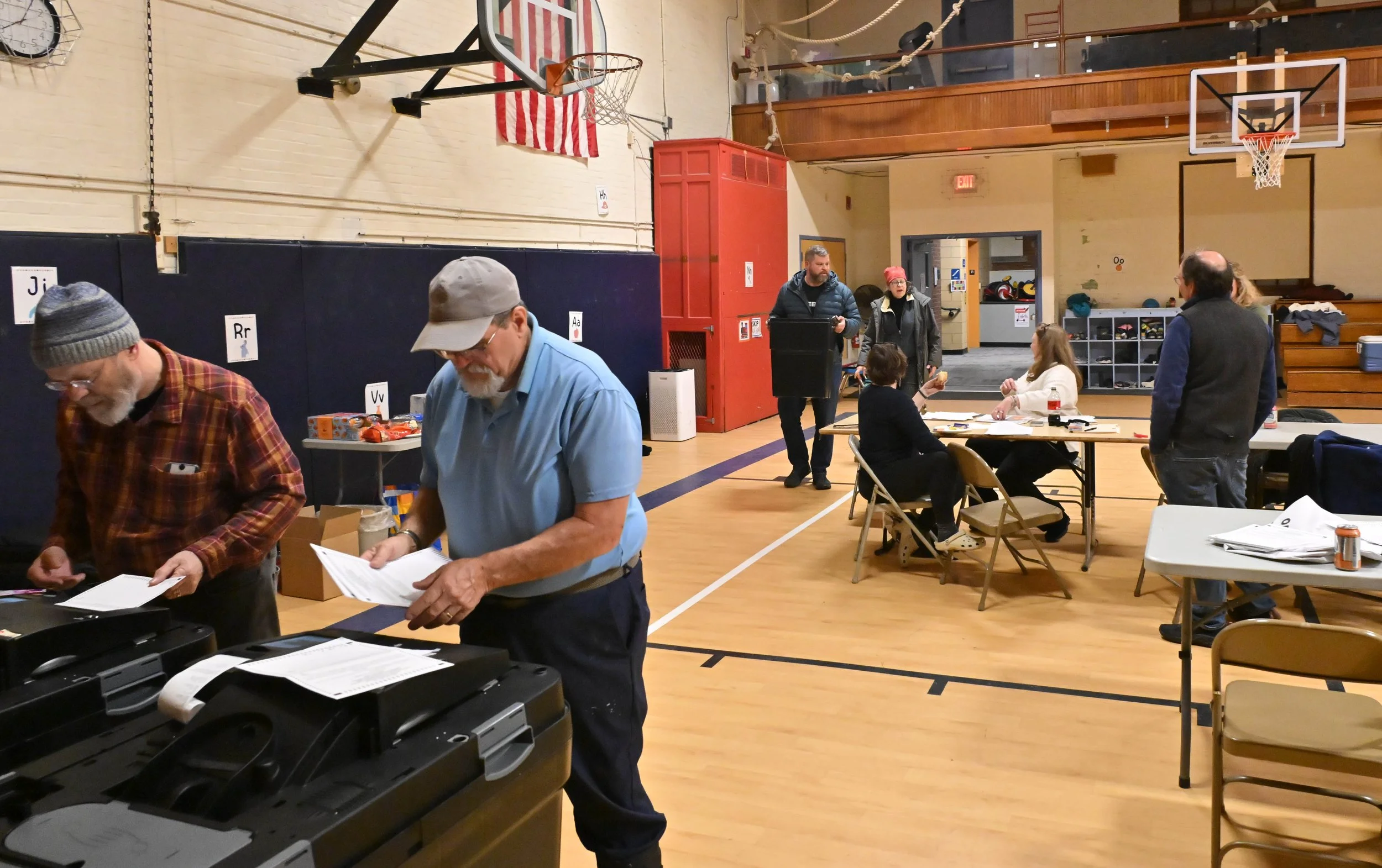
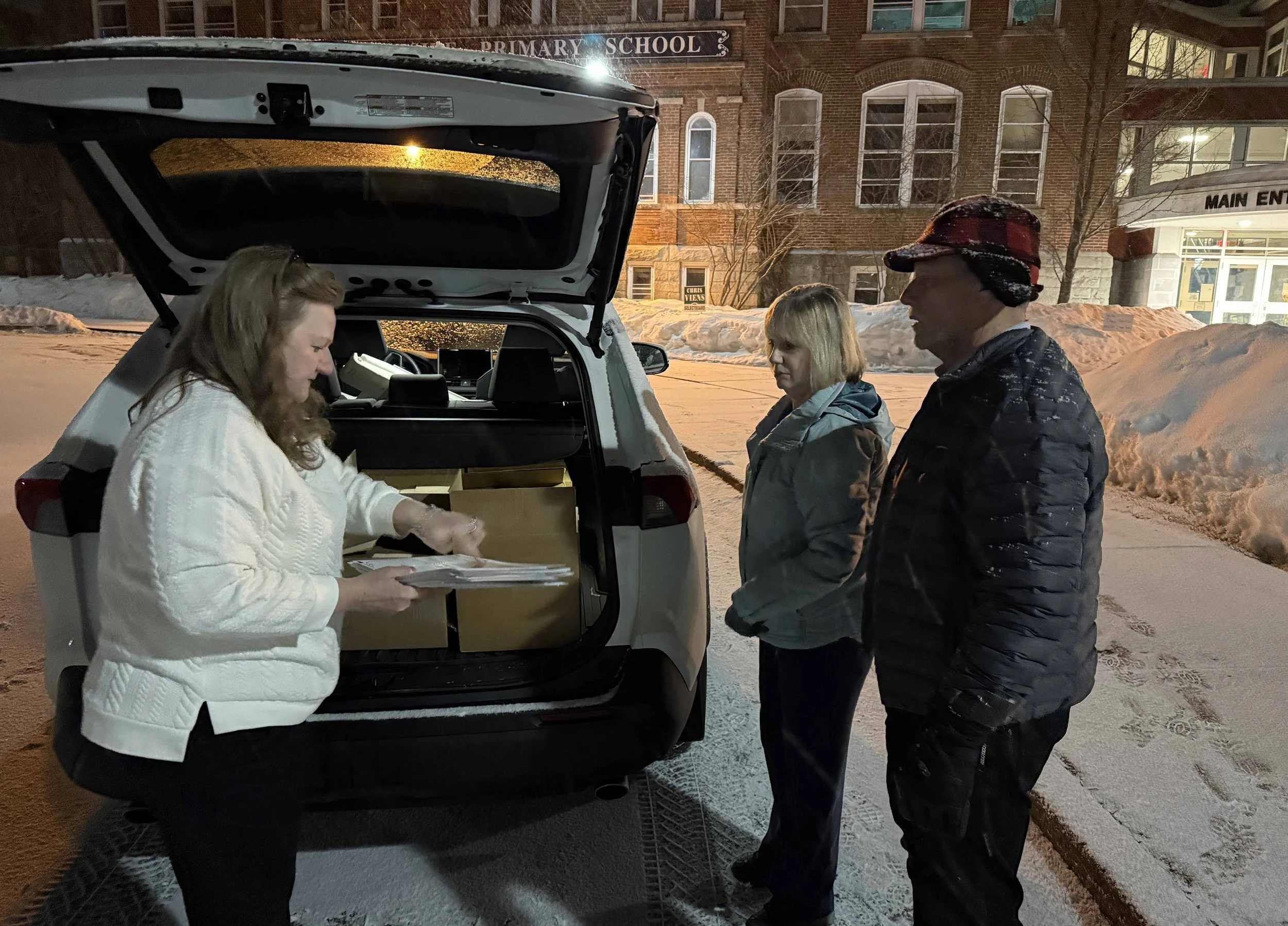
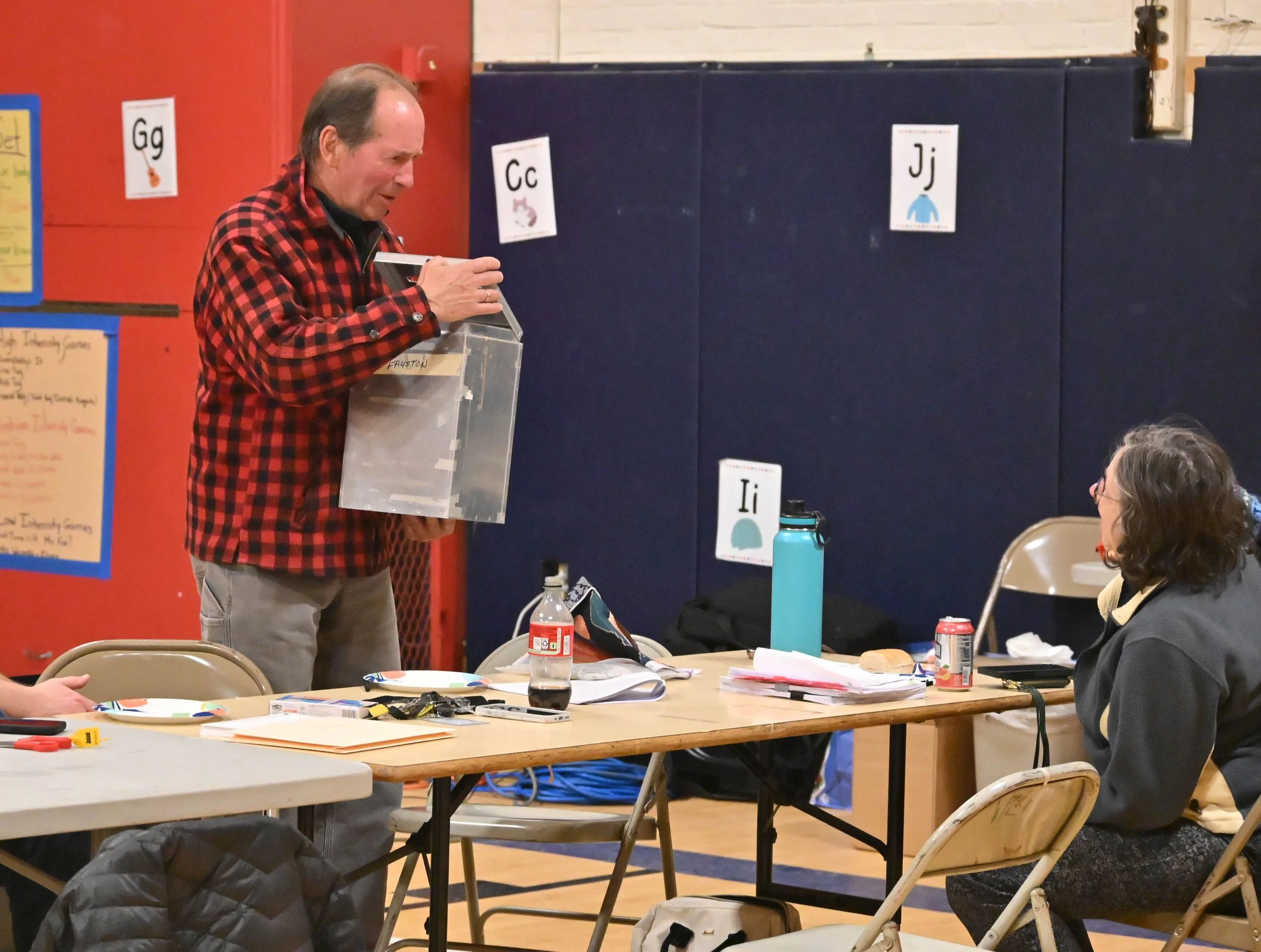
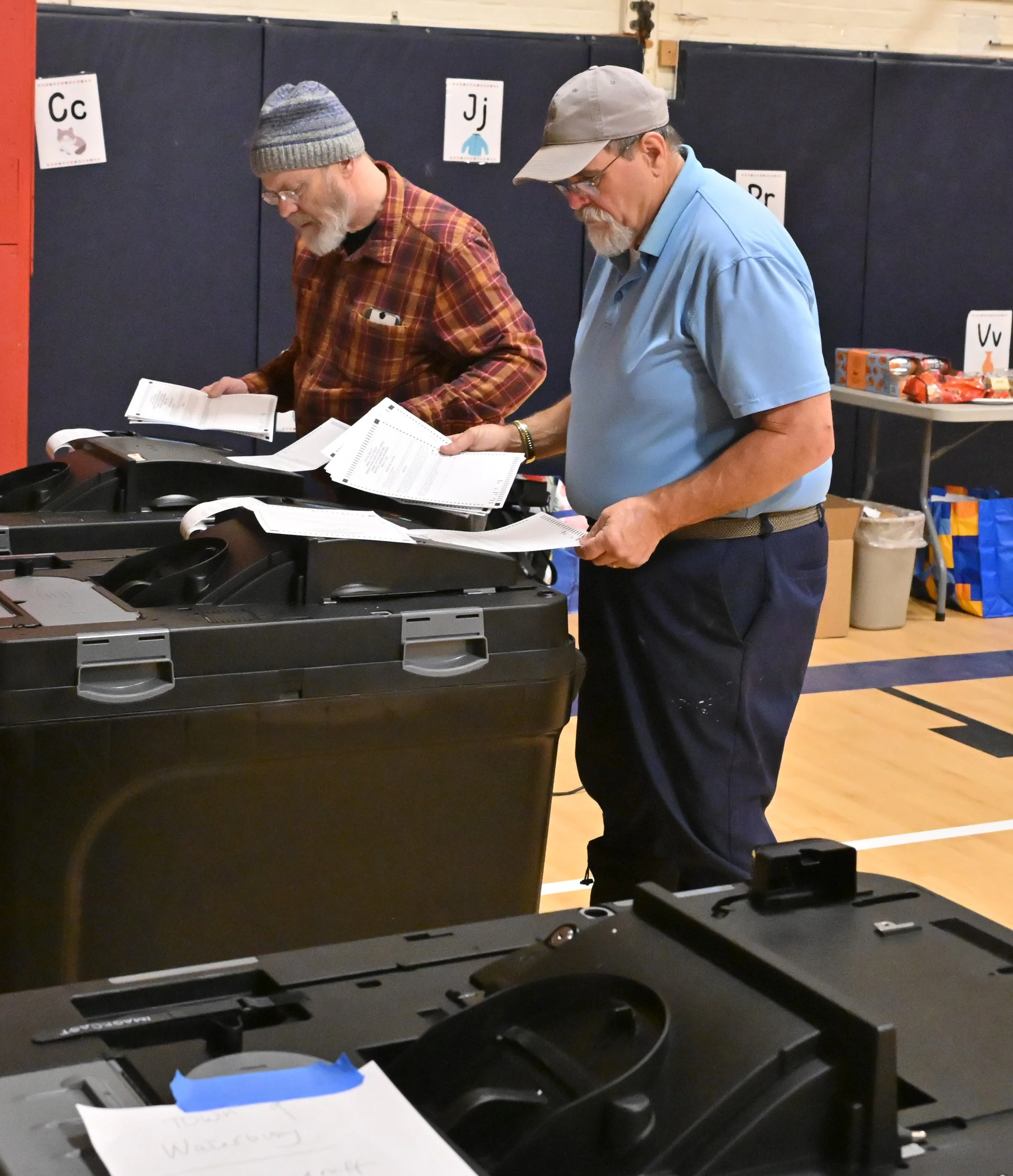
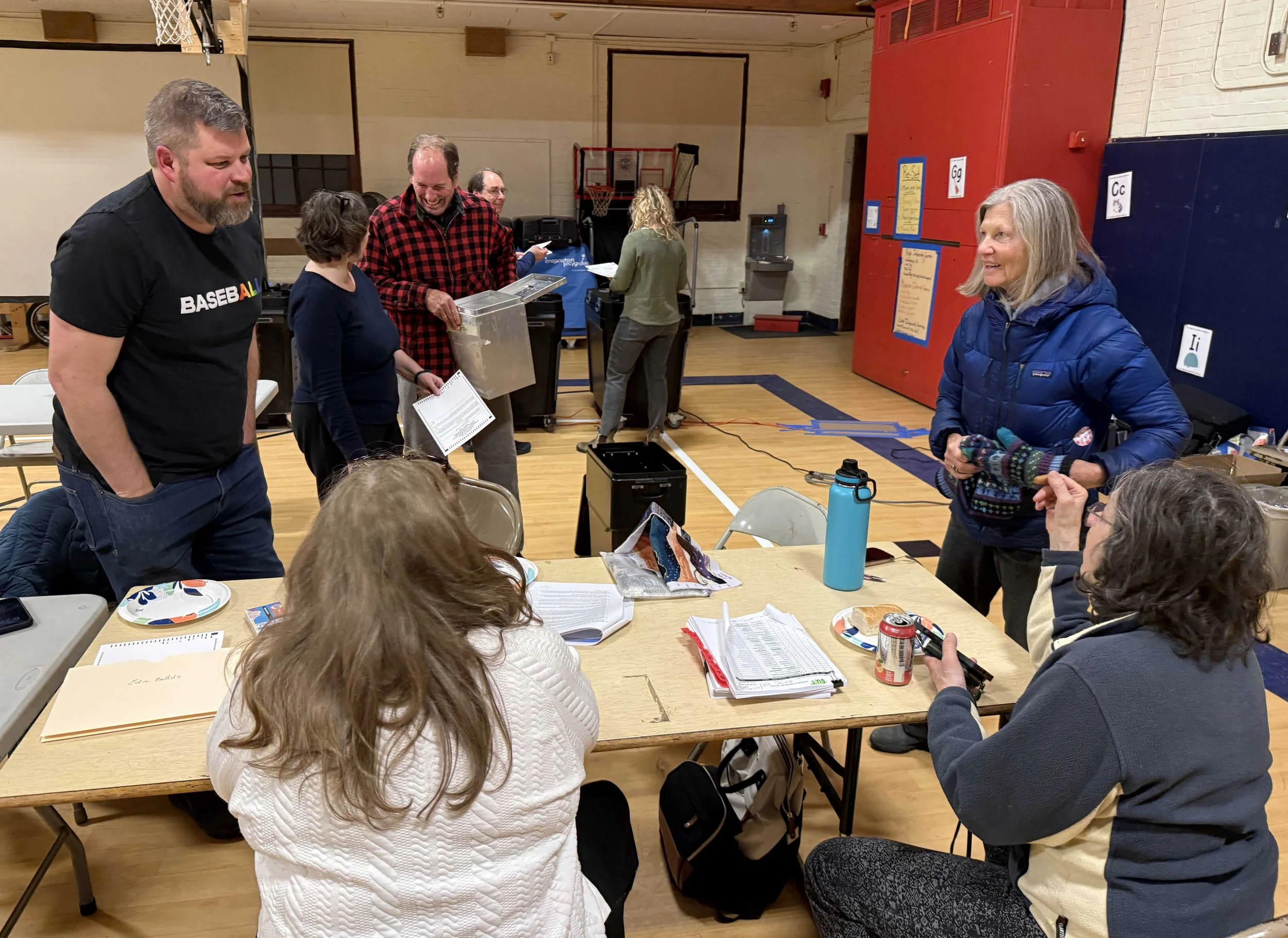
Brookside Primary School's gym was election central on Tuesday night for counting ballots from both Waterbury's local election and the Harwood school budget vote, set up here. Photo by Gordon Miller
Buoyed by strong voter turnout in Waterbury, voters in the Harwood Unified Union School District on Tuesday accepted the proposed $51.9 million budget for the 2026-27 school year by a wide margin.
Scroll over to see details. Source: HUUSD. By Julia Bailey-Wells
Voters also gave an even stronger endorsement to adding $500,000 to the district’s Maintenance Reserve Fund, using funds leftover from the 2024-25 school year’s budget.
The budget passed 2,104 to 1,343, according to results tallied Tuesday evening. The maintenance reserve funding question won 77% of the vote, 2,687 to 736.
Soon after the results were known, Lichleiter sent a short email message with the news of the budget winning 61% of the vote to school staff and school board members. “I want to share the good news that the school budget passed today by a vote of 61% to 39%!” Leichliter wrote. “Thank you for the work you do every day on behalf of our students and community!”
On Wednesday, Leichliter in an email said the district is grateful to its voters for their strong support at the ballot box.
Scroll over to see details. Source: HUUSD. By Julia Bailey-Wells
“This budget reflects months of careful work to balance rising costs while protecting the programs and opportunities that matter most for our students,” he said. “The strong margin is another reminder that our communities value their schools. We are grateful for the confidence voters placed in the district, and our focus now shifts to implementing the budget in a way that supports students, staff, and the long-term sustainability of our schools.”
Votes are tallied without breakdowns by town, in line with requirements set forth by the Harwood Unified Union School District when it was formed in 2017. Votes are cast in each town and ballots are then brought together and comingled for the counting.
Tuesday’s vote tally was conducted for the first time in Waterbury at Brookside Primary School, rather than at Harwood Union High School. The shift allowed school district officials to use multiple tabulator machines to process the ballots in an effort to shorten the time needed to count nearly 3,500 ballots.
The new budget represents an increase of 5.44% over the $49.4 million budget that Harwood voters approved in 2025 for the current school year.
District leaders worked to present a budget that represented level services – meaning maintaining current programming, adjusting for enrollment and complying with state and federal requirements – or the coming year. That required making just over $1 million in cuts, given increasing costs to key areas of the budget such as wages and health benefits for employees.
It also was key for the budget’s per-pupil spending calculation to fall below the threshold the state sets for excess spending because districts that exceed that amount are penalized with a higher tax rate. This year, the state’s spending threshold is $16,470 per pupil. Harwood’s budget of $51,884,847 has a per-pupil spending calculation of $16,228.78, coming in $241 under the state’s penalty threshold.
Harwood’s current enrollment as of October for this school year is 1,787, down by 27 students from last year. The weighted average enrollment used in the complex state education funding formula translates to 2,625 students using calculations that count some students as more than “one” based on needs that increase educational costs. Weights are applied for students from rural communities, low-income households and those who are English-language learners.
Over the past two years, budget cuts in the Harwood district have trimmed the equivalent of 49 full-time jobs, including elementary language teachers, some nursing and library staff, and classroom teachers at Brookside Primary and Crossett Brook Middle schools. Other cuts have come from transportation, operations and athletics areas of the budget.
The budget for the 2026-27 school year calls for an additional reduction of three and a half full-time-equivalent employees: 1.5 due to a consolidation of preschool classes, a human resources position and one additional non-classroom employee not yet determined, officials said.
School administrators emphasized during the budget process that staffing costs represent 72% of the budget, some $37.2 million. Health insurance premiums alone account for $6.4 million or 12% of the budget, according to the budget presentation by district Finance Manager Lisa Estler. School staff health benefits are negotiated through a statewide program that individual school districts do not control. The Harwood district pays 80% of employees’ health benefits.
The $1 million cut from the budget before presenting it to voters included some cuts that don’t impact classroom operations, such as a planned move of the district’s central office from leased space in Waitsfield to Harwood Union High School later this year, and eliminating a vacant administrator position at the high school. Combining preschool classes to be run at just three instead of five elementary schools next fall trims nearly $250,000. A move to improve student participation in breakfast and lunch programs aims to increase the district’s state reimbursement for school meals by about $50,000.
Estler noted that some community members concerned about school costs note that the budget increases year-to-year often exceed the federally calculated Consumer Price Index, currently under 3%. She pointed out that many of the largest expense categories in the budget are items with costs growing by more than that rate, such as health benefits and special education services.
Scroll over to see vote totals. Source: HUUSD. By Julia Bailey-Wells
The ballot item to roll $500,000 in unspent funds from last school year into the district’s maintenance reserve account comes as that account is at a historically low level with a historically large list of deferred maintenance work needed in the district’s seven schools. The account currently has a balance of about $1.9 million and the maintenance project list totals over $100 million. The school board recently approved projects for the 2026-27 school year that come to $1,036,000.
Estler cautions that school property tax impacts of the now-approved 2026-27 budget will not be exactly known until later this spring when the final pieces to the state’s education formula are set by state lawmakers.
So far, the estimated tax increases per town in the Harwood district to support the $51.9 million budget range from a low of 11-12% for Waterbury, Moretown and Warren, to 14-17% for Duxbury, Waitsfield and Fayston, based on Estler’s recent budget presentations. As an example, the estimated increase in the school tax bill for a Waterbury home valued at $300,000 would be $723.
School officials point out that more than half of the district’s taxpayers qualify for property tax relief through a state program that takes income into account, meaning they do not pay the full amount of their calculated tax bill.
School board elections
Also on Tuesday, voters in five of the district’s communities elected members to serve on the Harwood school board. Nine of the board’s 14 positions were on ballots, and eight members were elected. Waterbury and Warren each had a write-in contest. Winners were Theo Hanna in Waterbury and Macon Phillips in Warren. Incumbents unopposed were Cindy Senning and Emily Dolloff in Duxbury, J.B. Weir in Waitsfield, and Langford Davidson in Fayston. Newcomer Karl Naden won a second seat in Fayston as a write-in. No one ran for an open seat in Moretown, which now will be filled by a board appointment to serve until March 2027.
Annual meeting was Monday
Tuesday’s vote across the school district was preceded by a short annual meeting held in the library at Harwood Union High School. The annual meeting – akin to in-person town meetings held by town governments – includes voting on several articles of routine business for the district, a presentation on the budget being voted on the following day and a chance for members of the public to ask questions about the budget.
Attendance was quite sparse as Waterbury resident Tom Gloor was the only member of the public in the library audience. A reporter was the only member of the public online via Zoom. Only six of the school board’s current 13 members attended in addition to Estler and Leichliter.
Moderator Rick Rayfield, who was elected for another one-year term, ran the meeting, noting the evolution in the district’s annual meeting.
“This is a little different from years ago when we packed the auditorium here with hundreds of people and [former moderator] John Nutting managed to keep order,” Rayfield quipped. “That was a bigger job than I’ve got.”
Prior to the district’s consolidation in 2017, individual schools across the former supervisory union held their own annual meetings where school budgets were debated and voted upon, including the union district that oversaw Harwood Middle/High School.
The meeting proceeded out of order with the warning, beginning with Estler’s budget presentation, followed by several questions from Gloor asking to clarify some details in the presentation.
Leichiter thanked Gloor for attending and reassured him that there was no need to rush through his questions. “We're so thankful that you're here. We appreciate your questions. So don't apologize and try to hurry. We're happy to sit here as long as it takes to answer your questions,” Leichliter said.
Gloor expressed some dismay at the poor attendance, suggesting that the district better publicize the annual meeting. He proceeded to ask to clarify some budget details such as sources of revenue other than property taxes, the difference in the increase of the overall budget compared with the increase in the portion covered by education funds as well as whether employees have a co-pay on their health benefits. He asked about the percentage of teachers nearing retirement and whether the district may experience a “brain drain” should many staff choose to retire around the same time.
Leichliter noted that staff experience levels are relatively spaced out so that there are not many reaching retirement at any one time. This year, for example, just three staff are planning to retire, he said. Of greater concern is that training programs are graduating fewer educators each year, making recruiting more difficult to replace those who retire.
Gloor thanked the school officials for the discussion and urged the leaders, regardless of Tuesday’s vote outcome, to pay attention to the “no” votes and the segment of the population they represent.
“The idea that a school budget would not pass is is foreign to me a little bit, right? Because it would be about education. It's the future, right? But the costs are getting very, very real for many, many, many citizens,” Gloor said.
The remainder of the meeting proceeded quickly through the warning articles with only the school officials in attendance voting on the various questions.
The group unanimously accepted the school district’s annual report. It also unanimously approved nominations of Meg Libby and Laura Titus as district’s clerk and treasurer, respectively. They authorized the board to hire an auditor to review financial records at the end of the year and gave approval for the administration to borrow funds in anticipation of taxes in the summer before tax revenue collected in the member towns is available to pay the district’s bills.
The final article passed with no objections was for the school district to continue its practice of announcing that its annual report is available online, with paper copies available by request or from the district’s central office or any school.
See a recording of the school district’s annual meeting here.