
Harwood district looks to centralize preschool for 2026-27
February 4, 2026 | By Claire Pomer | Correspondent In the wake of declining births in both Vermont and Washington County, the Harwood Unified Union School District has announced plans to centralize early childhood education for the 2026-27 school year.
Currently the district offers 11 preschool sessions, employing 5.5 teachers. Next year, there will be eight preschool sessions, employing four teachers.

Pre-K students play outside at Brookside Primary School. File photo
The decision was made as school district administrators drafted the proposed budget for fiscal year 2027. The Harwood School Board sought to present a level-service budget for the voters to consider on Town Meeting Day. But increasing costs meant school leaders needed to trim just over $1 million for the bottom line to come in under a state spending threshold.
The move to consolidate preschool classes to fewer locations for next school year presented a cost savings of $224,588, according to Finance Manager Lisa Estler.
Vermont recorded the fewest births in the nation in 2024, and the state’s birth rates have been falling since 1990. Washington County recorded 482 births in 2023, and local towns have fared badly, with school officials offering the example that Warren had just one birth in 2024.
With falling birth rates comes declining school enrollment and smaller class sizes. The Harwood district student enrollment was at 1,787 at the start of the school year, down 1.5% from the prior year’s 1,814.
“What we’re looking at administratively has nothing to do with supporting or not supporting preschool and everything to do with taking a look at classroom numbers,” said Superintendent Mike Leichliter at a Jan. 7 Harwood School Board meeting. “We feel that we have to be not only responsible educationally, but that we also have to be responsible via enrollment and to our taxpayers to not have classes that are underenrolled.”
The 11 preschool sessions offered this year are spread across the district, with four sessions at Brookside Primary School in Waterbury that employ two teachers; three sessions at Moretown Elementary School, employing one and a half teachers; and two sessions each at Fayston and Warren elementary schools, employing two teachers.
Maximum 15 students
The Vermont Department of Children and Families, which oversees public preschool regulations, restricts pre-kindergarten class sizes to a maximum of 15 students. With 11 sessions and 15 students per session, Harwood’s overall program could enroll up to 165 preschoolers.
According to the district’s October 2025 enrollment report, 196 pre-kindergarten students are funded by Act 166, the Universal Prekindergarten Act, though not all of these students attend Harwood public preschools. The district’s 11 offered sessions have 127 students enrolled this year; the remainder attend private preschool programs across the district.
Leichliter addressed the district’s preschool programming in a Jan. 6 email to parents that looked ahead to the 2026-27 school year. “Even after reducing two pre-kindergarten classrooms at Waitsfield this year, our district programs remain under-enrolled. More than half of the 11 sessions currently offered have space for at least five additional students,” the superintendent wrote. “Based on current data and extensive outreach efforts, we anticipate that maintaining the same number of classrooms next year would result in more than 40 unfilled pre-kindergarten slots.”
The district’s plan now calls for ending preschool at Fayston Elementary in the fall and not resuming preschool at Waitsfield.
Pre-kindergarten programs are essential to early childhood development by creating interactions with children of the same age in a structured, formal environment, but classes with fewer than five students “do not provide the robust peer interactions and learning experiences we [HUUSD] strive to offer,” Leichliter noted.
Community backlash
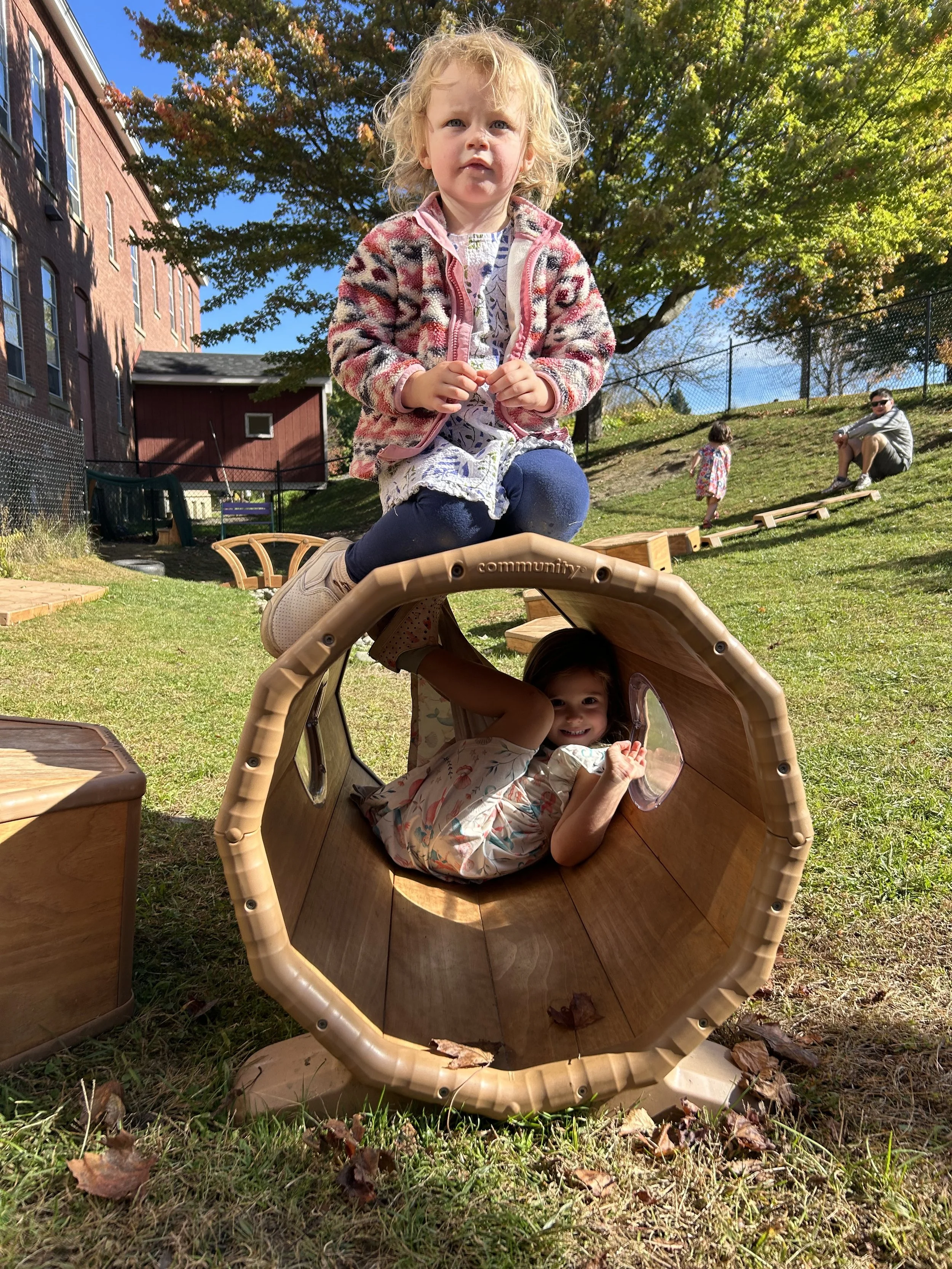
Preschool at Brookside Primary School is not expected to change for the 2026-27 school year. File photo
The plans to consolidate preschool classes for next year have attracted considerable community backlash. Recent school board meetings have seen public comments from parents and preschool teachers attesting to the benefits that the public preschool programs provide to students, their families and communities.
Moretown parent Carla Francis spoke at the Dec. 17 meeting. “We as parents feel more assimilated into the Moretown community, so I think by going to public preschool it’s affecting the whole family,” she said. “It really goes beyond the student.” She spoke about how she struggled to find a private preschool for her son, and that, if preschool programs were cut, it would be “less accessible for families. Some families won’t be sending their kids at such a crucial age.”
Longtime Moretown preschool teacher Jenny Lyle also addressed the board. “When we cut pre-k programs, we send a strong message to our district and our community that we don’t value preschool. Will pre-k ever return to Waitsfield or Fayston? Once a program is cut, it is not likely to return.”
When she applied for her job, she said she did so thanks to the public preschool programs offered by the district prior to Act 166. “This community is special. Let’s continue to support our young children and the families that moved here for our schools,” she said.
Waterbury parent Theo Hanna cited a study from the National Institute for Early Education at Rutgers University, that found that “studies of high-quality preschool programs show that every dollar spent is $17 in social benefits. Attending a good preschool is associated with higher grades later in school, less grade retention, higher job earnings, less delinquency and crime, and better long-term outcomes.”
A frequent volunteer in the Brookside preschool classroom, Hanna testified to its benefits, addeding: “Vermont towns like ours need young families and cutting incredible preschool programs does not make a strong case for moving to our district.”
At the Jan. 7 school board meeting, Libby, Shelby Semmes, Caitlin MacLeod-Bluver, Catherine Naden and Patty Martley each spoke to the importance of Harwood’s public preschool programs.
“It’s difficult to quantify intention, responsiveness, and emotional presence, but these elements are the reality of early childhood education and are foundational to the children’s learning and well-being,” Warren preschool teacher Elaina Foxx said. “As classroom numbers increase, meeting these needs becomes increasingly difficult and inevitably, the quality of a child’s experience declines.”
‘We do hear you’
School board Chair Ashley Woods of Warren assured members of the public that the board does read their emails and encouraged people to share their concerns. “We do hear you,” she said. “We do take it in. We do talk about it. This is no vacuum; we are listening.”
Leichliter emphasized that, although the district intends to have fewer locations for preschool in the fall, it is not cutting capacity that will affect its ability to enroll children. “We are not looking to cut preschool. We are not looking to tell parents that we don’t have space,” he told the board and those in the audience.
He reiterated this point in his email to families: “All HUUSD resident students who wish to attend a public pre-kindergarten program will be accommodated. We are confident that we will have sufficient space to serve interested families.”
In addition to consolidating the preschool sessions, the Harwood district is currently working to create child-care partnerships that will provide for full days of care or for pre-k students for the days they are not in school. More details about these partnerships will be shared on or before pre-kindergarten screenings begin in March, school leaders said.
Claire Pomer is a senior at Harwood Union High School from Waterbury.