
Ceremony marks Marsh House apartments’ opening in Waterbury
June 4, 2026 | By Lisa Scagliotti In 2011, the town’s worst flood of the century touched off the series of events that led to a wintry downtown groundbreaking in February 2025.
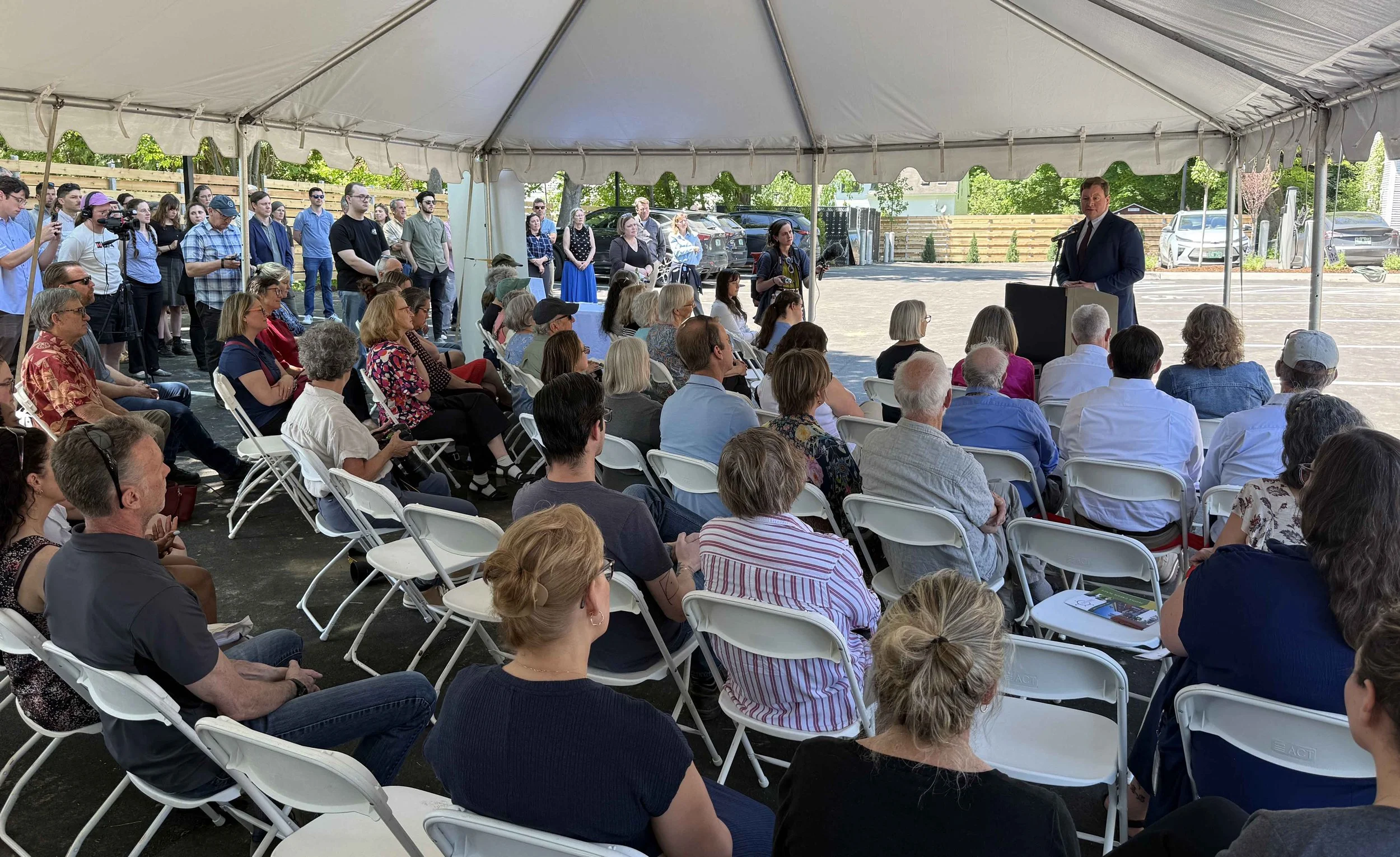
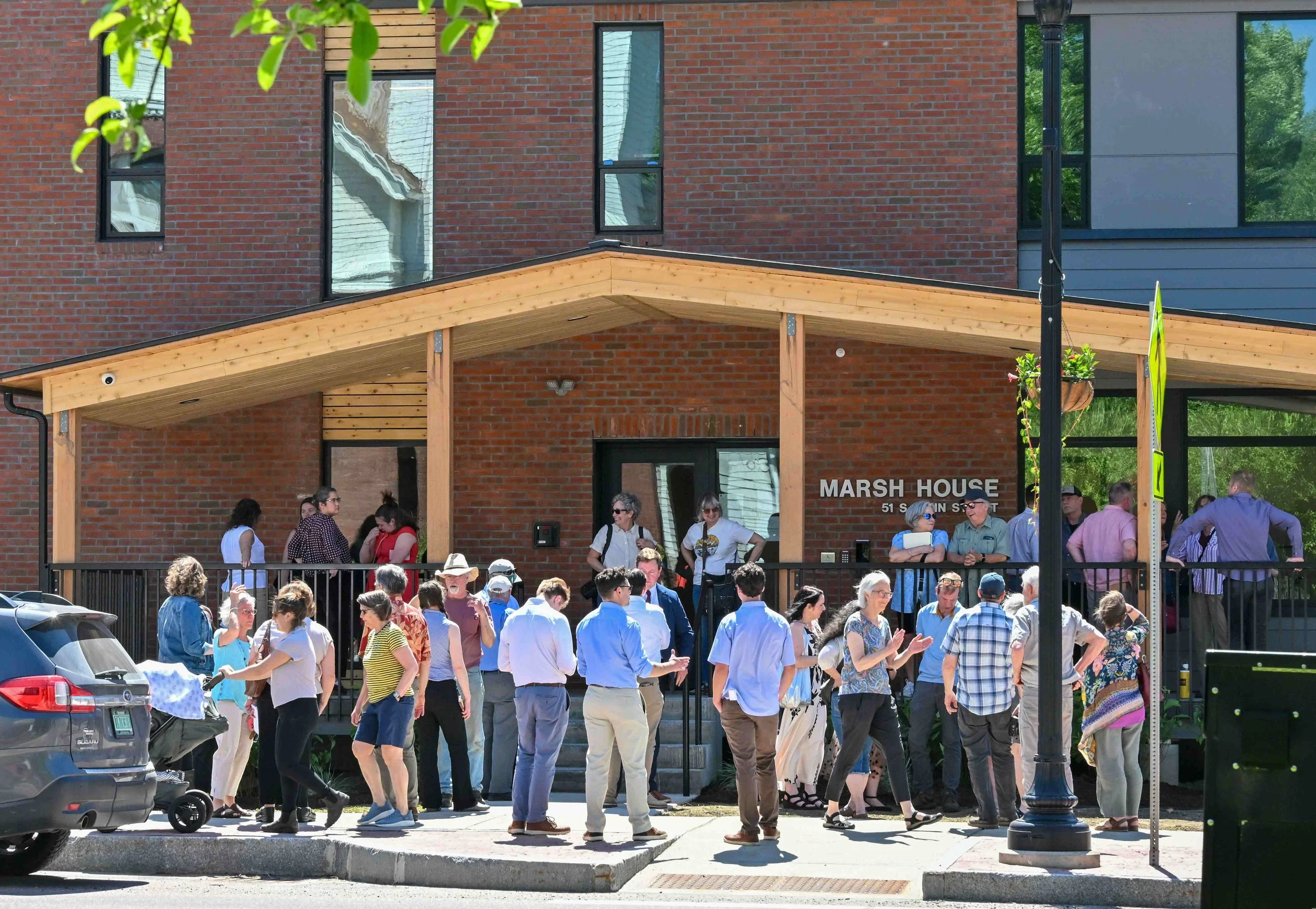
Fifteen months later, more than 100 people gathered in the sunshine to celebrate the grand opening of Waterbury’s newest 26-unit apartment complex on South Main Street.
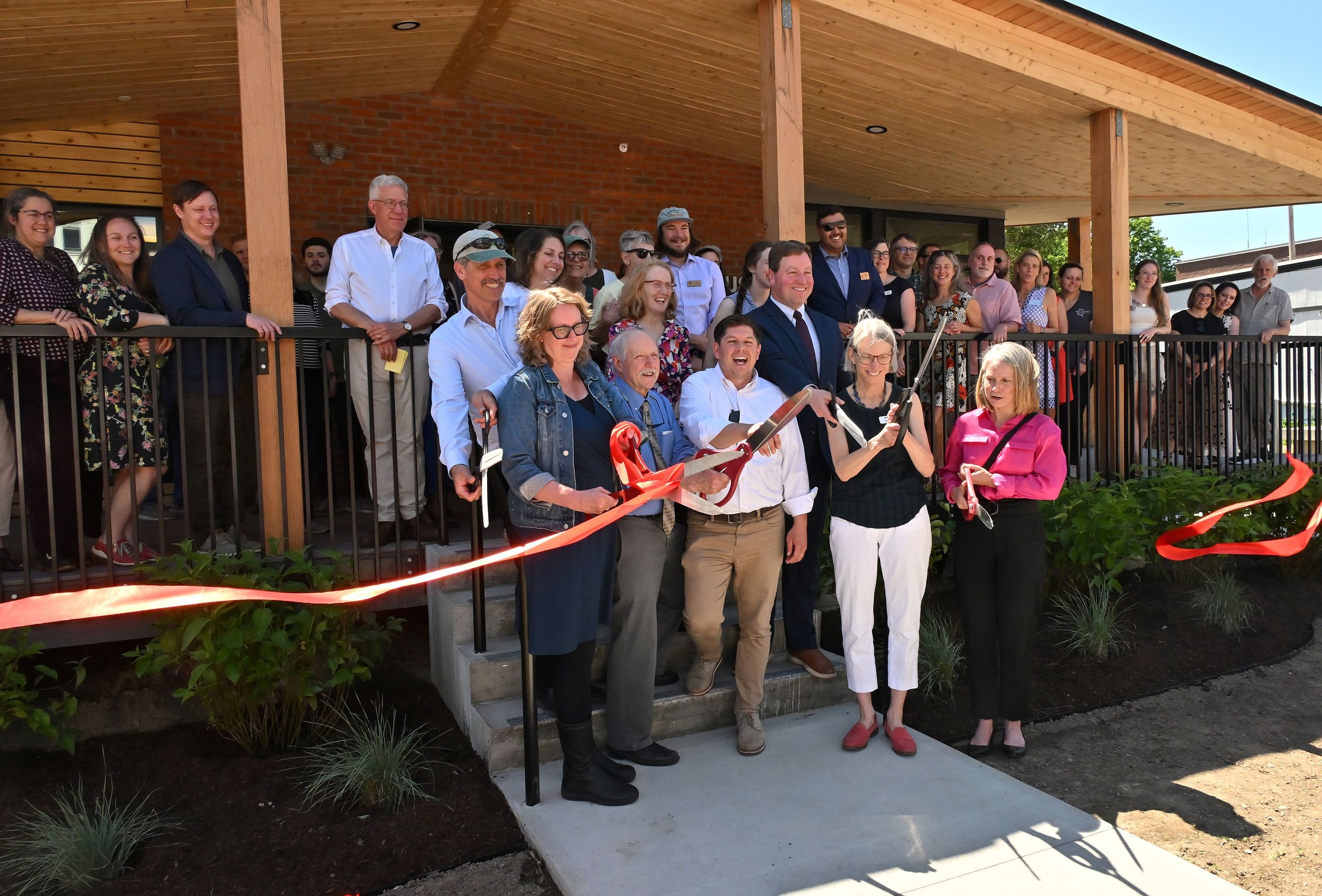
The ceremony concluded with a ribbon-cutting. Photo by Gordon Miller
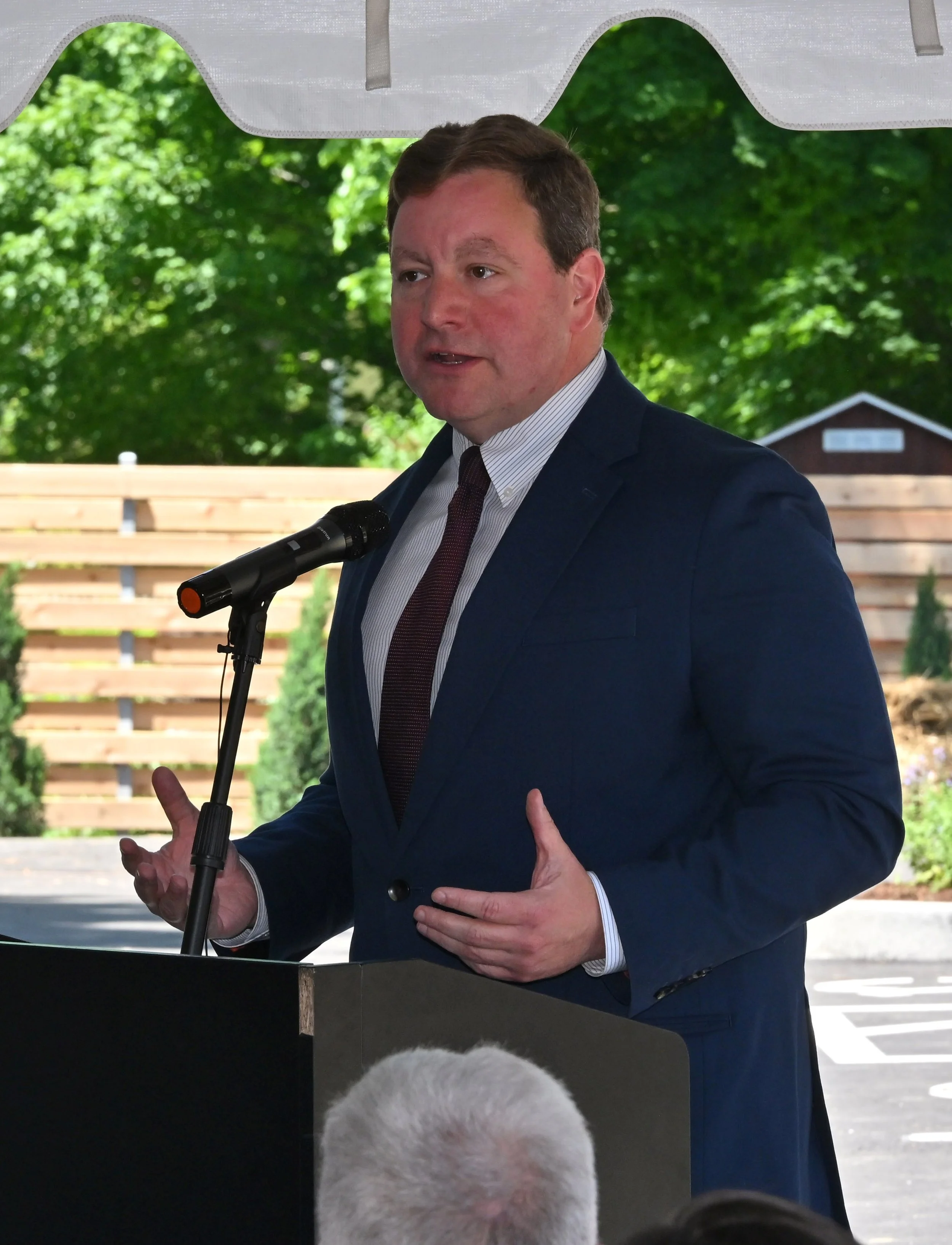
Local residents and town officials, present and past, gathered on Wednesday to hear from representatives of Downstreet Housing & Community Development and Evernorth – the project’s co-developers and co-owners. Leaders of agencies involved in planning and financing the $15.3 million affordable housing project were joined by elected local and state representatives, state Treasurer Mike Pieciak and Lt. Gov. John Rodgers.
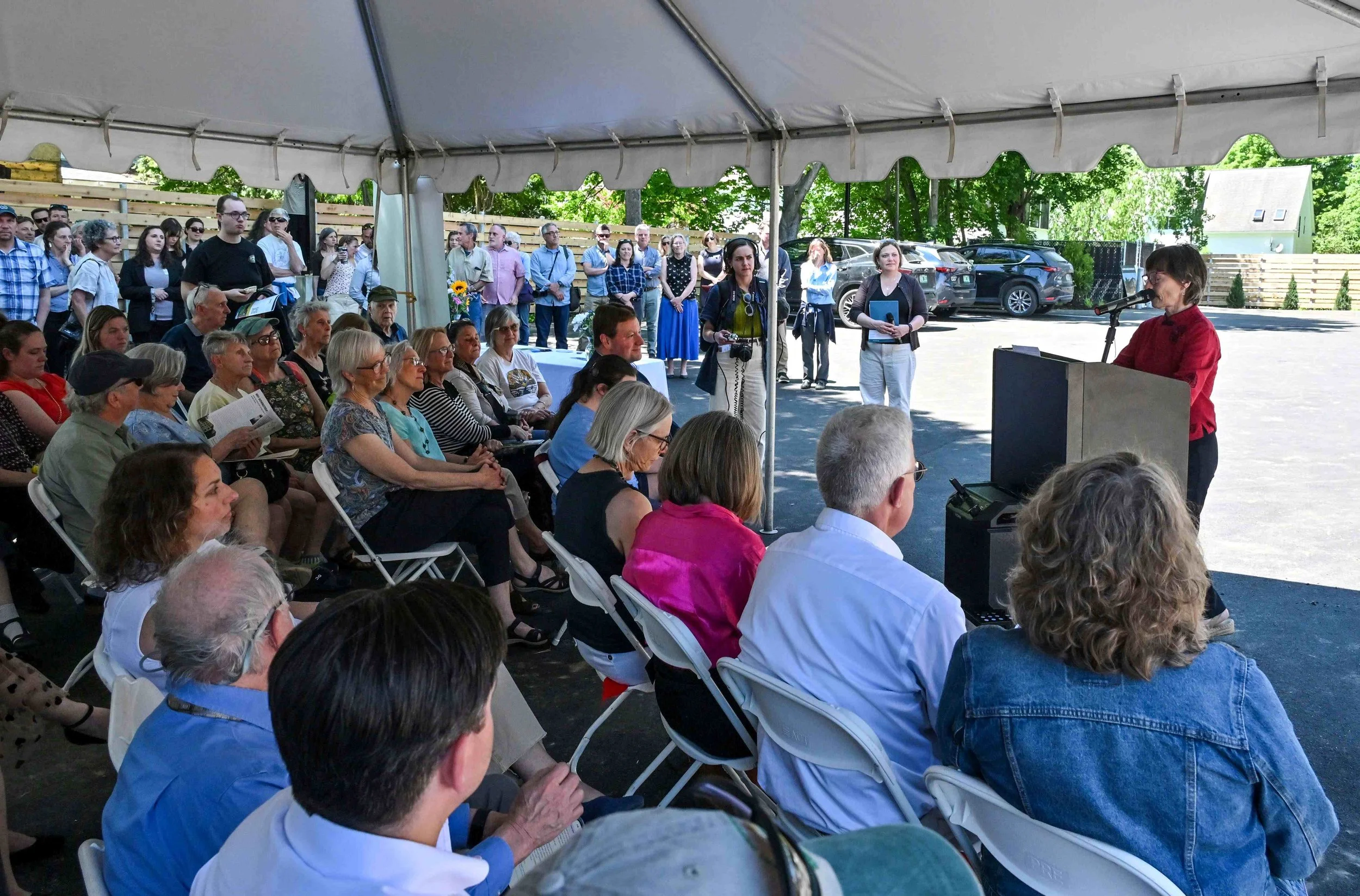
In between visitor tours of the three-story building where the first tenants have moved in just this week, the speakers at the 45-minute ceremony underscored the long, complex path the project took to reach completion, from community buy-in to the multi-layered financing required to establish the project to remain permanently affordable for low- to moderate-income tenants.
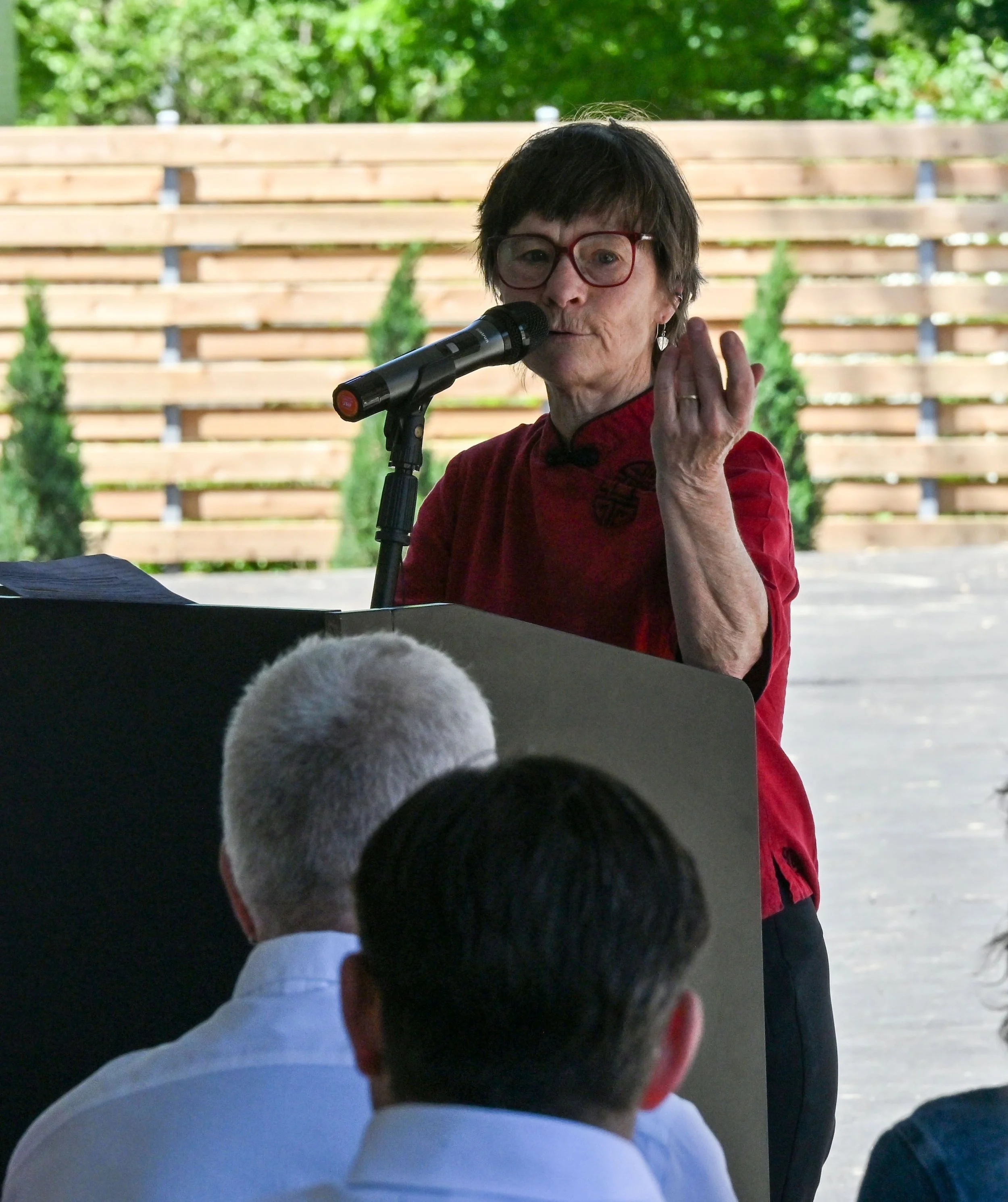
Waterbury resident Pegeen Mulhern, the new chair of Downstreet’s Board of Directors, opened by reflecting on how the Marsh House project evolved from “an idea, to a community conversation, to a get-out-the-vote campaign that garnered overwhelming support for the EFUD transfer of the property, to a construction site, and now to homes.”
She described it as “exciting, and honestly, a very moving and meaningful community action.”
Mulhern was referring to how, in October 2022, voters in Waterbury’s Edward Farrar Utility District voted overwhelmingly in favor of selling the 51 South Main Street parcel to Downstreet to build affordable housing. While just a handful of voters typically vote in regular elections for the water and wastewater utility, the 208-69 vote on the property sale remains the district’s largest turnout ever.
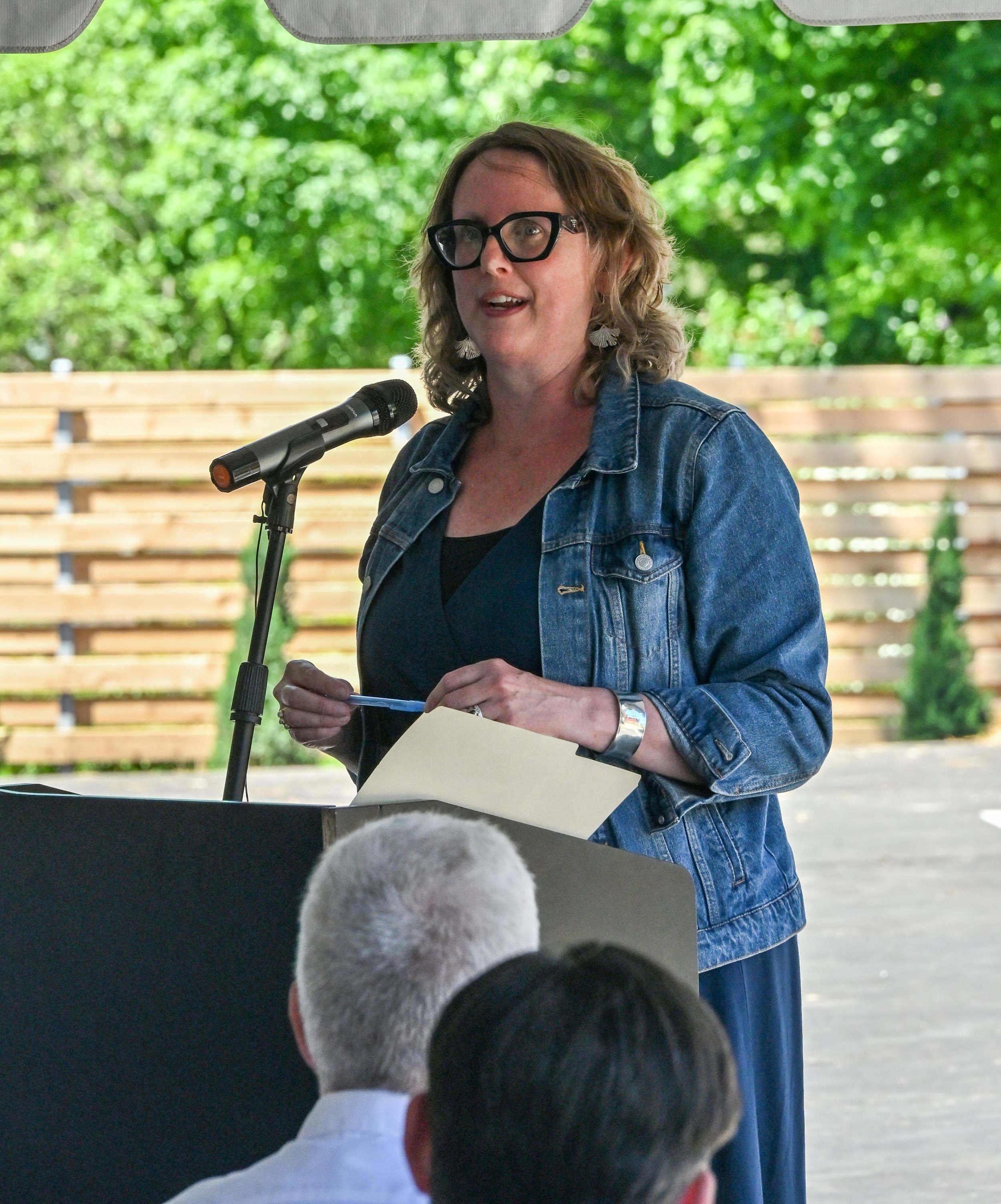
Downstreet Executive Director Angie Harbin recalled that wave of community support as a critical mandate to make the project happen. “The people of Waterbury fought for this,” she said. “They voted yes to permanently affordable homes, to new neighbors, to a Waterbury where people with different incomes, different needs and different life stories can all belong. That vote was so important.”
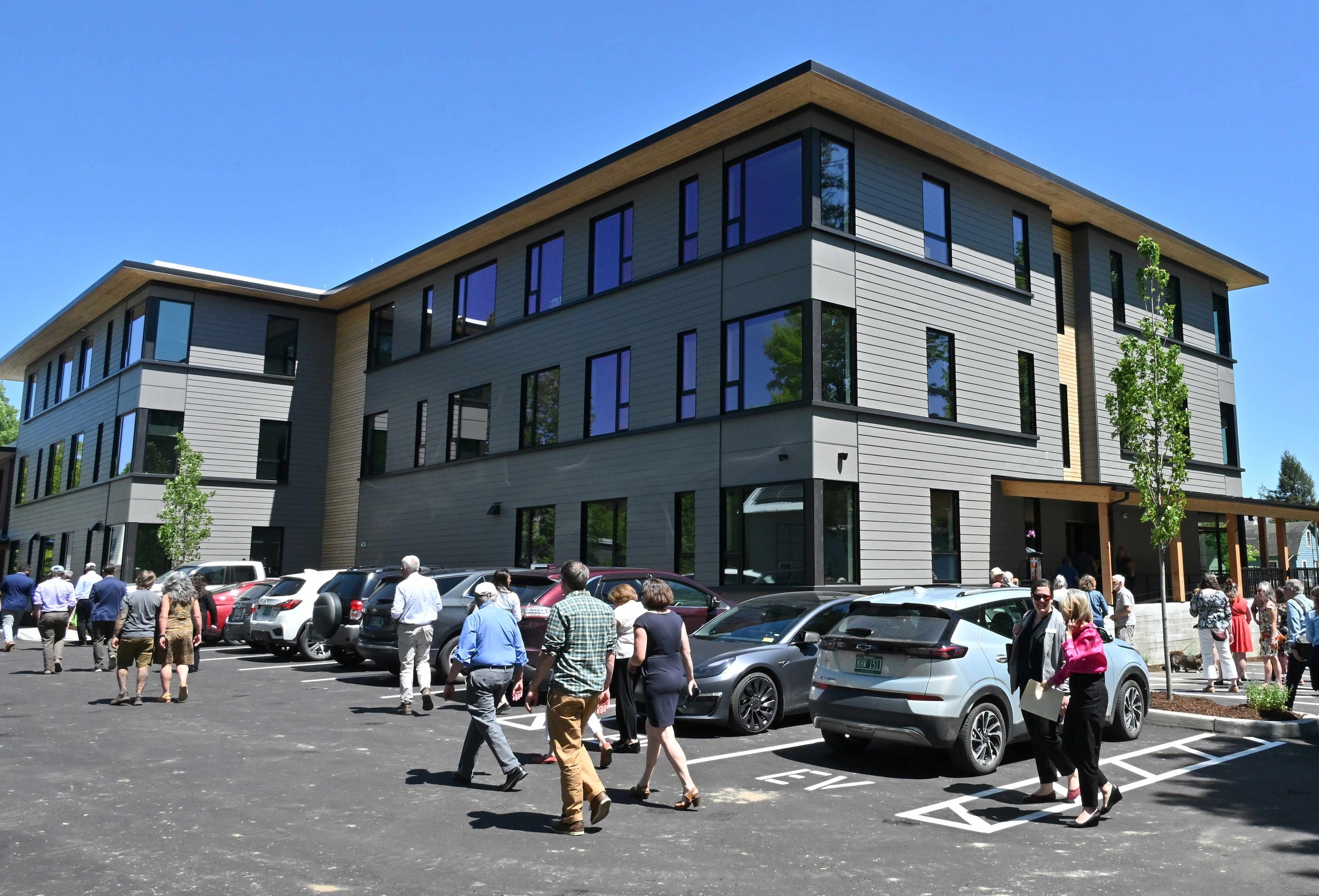
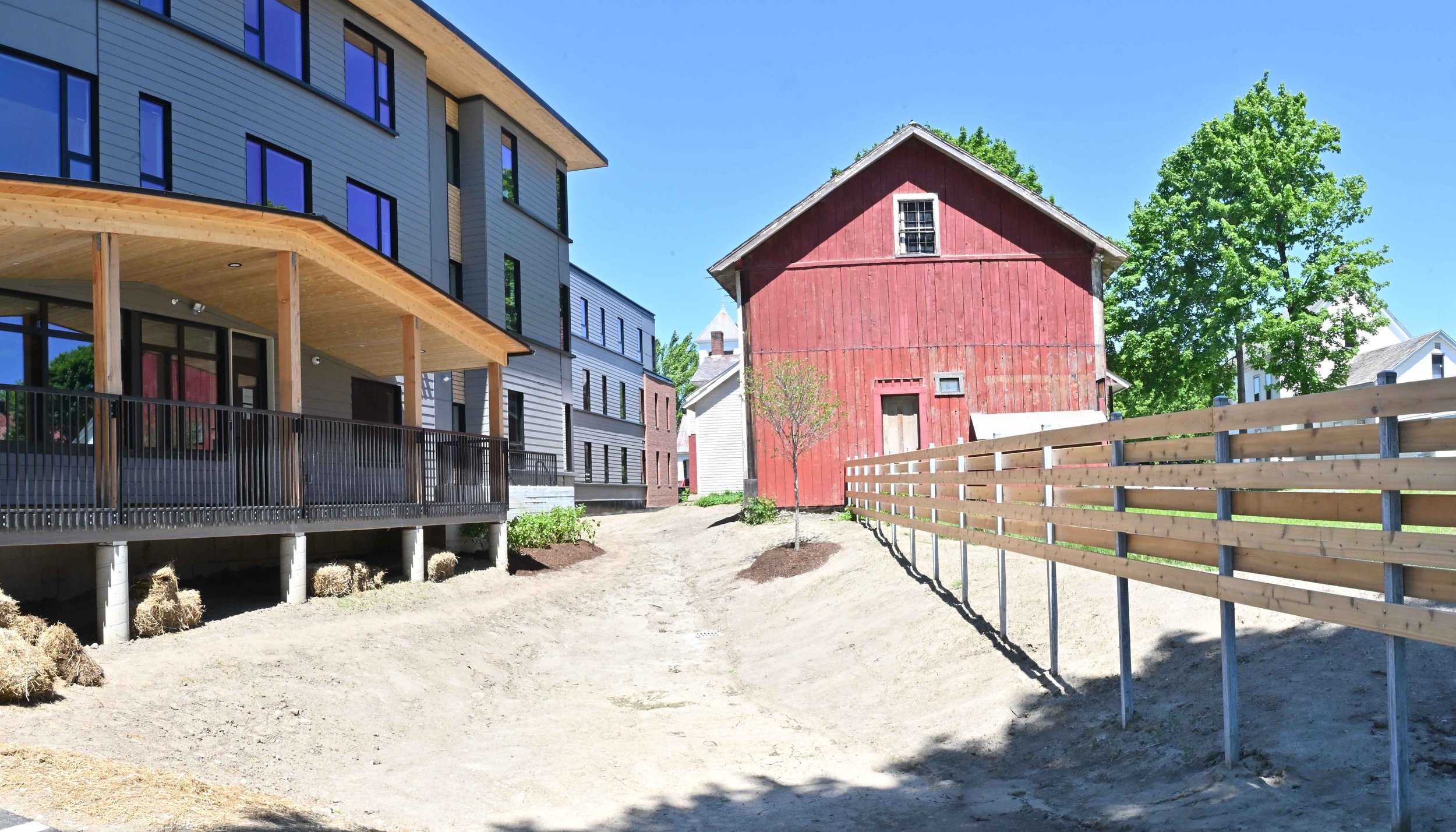
The project is Downstreet’s fourth Waterbury apartment building with 26 units configured as four studio apartments, 17 one-bedroom, and five two-bedroom units.
Already this week, tenants have moved into eight units, and more will be moving in over the coming weeks, Downstreet officials said.
Harbin said the nonprofit housing agency has received over 80 applications, many of whom do not live in Waterbury but have jobs here and want to be closer to work.
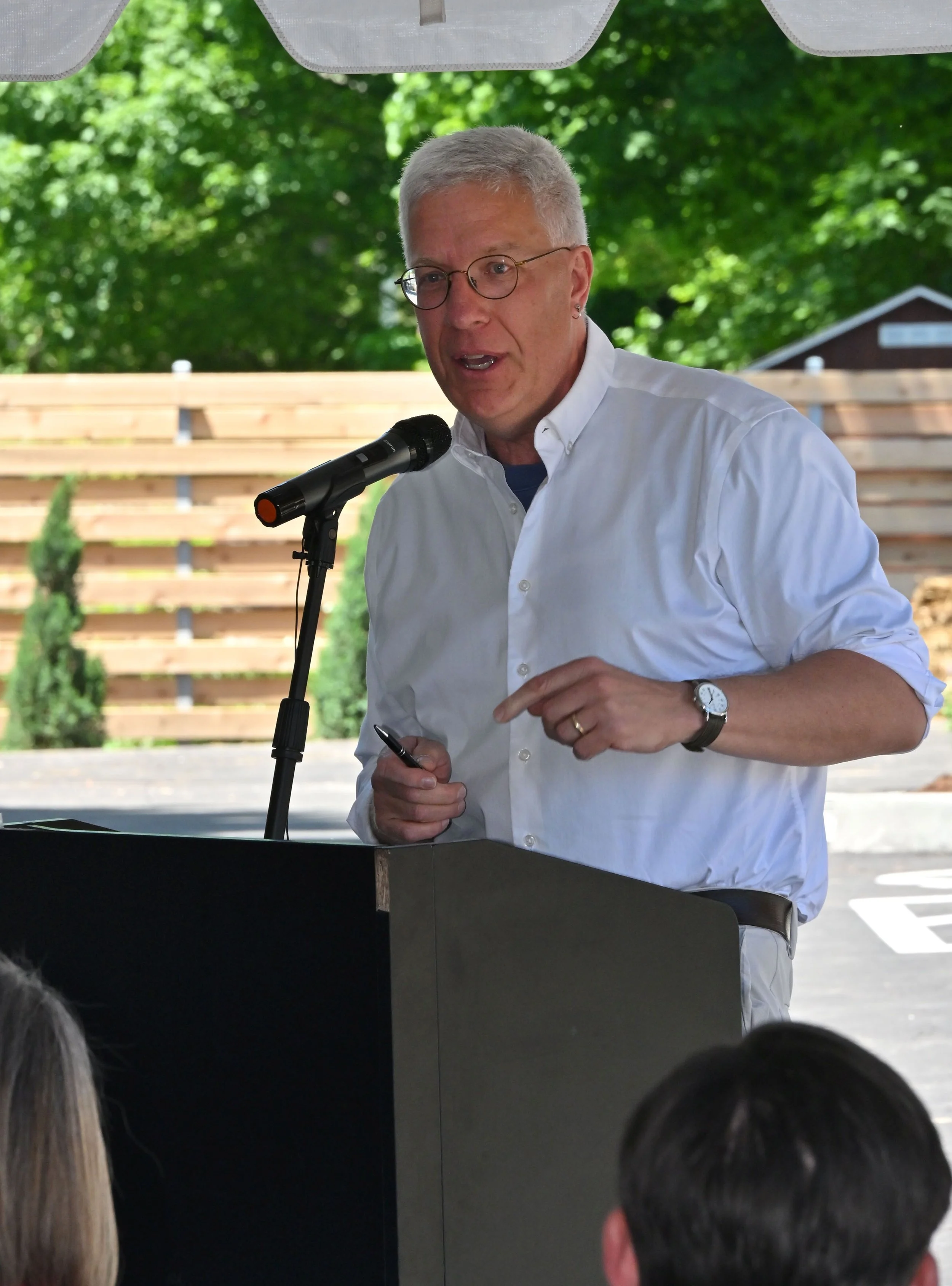
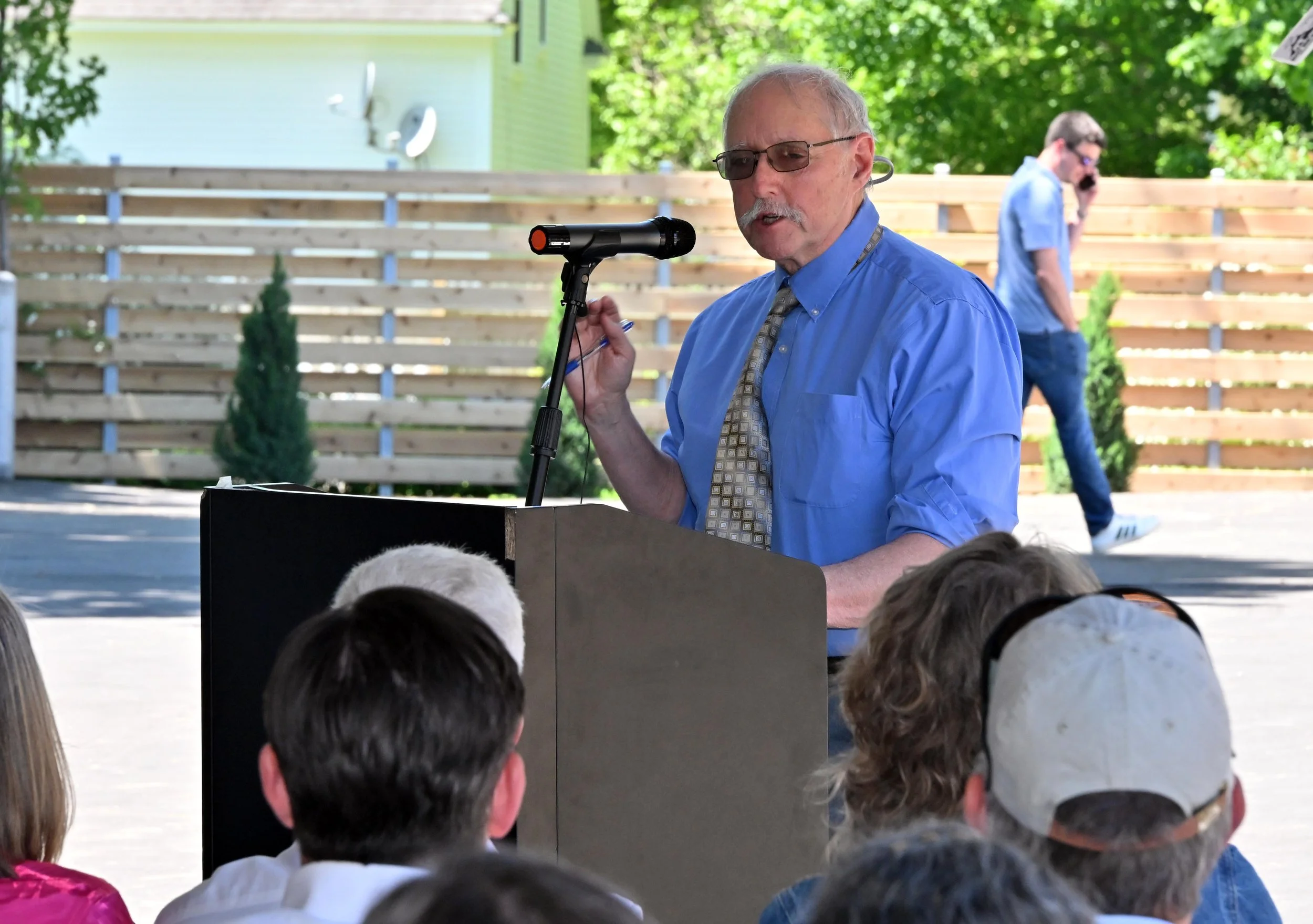
“That number definitely speaks to the demand for more affordable housing options here,” said Joe Camaratta, chair of Waterbury’s Housing Task Force. “Waterbury has almost 700 renter households, and 72% of them would qualify for an apartment in Marsh House.”
Camaratta said he was encouraged to hear that prospective tenants have have ties to the community through work, family and friends.
As with other Downstreet properties, Marsh House tenants will be approved based on household income. The project aims to rent to those with annual income between 30% and 80% of the Area Median Income, which could be as low as $23,200 for a single person and up to $88,300 for a four-person household.
Studios will rent for $960 to $1,150 per month; one-bedrooms for $1,030-1,650, and two-bedrooms between $1,490 and $1,980 monthly.
Working with Upper Valley Services, Downstreet will lease three units to tenants whose household includes an individual with developmental or intellectual disabilities. And working with Good Samaritan Haven in Barre, Downstreet will match five tenants who have been in temporary housing to permanent rentals. Harbin noted that one tenant, a single mom with children, has already moved in after being in a situation living with friends.
“Marsh House is beautiful. It’s new. It’s energy-efficient,” Harbin said. “But what matters most is that it’s home. People are already walking through these doors with groceries. They’re making dinner. They’re getting kids ready for school. They’re coming home from work – the everyday things that make a life.”
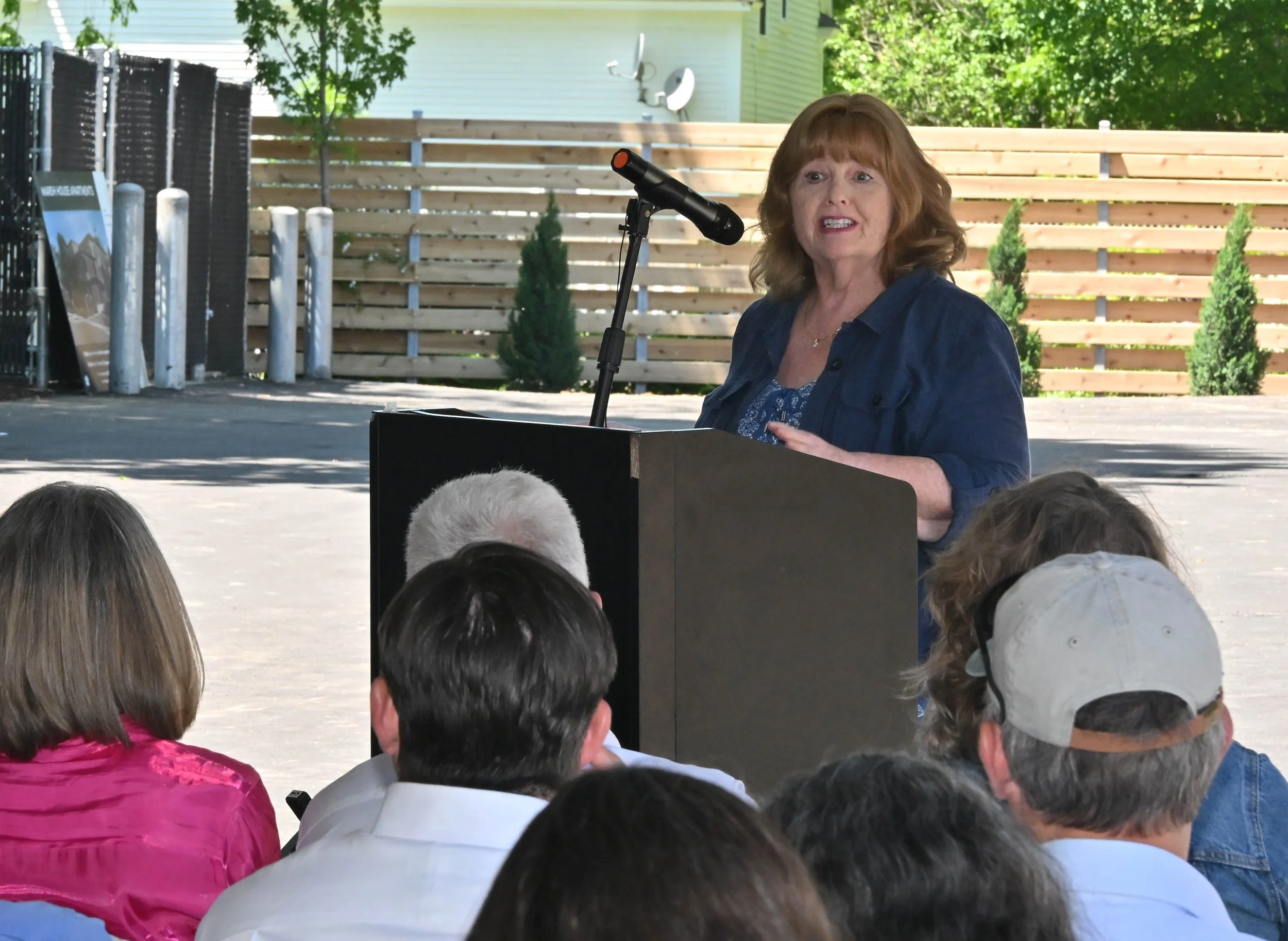
State Treasurer Pieciak said the question of how to make Vermont an affordable place to live is “the fundamental question of our time” for Vermonters from young people just starting out to older Vermonters who want to stay in their homes as they age.
Pieciak commended the state legislature for committing over $100 million in housing programs that include low-interest loans to support development such as Marsh House. He noted that the decision to designate a portion of the units for tenants with disabilities and those working to exit homelessness sends an added message that “in Vermont, everybody matters, everybody has value and everybody deserves dignity.”
State Reps. Tom Stevens and Theresa Wood, Democrats who represent Waterbury in the Vermont House, reflected on the years it’s taken for the property at 51 South Main Street to evolve from what was the town and village offices to 26 new homes. Tropical Storm Irene rendered the former municipal building unusable in 2011.
“For the next 10 years, we waited,” Stevens said. “We wondered and hoped and cajoled EFUD to find a way to use this property for this purpose at long last, it happened.”
The former town hall was originally a single-family home, and the parcel’s history dates back to the family of James Marsh, considered Waterbury’s first permanent settler in 1784. His son, Elias, lived at what’s now the apartment complex site.
Wood said she’s particularly happy with the name choice and its nod to local history. “That is a sign of the past meeting the present and moving to the future,” she said.
Gus Seelig, longtime executive director of the Vermont Housing and Conservation Board, recalled his organization’s work on multiple housing efforts in Waterbury that ultimately incorporated Downstreet’s ownership, beginning 35 years ago with the senior apartments at the Stimson and Graves building on Stowe Street to the Seminary building on Hollow Avenue in Waterbury Center, to the South Main Apartments developed after Tropical Storm Irene.
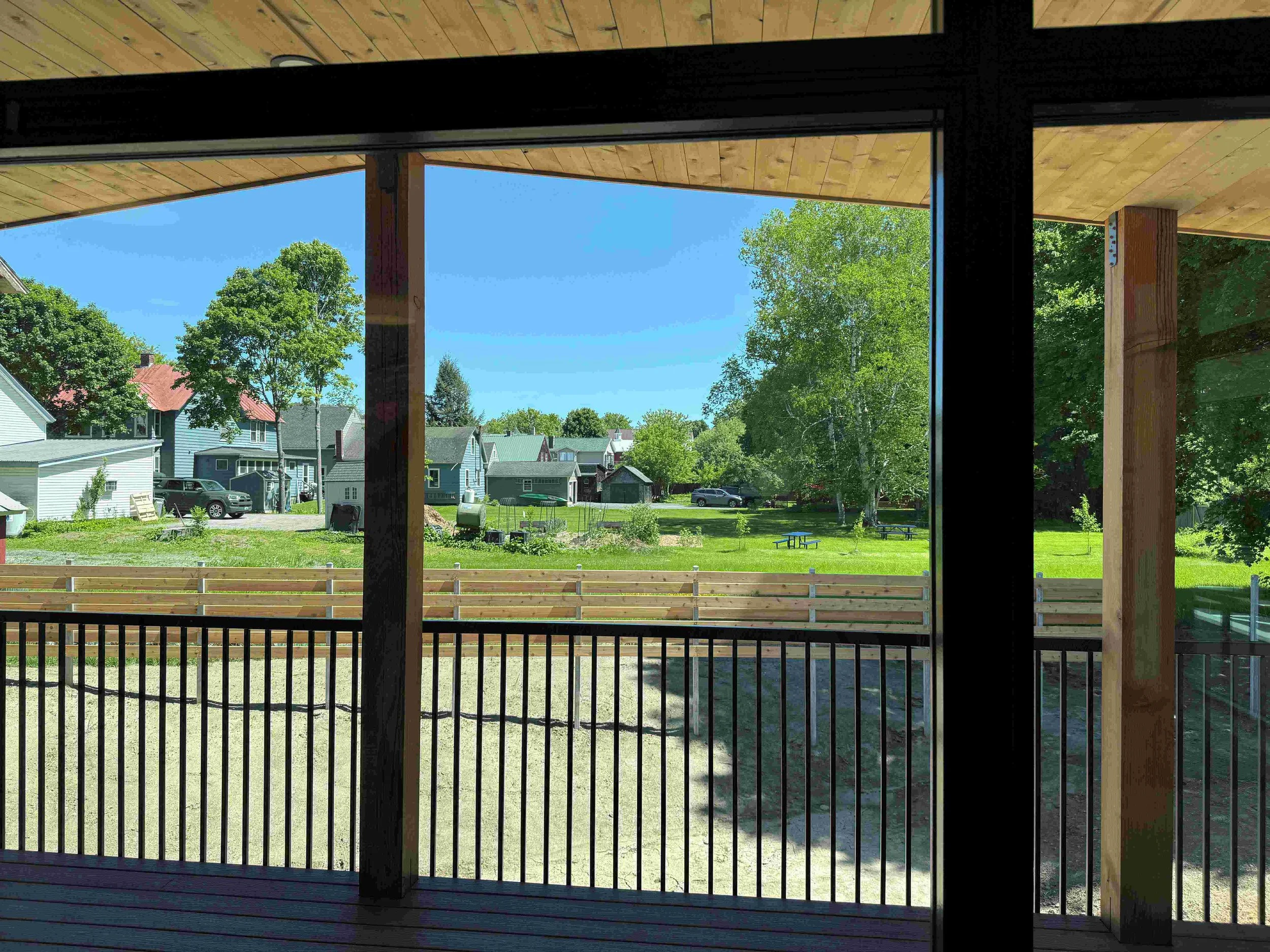
“Look at this community today,” Seelig said, calling the afternoon ceremony a commencement, asking those gathered to imagine in the years ahead, “Think of all that’s going to happen after today – the birthdays, the anniversaries, the graduations that are going to be celebrated in this building, on the porch, in the backyard.”
Lt. Gov. John Rodgers attended the ceremony and took part in the ribbon-cutting, but did not make any public remarks. Reached afterwards, he shared his thoughts on the occasion, saying that “teamwork makes the dream work.” Rodgers called it a “great day for Waterbury and Vermont” to see the housing project completed.
“Thanks to the vision of the Waterbury utility district, selectboard and voters, the leadership of Downstreet Housing and Evernorth, the dedication to community from our friends at Good Samaritan Haven and Upper Valley Services, and thanks to the governor and his team, of course, Waterbury and its residents now have more affordable, environmentally conscious housing,” Rodgers said. “Waterbury is showing us how we can be part of the housing crisis solution and offering us a model for how we can make it happen in our communities across our beautiful state. It takes a town – the town of Waterbury!”
Financing from multiple sources
Funding for the project came together from a variety of public and private sources: Just under $8 million came from federal tax credits through Evernorth and TD Bank and administered by the Vermont Housing Finance Agency; TD Bank also provided the construction financing and VHFA was the source of a permanent loan as well; another $5.7 million came from the Vermont Housing and Conservation Board, including over $800,000 in Congressionally Directed Spending secured by former U.S. Sen. Patrick Leahy.
The Vermont State Housing Authority allocated six project-based housing vouchers to the project, and the town of Waterbury contributed $100,000 of its federal pandemic-relief American Rescue Plan Act funds. The state Agency of Commerce and Community Development assisted with Sales Tax Reallocation funding that exempts the project from sales tax charges on materials; Efficiency Vermont also provided incentives for the building’s energy-efficiency features.
The project was designed by gbA Architecture & Planning; ReArch Company was the construction management contractor.
In materials describing the project that were handed out at the ceremony, Downstreet and Evernorth include an acknowledgement of their operations’ connection to the region’s Indigenous peoples. They point out that their offices and properties exist on unceded territory originally belonging to the Western Abenaki. “We remember and honor their connection to this region and the hardships they have endured and continue to endure because of colonialism and forced removal from their land,” the companies’ statement notes.
As part of its development process, Downstreet contributes to groups that support and promote Vermont Indigenous peoples, history and culture. In the case of Marsh House, Downstreet has made a $1,000 donation to the Abenaki Nation of Missisquoi.
“We will continue to recognize those who have been marginalized as a result of our country’s history and the persistence of white supremacy through donations like these and through our work to provide true equity in housing access across Central Vermont,” the statement explains.