
Over four hours, Waterbury voters pass a budget with raises for officials, a firetruck, and lowered property taxes
March 5, 2026 | By Lisa Scagliotti, Sandy Yusen and Sarah AndrewsORCA Media recorded Waterbury’s 4.5-hour town meeting. Watch the video online here.
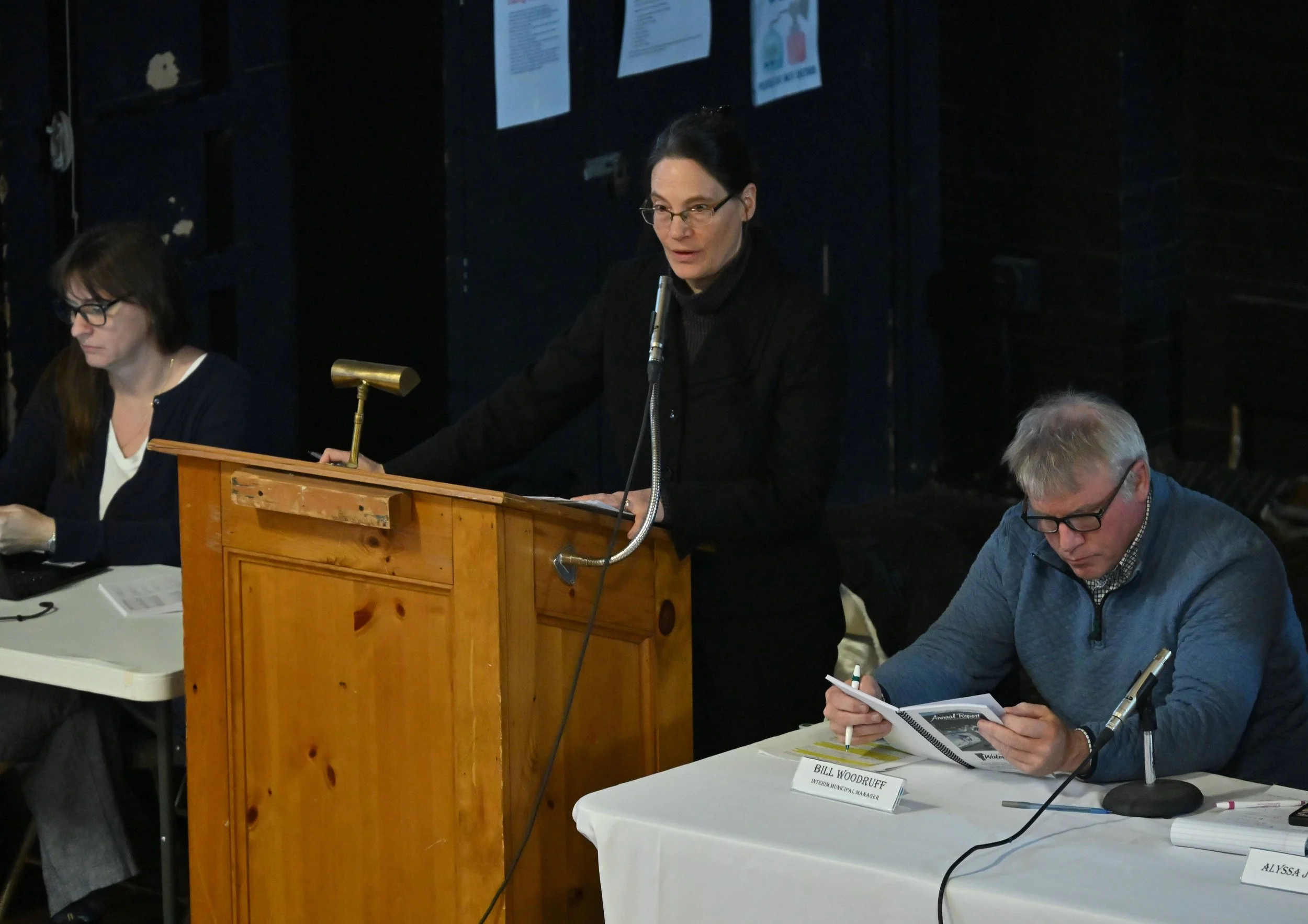
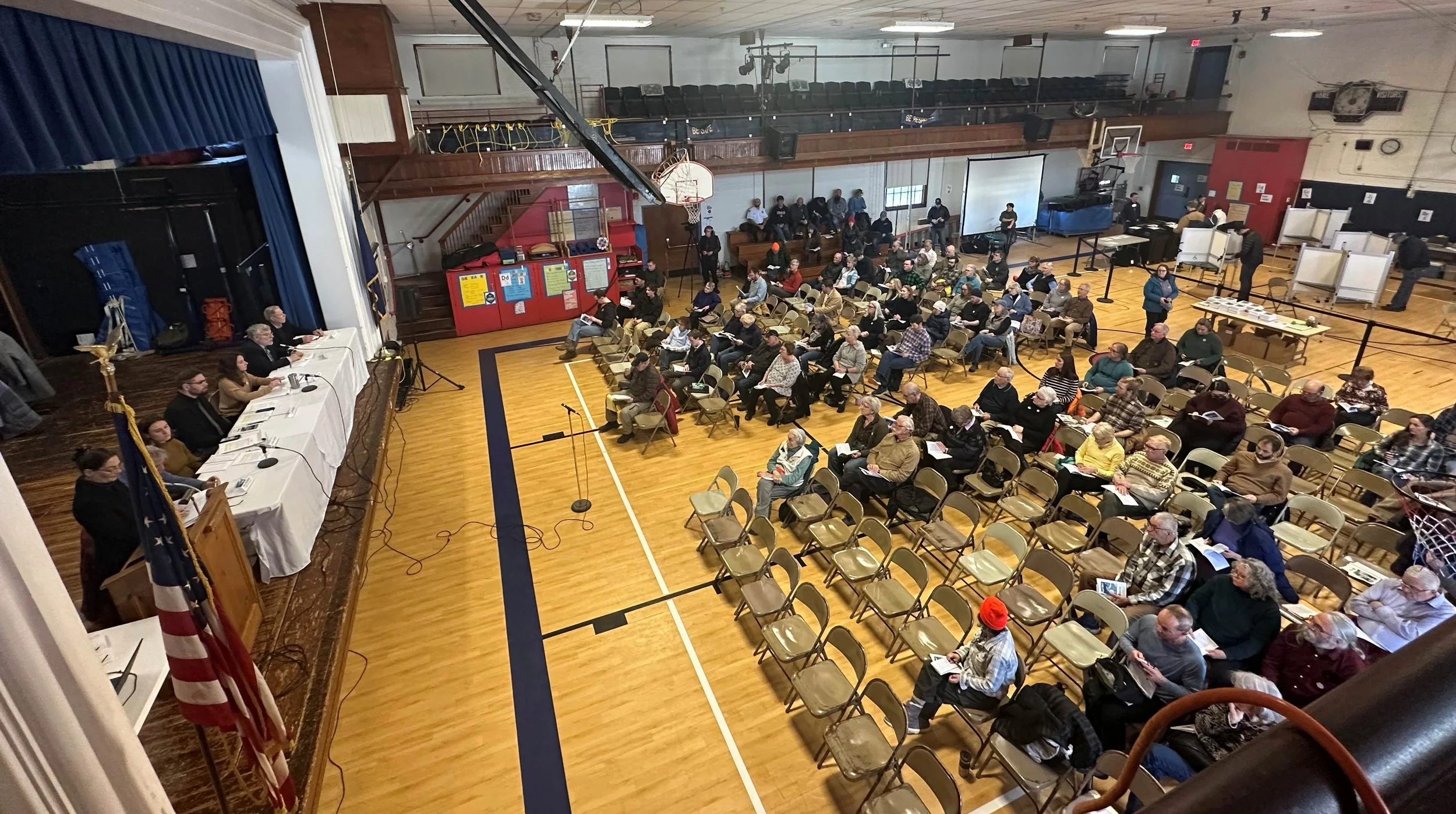
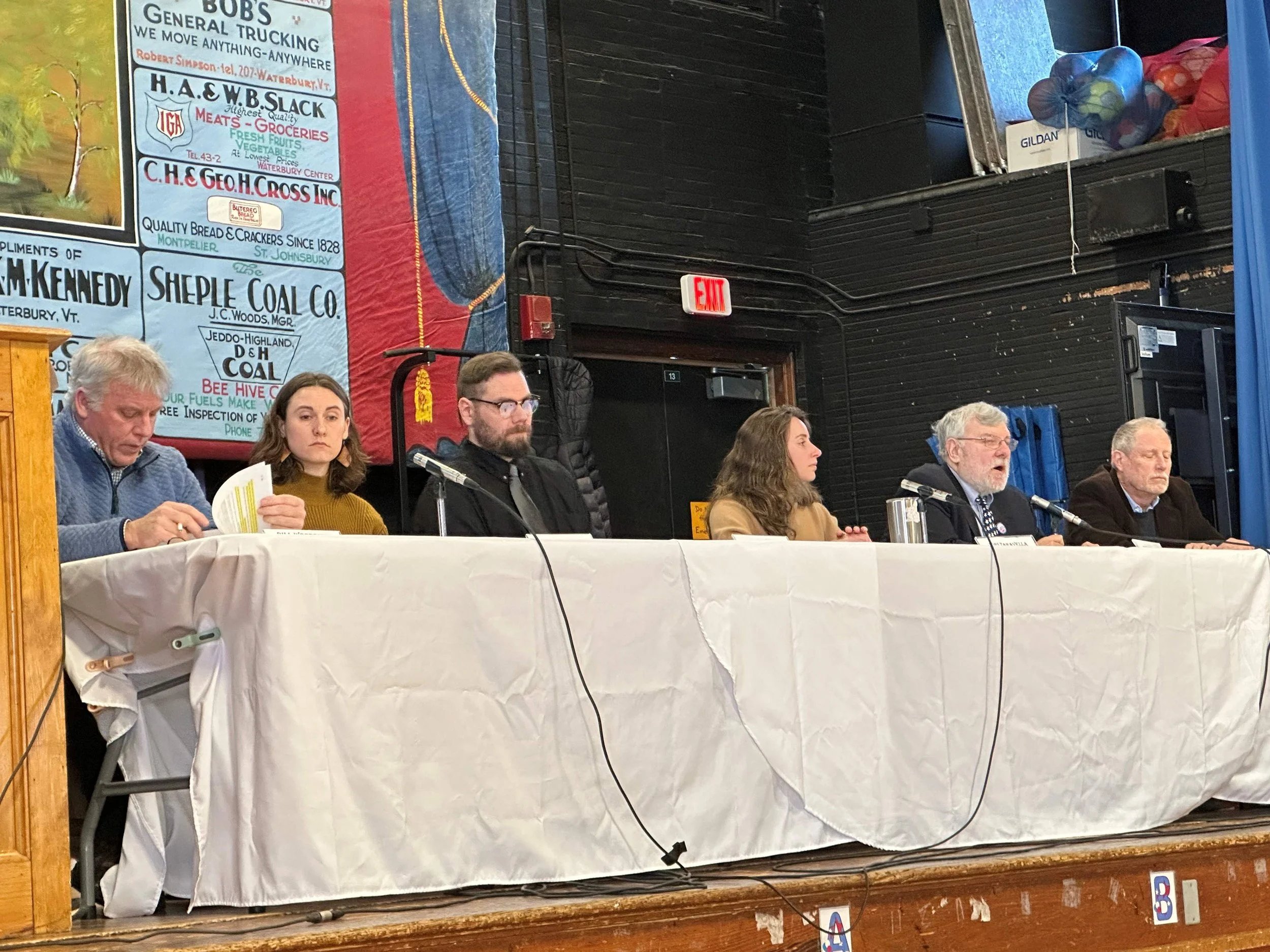
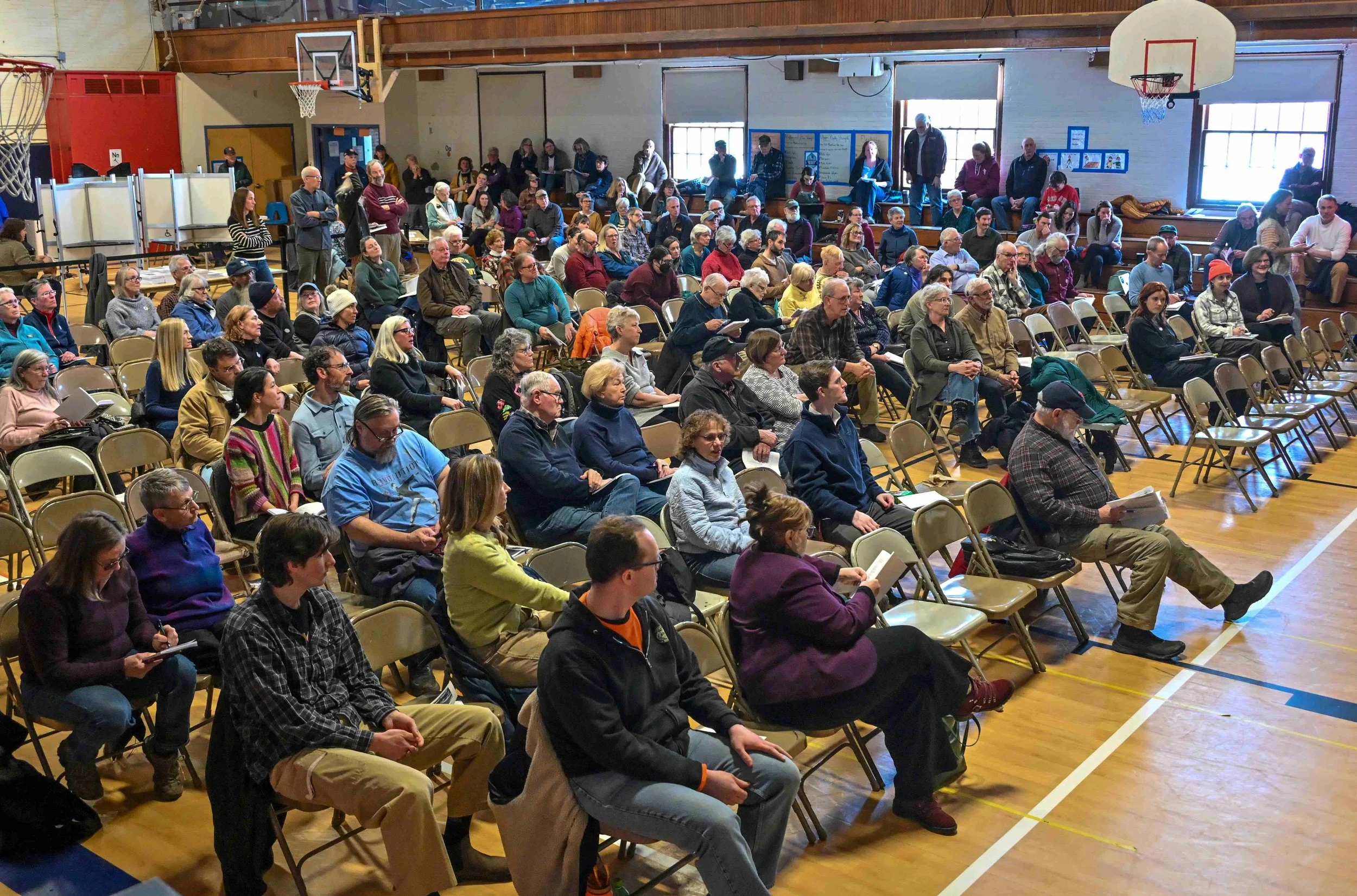
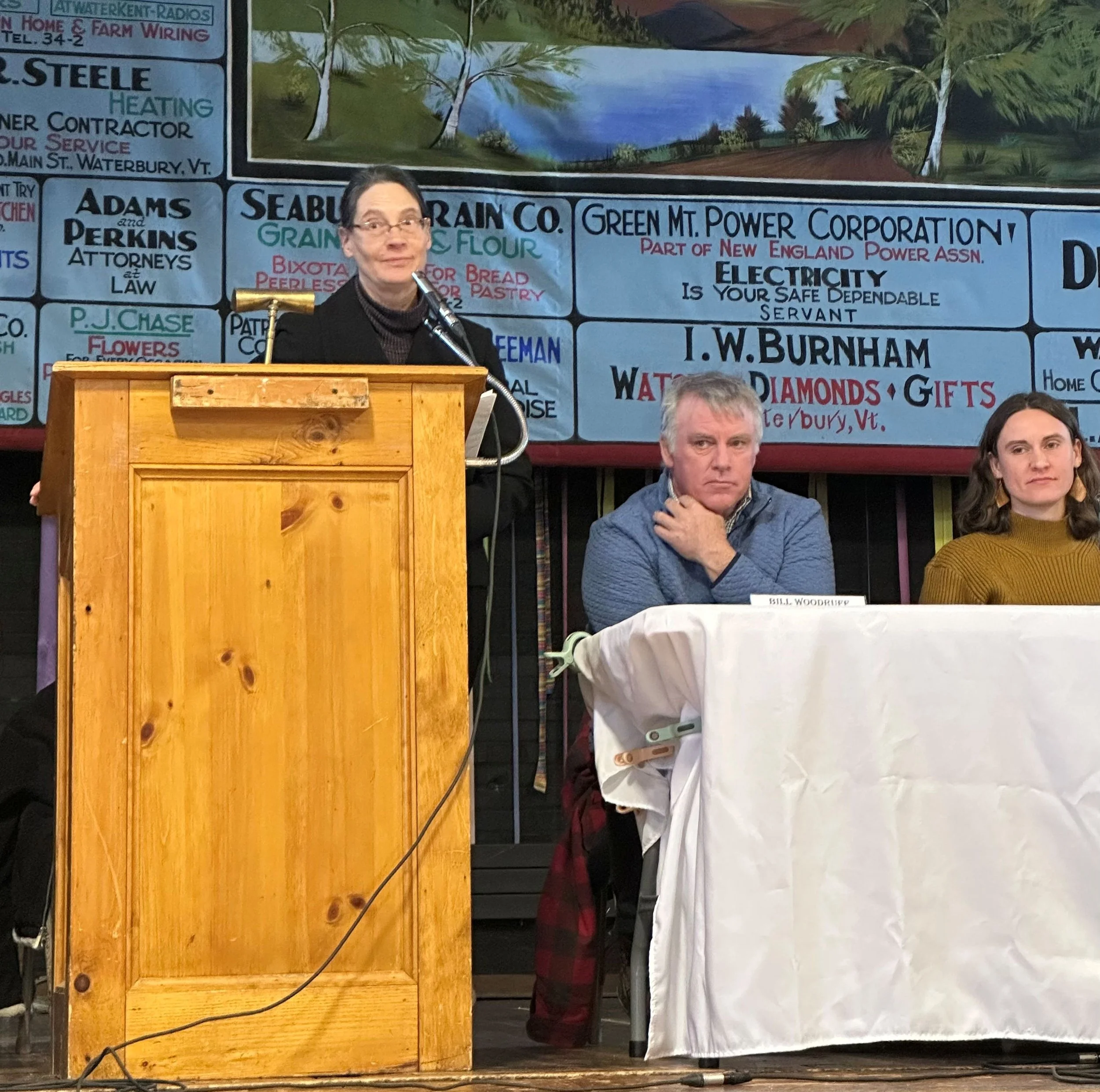
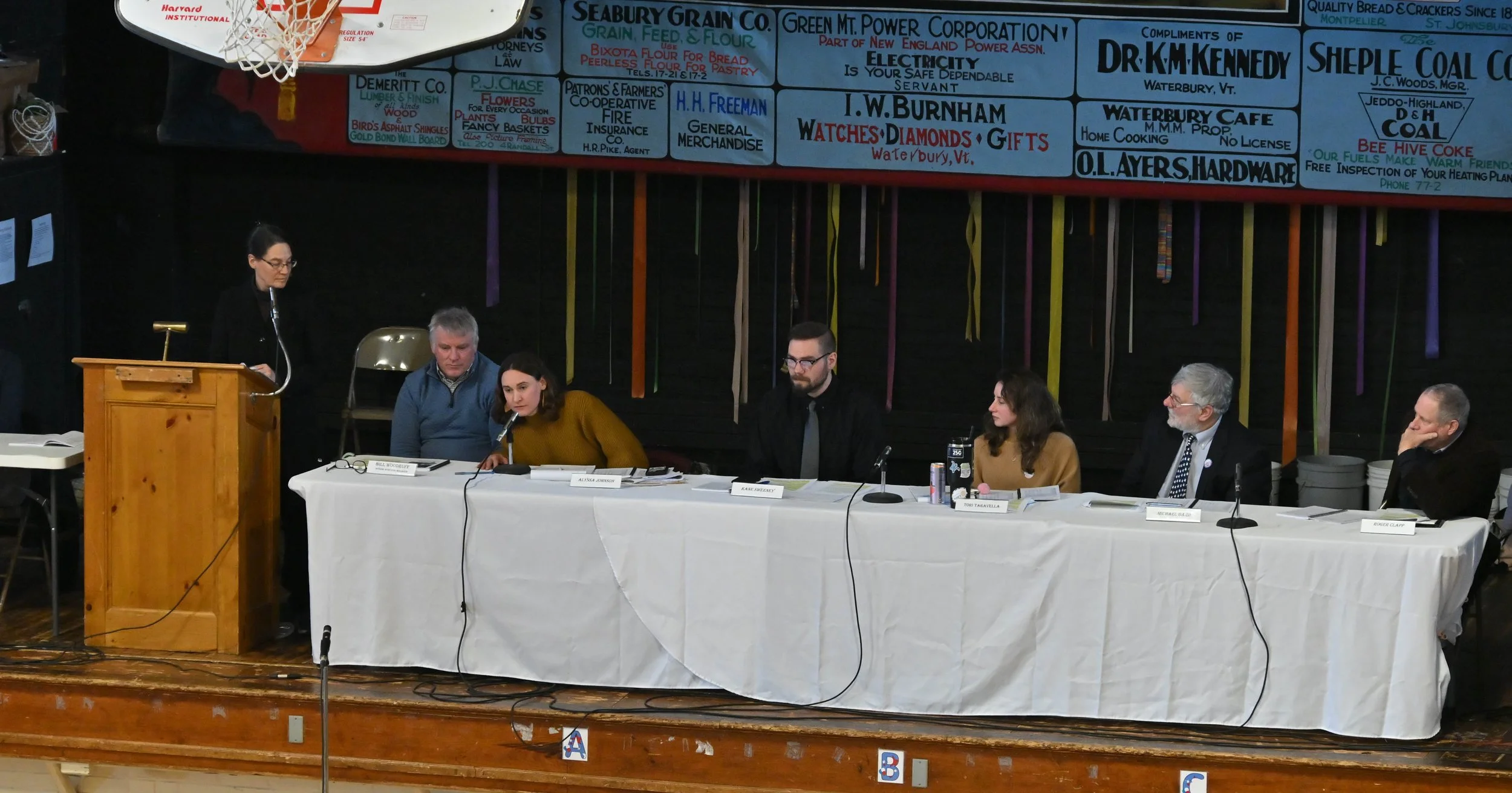
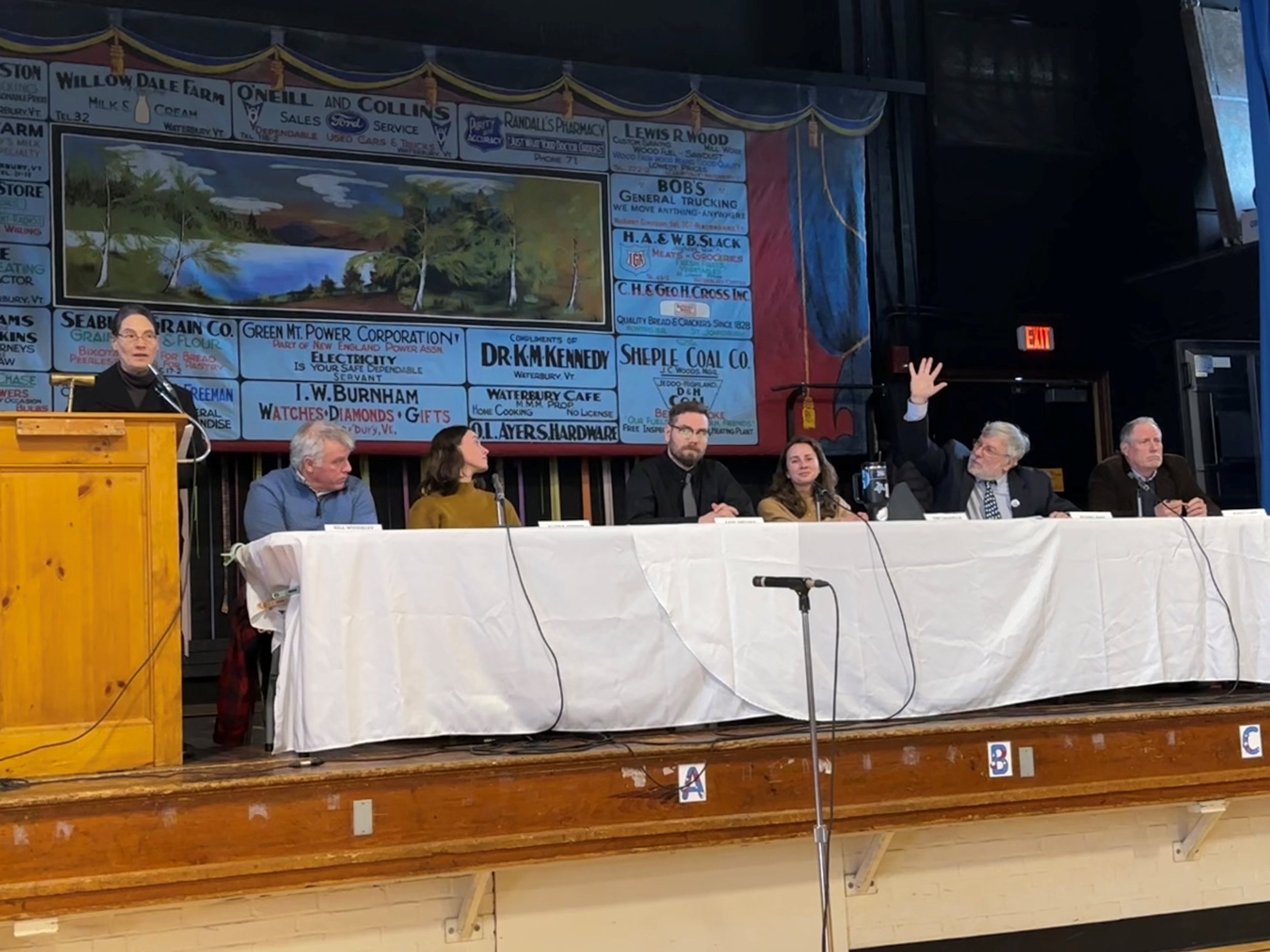
Waterbury Town Meeting at Brookside Primary School drew approximately 180 people on Tuesday. On stage (left to right) are Town Moderator Rebecca Ellis at the podium, Interim Town Manager Bill Woodruff, Select Board Chair Alyssa Johnson, Vice Chair Kane Sweeney, members Tori Taravella, Mike Bard and Roger Clapp. Photo by Lisa Scagliotti
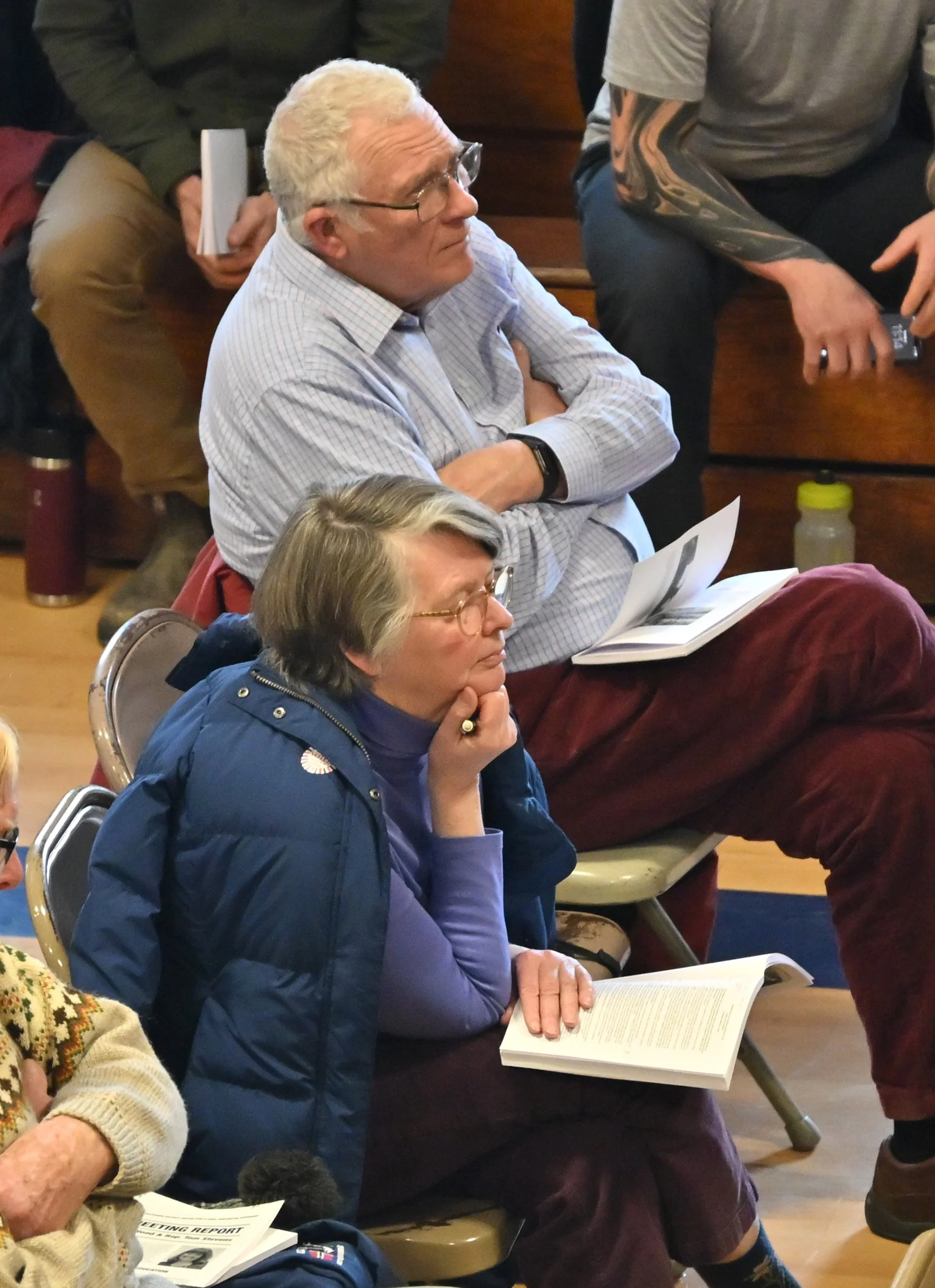
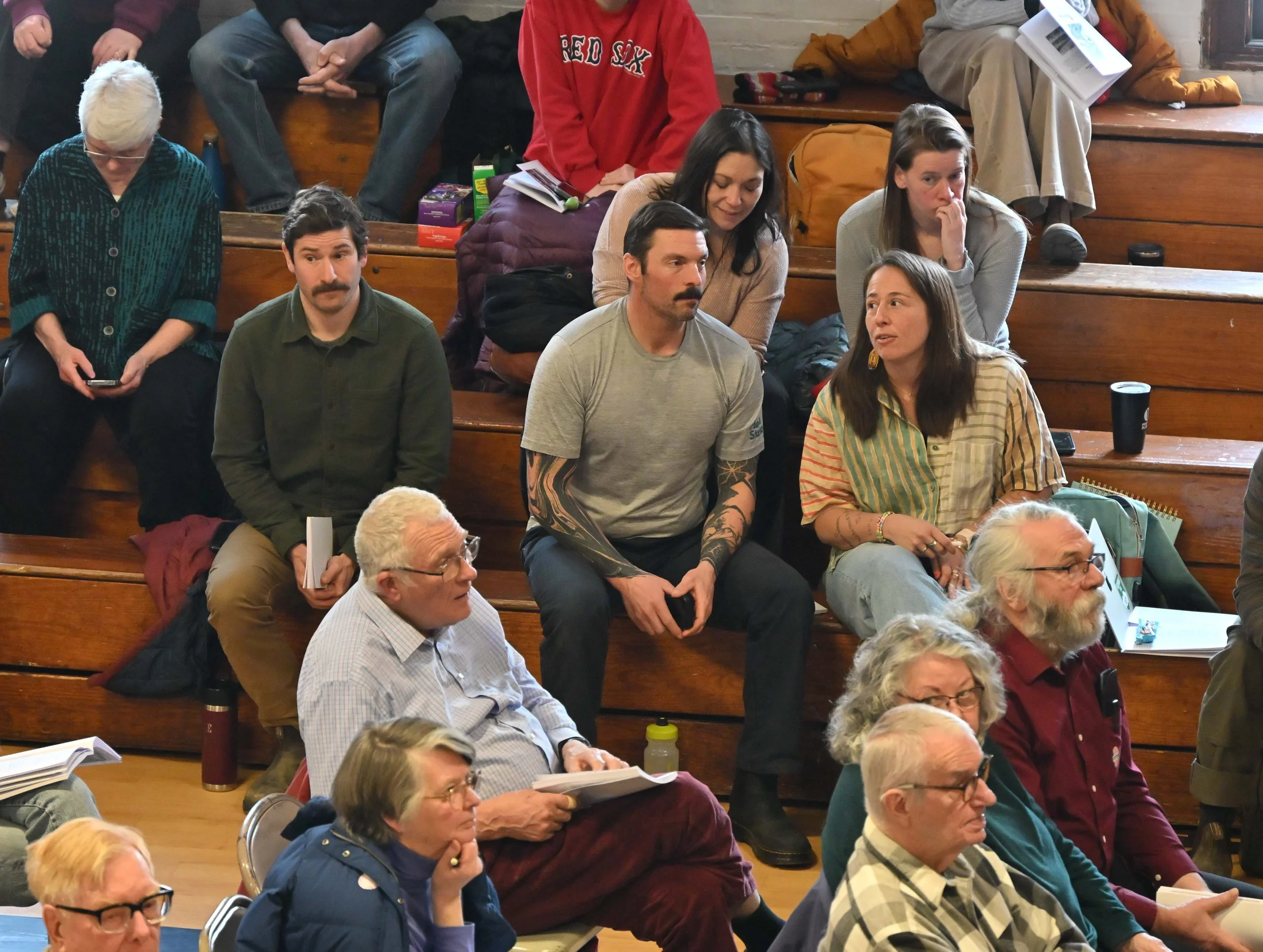
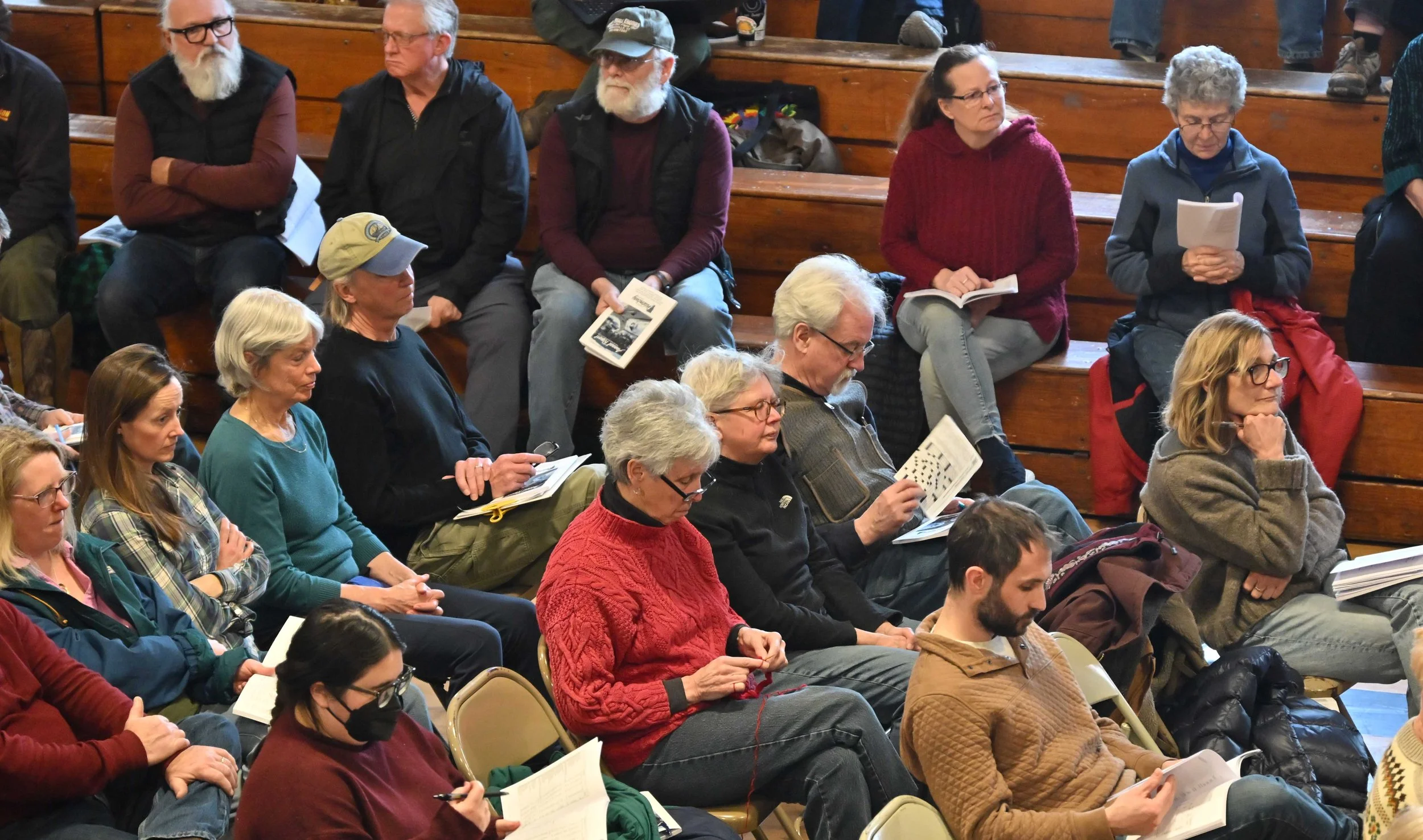
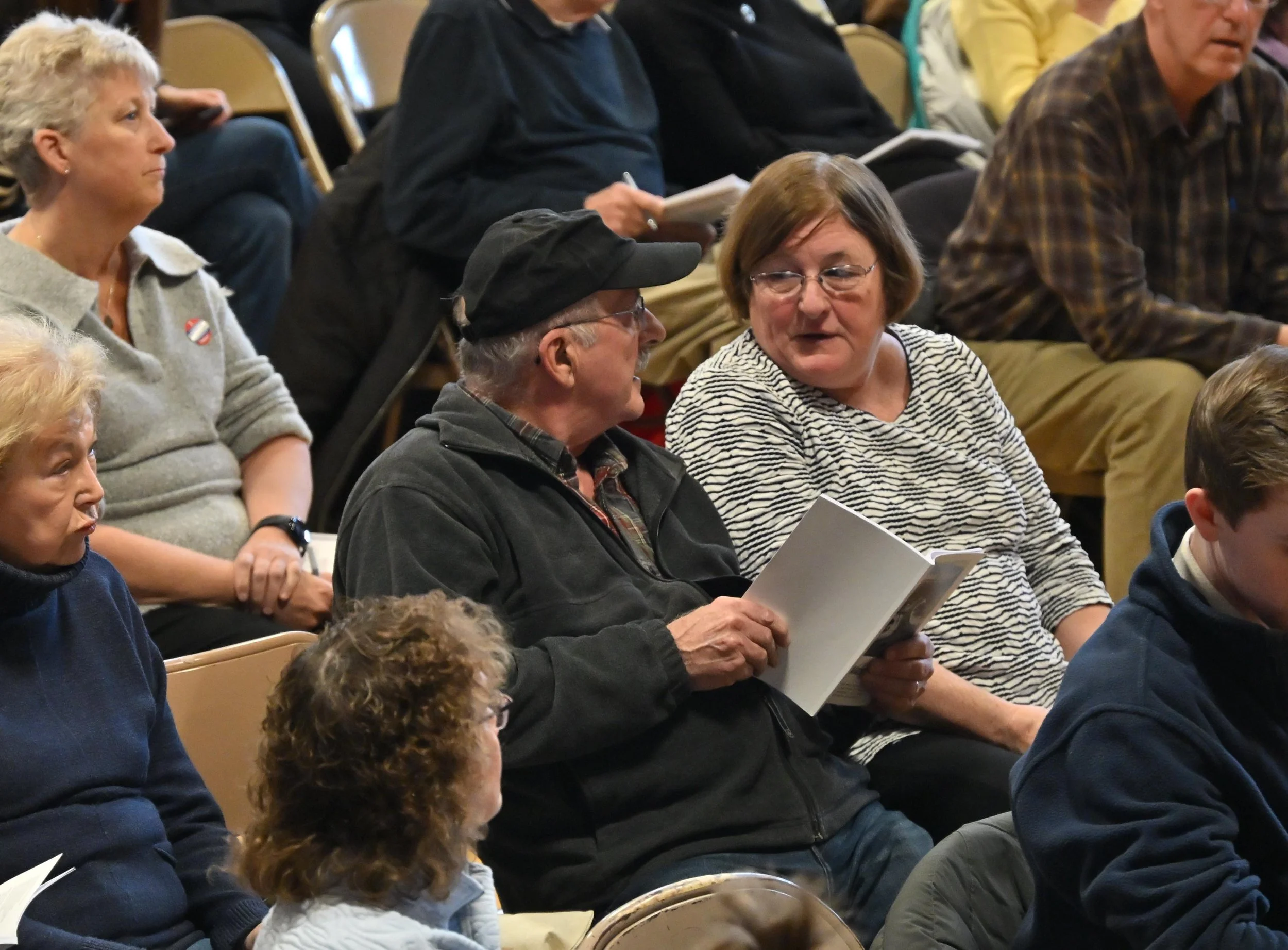
Approximately 180 voters gathered for the annual in-person town meeting at Brookside Primary School on Tuesday, where the top item of business was adopting a town budget in which they voted to give raises to elected town officials, purchase a firetruck, and make an adjustment to erase a property tax increase.
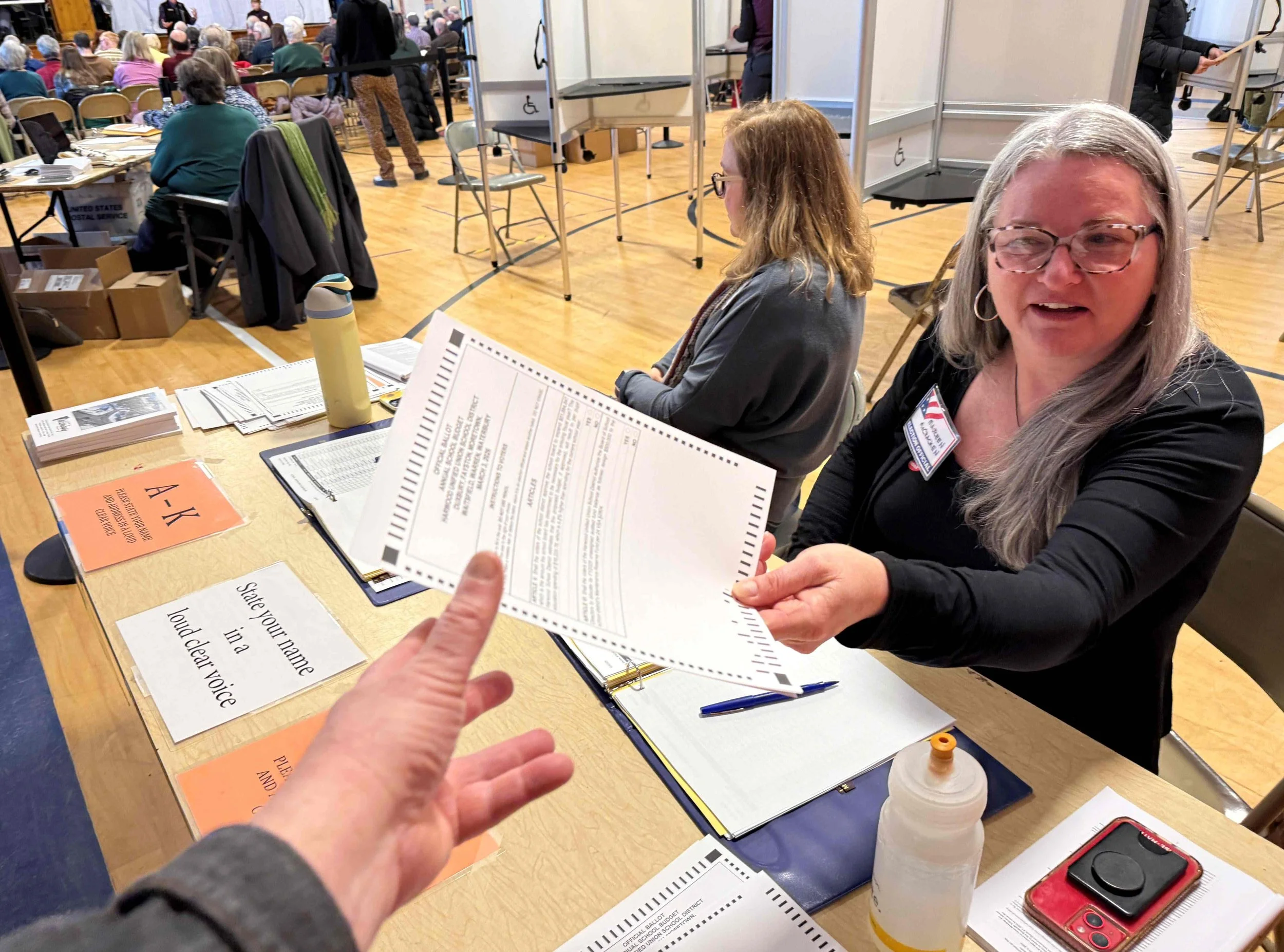
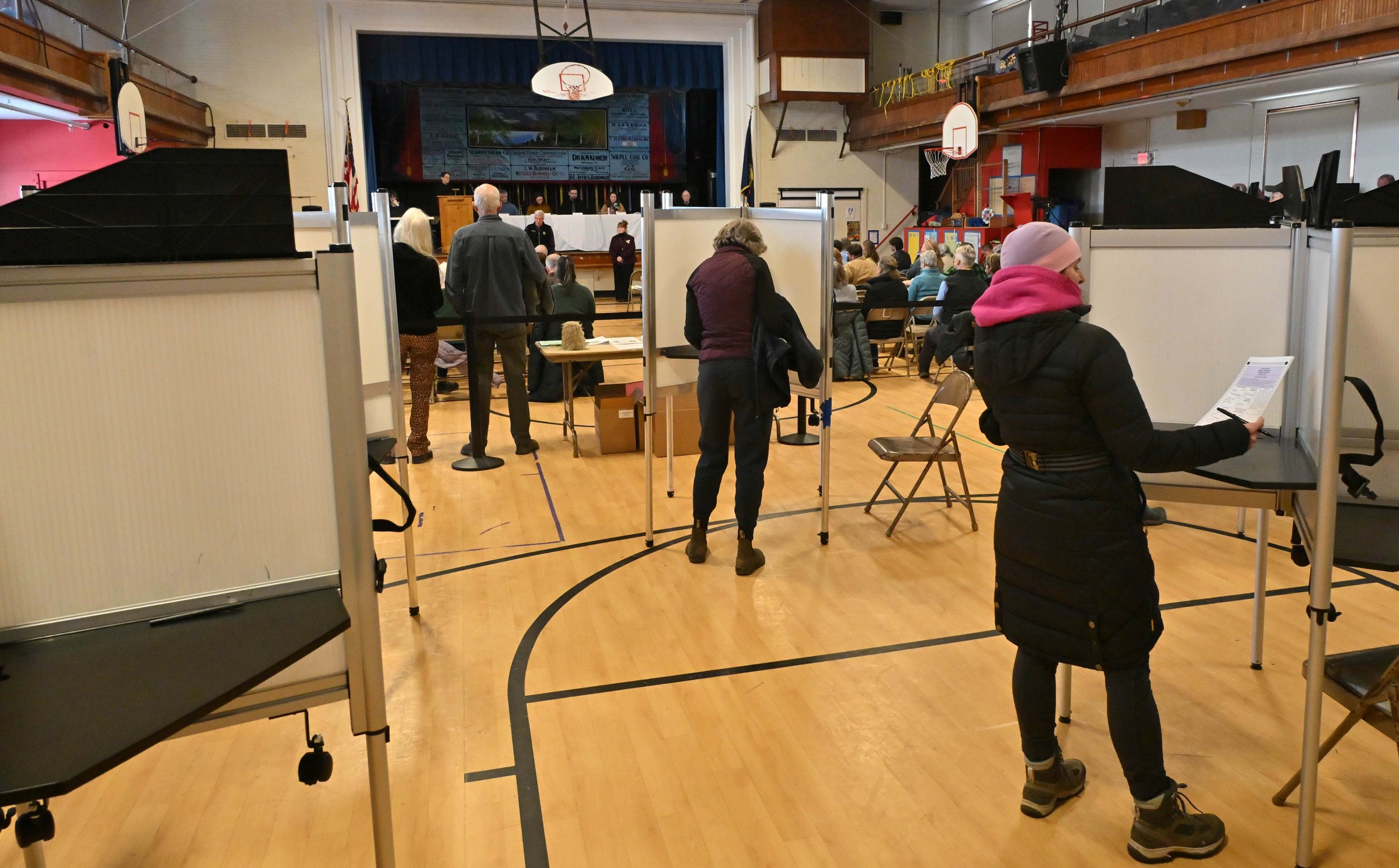
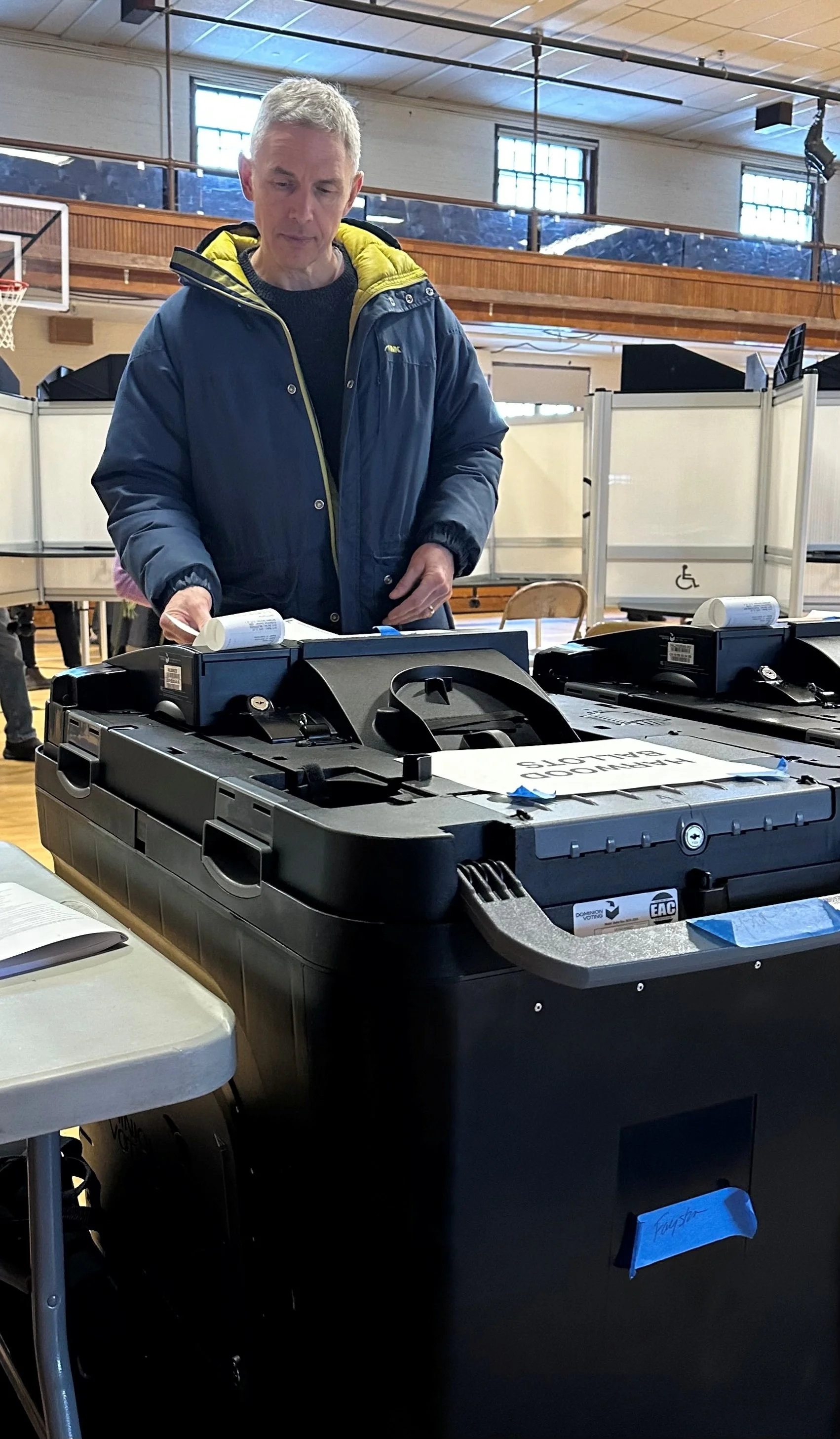
As the meeting unfolded over four and a half hours, many additional voters passed through the gym to cast their votes in Australian ballot elections for the town, Harwood Unified Union School District, and Central Vermont Career Center School District. The gathering included the presentation of an annual community service award and a visit from the town’s two members of the Vermont House of Representatives.
The meeting’s first major discussion was around pay increases for select board members. Article 6 addressed the compensation for select board members for their service in 2025. P. Howard “Skip” Flanders proposed increasing compensation to $2,500 for the board chair and vice chair, and $2,250 for additional board members, and $750 for each of the three members of the Board of Listers. The previous rates were $1,450 and $1,200, respectively for the select board officers and members, $500 for listers. He explained that the last increase for the officials was in 2013, saying that the increases reflected inflation and the ratio of the officers’ pay to the town’s annual budget. Flanders proposed the raise to show support for the board during what was a difficult year for the town.
“We owe the select board a vote of appreciation,” Flanders said.
Interim treasurer Bill Shepeluk acknowledged that “this was a tumultuous year for our town” and that the select board “did things outside what would have happened normally.” Shepeluk said that the town lost almost one-third of its staff last year, and said the select board had to step up to address many transitions. Turnover on the town staff in the past several months has included resignations including the town manager, town clerk, library director, recreation department staffers and the zoning administrator.
In addition, four of the select board members seated at the meeting's head table are ending their service. Chair Alyssa Johnson and members Mike Bard and Tori Taravella were not running for re-election as their terms ended. Vice Chair Kane Sweeney was stepping down as of Tuesday due to taking a new job with the labor union representing town employees.
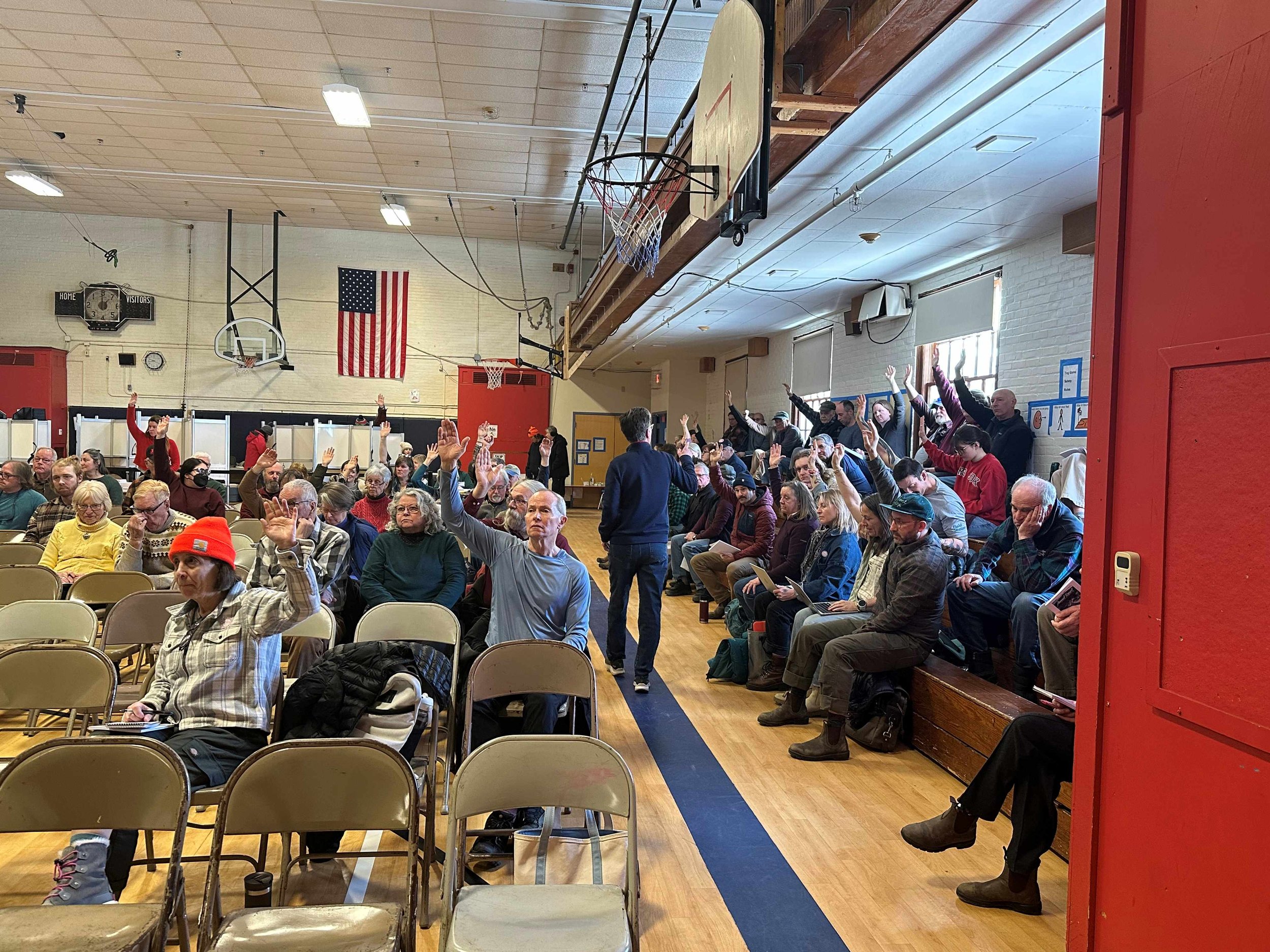
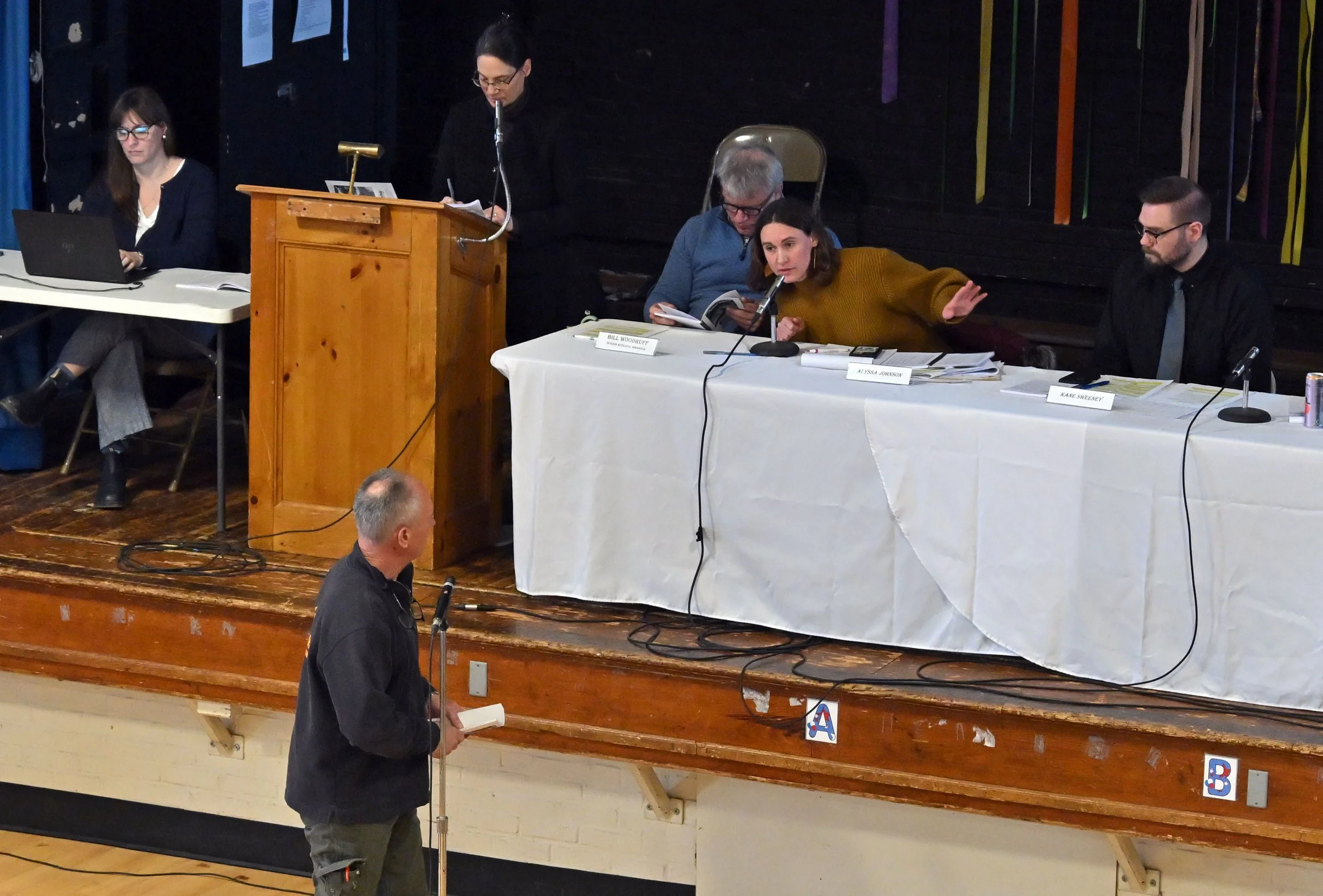
Evan Karl Hoffman, a candidate for one of the two one-year positions on the select board, proposed an even higher increase for the select board chair to $5,000 to reflect the additional work inherent in this leadership role. Hoffman’s proposal led to discussion over the nature of the role, the value of community service, and the time commitment board members dedicate to their positions. While the vote was close enough to require a hand count, the increase passed 67 to 52.
Flanders concluded by congratulating outgoing select board Chair Alyssa Johnson for her service, calling her a “generational public servant.” Johnson teared up as the audience rose to their feet, giving her a standing ovation. The town’s 2025 Annual Report was also dedicated to Johnson.
Carla Lawrence, a justice of the peace and former town clerk, counts hands during a vote on whether to increase stipends for select board members and listers. Photo by Lisa Scagliotti
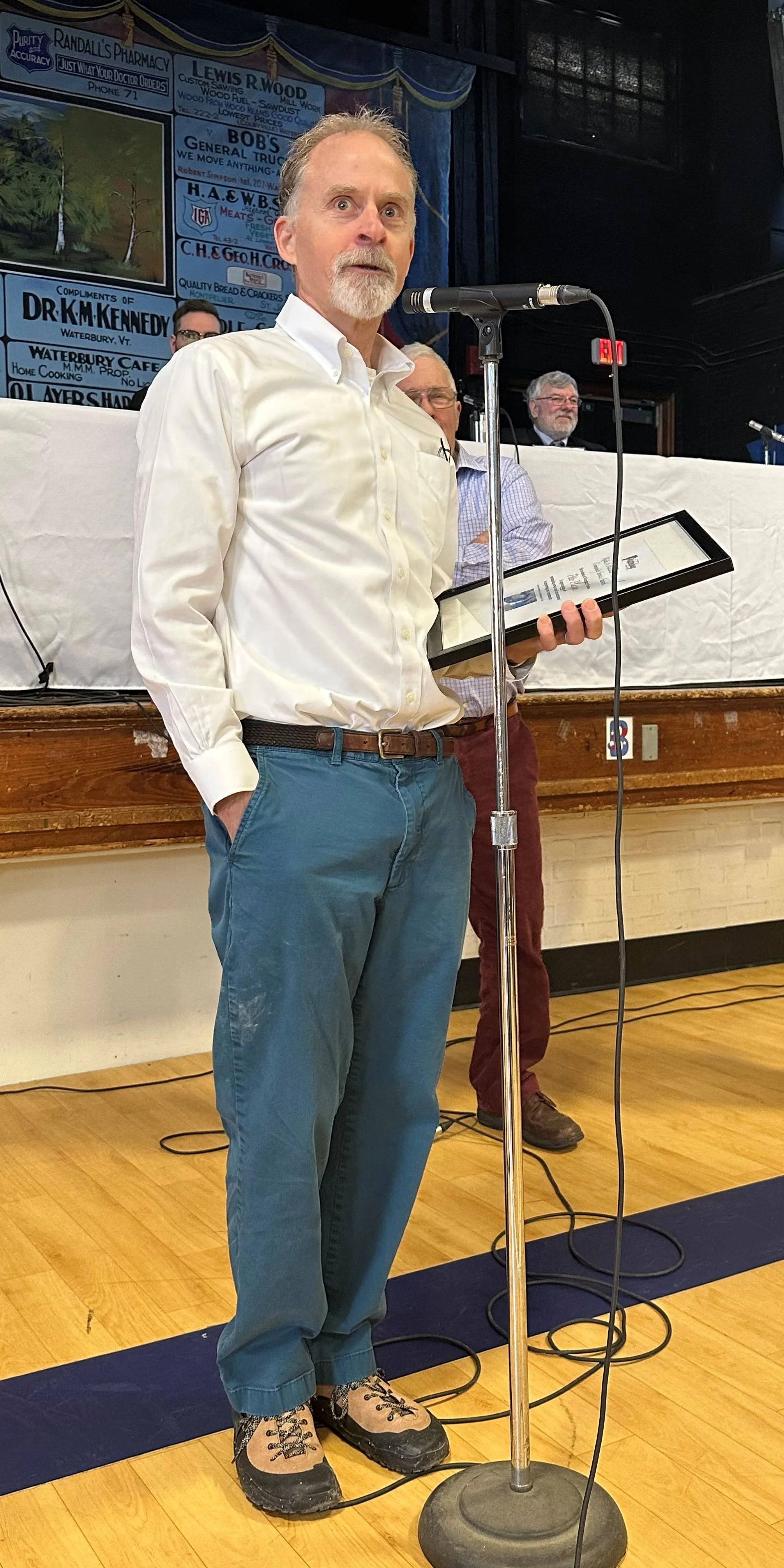
Wallace Award goes to Rev. Peter Plagge
Rev. Peter Plagge is this year’s recipient of the Keith Wallace Community Service Award. Photo by Gordon Miller
Flanders, as chair of the Edward Farrar Utility District Board of Commissioners, and Roger Clapp from the Select Board presented the annual Keith A. Wallace Community Service Award during the meeting. The award honors the town’s former 34-year town moderator, school board member, planning commissioner, state legislator and dairy farmer. Wallace died in 1995 and was given an award for his “lifetime of community service” when he stepped down as moderator in 1994.
This year’s award went to Rev. Peter Plagge, pastor of the Waterbury Congregational Church and director of the Waterbury Good Neighbor Fund. Flanders described Plagge’s “calling to bring assistance to those in need,” his commitment to make the church a sanctuary for immigrants, and his leadership in taking care of community members.
Flanders recalled a benediction that Plagge penned in 2023 to honor Edward Farrar, namesake of the municipality’s utility district. Farrar lost his life in a 1904 sewer line excavation cave-in. His sacrifice was commemorated with a plaque added to his gravestone in Hope Cemetery. Flanders said he made a few modifications to Plagge’s original remarks to instead have them reflect back on Plagge’s service today.
In graciously accepting the award, Plagge remarked: “We are all tasked to do our best and I’m privileged to be able to do that this community and will continue to do that as well as I can for the years that I have. What I do is in large part simply being a conduit of your good graces.”
In addition to a framed certificate, the award typically comes with a plaque. Flanders offered Plagge the option to donate the $150 cost of a plaque to charity. Plagge elected to donate the sum to the Good Neighbor Fund.
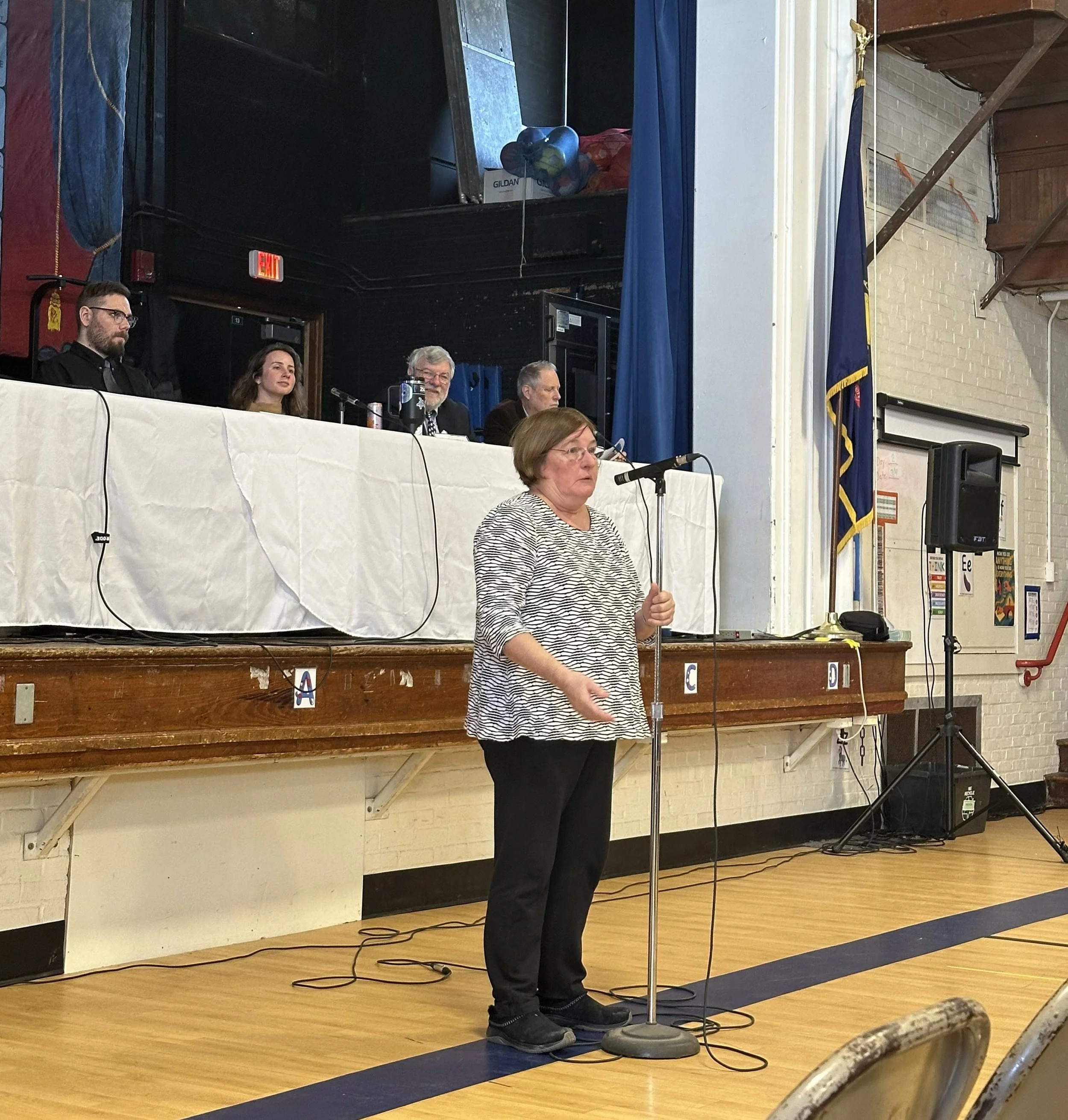
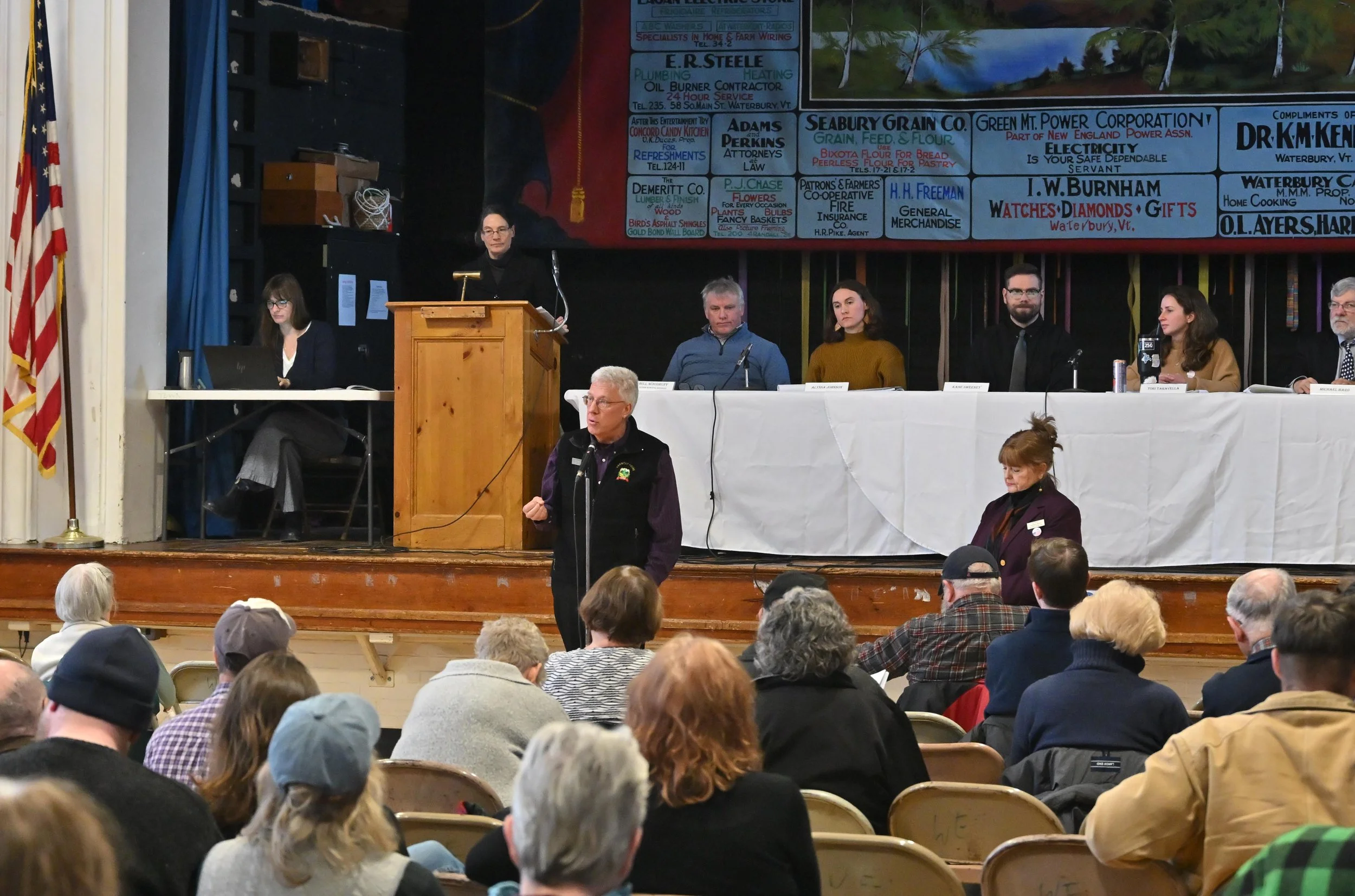
Interim Town Treasurer Bill Shepeluk (left) listens as resident Tom Gloor asks a question during town meeting. Photo by Lisa Scagliotti
Voters erase tax increase
Not surprisingly, some of the liveliest discussion happened around the proposed town budget.
Voters were asked to approve a budget of $6,567,486, an increase of 3.37% over the budget approved in 2025. Of that, $4,585,774 was slated to come from property taxes, and nearly $2 million from non-property tax revenue such as grants, fees and the local option sales tax. This would have resulted in an estimated tax increase of 2.7%.
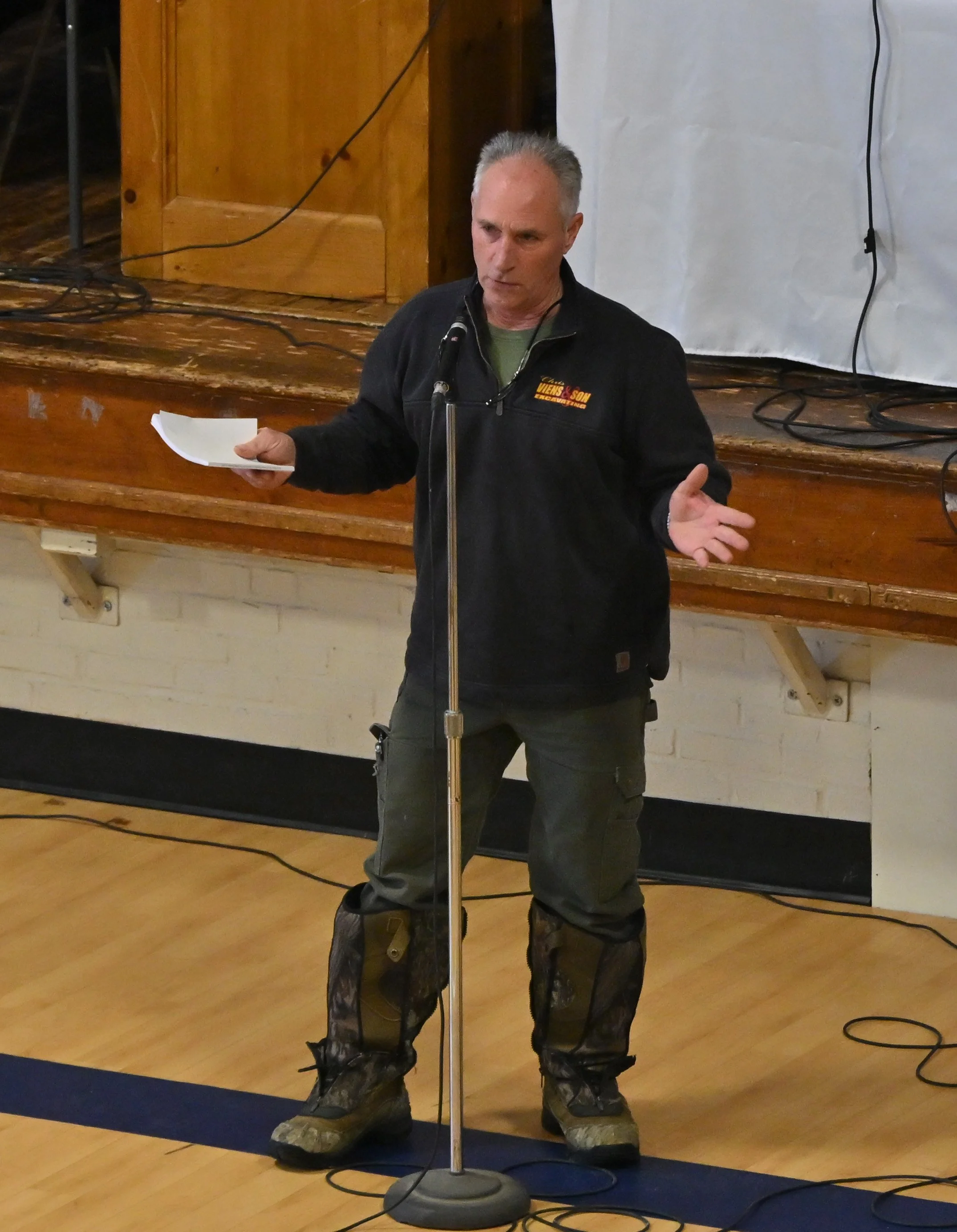
Many residents raised questions and concerns. Chris Viens, a candidate for the select board, expressed worries about property tax increases, hearing from neighbors who are considering leaving the state because of affordability issues. “Somehow we’ve got to stop the bleeding here,” he said. Public safety was another area of concern for residents, with many seeking clarity on the scope of the contract for services with the state police.
After much discussion, former select board member Karen Miller proposed amending the budget article to reduce the amount to be raised from property taxes by $120,000 by allocating that amount from the town’s fund balance of surplus revenue from 2025. The move aimed to essentially erase any property tax increase for 2026.
Shepeluk vouched for the move, saying that the fund balance stands at approximately $500,000. The budget already called for using just over $85,000 from the fund. The additional $120,000 would mean using just under $206,000. The amendment passed, along with the overall proposed budget for 2026.
Both Johnson and Shepeluk after the meeting noted that the final calculations for the town tax rate will be made in July after the town’s property grand list is determined for the year. They agreed that the adjusted allocation using the fund balance would likely mean that the town portion of tax bills this year will be very close to the 2025 charges.


Reserve funds for housing and natural disasters
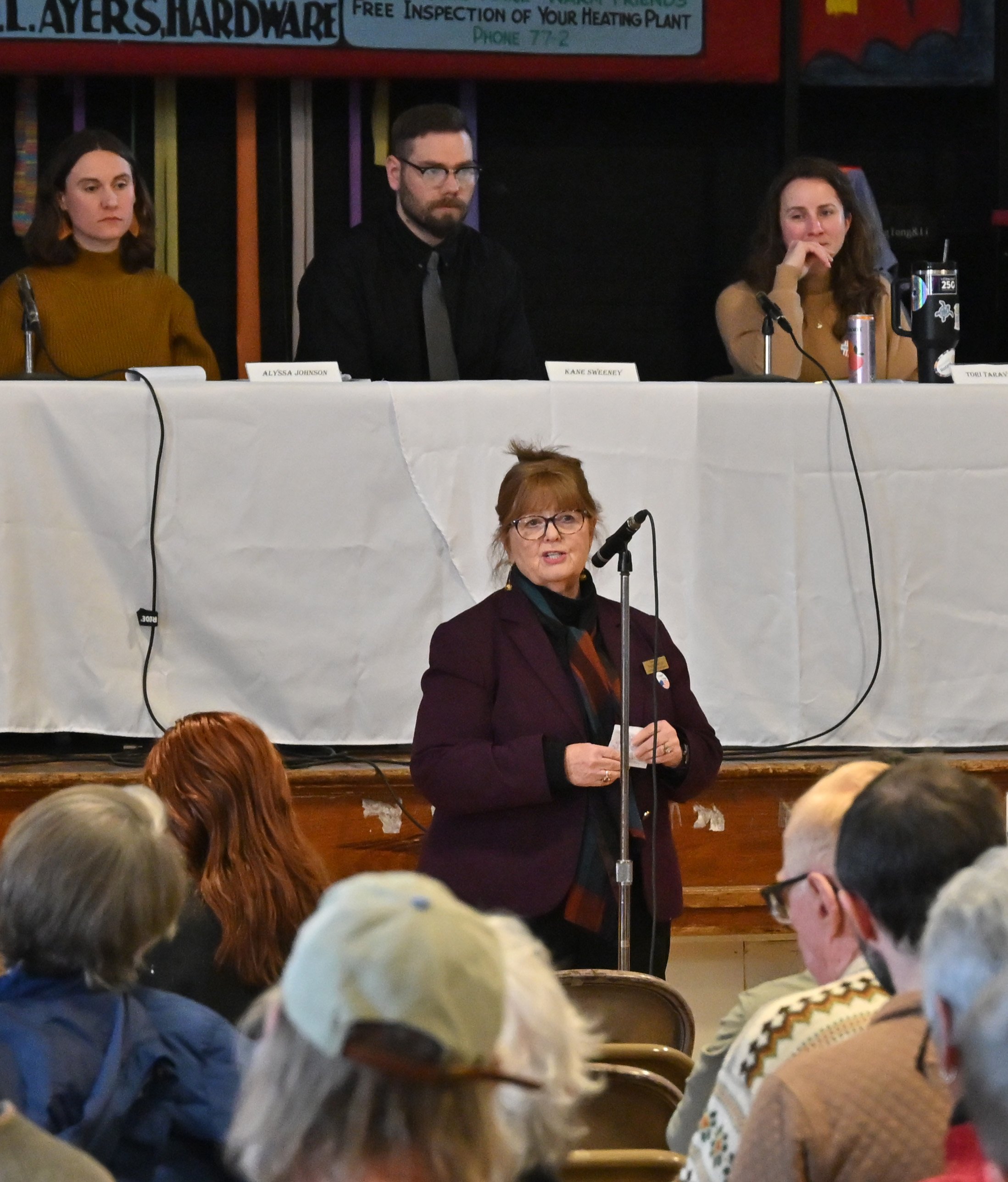
A series of articles in the meeting agenda proposed the creation of and allocations for special reserve funds out of local option tax revenues. The first allocates $14,000 to a Natural Disaster Reserve Fund that would support volunteer training, recovery, and cleanup efforts during emergencies. John Malter, who chairs the Natural Disaster Preparedness Committee, spoke of the need for resources as well as volunteers to ensure the town’s readiness for events such as the flooding the past few Julys.
The second is a Waterbury Housing Reserve Fund, with a $175,000 allocation to support housing initiatives and incentives. The housing fund was previously created with allocations in both 2024 and 2025. Tuesday’s measure established it as an official reserve account with a balance that can be carried from year to year. The fund currently is being used for a program to support the creation of new apartment units.
Both proposals passed on voice votes.
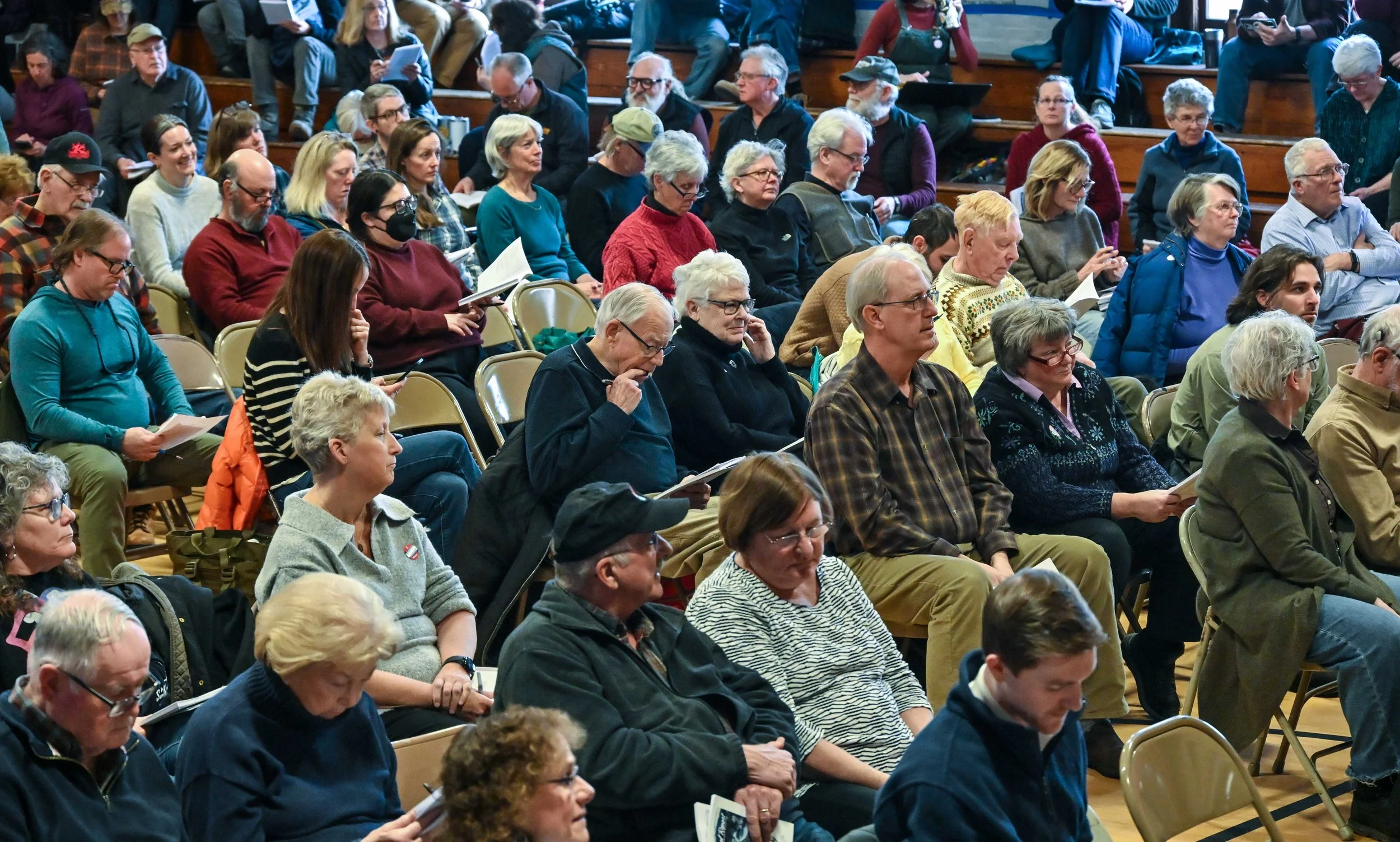
Photo by Gordon Miller
Local Option Tax revenue and a fire truck
Voters easily approved $414,407 for the purchase of a new fire truck. Fire chief Gary Dillon said the purchase was “due and necessary,” citing mechanical issues with one of the existing trucks that was purchased in 1998 prior to the merger of the town’s two fire departments into one. The truck had been scheduled for replacement in 2018. The proposal calls for $110,000 for the truck purchase to come from local option taxes.
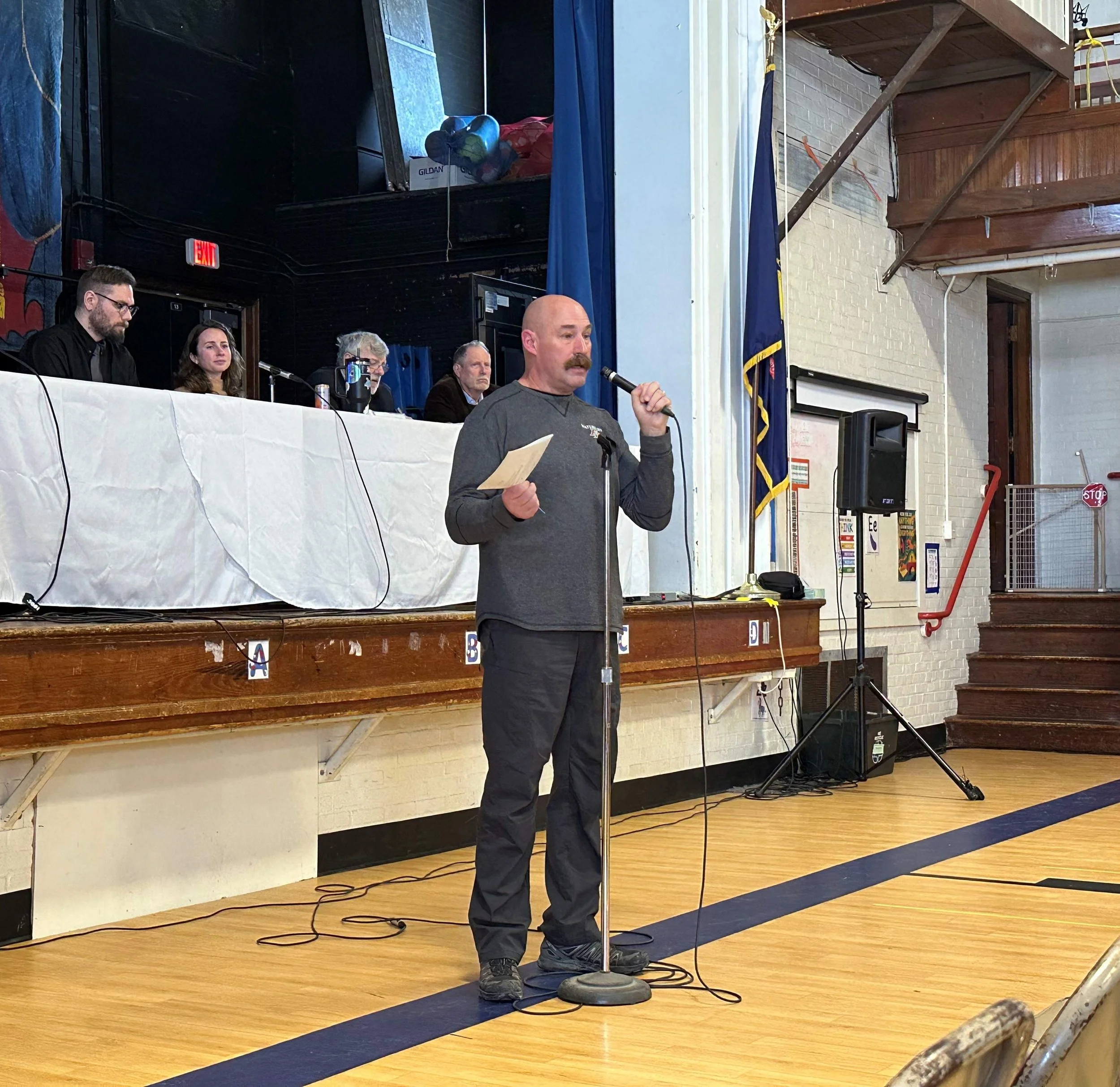
Waterbury Fire Chief Gary Dillon explains the firetruck purchase. Photo by Lisa Scagliotti
Listed separately on the town meeting warning was a list of appropriations of local option tax revenues for this year. This article generated discussion among attendees around housing plans, public safety, and town planning. Ultimately, voters approved allocating $935,000 for a range of uses, including $150,000 each for gravel road upkeep, sidewalk replacement, and a new filtration system for the town pool. Another $126,667 would cover a payment on a fire department truck that voters approved in 2025. Debt of $103,000 on a public works truck approved in 2025 would be paid for, along with $75,000 for a new F350 truck for the department.
The decision to spend $75,000 in option tax revenue on a nine-month pilot program with the Washington County Sheriff’s Department generated much interest. The contract would provide Waterbury with approximately 700 hours of police services from July through March 2027, mainly to provide additional motor vehicle safety patrols. This would supplement the contract the town has with the Vermont State Police for $477,000 in the general budget that covers two full-time troopers devoted to Waterbury.
Martha Staskus, chair of the town’s Planning Commission and also a candidate for the select board, spoke to the $15,000 allocation to the town plan update, adding a pitch for participation in the draft of the plan. The committee expects to have a draft by the end of summer and aims to complete the plan by the end of 2026. If you want to get involved, she said, “Now is the time if you haven’t already.”
Charitable contributions support 26 organizations
Voters also approved donations to 26 local and regional nonprofit organizations, totaling $50,632. A dozen of the allocations were $1,000 or less, covering a range of organizations from Capstone Community Action to the Waterbury Community Band. Larger allocations were also approved in a series of articles introduced by residents, many with connections to the proposed recipient organizations. Wayne Goulet, commander of the Waterbury American Legion post, for example, introduced the legion’s request for $1,500 which will be used for the purchase of an automated external defibrillator machine.
MK Monley, speaking on behalf of Waterbury Area MakerSphere Cooperative, underscored the importance of supporting organizations with town funds. “These organizations are a part of our community and what makes Waterbury a great place to live,” she said.
All of the contributions were approved as proposed on the meeting warning.
One amendment was offered by Cheryl Gloor to reduce the request from The Children’s Room from $7,500 to the amount of its 2025 allocation of $4,000. The item was the largest among the special articles. The nonprofit serves families with young children from birth to age 6 and is located at Brookside Primary School. The group notes in its request published in the town annual report that it has not requested an increase in funding from taxpayers in 10 years and increased demand and costs warranted the additional funding this year. Several current and former Children’s Room board members and parent supporters spoke up in favor of the original request, including Beth Ann Maier, who was a founding member of the organization when she said her 43-year-old son was a year old. The amendment failed and the $7,500 was approved.
One anomaly in the reporting on contributions to nonprofits was raised to note that funding for the Waterbury Area Senior Center is listed in part in the budget detail —$32,500 for 2026 —and in a special article requesting $6,500 for a total of $39,000. The nonprofit serves seniors in Waterbury and surrounding communities with its Meals on Wheels program, as well as congregate lunches and activities at its center on Stowe Street. Senior Center staff provided lunch during town meeting in the school cafeteria. A request was made for this allocation to just be listed in one spot in 2027.
One new request this year was for $5,000 from the Waterbury Common Market, prompted by a dramatic increase in demand, director Sara Whitehair reported. Reductions in federal food programs have had an impact, Whitehair said, noting that the market logged visits from 210 patrons in January, the most of any month in the four years she has been director. Two new initiatives this year at the market will be adding a wheelchair ramp to its building and setting up a delivery option to get food orders to patrons who may be unable to easily get to the market, she noted.
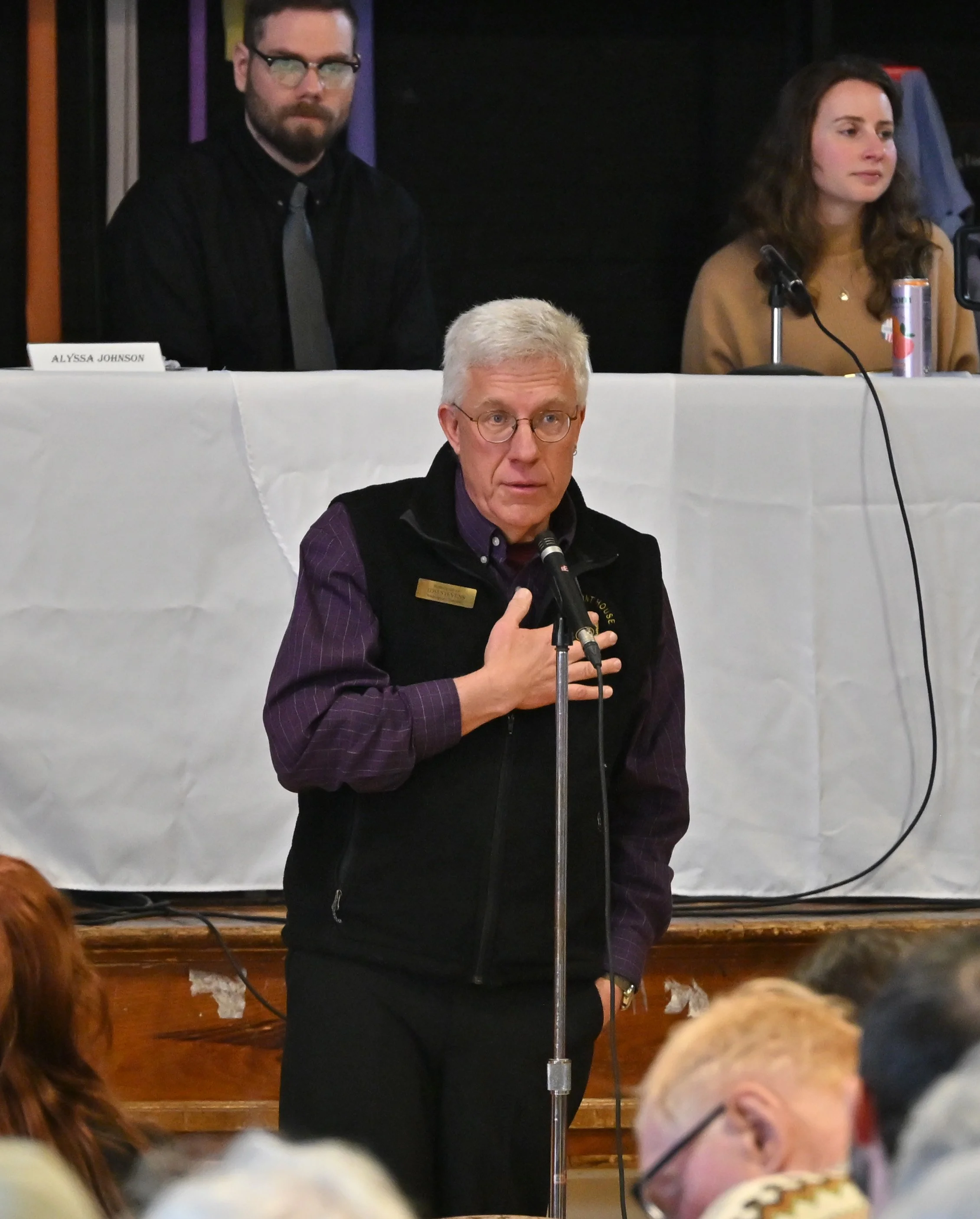
State Reps. Tom Stevens and Theresa Wood share updates from their work at the Statehouse. Photo by Gordon Miller
Legislators offer updates
State Reps. Theresa Wood and Tom Stevens, Waterbury Democrats representing the Washington-Chittenden legislative district covering Waterbury, Bolton, Huntington and Buels Gore, spoke briefly to highlight work they are involved with at the Statehouse in Montpelier. They also had printed copies of their annual Town Meeting legislative report available for meeting attendees.
Wood, who chairs the House Committee on Human Services, shared her work on H.545, a bill in the process of being passed that provides state authorization to issue vaccine recommendations. The law, according to Wood, provides for accurate and timely information about vaccines and makes them available at no cost to Vermonters.
Wood also shared the implications of federal government funding reductions on programs like 3SquaresVT, a program that more than 60,000 Vermonters rely on for purchasing food. “What happens in Washington is really impacting what we deal with in Vermont,” she said. Cuts to housing vouchers have affected 4,022 Vermonters, including 863 children, she pointed out.
On the brighter side, Wood shared that Vermont ranked second in the nation in access to pre-K education and high in kindergarten readiness – a positive sign that statewide investments in pre-K education are paying off.
Stevens described his work on the House Appropriations committee, determining priorities for $300 million in state spending to help Vermonters, and creating a budget that “reflects what we believe in but also the financial realities.” He acknowledged the challenges with funding education and the property tax burden that are a top focus in Montpelier right now. He reiterated his commitment to “working together across the aisle to come to the best decisions.”
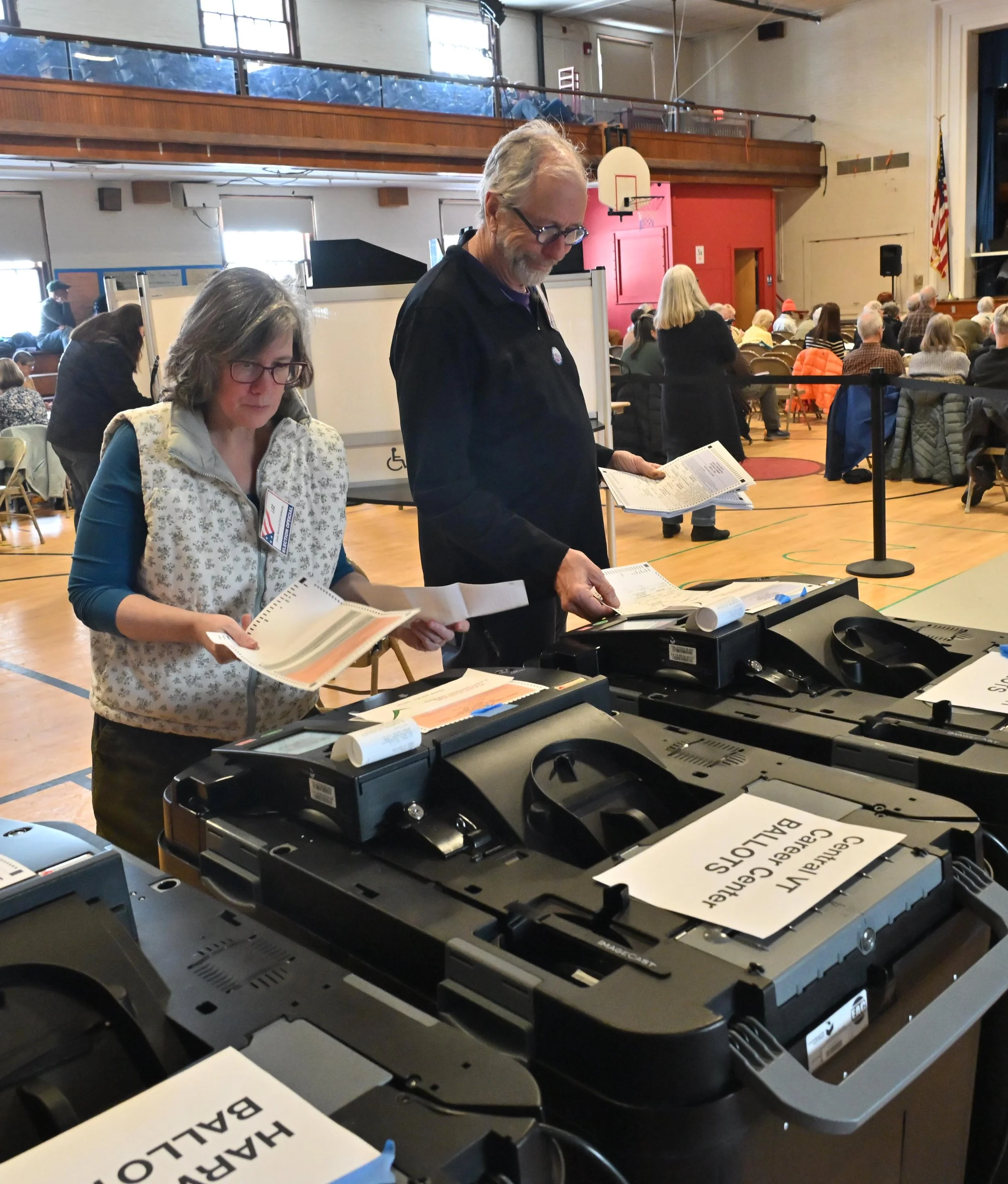
Town Clerk Beth Jones and Assistant Town Clerk Carol Dawes open absentee ballots at the polls during town meeting. Photo by Lisa Scagliotti
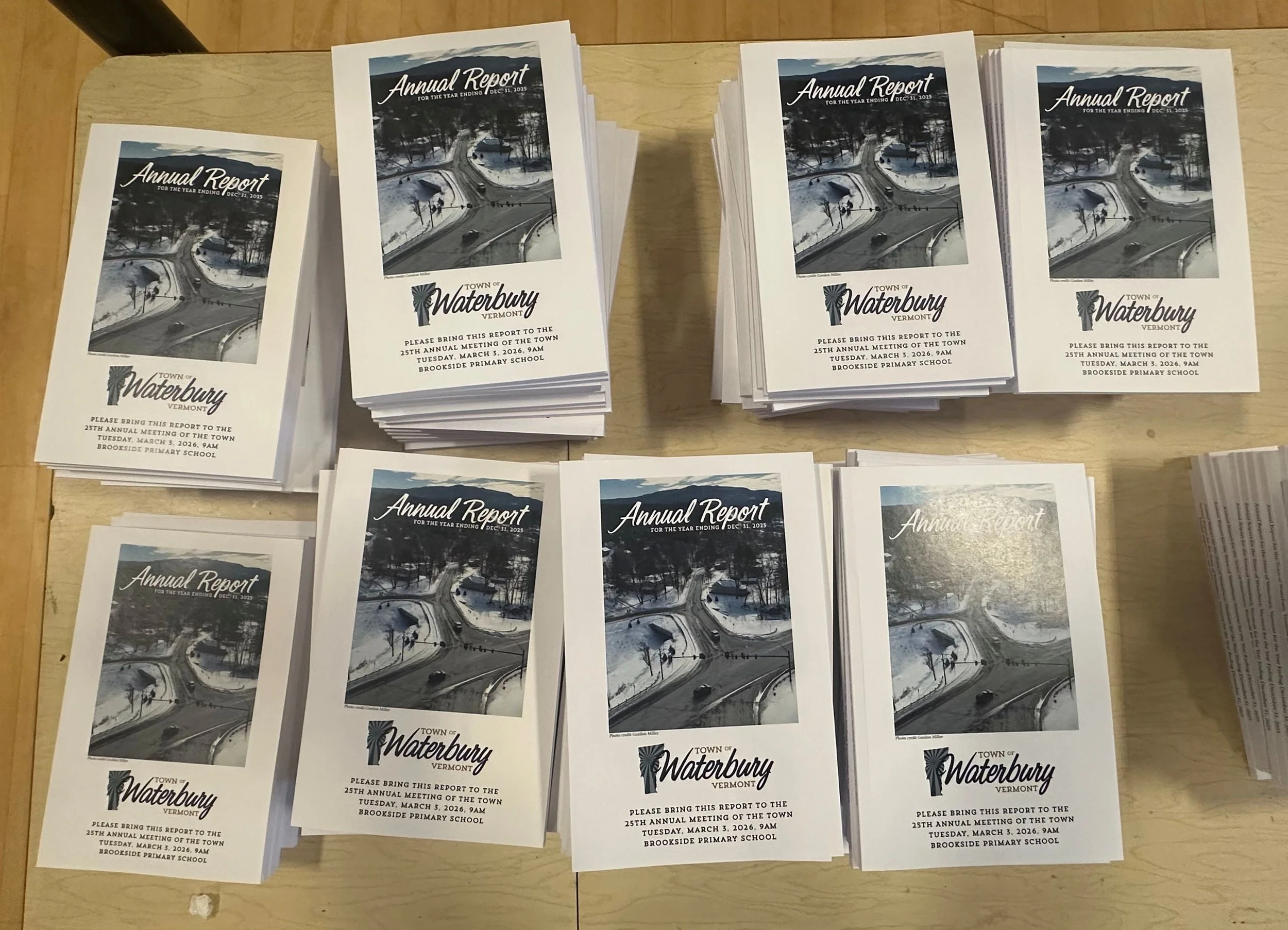
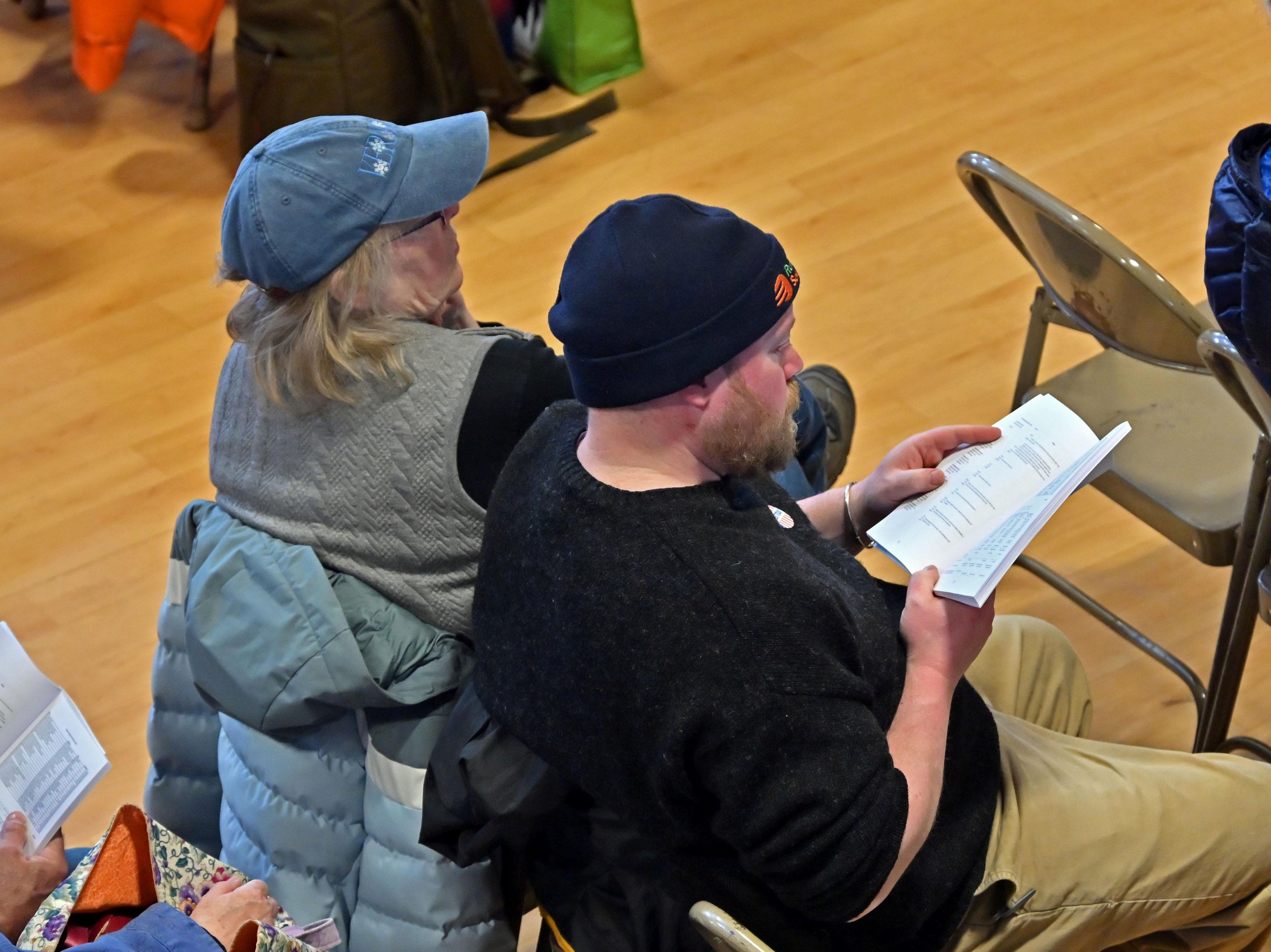
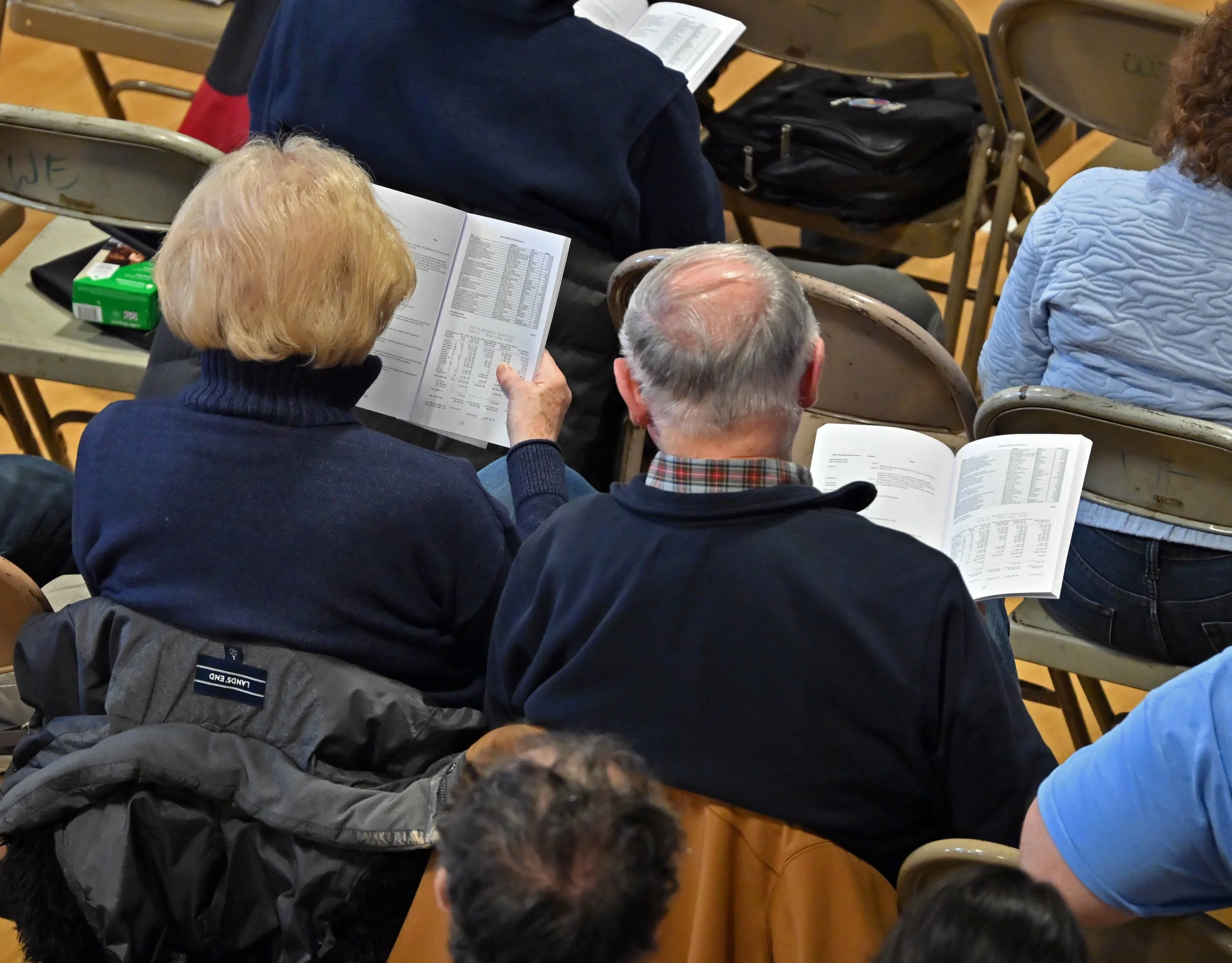
Printed copies of the town annual report are still available at the town office. Photo by Lisa Scagliotti
Appreciation for town employees
After the formal agenda was completed, moderator Rebecca Ellis opened up the meeting for general comments. With just a few dozen attendees still in their folding chairs, multiple residents expressed thanks to select board members, volunteers, and town employees.
Outgoing select board member Mike Bard offered his thanks in particular to town staff members saying, “They are the bedrock of what makes our town go.”
The meeting adjourned at 1:42 p.m.
ORCA Media recorded Waterbury Town Meeting on March 3. The video will be posted on the orcamedia.net website under Local Government in the Waterbury Municipal Meetings section.