
Enjoy Vermont’s autumn beauty responsibly: Safety tips for fall hiking
October 6, 2026 | By Adam Mattessich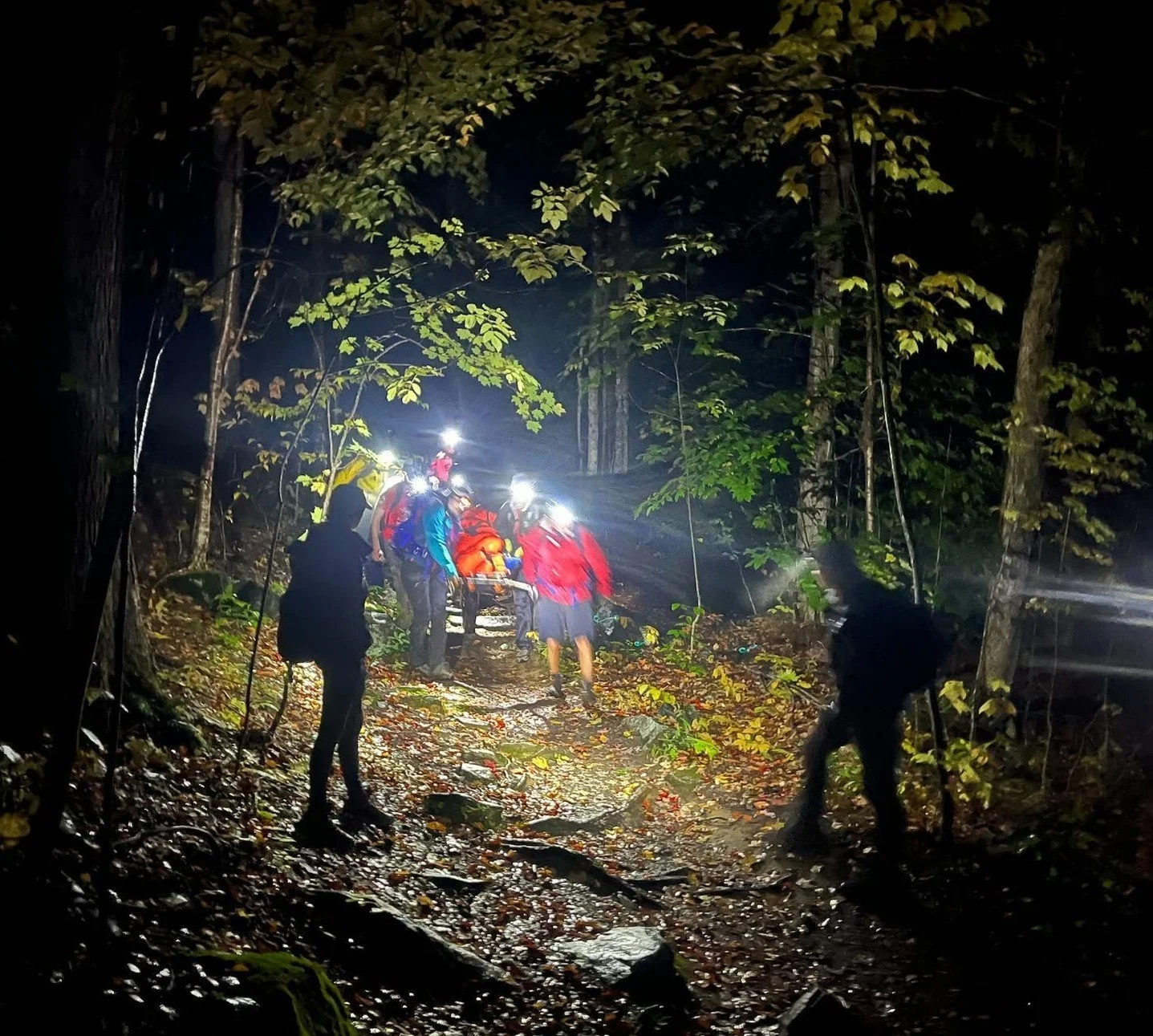
An afternoon fall leads to a nighttime rescue call on Hunger Mountain on Sept. 28. Photo courtesy of Waterbury Backcountry Rescue
Autumn in Northern Vermont is unmatched. The vibrant tapestry of red and gold across our hillsides, paired with crisp, cool air, makes this one of the most rewarding times of the year to explore the Green Mountains.
From Camel's Hump to Mt. Hunger, and many local woodland networks, the scenery draws residents and visitors alike to the trails.
However, as foliage season progresses, mountain conditions shift rapidly. What begins as an enjoyable afternoon walk can quickly turn hazardous if hikers are unprepared for late-fall conditions. Across the country, rescue teams see a notable spike in call-outs this time of year due to a few common, easily overlooked seasonal hazards:
Shorter days and early darkness: Sunset comes much faster in the fall, and canopy cover makes trails pitch-black long before dusk officially ends. Getting caught without a light source is one of the leading causes of stranded hikers.
Fallen leaves and hidden hazards: A thick carpet of colorful leaves may be beautiful, but it easily obscures trail blazes, rocks, roots, and drop-offs. Leaves also trap moisture underneath, creating extremely slippery footing on slopes and granite slabs.
Rapidly dropping temperatures: Mild valley temperatures often mask cold, windy conditions at higher elevations. Hypothermia is a very real threat when sweat-soaked gear meets plummeting late-afternoon temperatures.
To ensure your fall outings remain safe and enjoyable, the Waterbury Backcountry Rescue Team urges everyone to follow these essential guidelines before stepping onto the trail:
Pack proper gear: Always carry a dedicated headlamp or flashlight (with extra batteries) – do not rely solely on a phone battery. Bring extra warm, moisture-wicking, and waterproof layers (avoid cotton). Stow microspikes or trekking poles in your pack, as fallen leaves are slick and early frost or ice often coats higher-elevation trails.
Know your route: Research the trail ahead of time and download offline maps. With leaves covering trail treads, losing the path is much easier than in summer.
Tell someone your plan: Always leave a detailed trip plan with a reliable contact, including your exact route and your expected time of return.
Call 911 early: If you lose the trail, become injured, or realize you will not make it out before dark without adequate gear, call 911 immediately. Do not wait until your phone battery is nearly dead or pitch darkness has set in. Mobilizing a backcountry rescue team takes hours, and contacting us early allows us to assist you much more safely and efficiently.
Our local trails are a priceless community asset. By preparing for changing autumn weather and carrying the right essentials, we can all enjoy Vermont’s breathtaking fall season safely.
Adam Mattessich is a lieutenant with the Waterbury Backcountry Rescue Team, a division of Waterbury Ambulance Service.