Molly Gray: Standing with Afghan allies & Vermont’s future
December 16, 2025 | By Molly Gray
I was a senior in high school when 9/11 happened.
I will never forget where I was or how the day unfolded. I wasn’t yet 18, but my entire adult life would be shaped by that event. Soon after, the U.S. invaded Afghanistan, and then Iraq. U.S. involvement in Afghanistan would last 21 years, and at one point, Vermont would have the highest per-capita population of servicemembers serving in Afghanistan and Iraq in the nation.
Over the last three years as the executive director of the Vermont Afghan Alliance, I’ve met countless veterans, former aid workers, lawyers, contractors, and others who worked in Afghanistan. U.S. efforts focused on everything from counterterrorism and the rule of law to education and agriculture.
During the chaotic withdrawal from Afghanistan in August 2021, the U.S. evacuated an estimated 125,000 Afghan allies. That was only a fraction of those who had worked with the U.S. government over two decades. An estimated 145,000 Afghans eligible for Special Immigrant Visas were left behind, along with countless wives and children. Many men evacuated in 2021 were told to leave their families behind with the promise of reunification within a year, yet separation continues.
The Vermont Afghan Alliance began in 2022 as a scrappy, GoFundMe-funded, volunteer-led effort to help newly arriving Afghans learn to drive and obtain a license. In Vermont, we all know that without a car, employment options shrink quickly. Today, Afghan allies live in more than a dozen towns—from St. Albans to Bennington and Rutland to Hartford—well beyond traditional resettlement hubs like Burlington.
In 2023, I joined the Alliance as an interim executive director to help grow and professionalize the organization. While I never worked in Afghanistan, I spent much of my twenties with the International Committee of the Red Cross, promoting U.S. compliance with the Geneva Conventions in Afghanistan, Iraq, and at Guantánamo. My brother served in Iraq, and like so many of my generation, my adult life has been shaped by the so-called “Global War on Terror.”
I felt a deep responsibility to a community that had risked so much in support of U.S. missions abroad. I also felt a strong sense of Vermont’s hospitality—that if you welcome someone into your home, at a minimum, you provide food, shelter, and safety. Finally, as someone long concerned about our demographics, the truth is simple: we are not going to birth our way out of our workforce crisis. The solution lies in welcoming people—and their talents—from across the country and the world.
Since 2023, the Alliance, together with community partners, has welcomed and served an estimated 650 Afghan allies statewide with employment, driving lessons, housing assistance, immigration legal services, civic education, health programming, and more. We’ve partnered with dozens of employers across northern Vermont eager to hire Afghan allies and willing to
make small workplace adjustments. Through our driving program alone, more than 60 individuals have passed the Vermont road test. From manufacturing to healthcare, education to commercial truck driving, Afghan allies are filling high-demand jobs, strengthening our rural economy, and enriching our communities.
A recent USCRI policy report found that Afghan allies nationwide have contributed an estimated $1.79 billion in local, state, and federal taxes, including contributions to Medicare and Social Security. Contrary to harmful rhetoric, Afghan allies are not a drain on the system—their contributions far outweigh the short-term support provided during resettlement.
A damaging narrative suggesting Afghan allies are unvetted or pose a security risk to this country is circulating from Washington. In reality, those fleeing the Taliban are among the most thoroughly vetted individuals in this country—they were screened during employment with the U.S. government, during immigration processing, and again with every status adjustment.
Afghan allies are our neighbors, friends, and colleagues. At the Alliance, the majority of staff and board members are Afghan allies themselves—thoughtful, courageous, emerging leaders raised in an Afghanistan backed by the U.S. They understand, as deeply as we do, the hope and possibility that come with a free and democratic society. I’ve been inspired daily by what these young leaders have achieved for Vermont and the talents they’ve already contributed to our state.
I’ll soon step back from the Alliance to make space for new leadership and a new chapter for the organization. What began as an interim role became far more meaningful than I ever expected. As for what’s next, I hope to bring what I’ve learned back into state government, where I can have a broader impact as we continue to address our demographic crisis and the policies coming from Washington.
To the state and local leaders, community partners, and volunteers I’ve had the opportunity to work alongside over the last few years—thank you. I’m inspired and amazed by what we can accomplish when we pool our resources and talents around a common purpose. I’m excited for the Alliance’s next chapter and for all we can continue to achieve for our newest neighbors and Vermont.
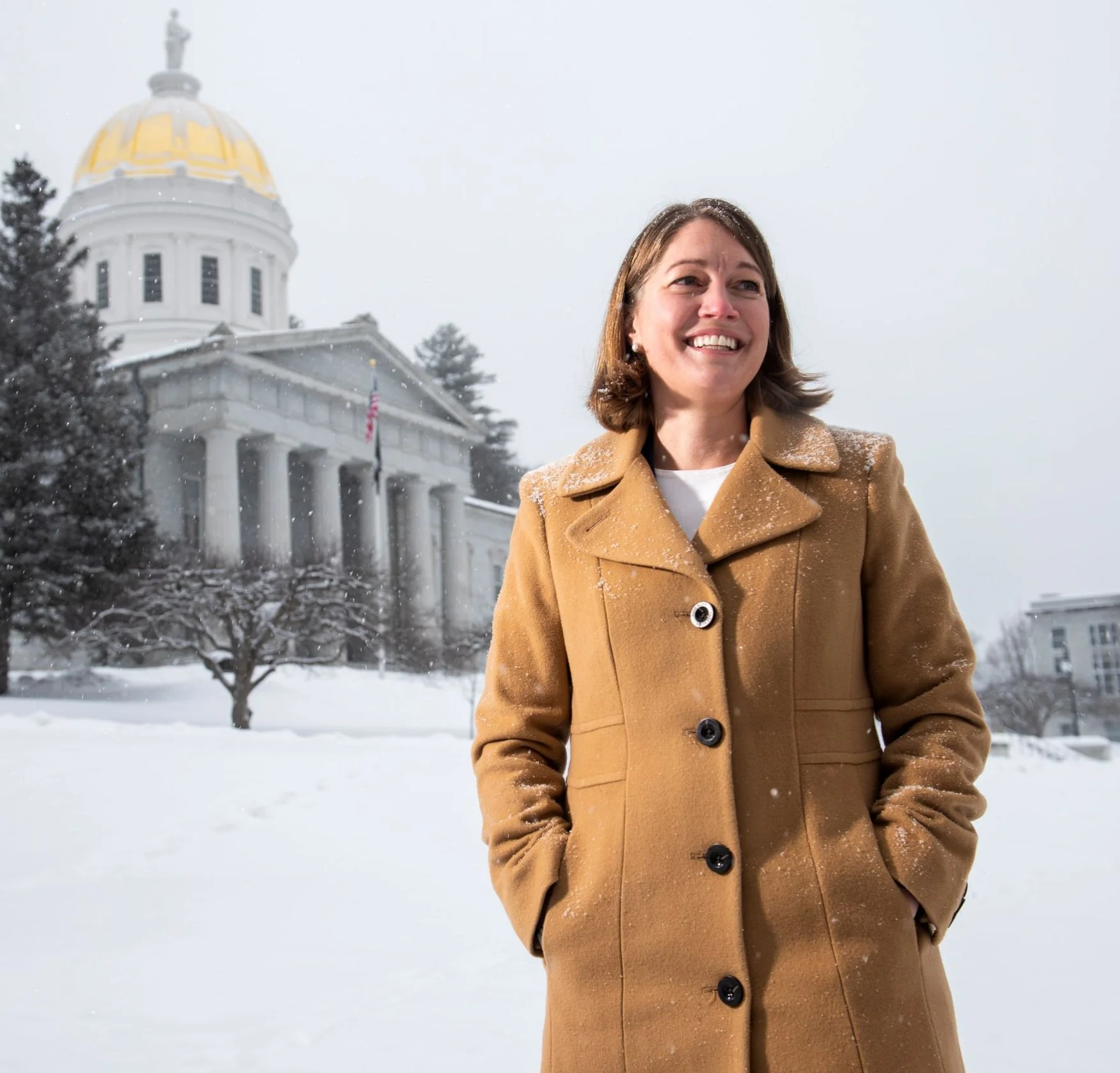
Molly Gray has served as executive director of the Vermont Afghan Alliance since April 2023. She was Vermont’s lieutenant governor from 2021 to 2023, and a Democratic candidate for Congress in 2022. She has announced that she intends to run for lieutenant governor again in 2026.