Op-Ed: Supreme Court hears challenge to Fish & Wildlife’s compliance with new rules for hounding coyotes, trapping
January 20, 2025 | By Brenna GaldenziWhy should grassroots nonprofit organizations have to sue the Vermont Department of Fish & Wildlife to make it comply with legislative mandates?
In 2022, the Vermont Legislature enacted two laws – Act 159 and Act 165 – directing the Vermont Fish and Wildlife Board and the Vermont Department of Fish & Wildlife to address long-standing concerns about trapping practices and the controversial practice of hunting coyotes with hounds, known as “coyote hounding.” Act 165 also imposed a moratorium on coyote hounding until new rules consistent with legislative intent were adopted.
Despite clear statutory directives, the state department and board failed to comply.
In 2023, the Legislative Committee on Administrative Rules, which oversees all state rulemaking, warned the Department and Board that their proposed rule did not meet legislative intent. The committee provided multiple opportunities for revision. The department and board ignored those warnings and moved forward anyway – an unusual act of defiance of the legislative branch that left wildlife advocates with no option but to pursue legal action.
One key requirement of the legislation was that hounds used to hunt coyotes be “controlled” to minimize conflicts with the public and meet statutory safety standards. The department defined “control” to mean that hounds must simply be outfitted with GPS and training collars – even if the handler is a mile or more away, inside a vehicle, with no line of sight or verbal control over the dogs.
This definition fails to prevent hounds from trespassing on posted private property or harassing landowners, pets, and livestock.
Recently on Christmas Eve, an Addison County landowner who has experienced multiple incursions by hounds and hounders reported hounds chasing a lone coyote on his property – clear evidence that the coyote hounding rule is ineffective.
There are also ongoing concerns about hounds chasing coyotes into roadways, creating serious risks for motorists. The hounds themselves are also victims of this practice.
The rulemaking also required traps to be set away from areas where the public “may reasonably be expected to recreate,” as specified in statute. The department and board interpreted this requirement so narrowly that it applies to only a small fraction of lands. They further exempted all traps placed in water – including in shallow streams – from setback requirements altogether. As a result, dogs drinking from streams along trails or culverts receive no protection, an outcome clearly inconsistent with legislative intent and public safety.
After a lower court ruling, the nonprofit appealed to the Vermont Supreme Court, which heard oral arguments on Jan. 14, 2026. The case now awaits a decision by the court.
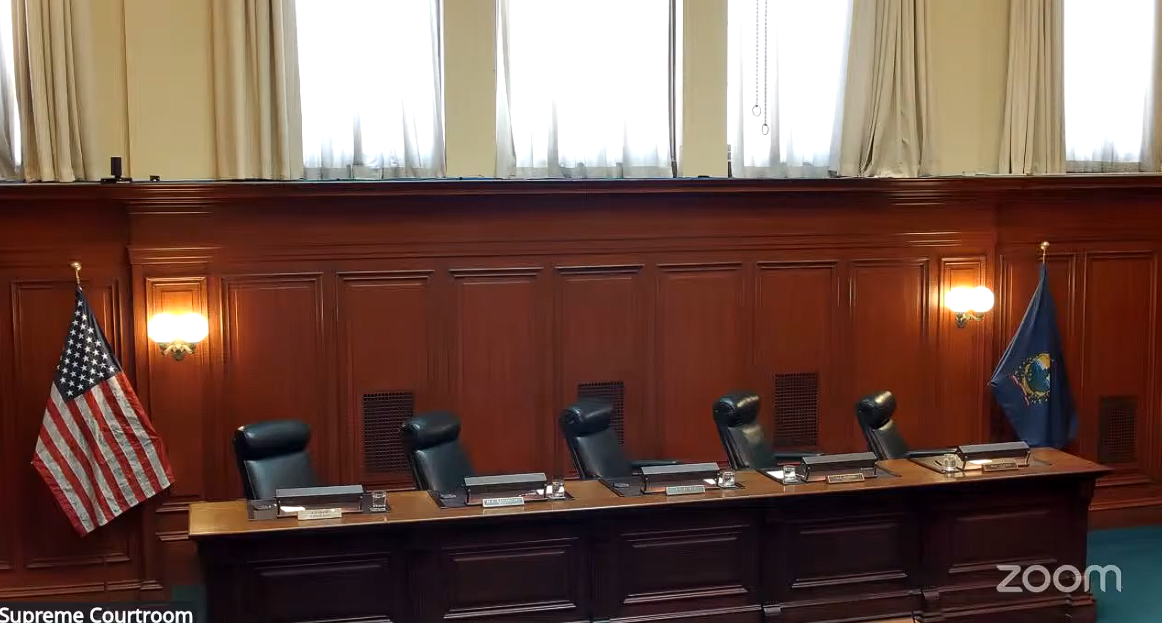
At stake is whether state agencies can disregard legislative mandates and public safety in favor of political pressure from special interests – or whether the rule of law will be upheld.
The department and board defied the rules committee, illustrating their refusal to engage in good-faith rulemaking and their prioritization of hunter and trapper interests over legislative intent and public safety. This unprecedented case is now under deliberation by the Supreme Court justices.
Stowe resident Brenna Galdenzi is president of the nonprofit animal welfare organization Protect Our Wildlife. See a recording of the Jan. 14 oral arguments before the Vermont Supreme Court here.