
Ripples from the Reservoir | August
August 12, 2026 | By Sheila Goss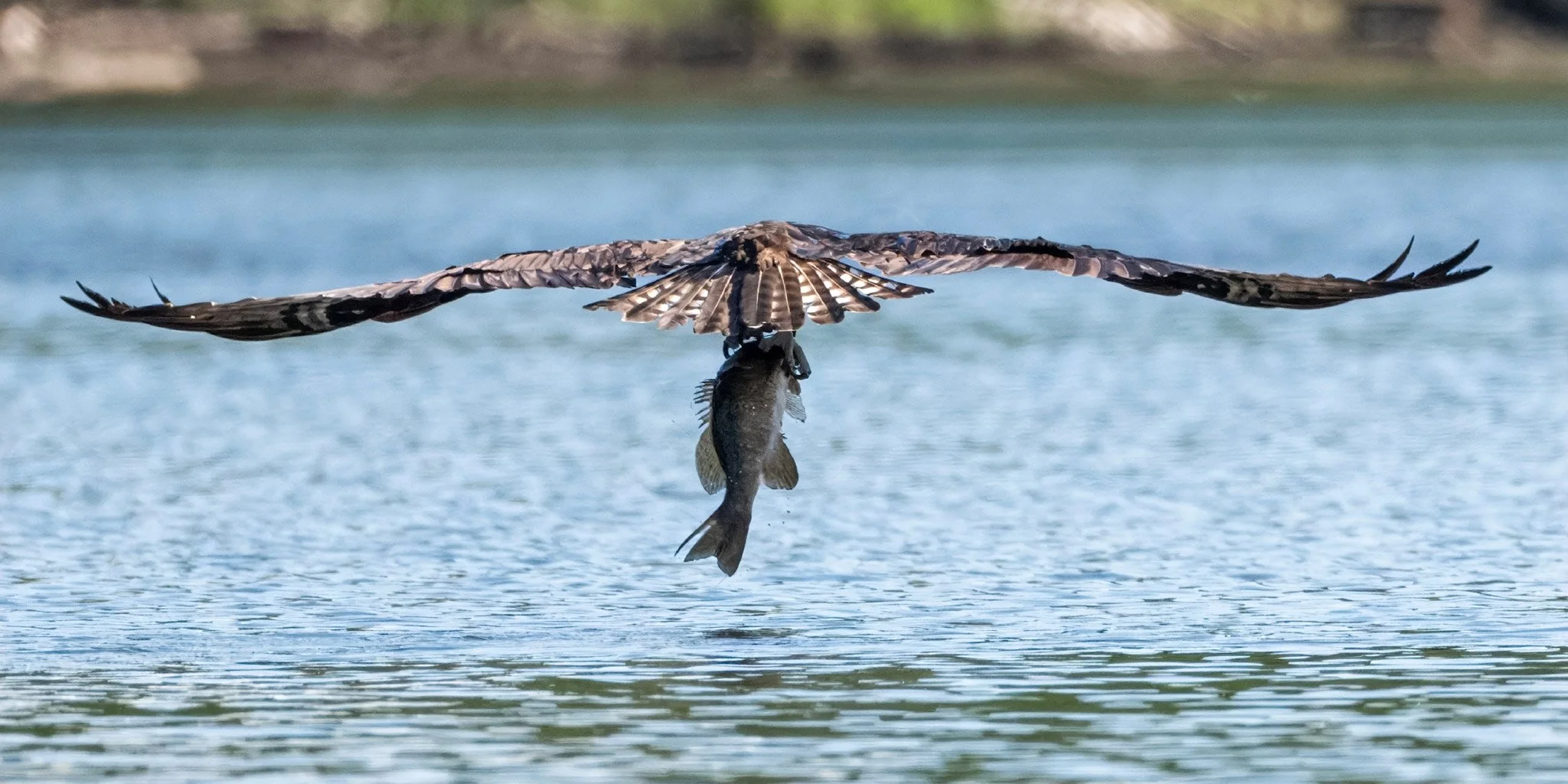
Trevor Crist captured this image of an osprey with a fish.
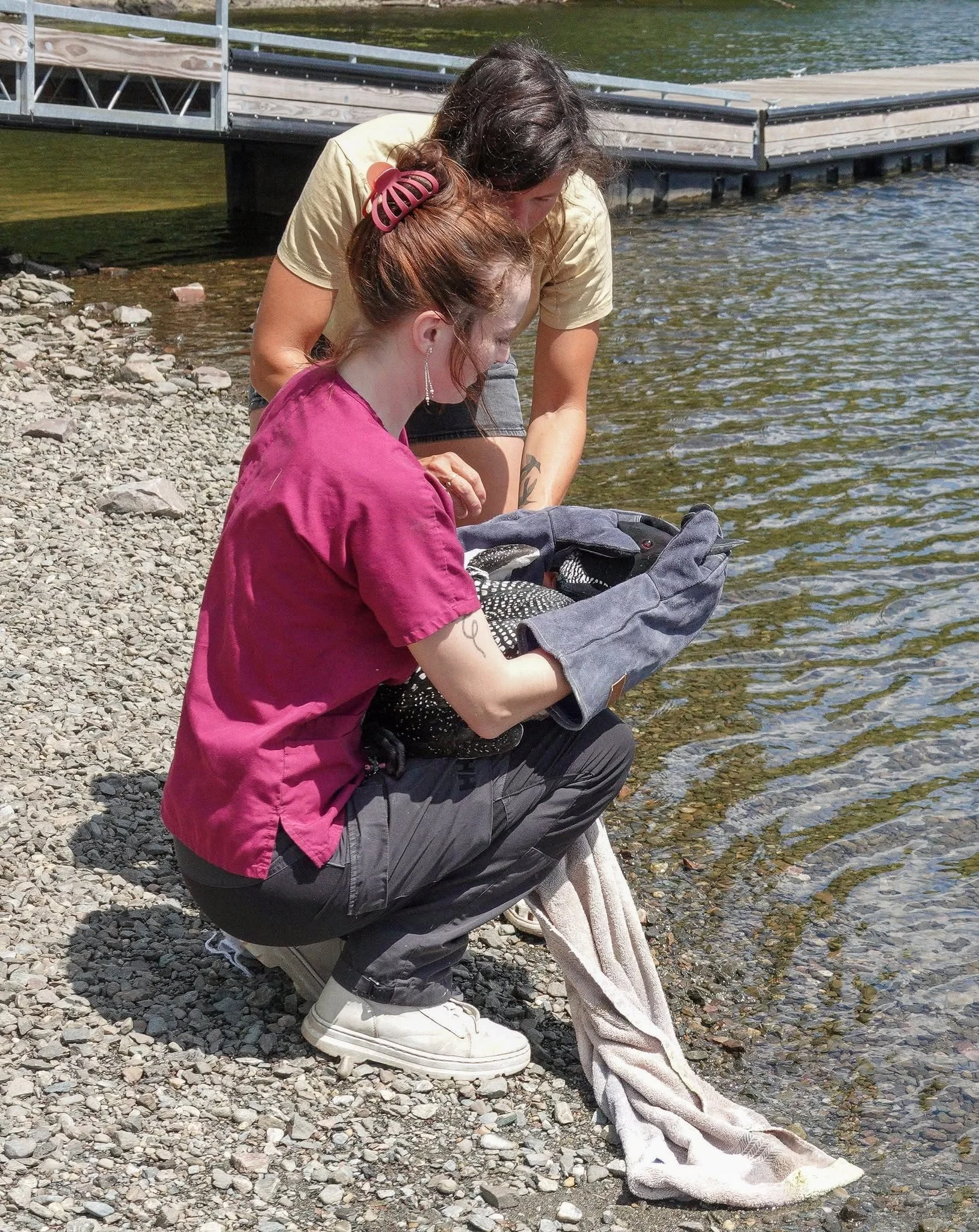
Releasing a loon. Photo by Sheila Goss
August has arrived, bringing lots of activity on the reservoir. Warm muggy days have brought out the boaters, swimmers, and campers, and the state parks staff have been very busy.
Our birds have also been busy! Our loon pair were quite determined, and despite having two nest attempts flooded out, they tried again. The third time was the charm, as they found a small island where they built a nest above the waterline, and they incubated an egg for 28 days. On August 1, the first documented hatching of a loon chick on the Waterbury Reservoir happened!
We ask all reservoir users to be very alert, observant and cautious on the water, since the little loon-let will be tough to see for quite a while. It is now staying close to the adults, but soon will be swimming off more distant from the adult loons, obviously putting it more at risk from boat activity. Our floating rangers are on top of it, and are watching out for all of the wildlife, birds, and reservoir visitors.
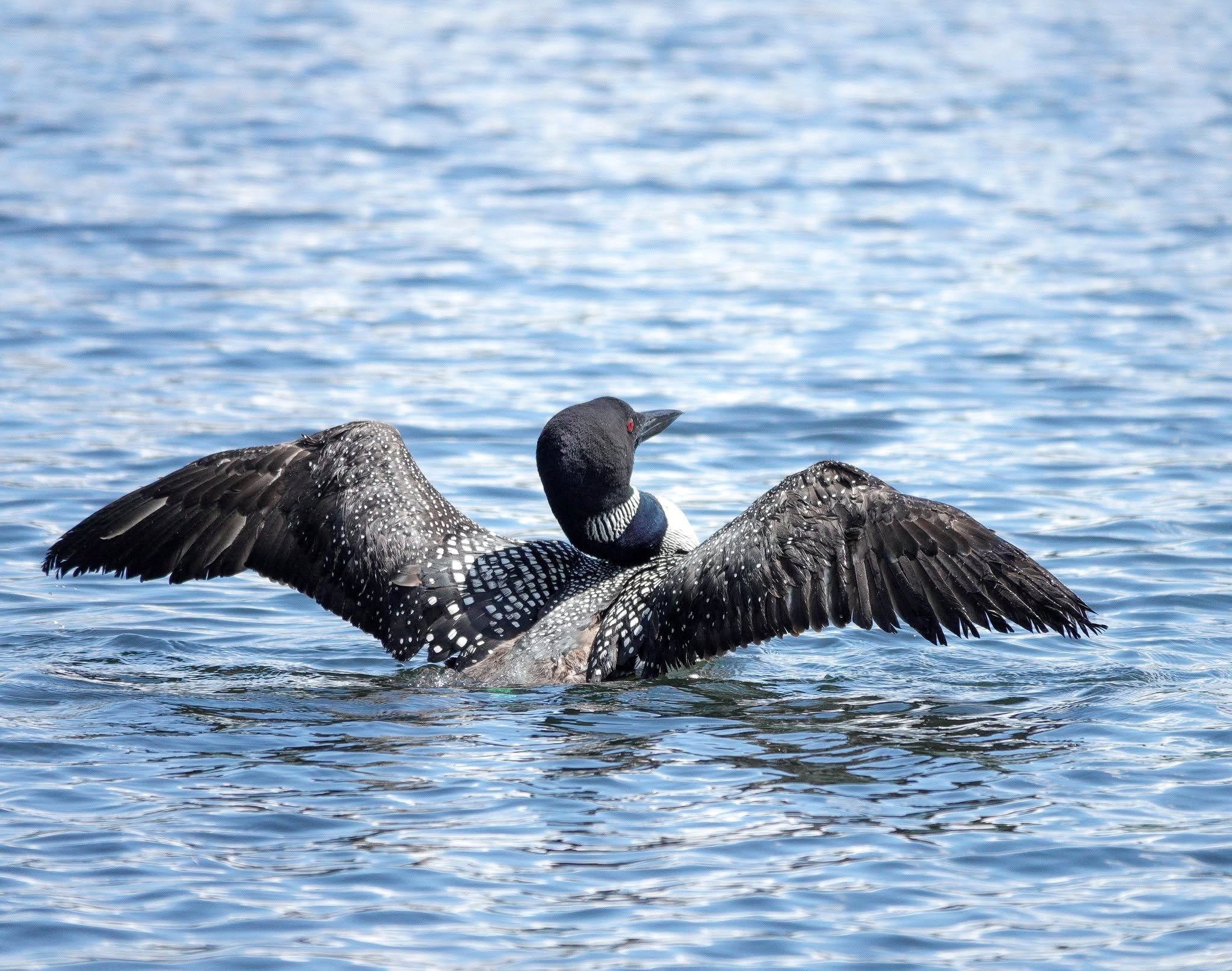
A freed loon stretches its wings. Photo by Sheila Goss
In other loon news, a loon in July crash-landed on another Central Vermont lake and was taken to the Vermont Institute of Natural Science for a medical check-up and short rehab before being released. Along with a VINS rehabber and Eloise Girard from the Vermont Loon Conservation Project in White River Junction, we released that loon at the dam access on the Waterbury Reservoir.
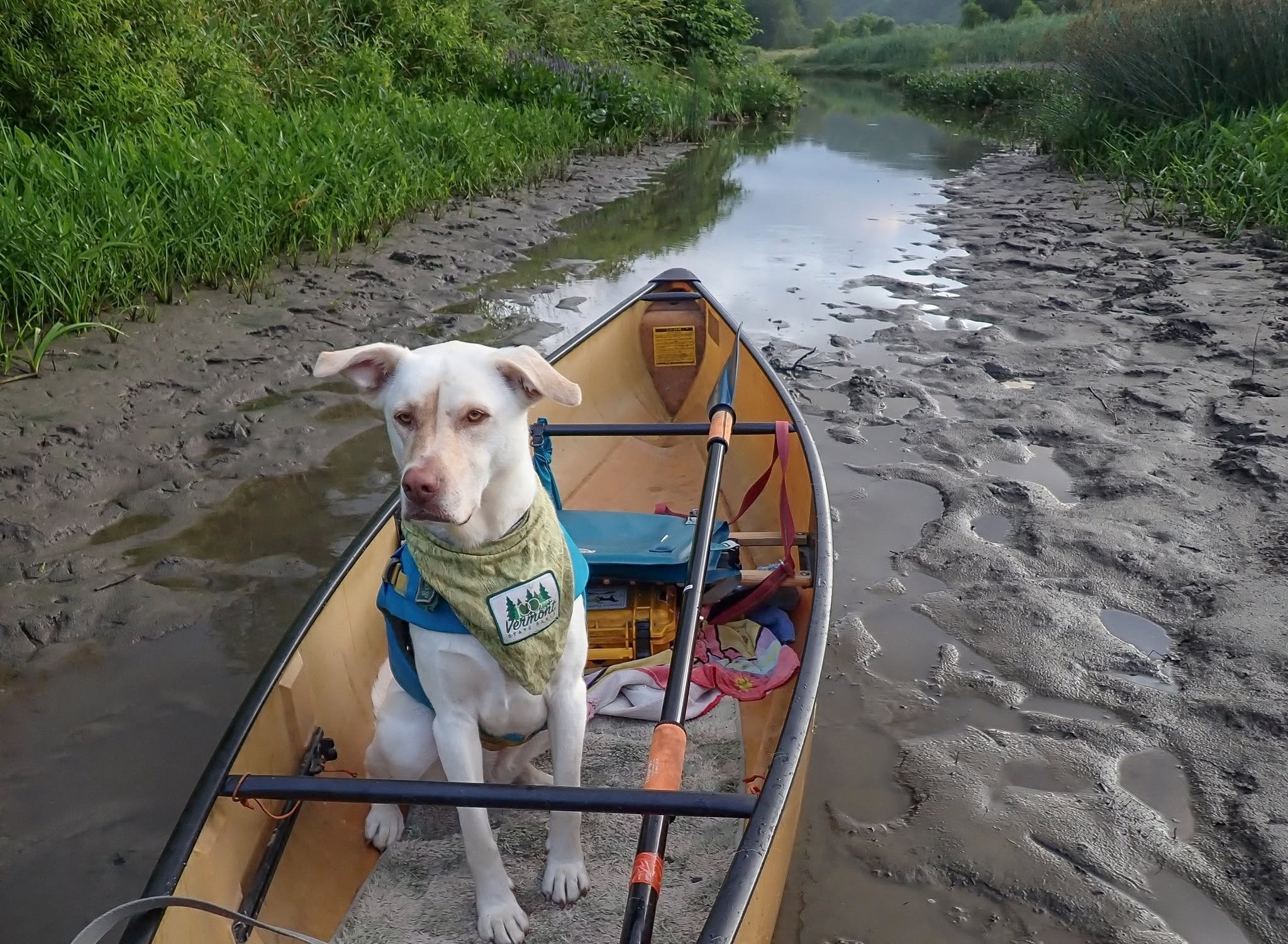
Kanootti ignores the muddy canoe access. Photo by Sheila Goss
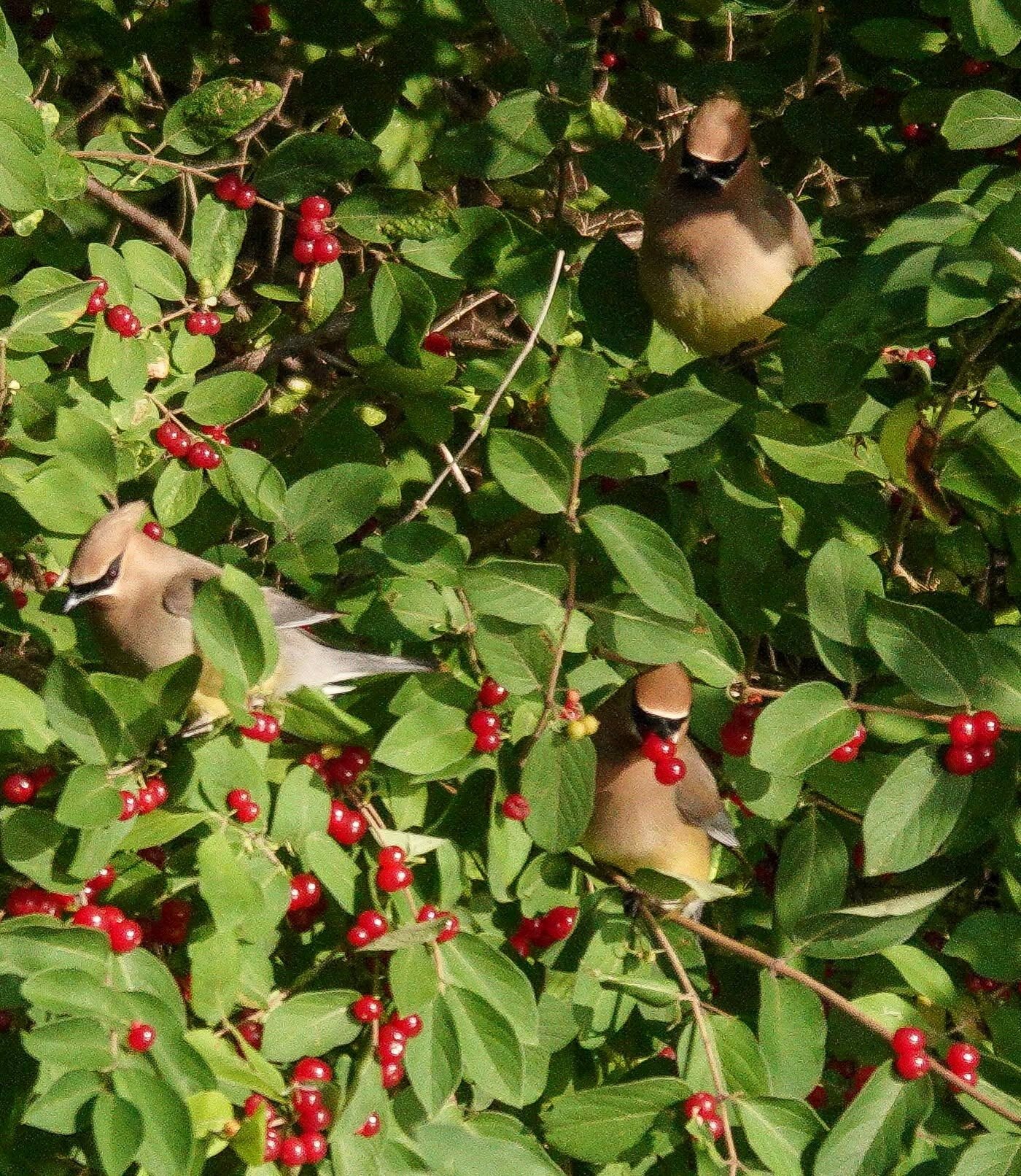
Cedar waxwings congregate in a bush along the shoreline. Photo by Sheila Goss
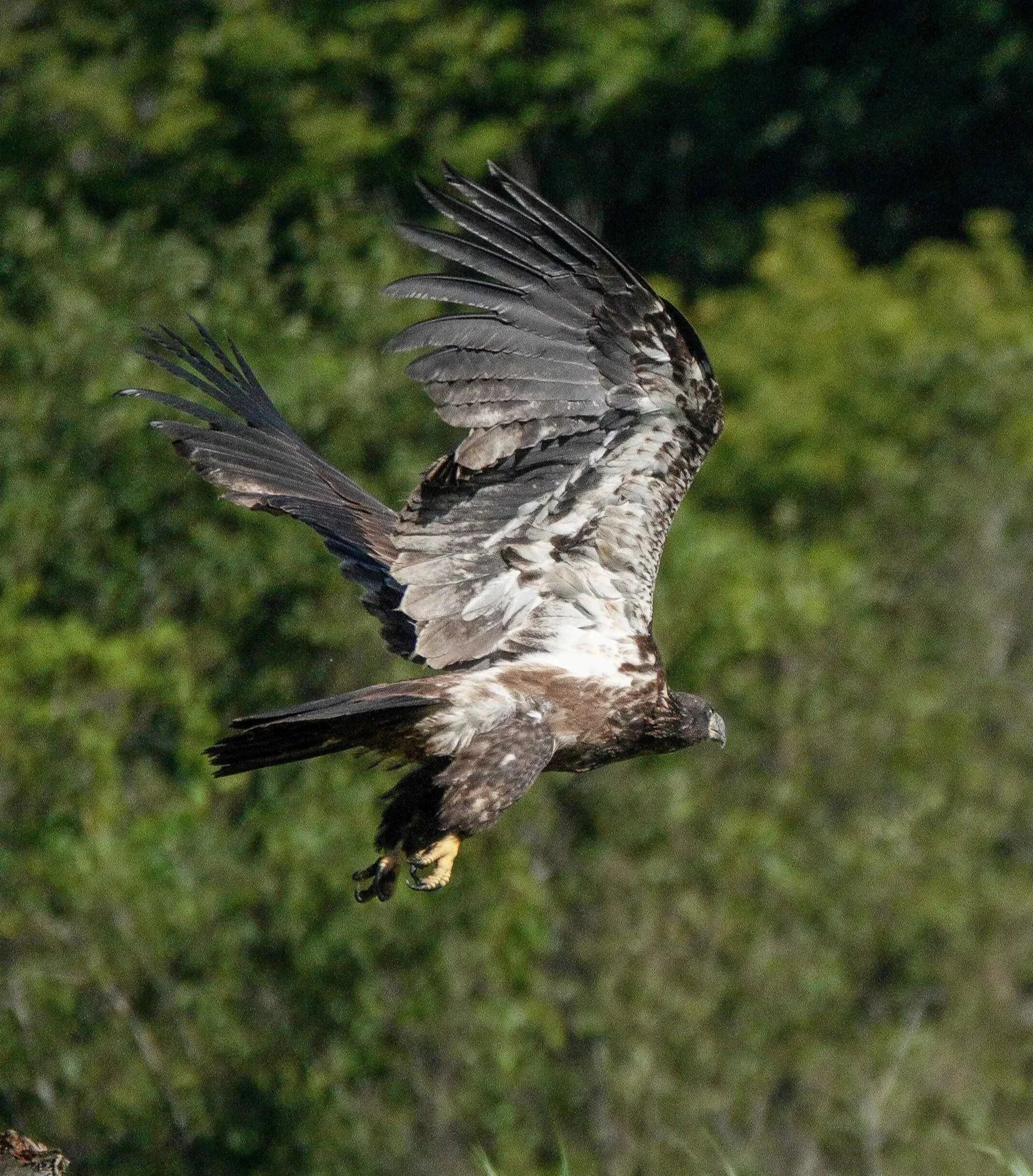
An eaglet takes off. Photo by Sheila Goss
Now banded with distinctive leg bands, the loon seemed happy to be back in the water, diving, fishing, and drying its wings. However, within two days of the release, we received a report of a banded loon possibly beached at the southern end of the reservoir. Despite intensive searches, the loon was not located, so at this time we do not know its fate. Please keep an eye out, and if you see a loon with colored bands on its legs, please notify the Friends of Waterbury Reservoir or the state park staff.
Eagle report
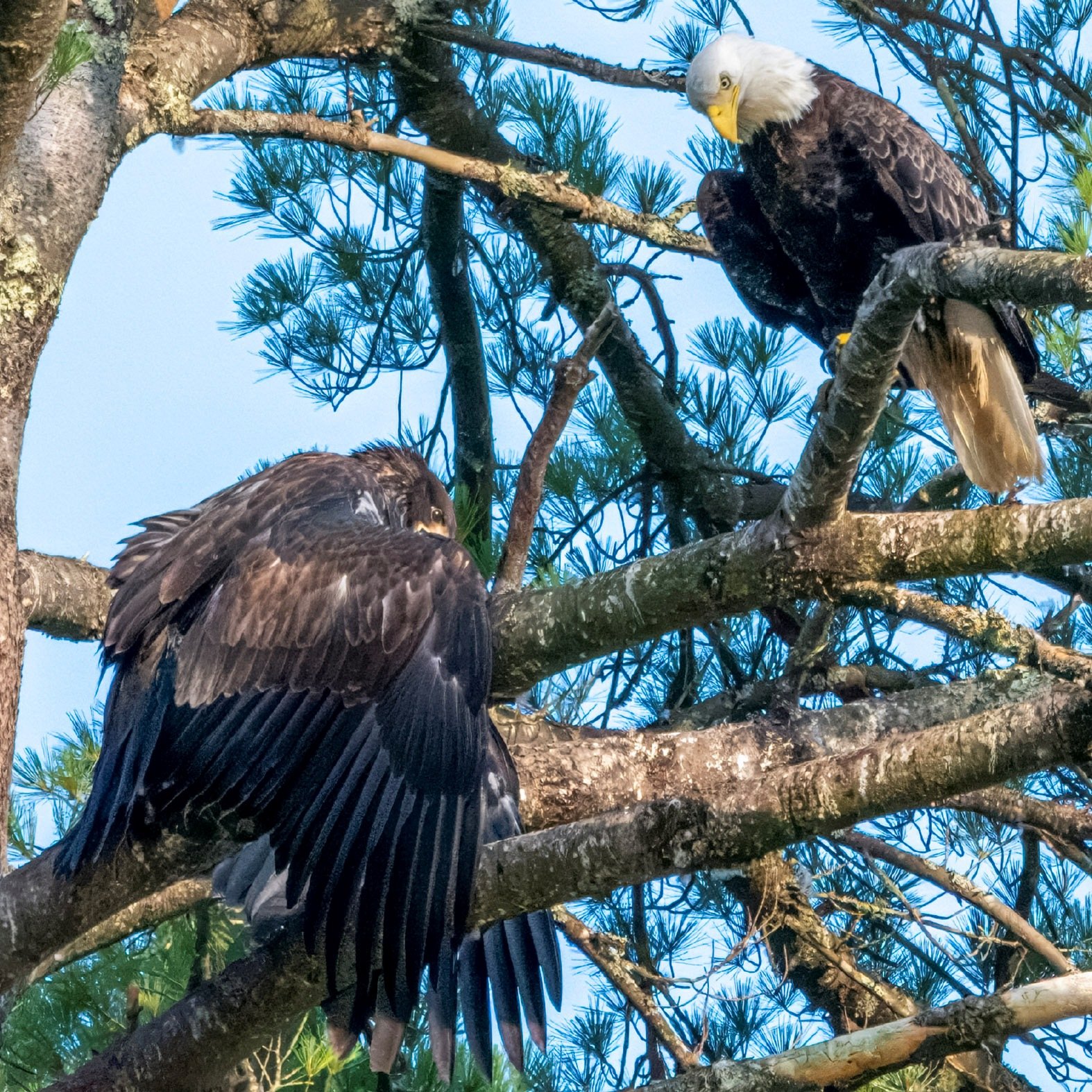
An adult and immature eagle at a fallen nest site. Photo by Trevor Crist
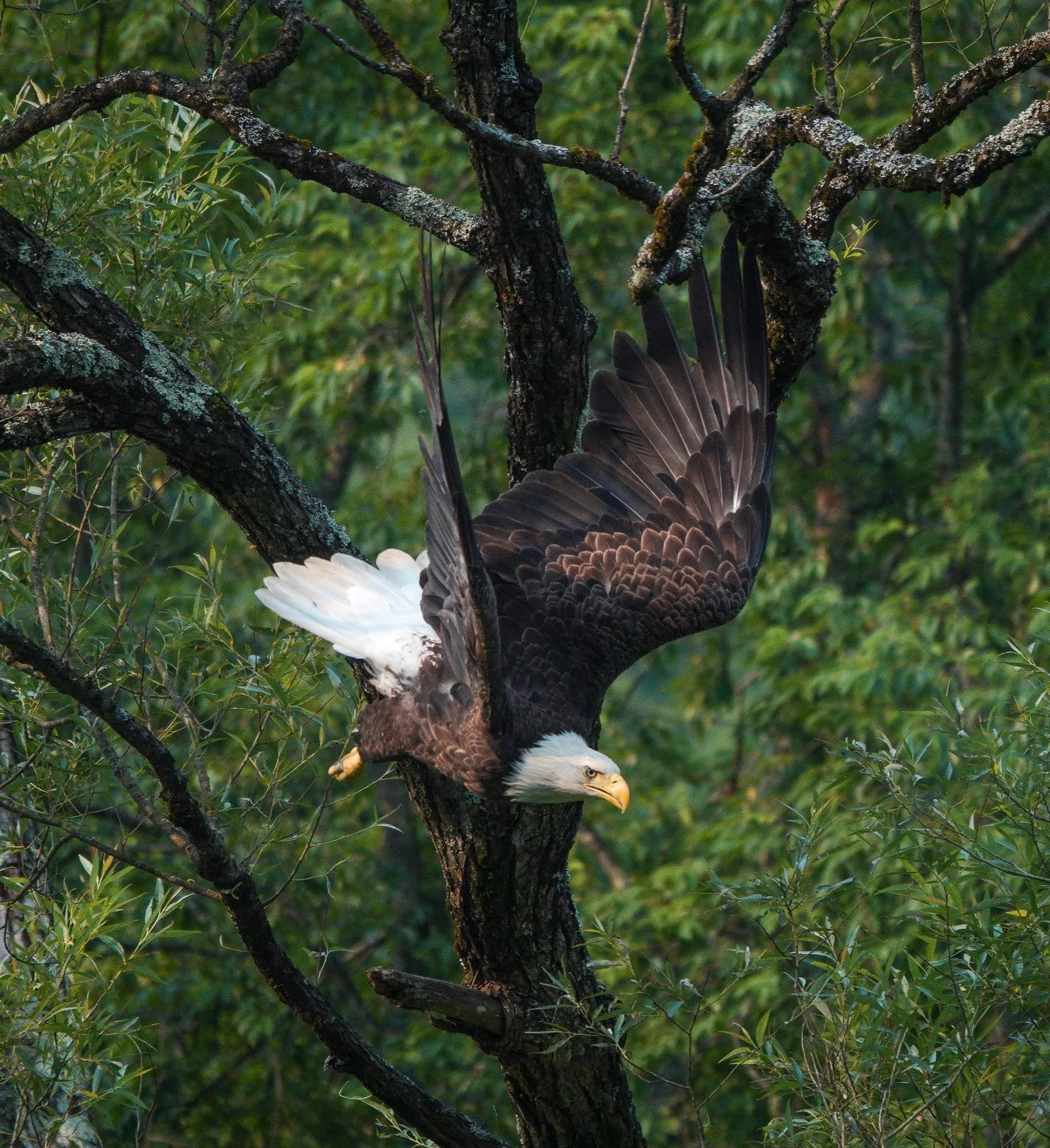
An adult eagle takes flight. Photo by Sheila Goss
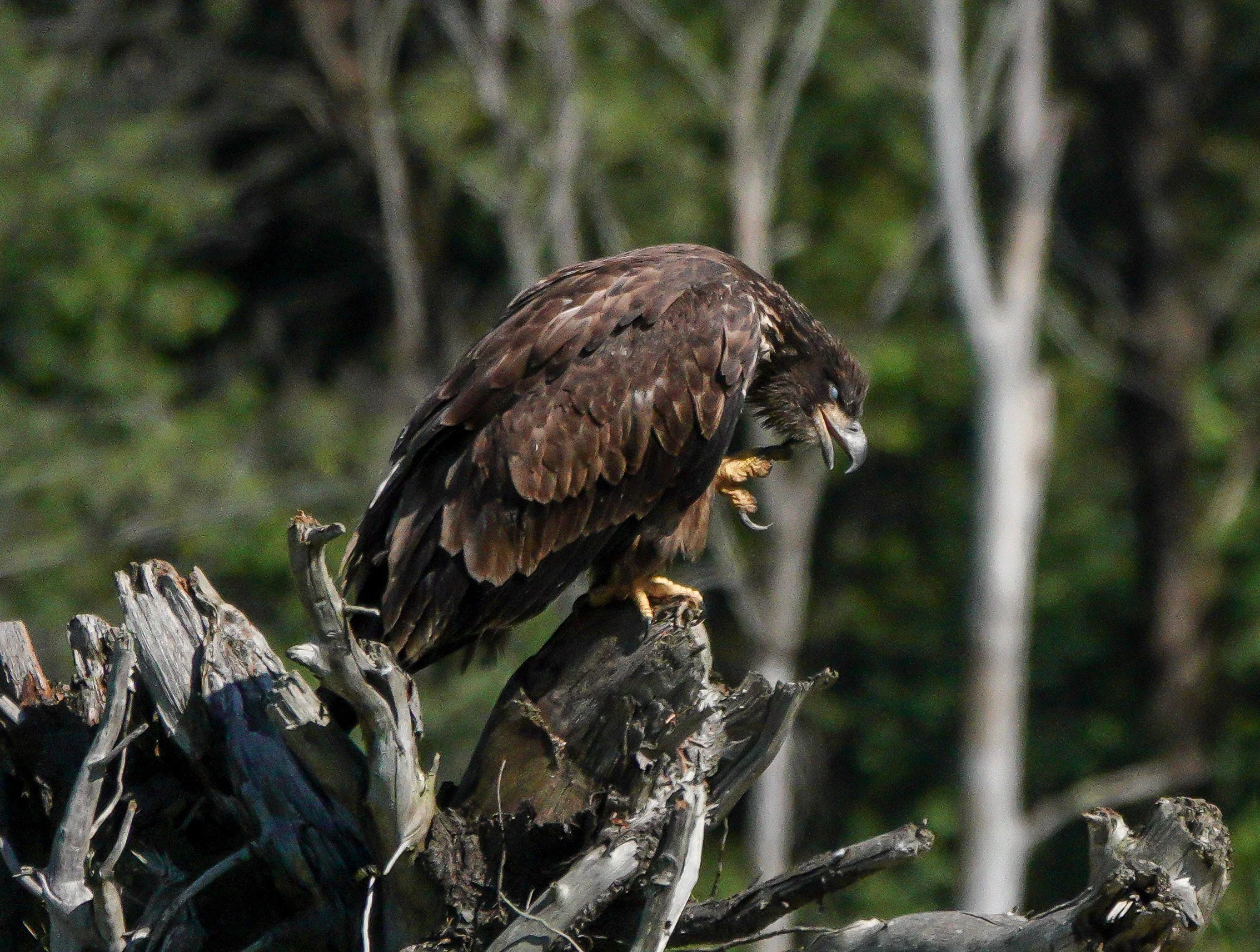
An eaglet perches. Photo by Sheila Goss
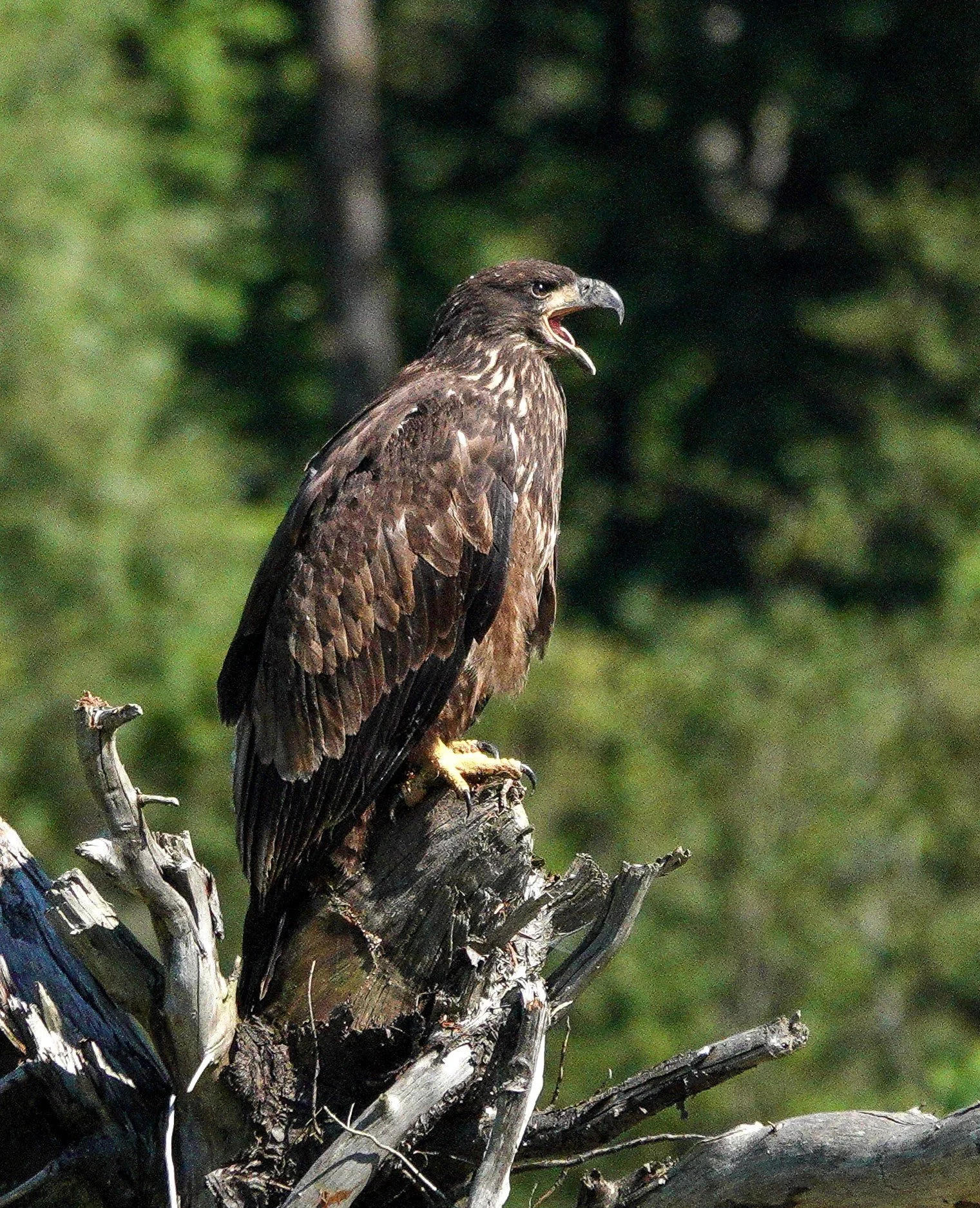
A young eaglet squawks as if to say, "feed me!" Photo by Sheila Goss
You may have also seen an eaglet pair flying around the northern end of the reservoir. Once again, as happened in July 2025, their little nest collapsed, so they were forced to perch on nearby branches. The nest collapse may have forced them into fledging a bit earlier than they would like, but they are both doing well flying tree-to-tree, though still being fed by the adults. Soon they will be coming down to the shoreline and water to catch their own fish and birds, so please also respect their space as they grow and develop.
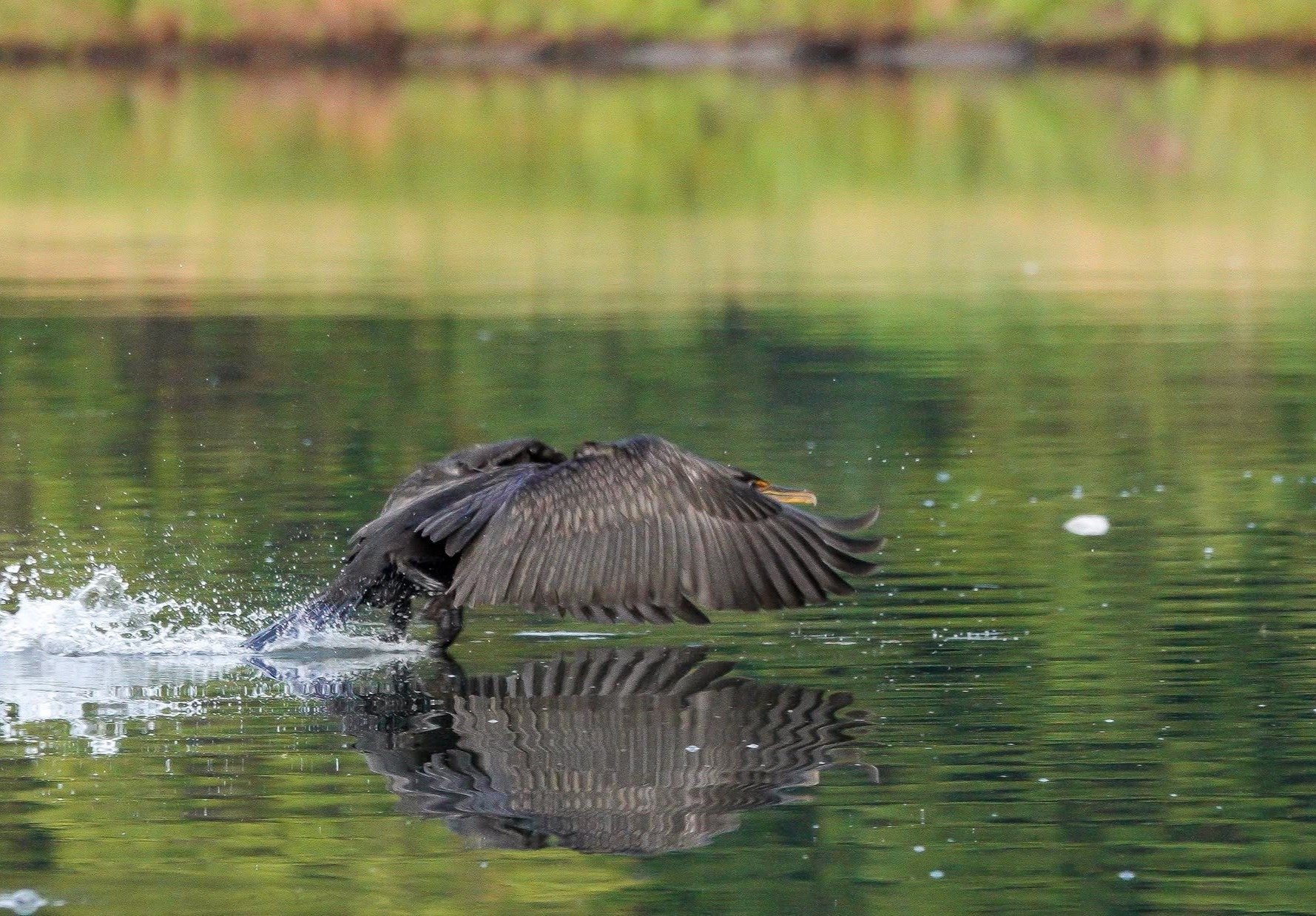
A cormorant takes off. Photo by Sheila Goss
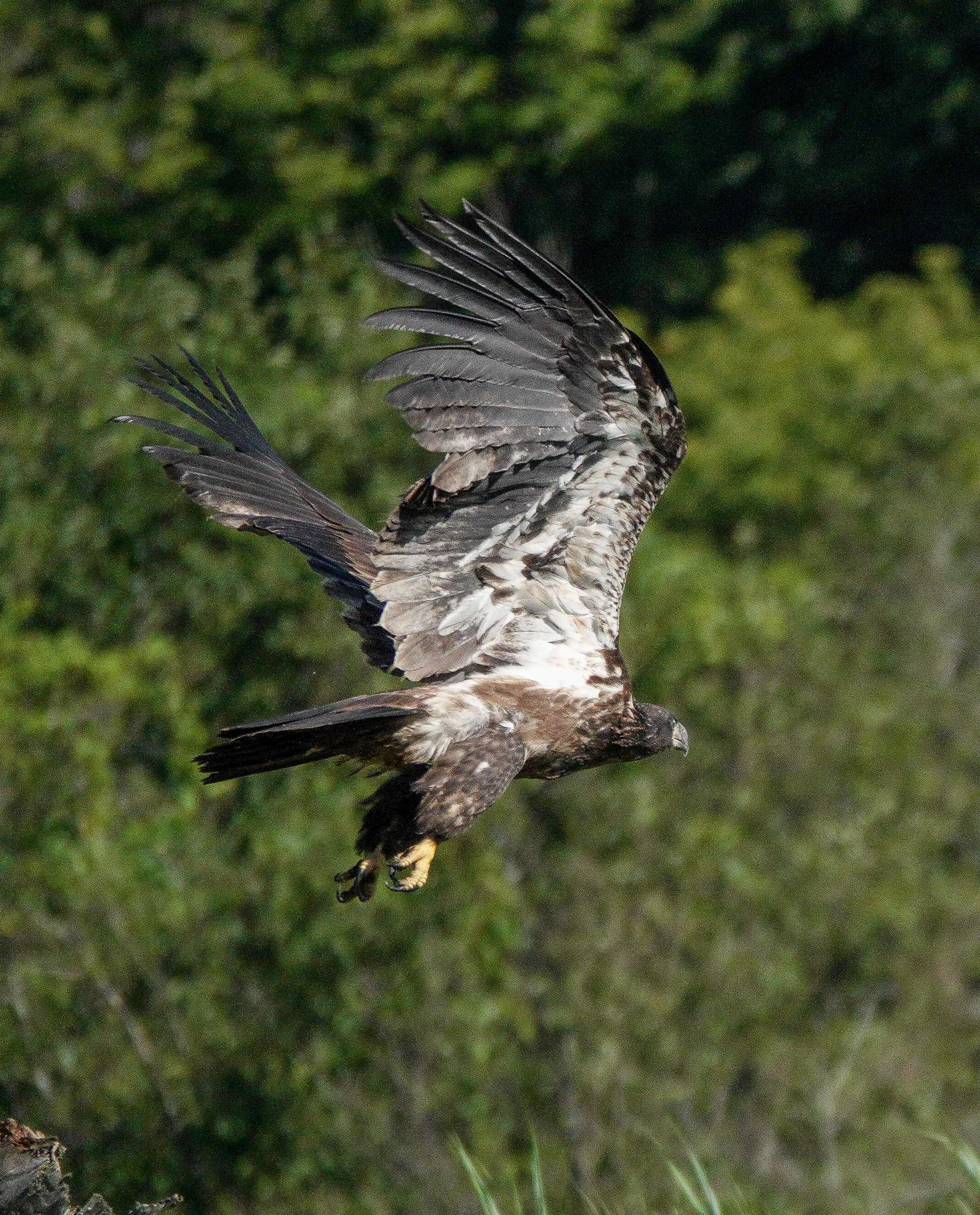
An eaglet takes off. Photo by Sheila Goss
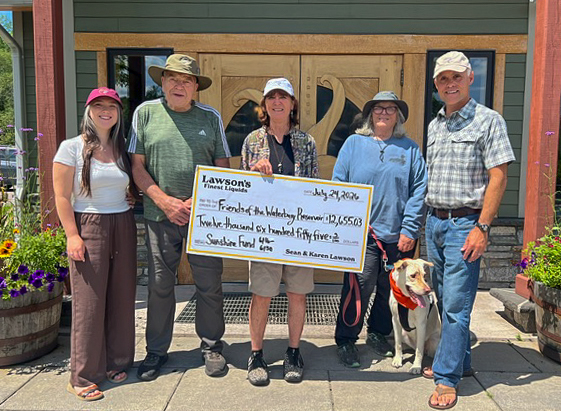
Friends of Waterbury Reservoir board members accept the Lawson's Sunshine Fund donation. Left to right: Emma Brownlee, Eric Chittenden, Francine Chittenden, Sheila Goss and her dog Kanootti and Tom Berry. Courtesy photo
Our Aquatic Invasive Species Greeter program has been busy monitoring the boat traffic in and out of the reservoir at three access points this summer. One alert greeter noticed an alarming find, but a search by the Vermont Department of Environmental Conservation scientists indicated that this potentially invasive species was probably picked up in Lake Champlain. This close call reinforced the importance of cleaning, draining, and drying boats that travel between water bodies.
As an organization, the Friends of Waterbury Reservoir depends on our community partners for support, as our many projects take a lot of time and financial resources. Recently, we were the beneficiaries of the Lawon’s Finest Liquids Sunshine Fund Program. Many people visited their establishment in Waitsfield, enjoyed the food and beverages, and in doing so contributed to the fundraiser. Members of our board of directors were thrilled at the generosity, and the giant check presentation was amazing!
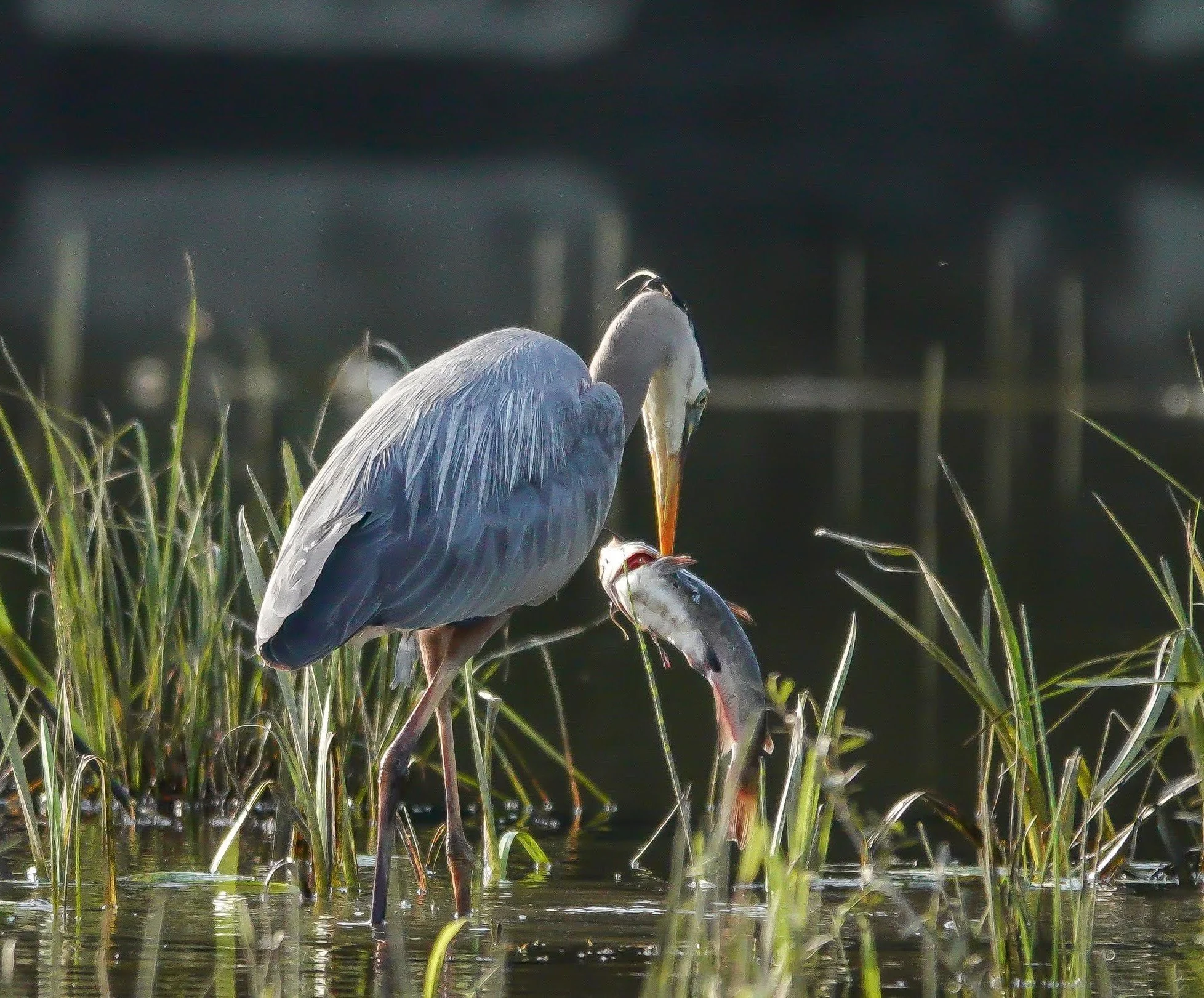
Heron with a fish. Photo by Sheila Goss
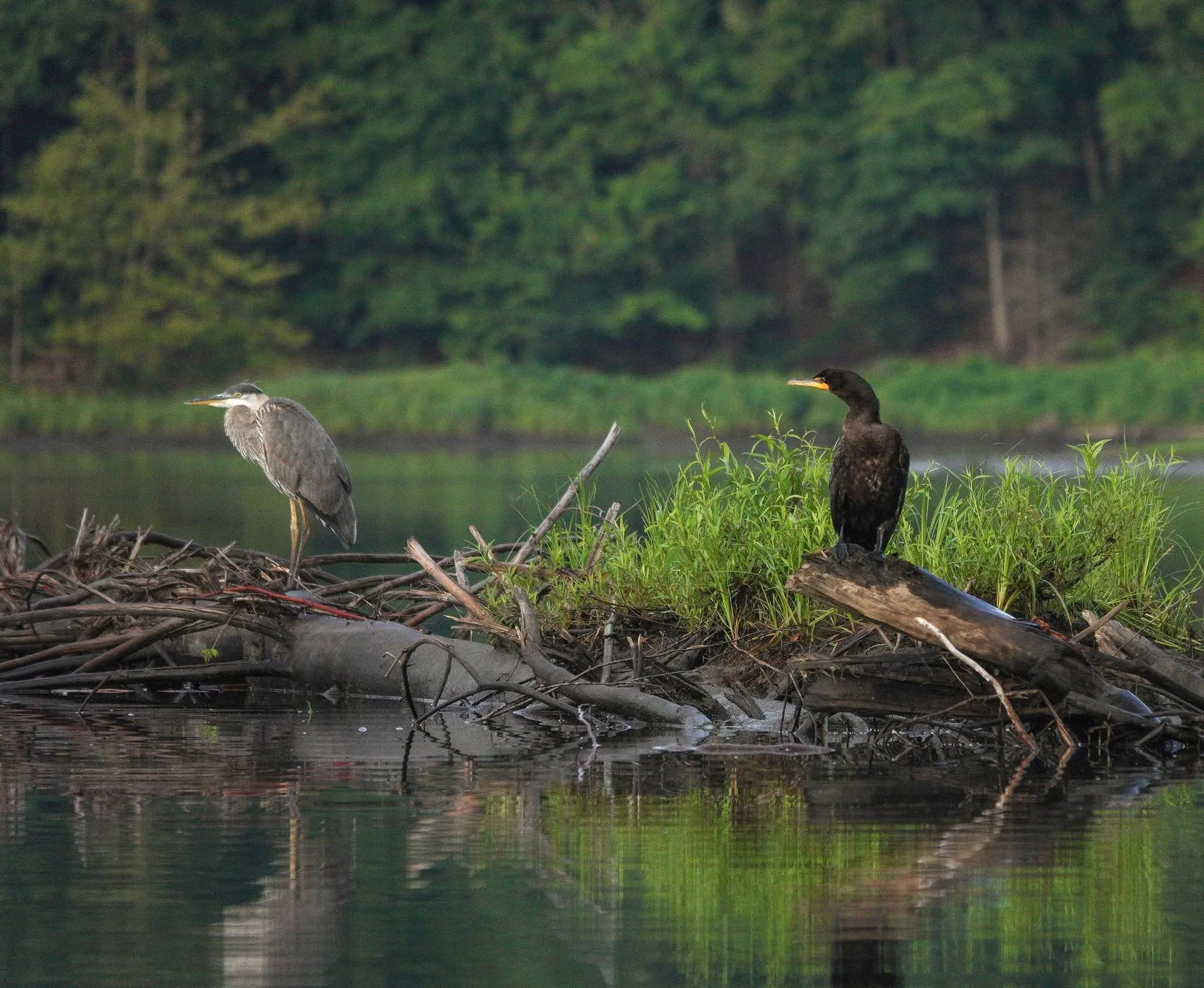
A heron and a cormorant share a perch. Photo by Sheila Goss
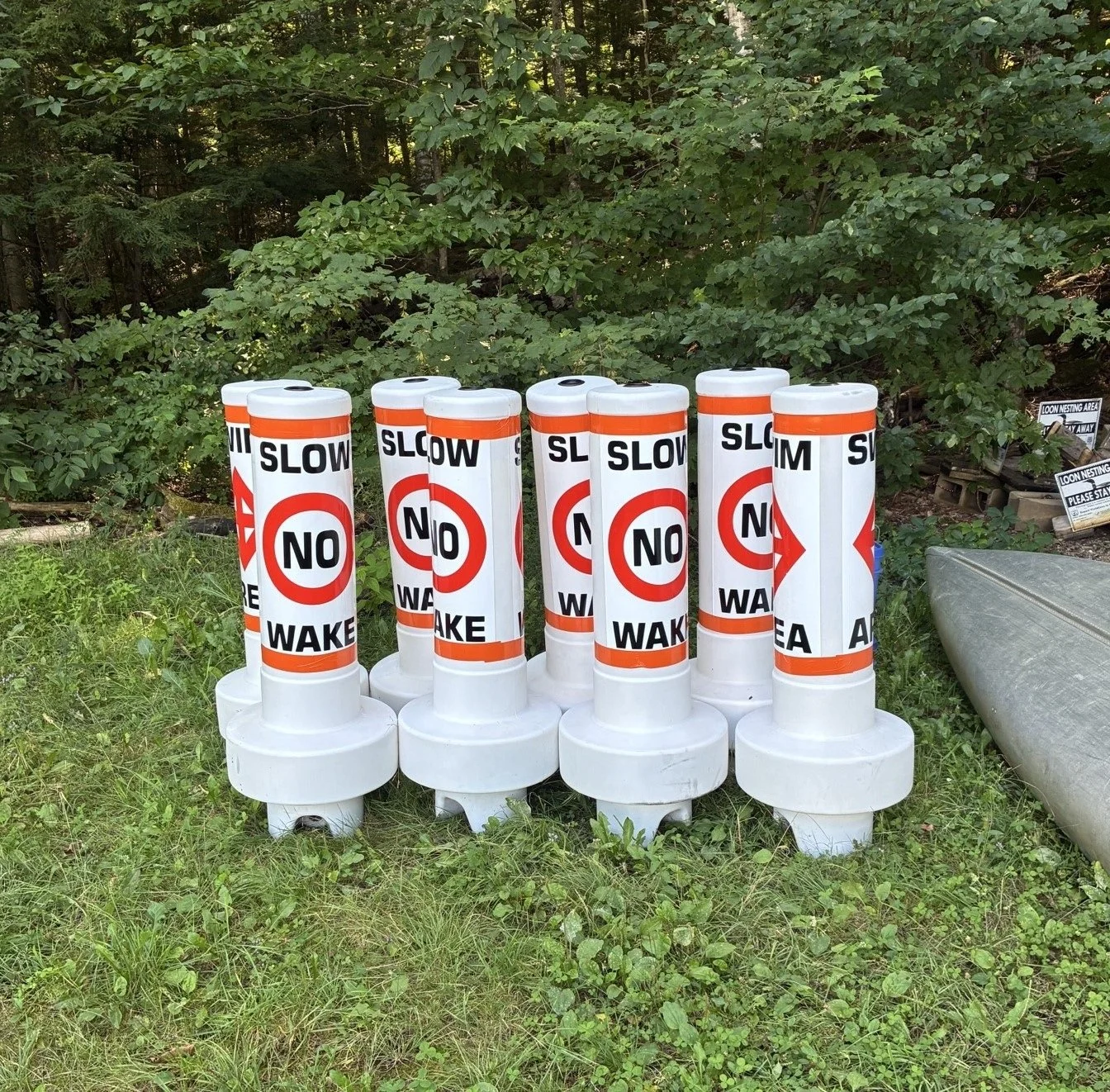
New No-Wake Zone buoys waiting to be put in place. Photo by Sheila Goss
As many have noted, water levels at the Cotton Brook access have once again been challenging. The past few weeks have not seen the high waters of earlier in the summer, but rather low water, resulting in a 100-foot-long mud slog at the end of the access channel. Many clogs and water shoes have been consumed by the sticky mud, so footprints along the channel show that many people opted for the barefoot approach! This situation has just become one of the usual periodic challenges facing paddlers heading in from the Cotton Brook access.
Enjoy the last weeks on the reservoir before the kids return to school, the days get shorter, and the nights get cooler. Fall is coming, and that is one of the best times to be on the water.
By the way, be sure to take notice of the sparkling new No-Wake Zone buoys!
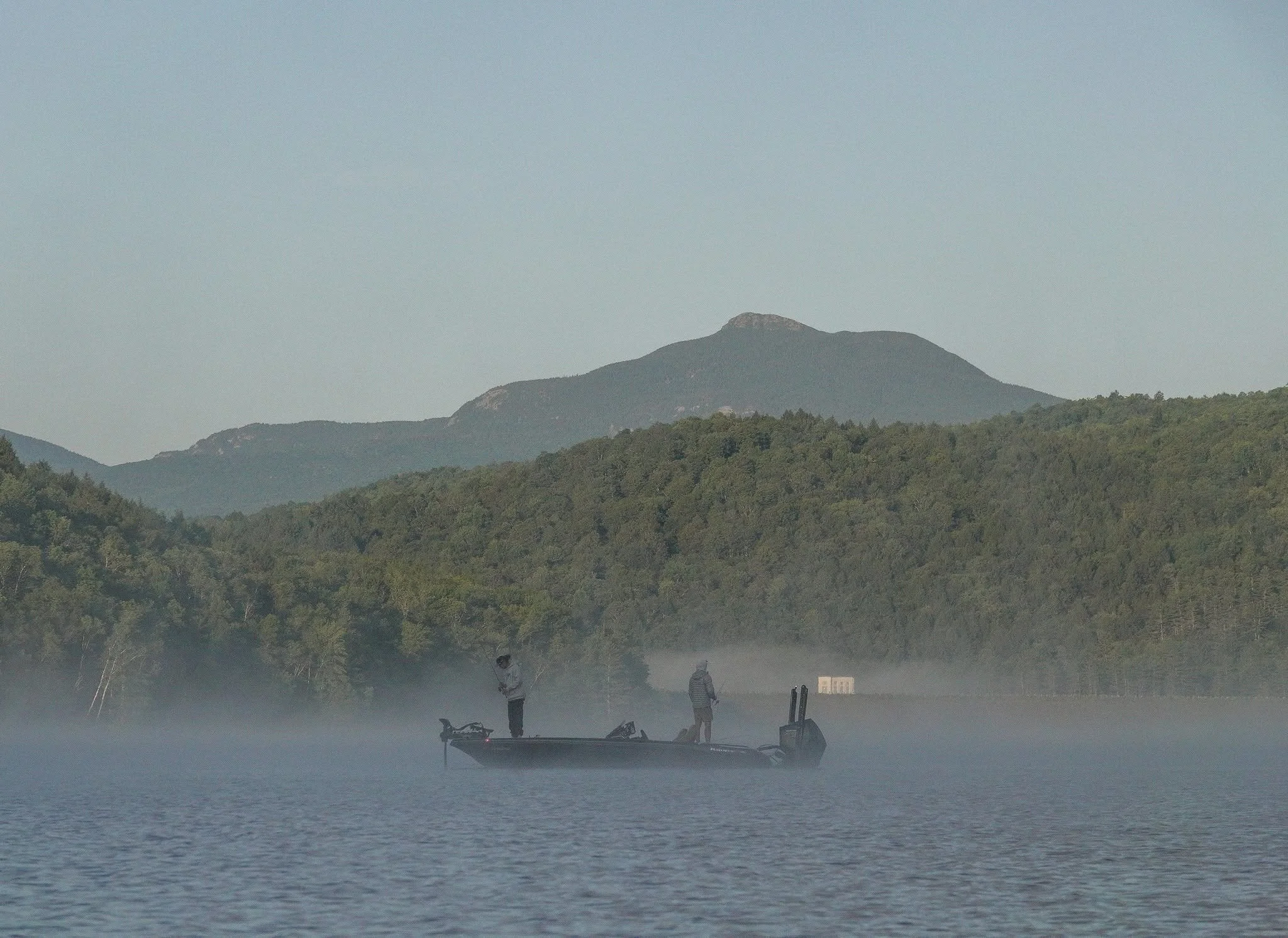
Anglers in the mist with the Waterbury Dam and Camel's Hump in the background. Photo by Sheila Goss
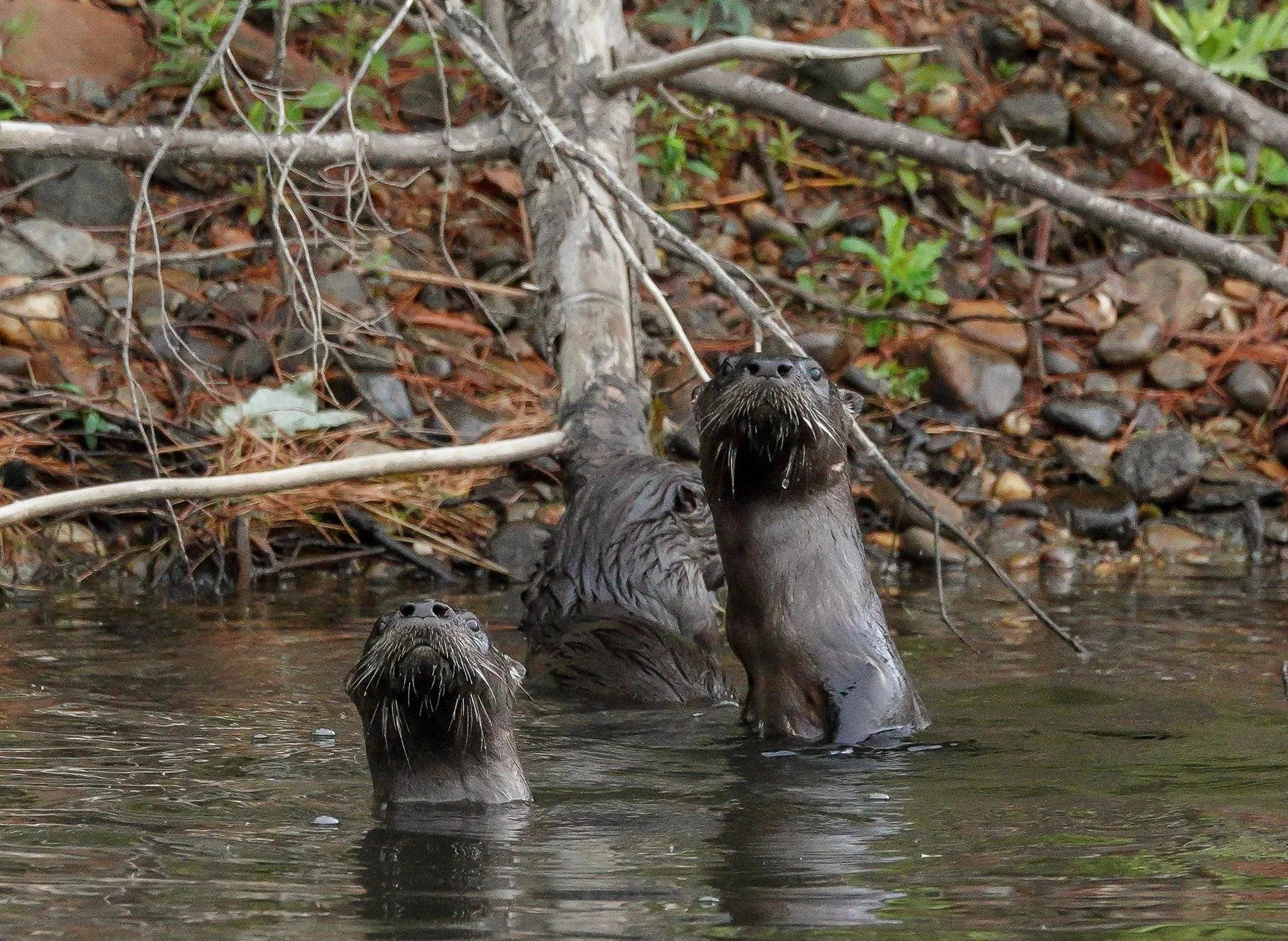
Otters observe a human and canine visitor. Photo by Sheila Goss
Sheila Goss, of Stowe, is vice president of the nonprofit Friends of Waterbury Reservoir. Learn more and contact the group at friendsofwaterburyres.org.