Those low-flying planes are dropping rabies vaccine for wildlife
May 9, 2025 | By Waterbury Roundabout 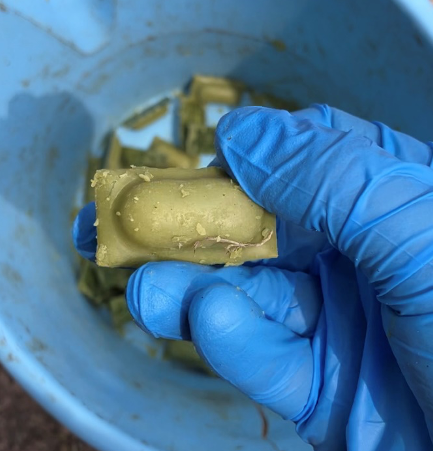

Both sides of the rabies vaccine bait packs. Photos courtesy Vermont Department of Health
If you see or hear low-flying aircraft overhead in the coming days, there’s a good chance they are special flights dropping rabies vaccine bait to help combat rising rabies rates in Vermont wildlife.
The U.S. Department of Agriculture Wildlife Services alond with the Vermont Department of Health, sponsor and organize these flights each year. This early spring distribution began this week to drop approximately 350,000 units of oral rabies vaccine bait across areas of Addison, Caledonia, Chittenden, Essex, Franklin, Grand Isle, Lamoille, Orange, Orleans and Washington counties.
Officials say that the increased frequency of bait drops will help slow the spread of the rabies virus among wildlife, but it takes time for enough animals to become immune.
“Rabies cases have been on the rise in Caledonia, Chittenden and Franklin Counties over the past several years,” said Natalie Kwit, state public health veterinarian with the Health Department. “When eaten by wild animals, the vaccine bait helps prevent the spread of rabies, protecting people and domestic animals who may come into contact with them.”
This is the third spring bait drop taking place in addition to an annual bait drop in August, officials said.
The drops involve rabies vaccine in the form of a sweet-smelling oral bait that is attractive to raccoons and skunks. Low-flying airplanes drop the packets in rural areas; helicopters are used in more suburban regions; in cities, they are placed by hand from slow-moving vehicles in residential areas.
Spread primarily through the bite of an infected animal, the rabies virus is fatal to both humans and animals, unless they have medical treatment. In Vermont, rabies is most often detected in raccoons, skunks, foxes, bats and woodchucks. Pets and livestock can also get the disease if they have not been vaccinated for rabies.
Since March 2022, rabies has expanded into Chittenden, Franklin, and Caledonia counties, where 95 animals have tested positive for rabies: 58 raccoons, 21 skunks, eight bats, three foxes, three woodchucks, a bobcat, and a rabbit. Prior to this outbreak, no rabid land mammals were detected from these counties since 2017.
The vaccine bait packs are not poisonous and are not harmful to people, pets, or wildlife. If you find a bait pack, don’t touch it unless necessary. Leave the bait undisturbed so it can be eaten by wildlife.
If the bait must be moved, use gloves or a plastic bag. If a pet eats a bait pack, or if a child brings one home, report it by calling the Vermont Rabies Hotline at 1-800-4-RABIES (1-800-472-2437) or call the toll-free number printed on the bait.
Public health officials also share these tips regarding rabies:
If you see a sick or strange-behaving wild or stray animal, or if you are concerned about a rabies exposure, call the Vermont Rabies Hotline (1-800-4-RABIES).
If you are bitten by an animal, wash the wound very well with soap and water and contact your health care provider as soon as possible.
If your pet or farm animal was bitten by a wild or stray animal that might have rabies, contact your veterinarian. State law requires dogs and cats to be vaccinated for rabies — even barn cats. Rabies almost never occurs in vaccinated animals. Always feed pets inside the house and keep them indoors at night. If they are outdoors during the day, keep them on a leash or in an enclosed space. Pets that roam free are more likely to be exposed to rabies.
Do not touch or pick up wild or stray animals – even baby animals – or try to make them into pets. You can’t tell if an animal has rabies just by looking at it.
“Not only can you put yourself or your family at risk for rabies or other diseases, but interacting with young wildlife may result in the animal being orphaned, or needing to be tested for rabies, which requires it to be humanely euthanized,” Kwit said. “So, for their sake, leave wildlife in the wild.”
More information about rabies in Vermont is online at HealthVermont.gov/Rabies.
Details about the bait packs and a list of the towns where they will be dropped is on the Health Department’s website here. Washington County towns are: Barre City, Barre Town, Berlin, Cabot, Calais, Duxbury, East Montpelier, Fayston, Marshfield, Middlesex, Montpelier, Moretown, Northfield, Plainfield, Waitsfield, Warren, Waterbury, Woodbury and Worcester.